Understanding clocks Worksheets for Ages 6-7
6 filtered results
-
From - To
Dive into our engaging "Understanding Clocks Worksheets for Ages 6-7" designed to help young learners grasp the concept of time. These fun, educational exercises guide children through reading analog clocks, identifying hours and minutes, and understanding daily schedules. Developed by educational experts, our worksheets use vibrant visuals and interactive tasks to make learning exciting and effective. Perfect for home or classroom use, they provide a solid foundation for time-telling skills. Available for free download, our worksheets ensure kids enjoy a hands-on learning experience, paving the way for their future success in mastering time management.
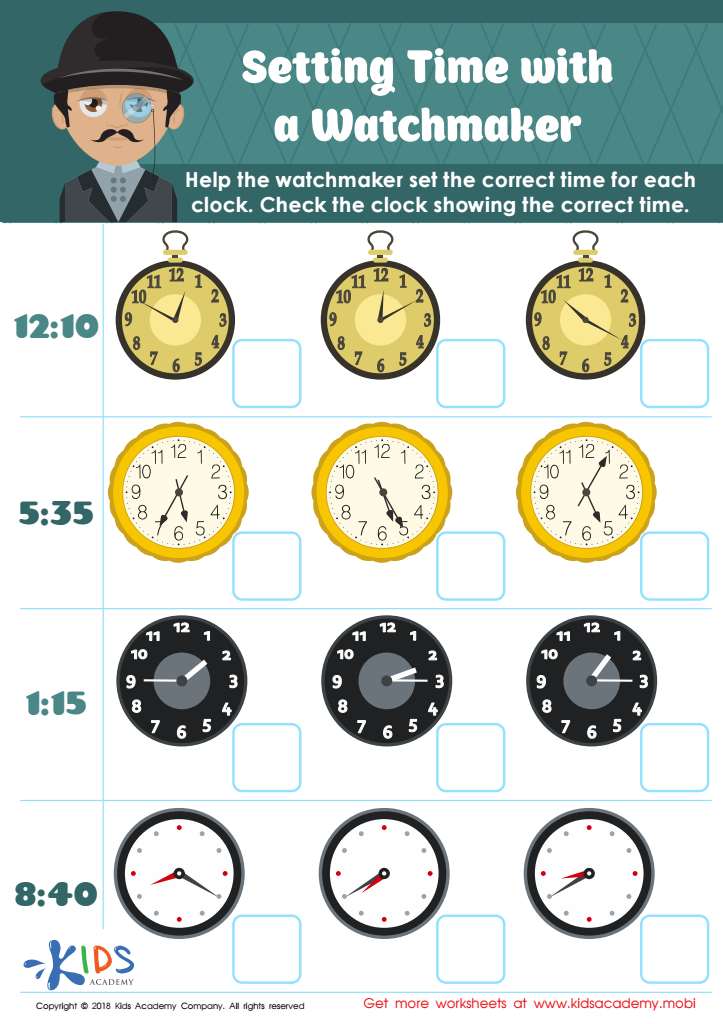
Setting Time with Watchmaker Worksheet
 Assign to My Students
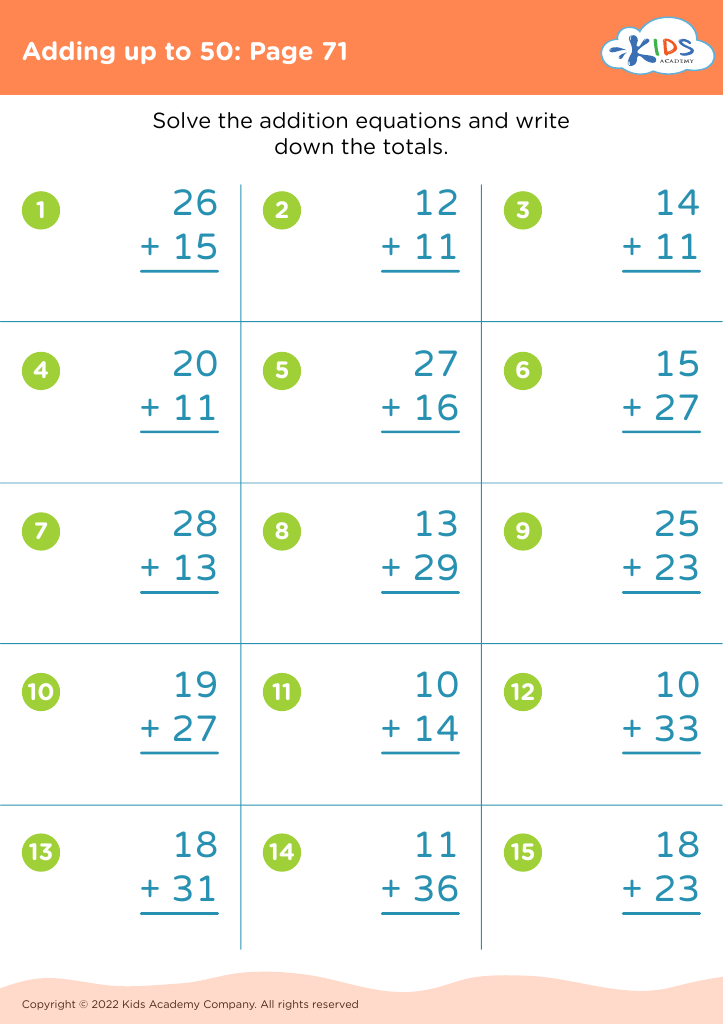
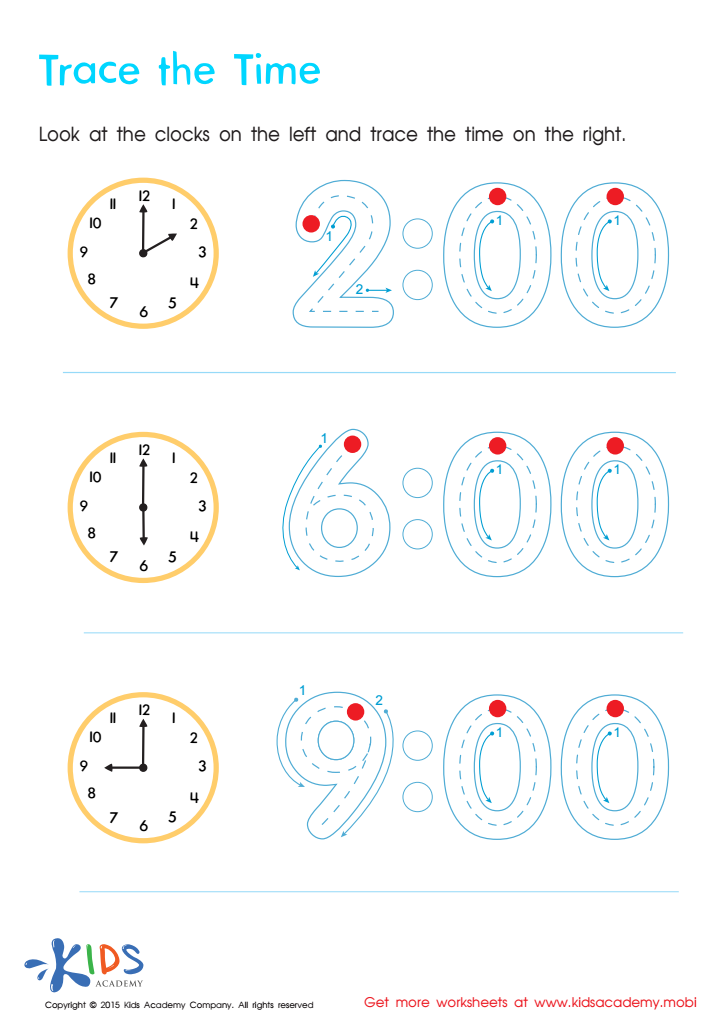
Telling The Time Worksheet: Part 2
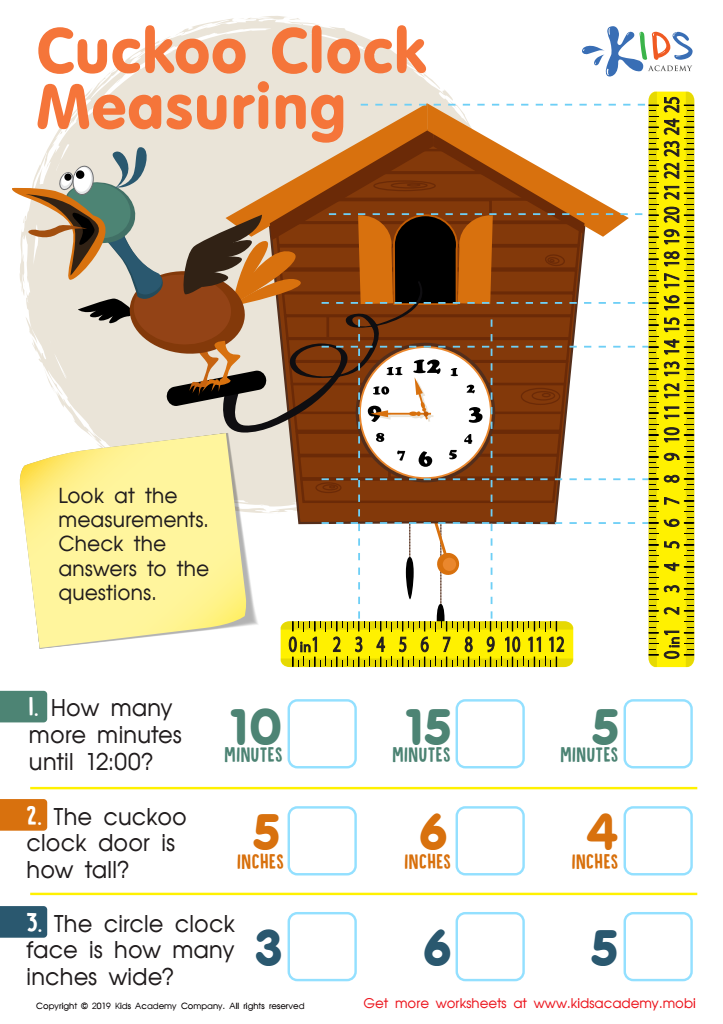
Cuckoo Clock Measuring Worksheet
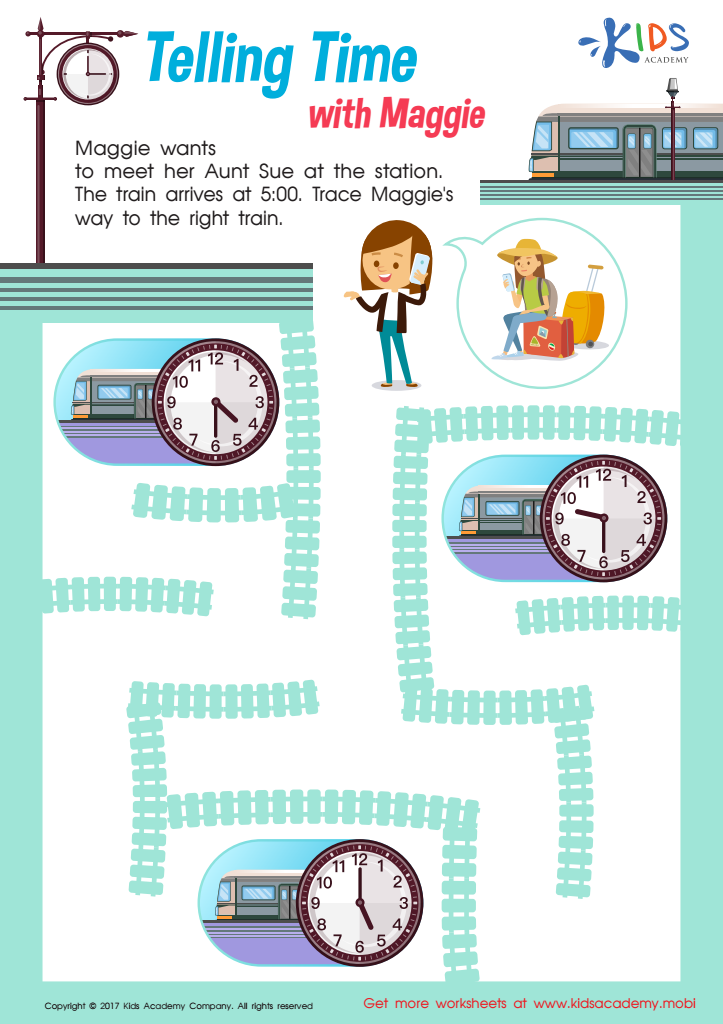
Telling Time With Maggie Time Worksheet







Understanding clocks is a fundamental skill that significantly impacts a child's daily life and academic success. For children aged 6-7, learning to tell time offers both practical and developmental benefits. First, reading a clock fosters independence. When kids know the time, they can manage their routines better, from getting ready for school to knowing when it's time for bed. This autonomy builds their self-confidence and instills a sense of responsibility.
From an educational perspective, understanding clocks enhances math skills. Reading a clock involves seeing relationships between numbers and learning concepts like skip counting, fractions, and the passage of time. Moreover, telling time on an analog clock helps children develop spatial intelligence as they recognize the position of the hour and minute hands.
Socially and emotionally, grasping the concept of time helps children adapt to structured environments, such as schools where they need to follow a time-based schedule. It also helps them in team activities and social interactions, like knowing when breaks end or activities start, fostering better cooperation and harmony.
Finally, in the technology-driven modern world, balancing analog and digital clock-reading skills ensures that kids are versatile and well-prepared for various scenarios. Understanding clocks thus provides a well-rounded foundation that supports their academic growth and personal development.








