Understanding timelines Worksheets for Ages 6-7
3 filtered results
-
From - To
Explore our engaging "Understanding Timelines Worksheets" designed for ages 6-7! These printable worksheets help young learners grasp the concept of time by sequencing events, understanding chronological order, and building essential historical thinking skills. Perfect for first graders, our colorful and interactive activities make learning about timelines fun and accessible. Each worksheet encourages kids to visualize and organize information, fostering better comprehension. Whether following daily schedules or historical events, our resources provide a strong foundation for future history and social studies topics. Start your child's journey in understanding timelines today and see their confidence and knowledge grow!
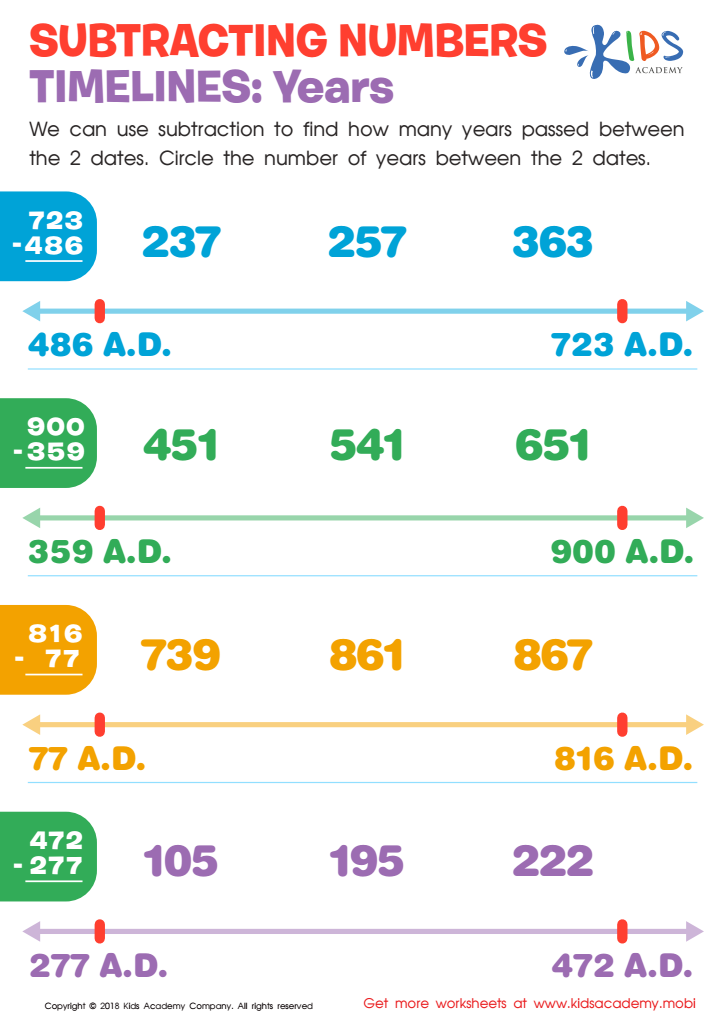
Subtracting Numbers Timelines: Years Worksheet
 Assign to My Students
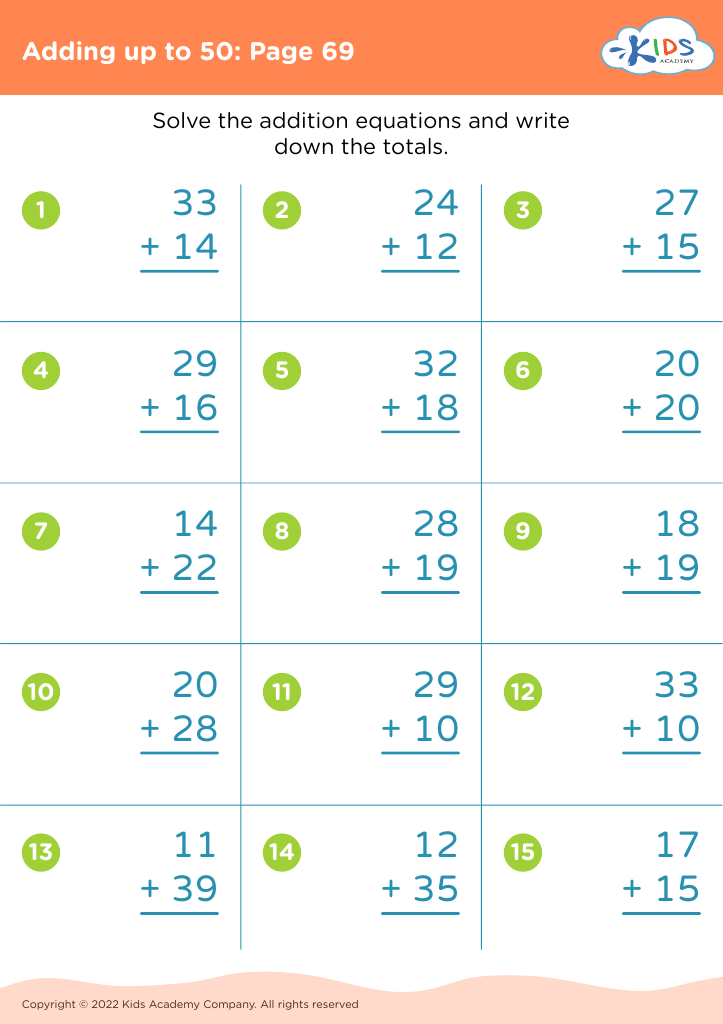
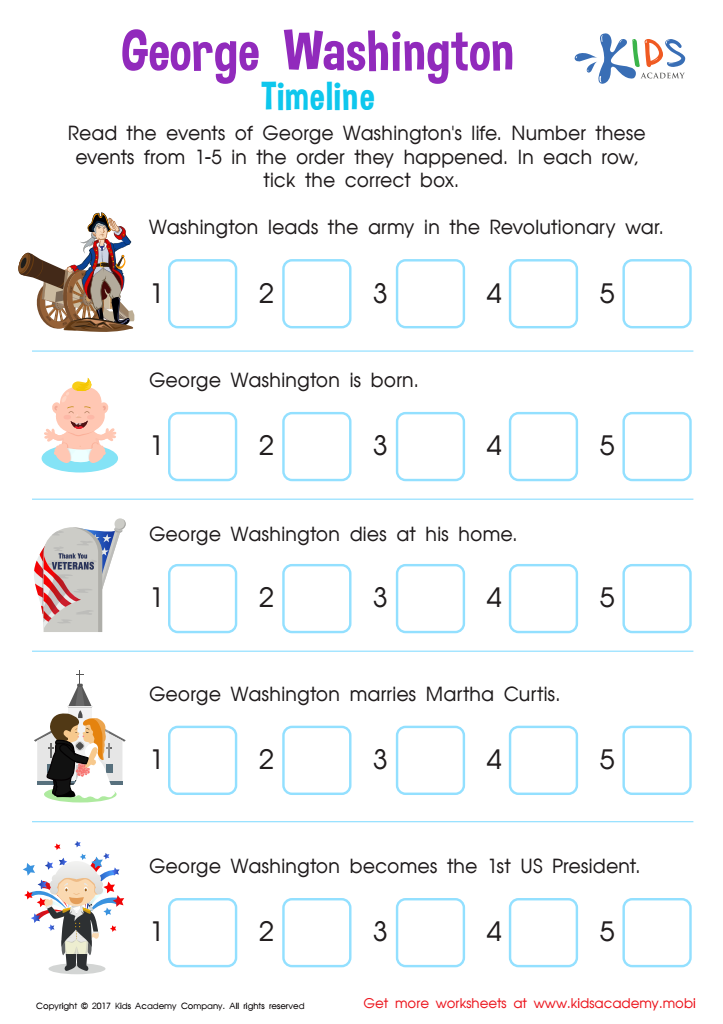
George Washington Timeline Worksheet






.jpg)
Understanding timelines is crucial for young learners, as it serves as a foundational skill in their cognitive and social development. For parents and teachers, emphasizing this concept for children aged 6-7 can bring significant benefits.
Firstly, timelines help kids grasp the concept of time, an abstract but key aspect of everyday life. By understanding sequences and the interrelation of past, present, and future, children can better manage their routines, fostering independence and responsibility.
Secondly, learning timelines enhances critical thinking. When children place events in chronological order, they learn cause and effect, enhancing their problem-solving skills. This analytical ability extends beyond history lessons to subjects like science and mathematics, where procedural understanding is crucial.
Additionally, timelines are storytelling tools that encourage literacy. As children recount personal milestones or class events, they practice narrative skills, enriching their vocabulary and writing abilities.
For social development, discussing timelines helps children comprehend shared histories and cultural events, promoting empathy and a sense of community. Understanding historical context fosters appreciation for diverse perspectives, an important step in social-emotional learning.
In summary, understanding timelines aids in cognitive development, organizational skills, literacy, and social-emotional learning, making it a pivotal component of early education for ages 6-7.








