Shape Recognition 2D Shapes Worksheets for Ages 6-7 - Page 2
31 filtered results
-
From - To
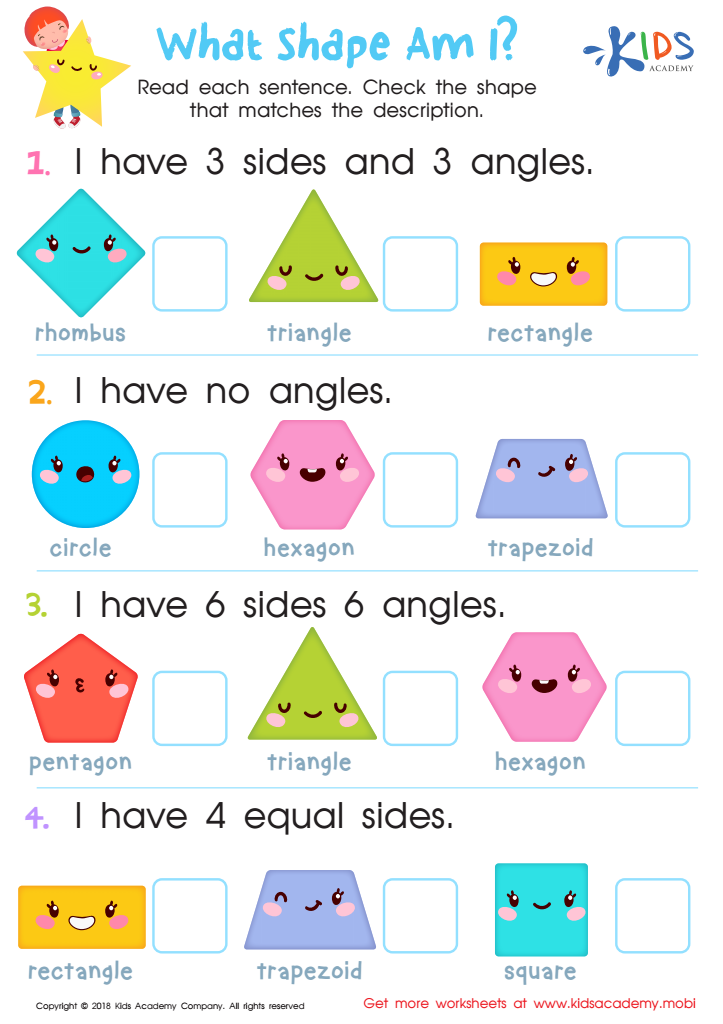
What Shape Am I? Worksheet
 Assign to My Students


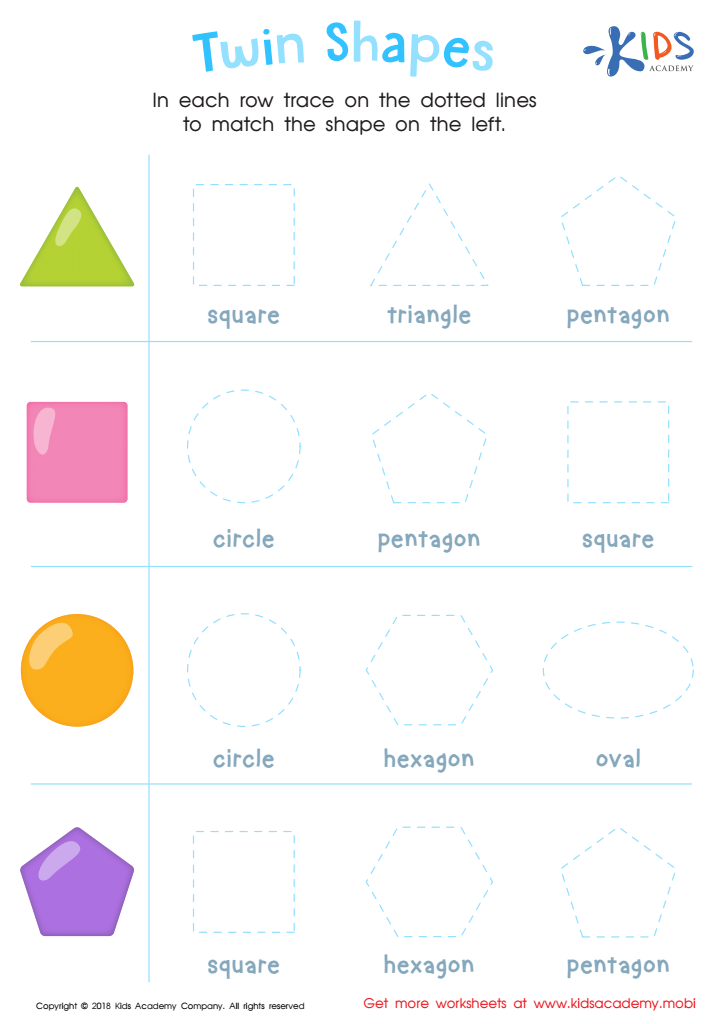
Twin Shapes Dot-to-Dot Worksheet
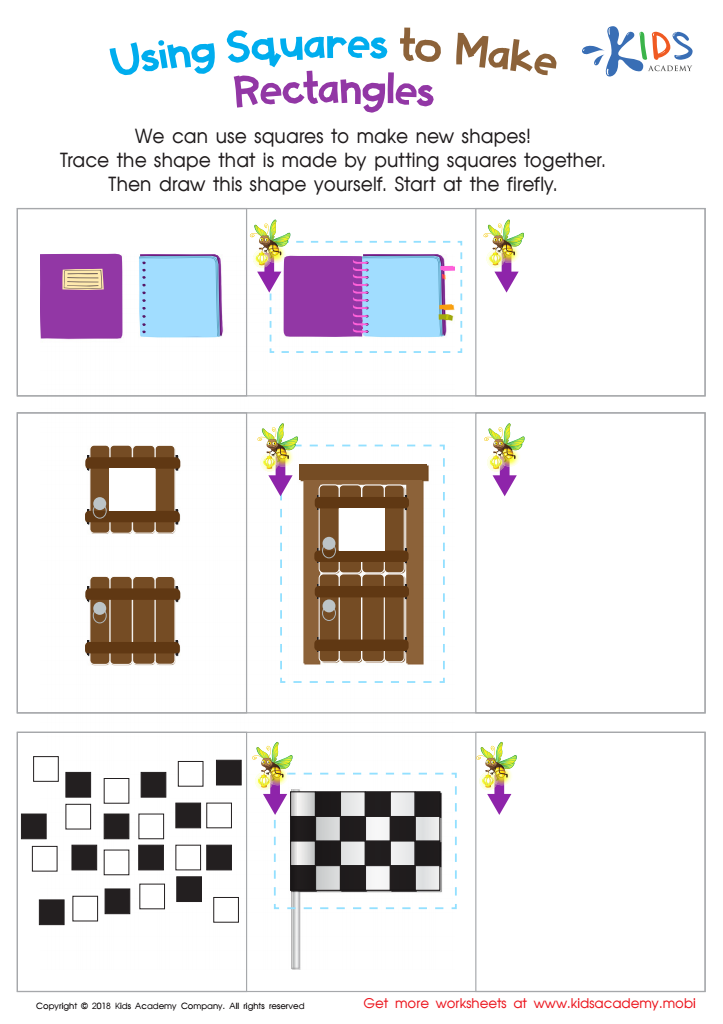
Using Squares to Make Rectangles Worksheet
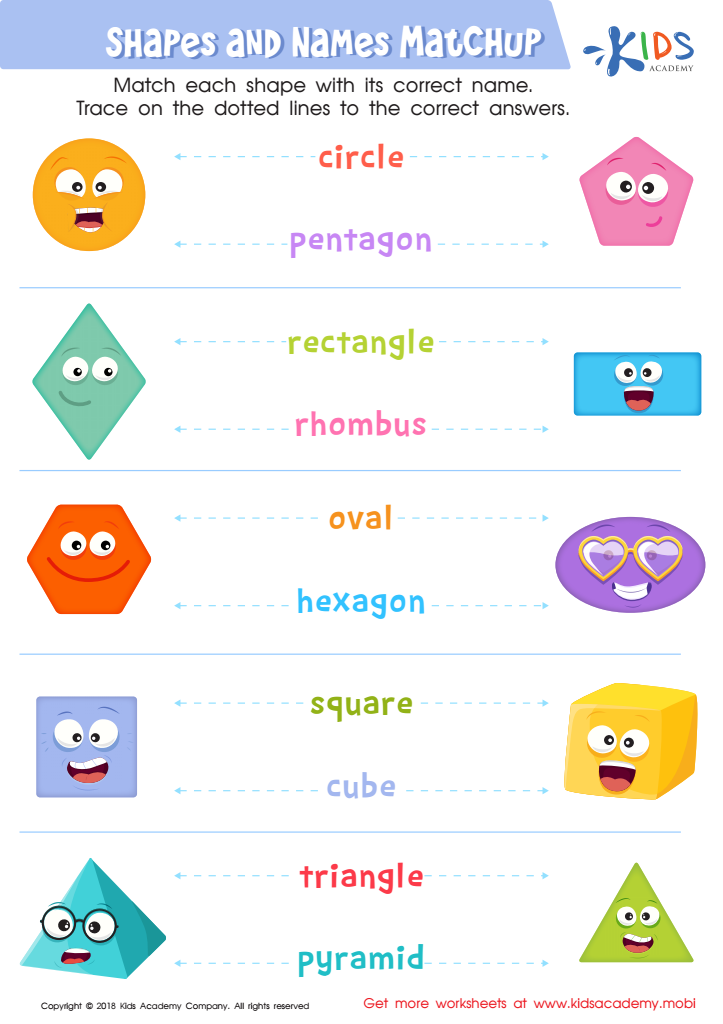
Shapes and Names Matchup Worksheet
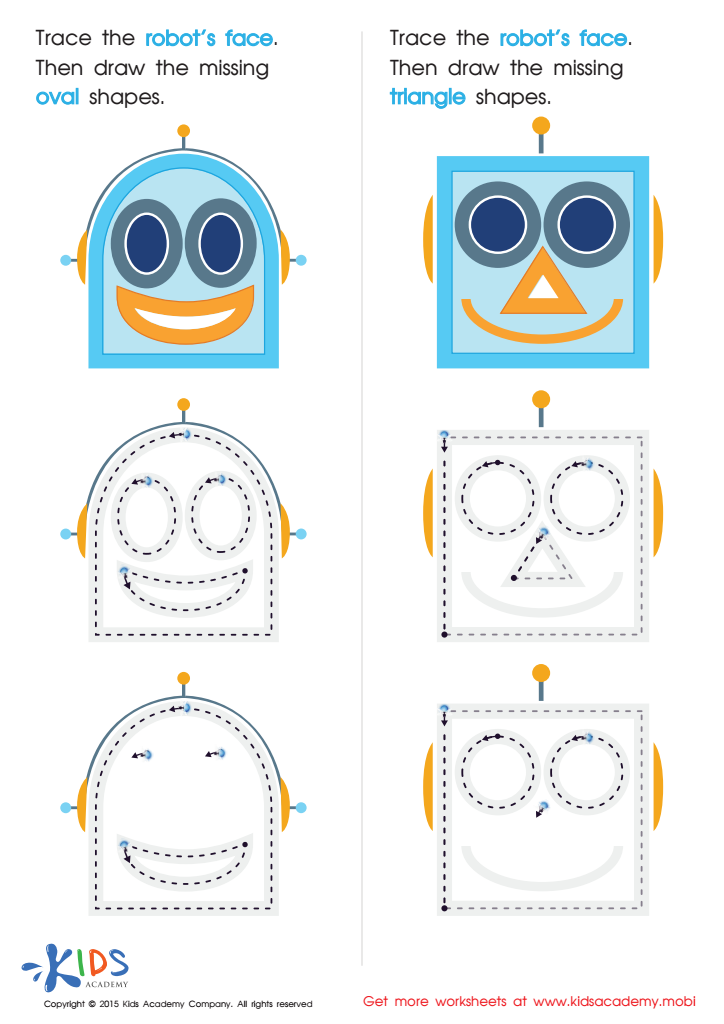
Drawing Ovals And Triangles with Fun Printable
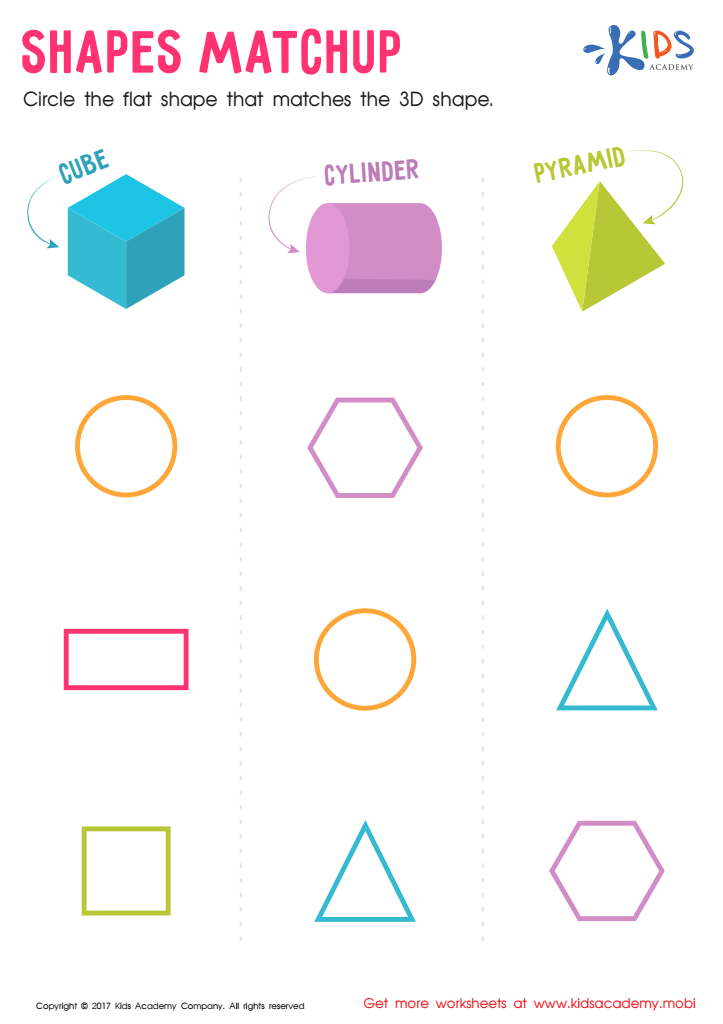
Shapes Matchup Worksheet
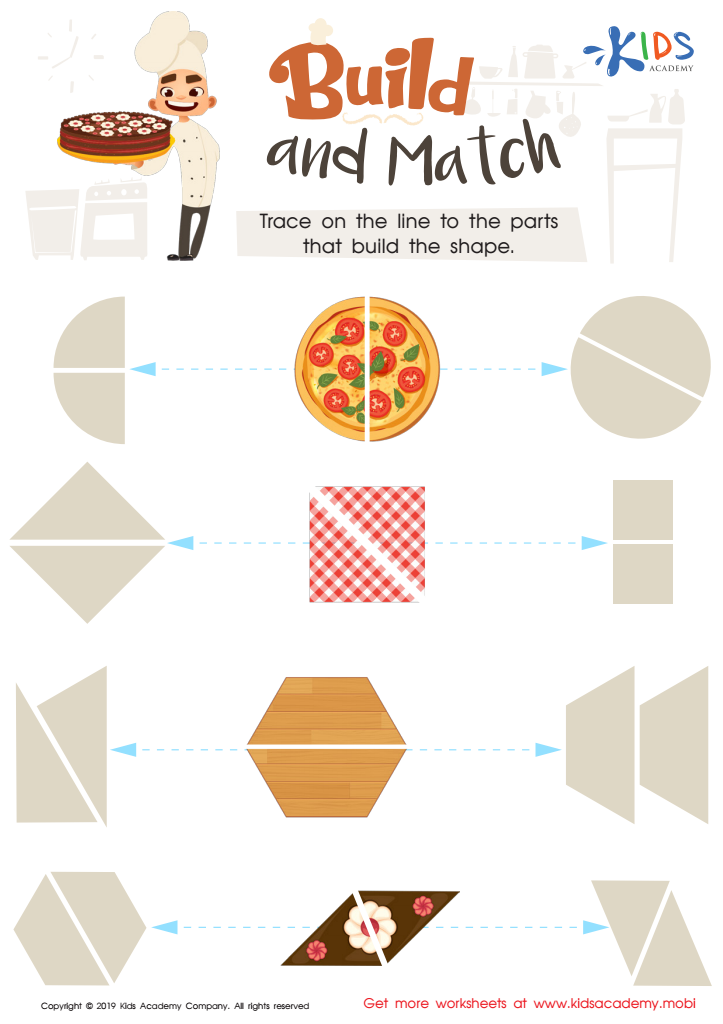
Build and Match Worksheet








Shape recognition is a fundamental skill that plays a crucial role in early childhood education, particularly for children ages 6-7. At this age, students are beginning to develop critical thinking and spatial awareness, which are essential for more complex mathematical concepts later on. Understanding 2D shapes—such as circles, squares, triangles, and rectangles—cultivates these skills and helps children learn to classify and communicate about the world around them.
Parents and teachers should be invested in promoting shape recognition because it lays the groundwork for geometry, measurements, and overall mathematical reasoning. Recognizing and understanding shapes not only engages children cognitively but also enhances their problem-solving abilities as they start to categorize items by shape, size, and color.
Furthermore, integrating shape recognition into everyday activities can boost children's creativity and connection to art, architecture, and nature. These skills contribute to improved fine motor coordination, as children often manipulate 2D shapes through drawing or crafting. Ultimately, fostering shape recognition enhances a child's self-confidence and nurtures a lifelong love for learning, making it imperative for educators and parents to prioritize this concept in early education.