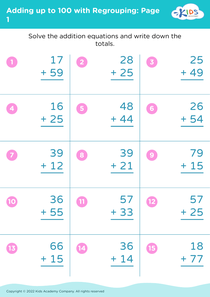
Problem-Solving Skills Adding up to 100 Without Regrouping Worksheets for Ages 6-7
10 filtered results
-
From - To
Boost your child's math confidence with our engaging "Problem-Solving Skills: Adding up to 100 Without Regrouping" worksheets designed for ages 6-7. These interactive printables help young learners practice addition skills by solving problems that encourage critical thinking and reasoning. Each worksheet provides a fun and effective way to enhance mathematical understanding without the complication of regrouping. Ideal for classroom or at-home learning, these resources focus on building foundational skills while promoting a positive attitude towards math. Watch as your child develops essential problem-solving skills, making math both enjoyable and approachable! Equip them for success in a fun, engaging way today!
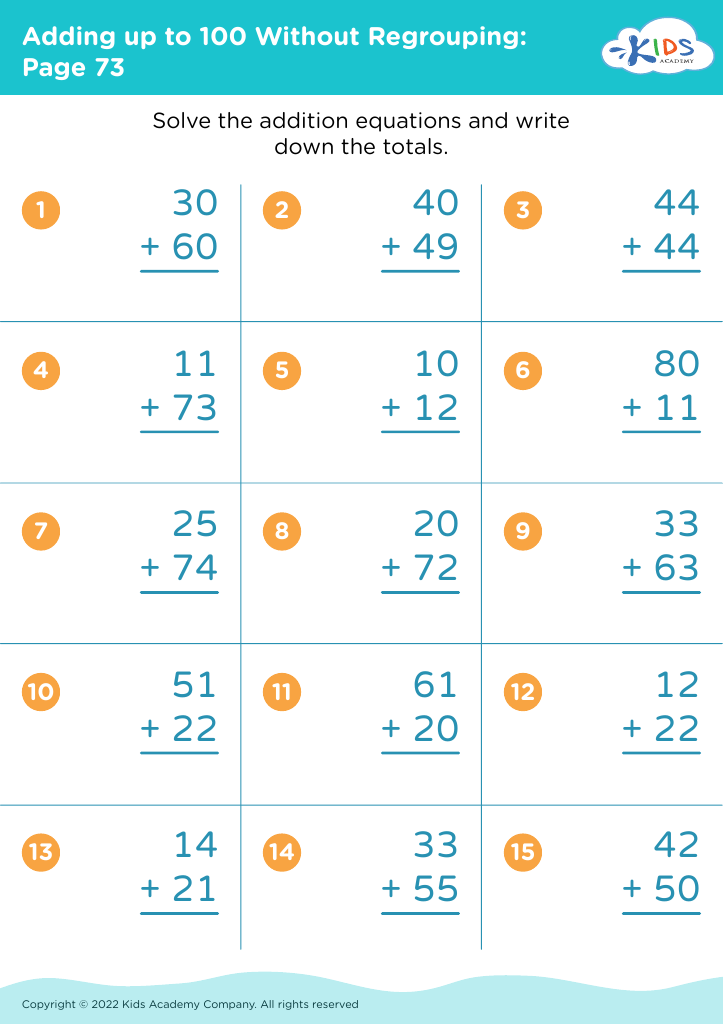
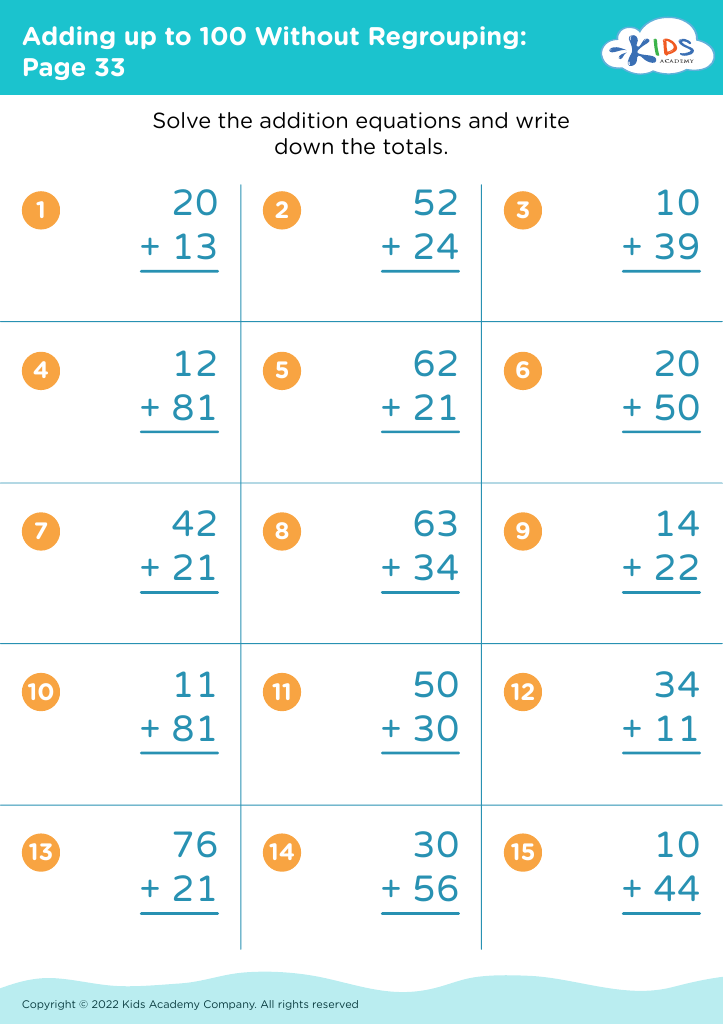
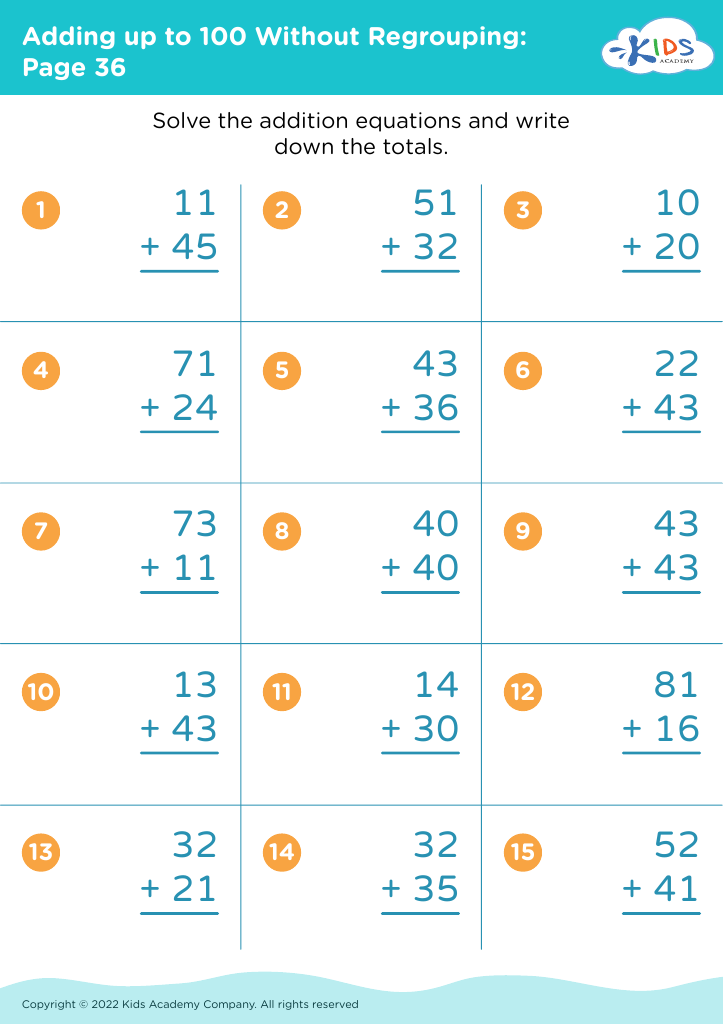
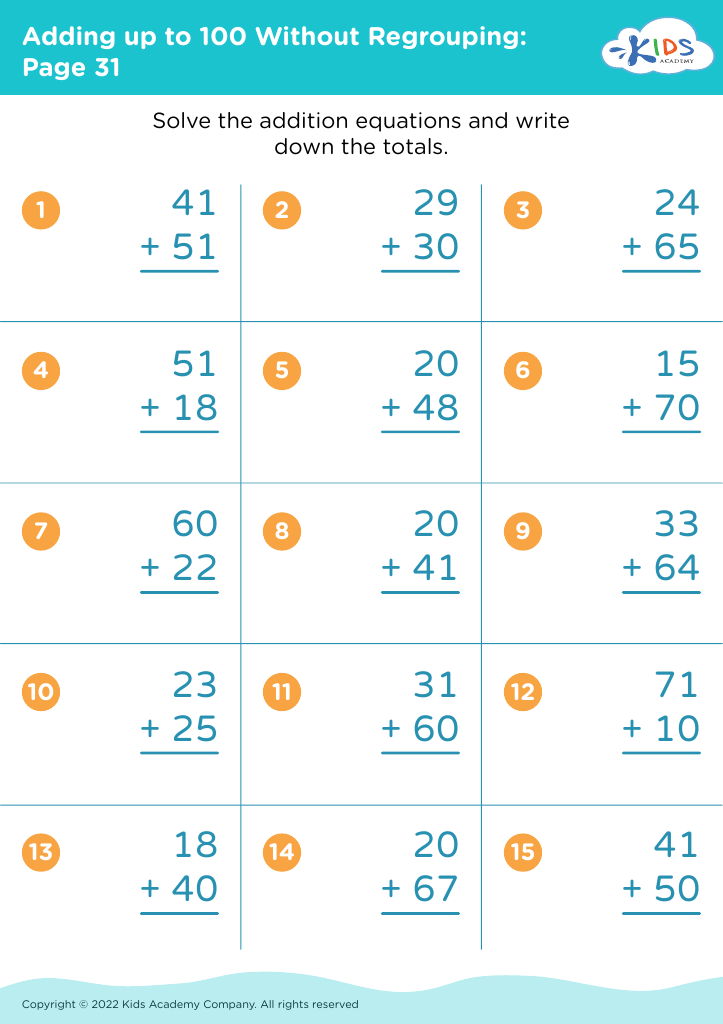
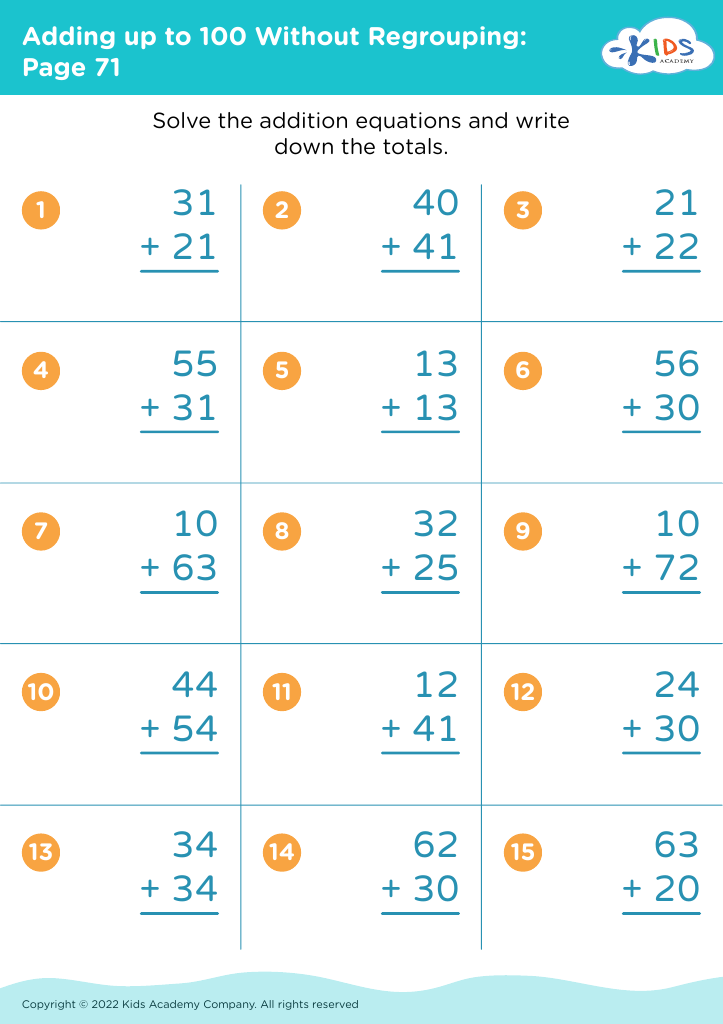
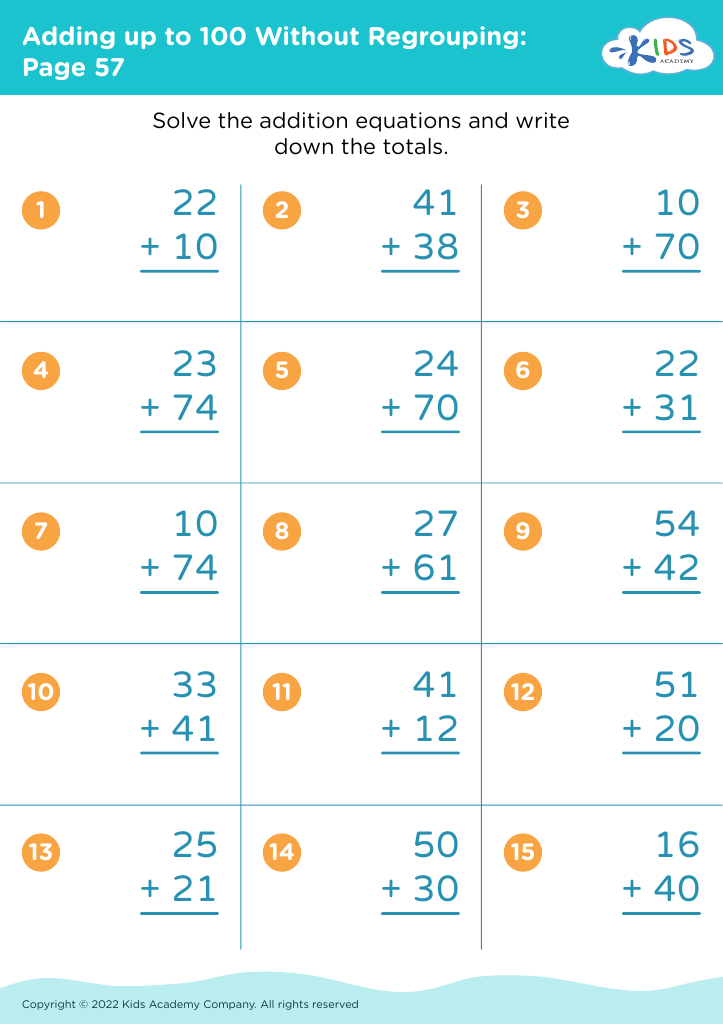
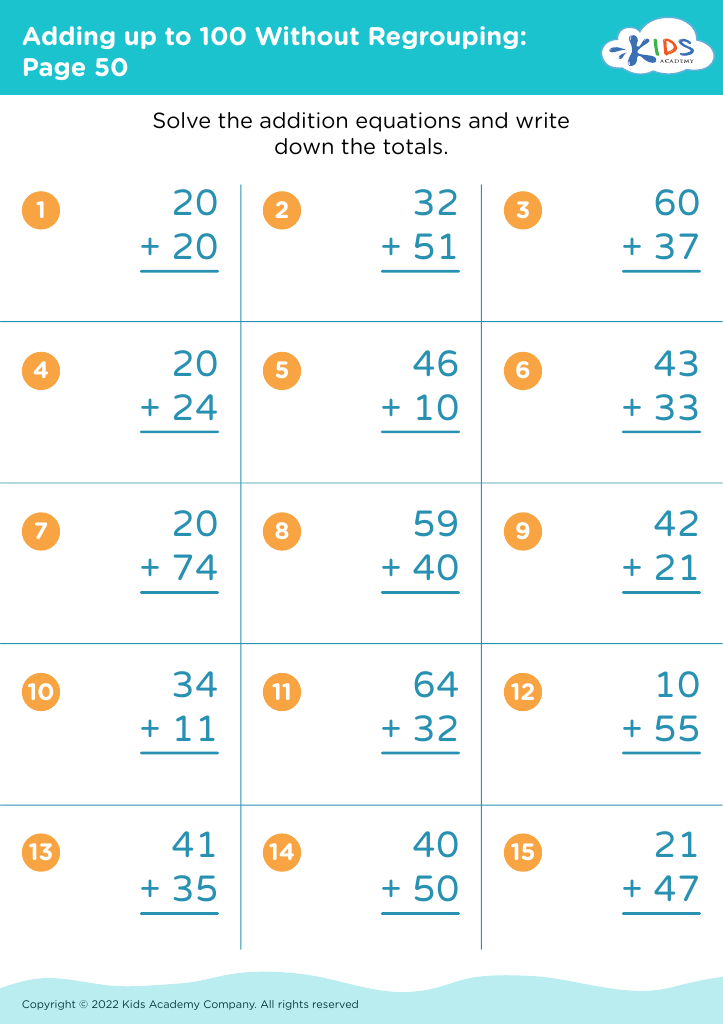
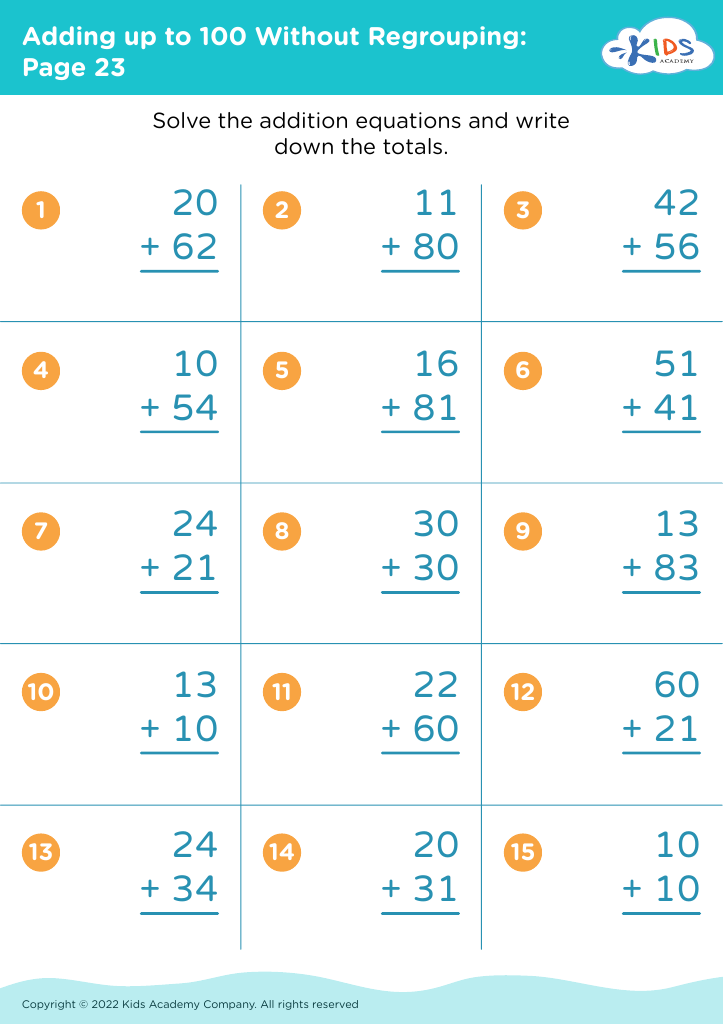
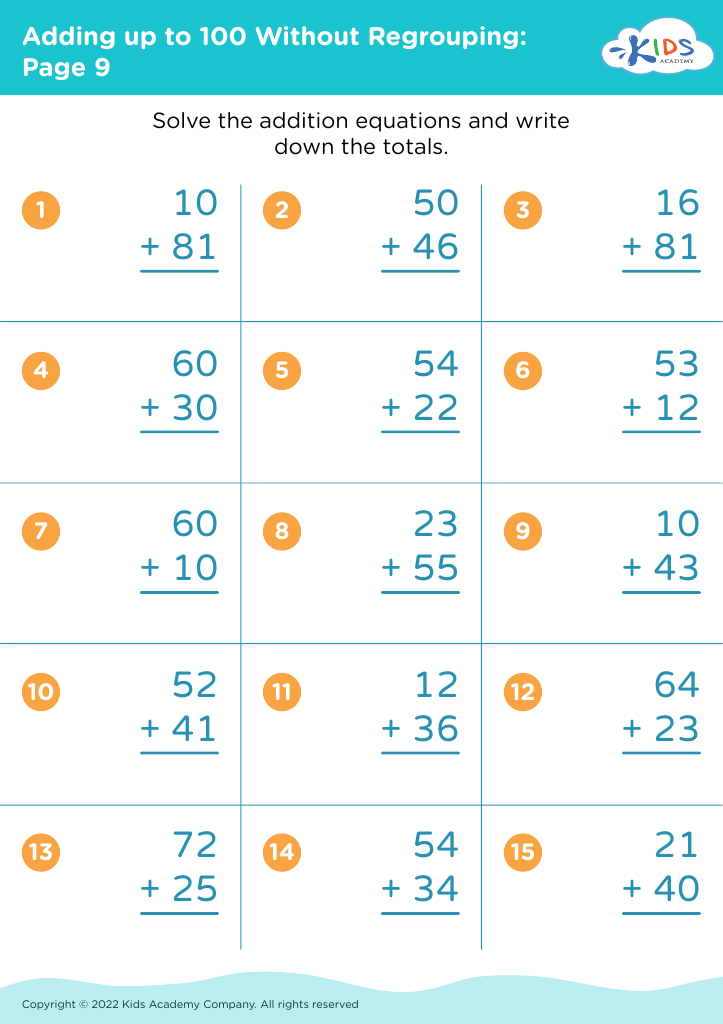
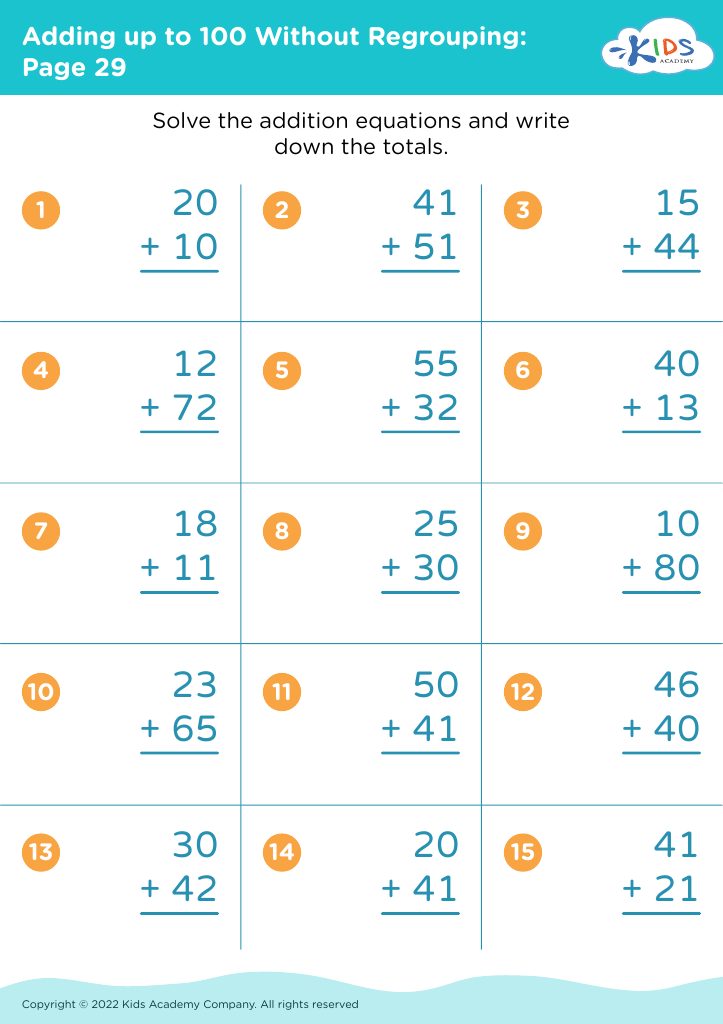




Parents and teachers should prioritize problem-solving skills, particularly in mathematical contexts like adding up to 100 without regrouping, for several important reasons. At ages 6-7, children are at a crucial stage for developing foundational math skills. Mastering addition without regrouping not only strengthens their arithmetic abilities but also builds confidence and fluency in number manipulation.
These problem-solving skills encourage logical thinking and critical reasoning, vital attributes for academic success and everyday decision-making. When children learn to solve these problems systematically, they begin to understand patterns, relationships, and the properties of numbers, which are fundamental concepts in math.
Moreover, strong problem-solving abilities can foster a growth mindset, teaching children that they can tackle challenging tasks through effort and perseverance. This mindset is applicable not just in mathematics but across all areas of learning.
Additionally, as children work collaboratively with peers or with guidance from adults, they learn valuable social and communication skills. This collaborative aspect enriches their learning experience and encourages teamwork.
Ultimately, by focusing on these skills early in a child's education, parents and teachers are providing them with the tools necessary for future academic achievements and lifelong problem-solving capabilities, instilling a love for learning that lasts.