Enhance counting skills Adding up to 100 Worksheets for Ages 6-7
6 filtered results
-
From - To
Boost your child's math confidence with our "Enhance Counting Skills: Adding up to 100 Worksheets" designed for ages 6-7. Perfect for young learners, these engaging worksheets are essential for hands-on practice to master counting and addition up to 100. Each worksheet offers fun, illustrated problems to help children seamlessly improve their number fluency and arithmetic skills. Whether your child is homeschooling or needs extra practice, our worksheets build a solid mathematical foundation. Spark a love for numbers and watch them succeed! Explore our collection today at [your website/institution].
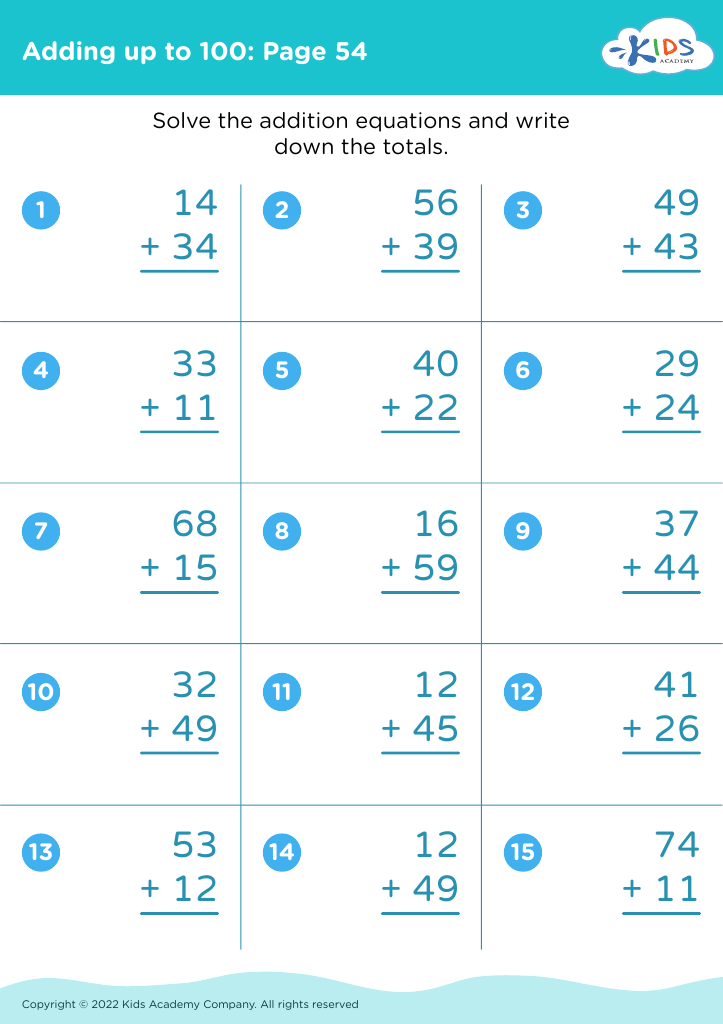
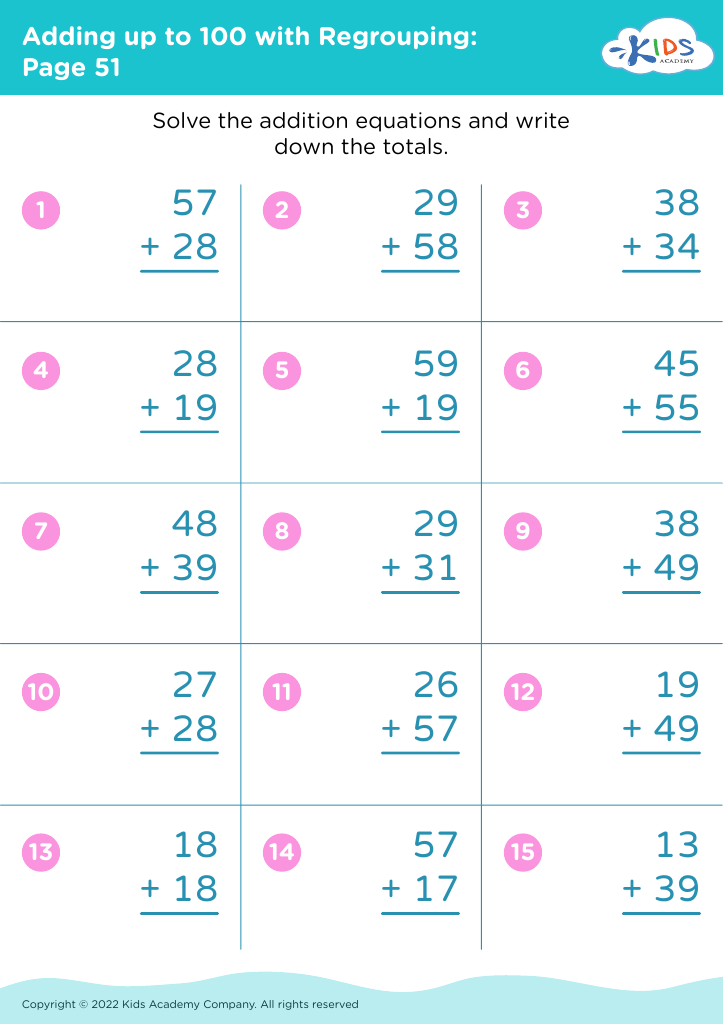
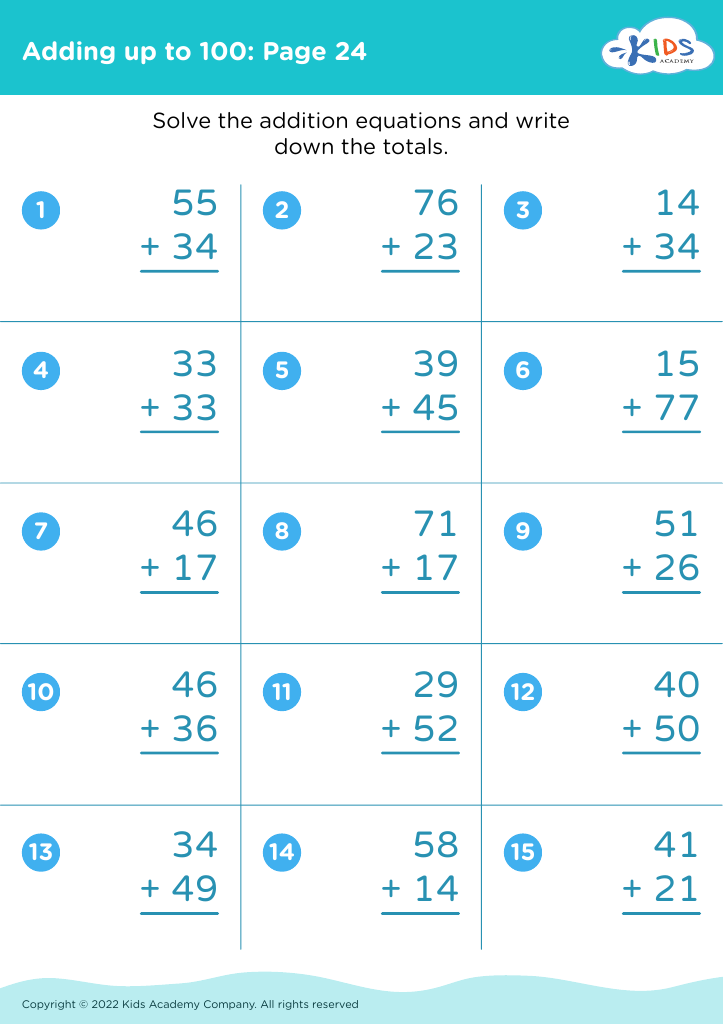
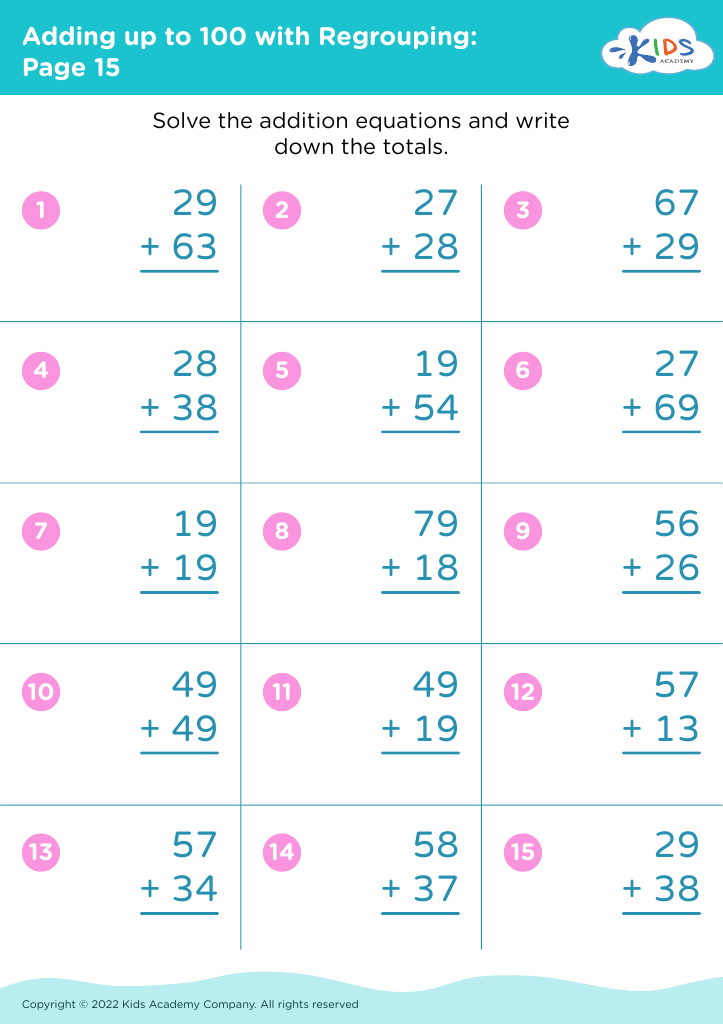
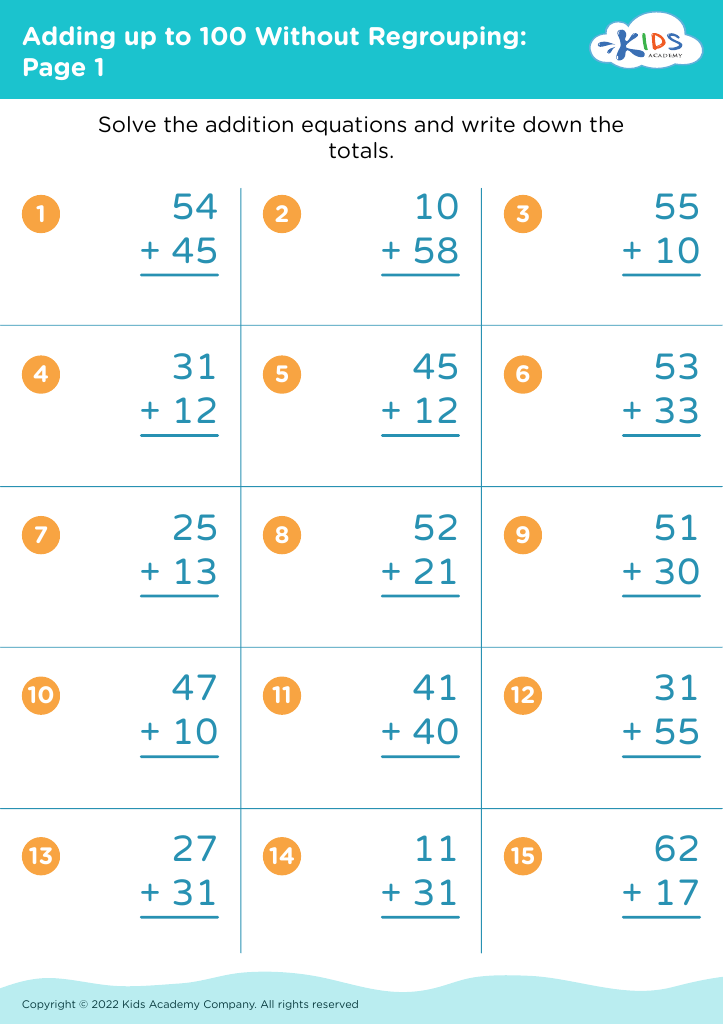
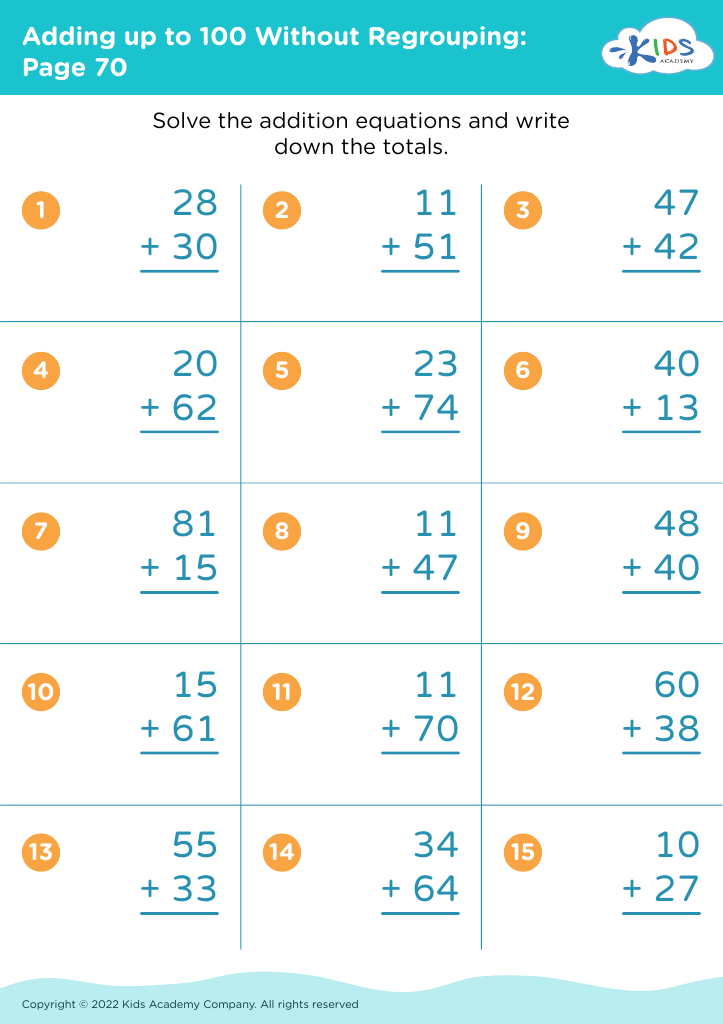






%20(1).jpg)
Enhancing counting skills involving numbers up to 100 is pivotal for children aged 6-7 as it forms the cornerstone of numeracy—an essential life skill. At this developmental stage, children are transitioning from understanding basic numbers to grasping more complex mathematical concepts. By mastering counting up to 100, children not only improve their numerical fluency but also enhance their comprehension of place value, sequencing, and the relationships between numbers.
Parents and teachers should prioritize this skill because it fosters a robust foundation for future learning in math, including addition, subtraction, multiplication, and division. Numeracy is not only important academically but also in everyday life, aiding in tasks such as measuring, time management, and budgeting—a deficiency in which can lead to challenges later in life.
Furthermore, proficiency in counting can boost a child's self-confidence in their academic abilities, promoting a more positive attitude toward learning and school in general. Early numeracy skills are often linked to better problem-solving abilities, logical thinking, and analytical skills. Therefore, by focusing on counting skills up to 100, parents and teachers can play a crucial role in setting children up for long-term academic and personal success.








