Filters

22 filtered results

Clear all filters
Favorites
With answer key
Interactive

22 filtered results

Difficulty Level

Grade


Discover our engaging "Fraction Simplification Adding Up to 100 Worksheets" designed specifically for children aged 6-7. These worksheets offer a fun approach to mastering fractions while reinforcing essential addition skills. Kids will learn how to simplify fractions, enabling them to grasp fundamental concepts in mathematics. Each worksheet features vibrant illustrations and age-appropriate problems, making learning enjoyable and effective. As they work through the activities, children enhance their critical thinking and problem-solving abilities. Perfect for classroom use or at-home practice, our resources support young learners in building a strong math foundation. Start their journey to math mastery today!
Check out this FREE Trial Lesson on Adding up to 100 for age 6-7!

Match Exactly the Same

Favorites
With answer key
Interactive
  • 6-7
  • Fraction simplification
  • Adding up to 100
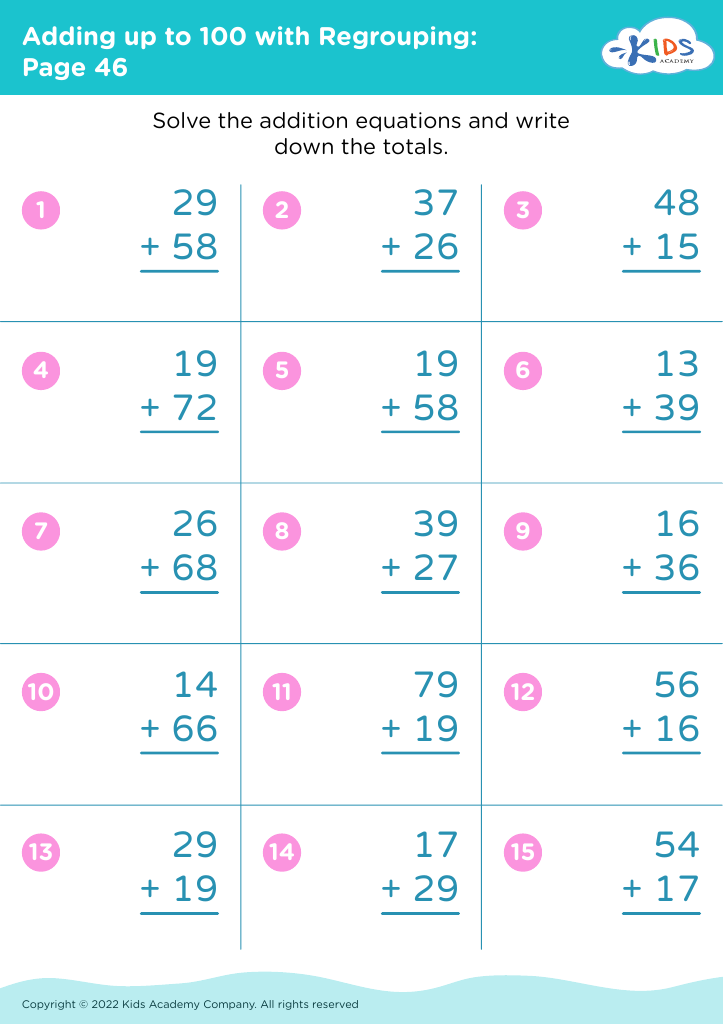
Adding up to 100 with Regrouping: Page 46
Worksheet
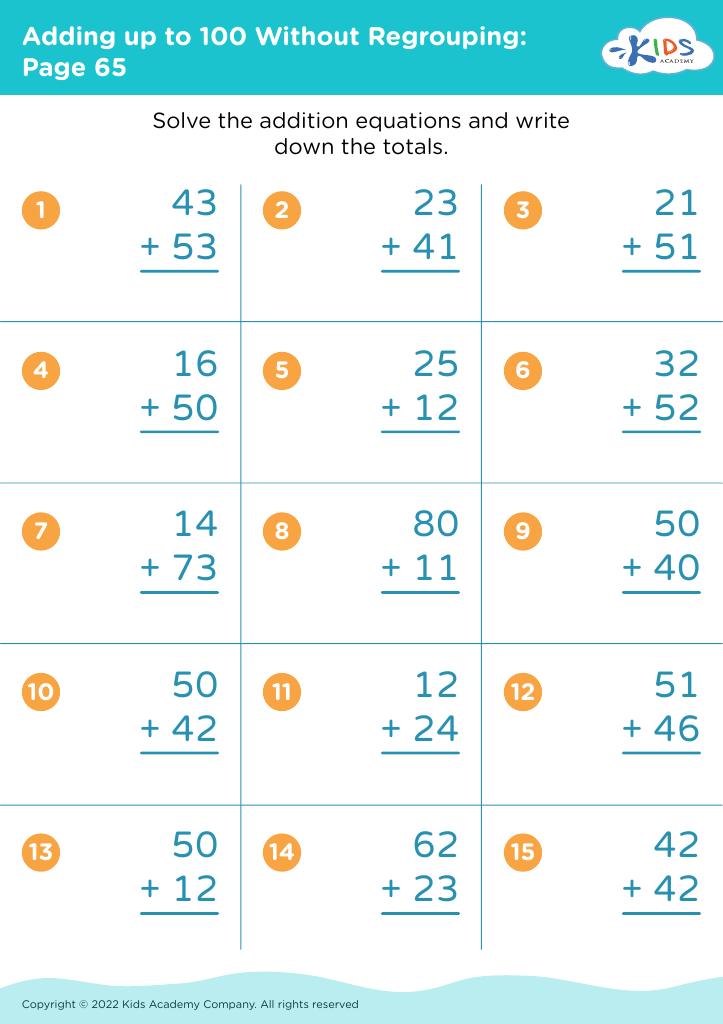
Adding up to 100 Without Regrouping: Page 65
Worksheet
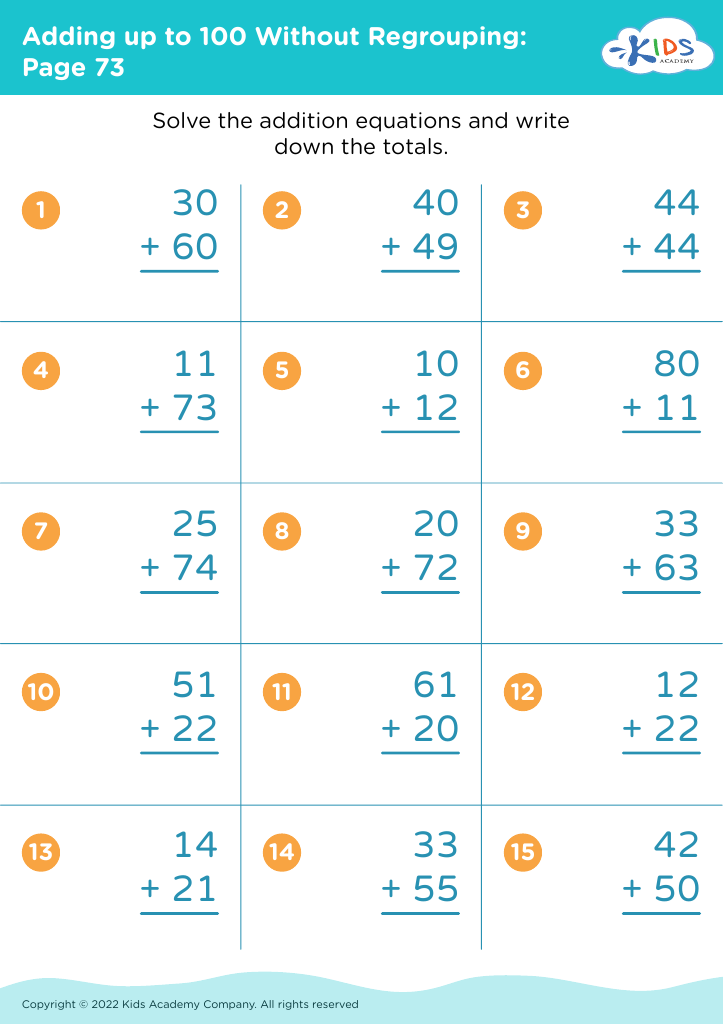
Adding up to 100 Without Regrouping: Page 73
Worksheet
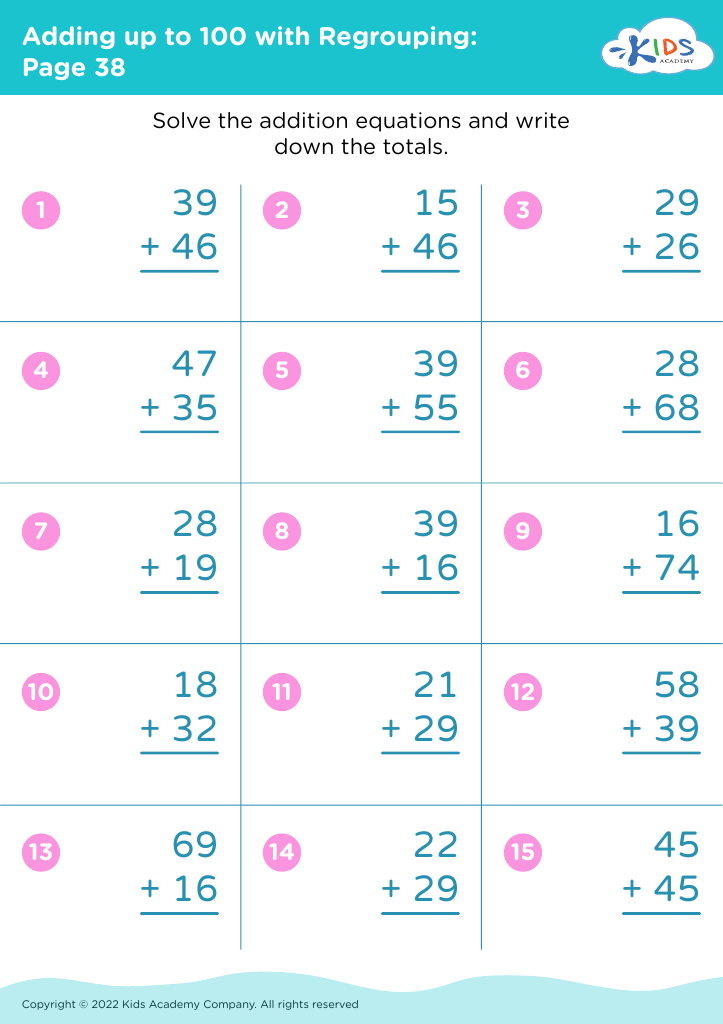
Adding up to 100 with Regrouping: Page 38
Worksheet
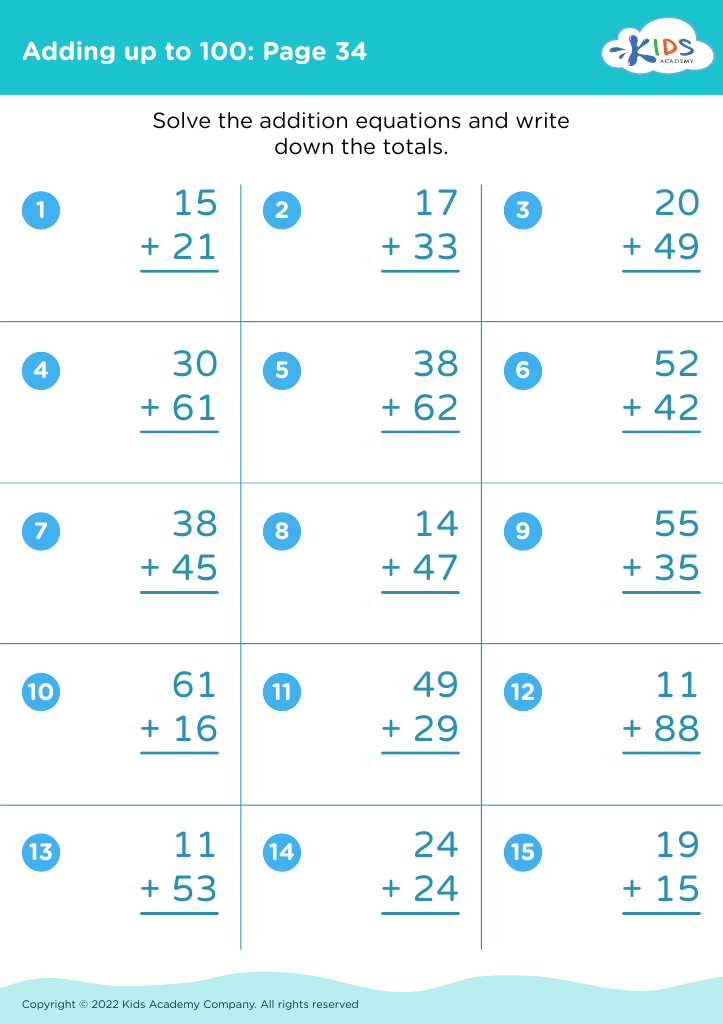
Adding up to 100: Page 34

Adding up to 100: Page 34

Adding up to 100: Page 34
Worksheet
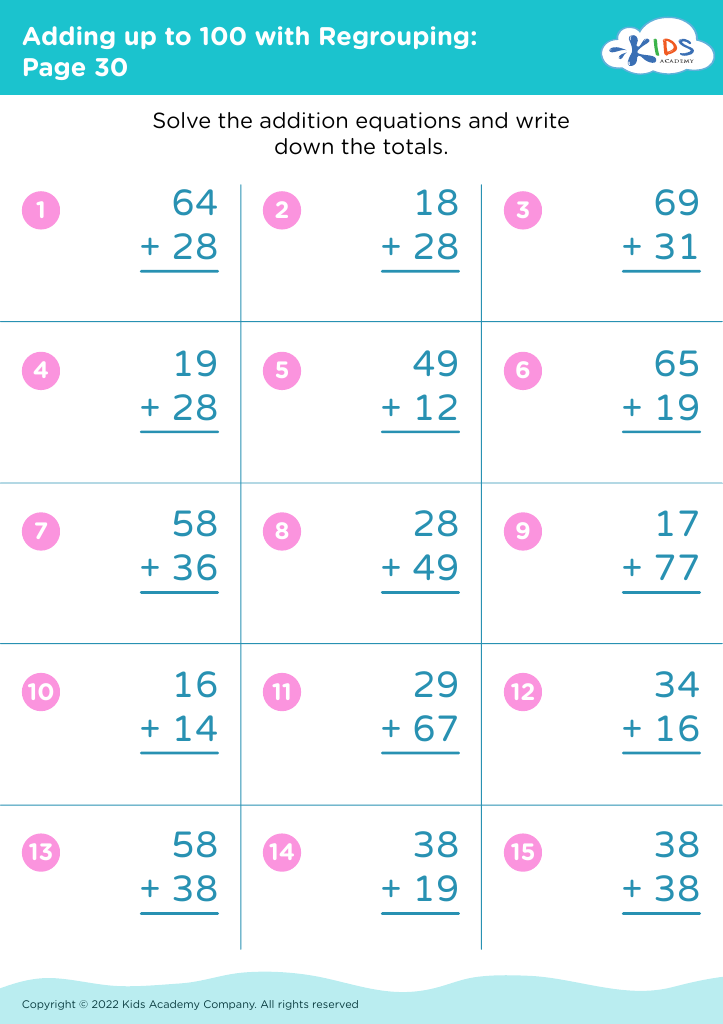
Adding up to 100 with Regrouping: Page 30
Worksheet
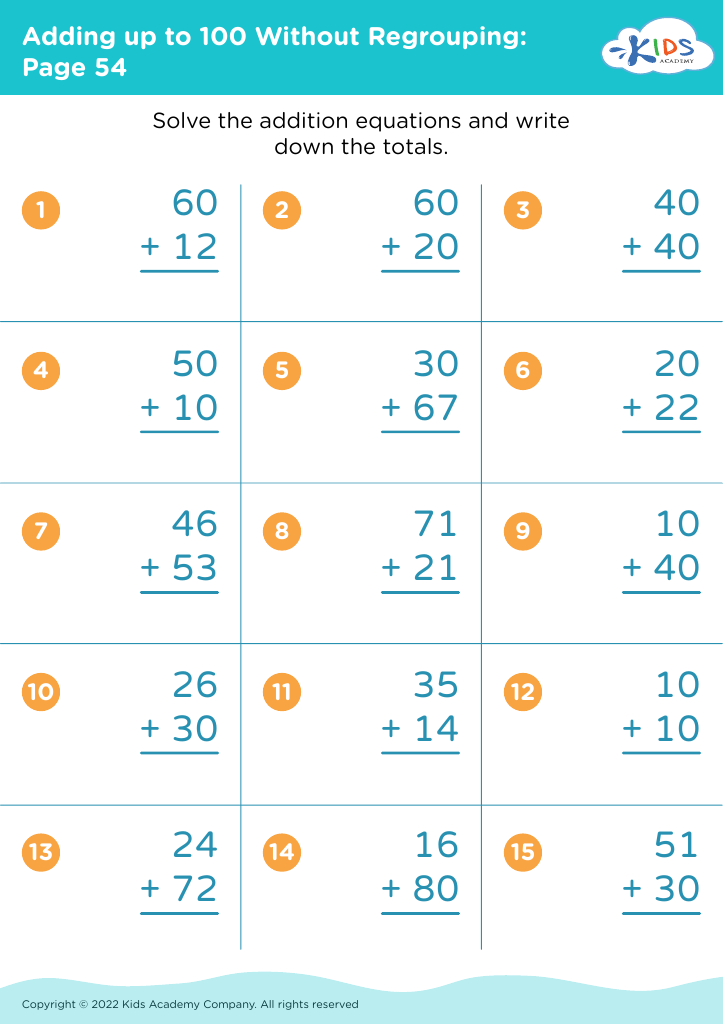
Adding up to 100 Without Regrouping: Page 54
Worksheet
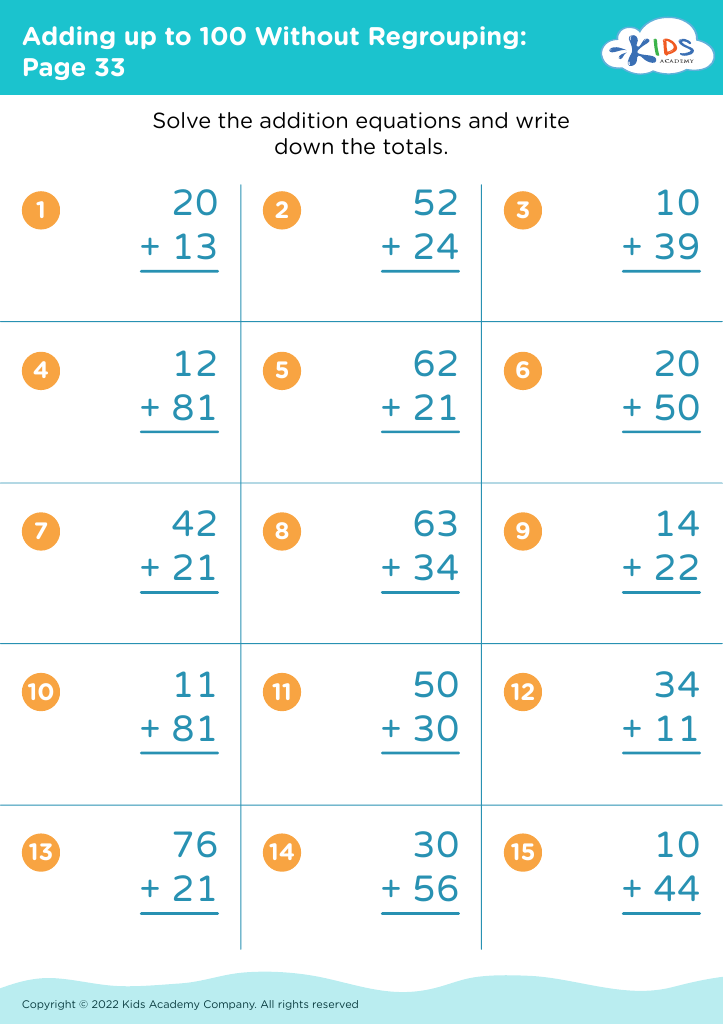
Adding up to 100 Without Regrouping: Page 33
Worksheet
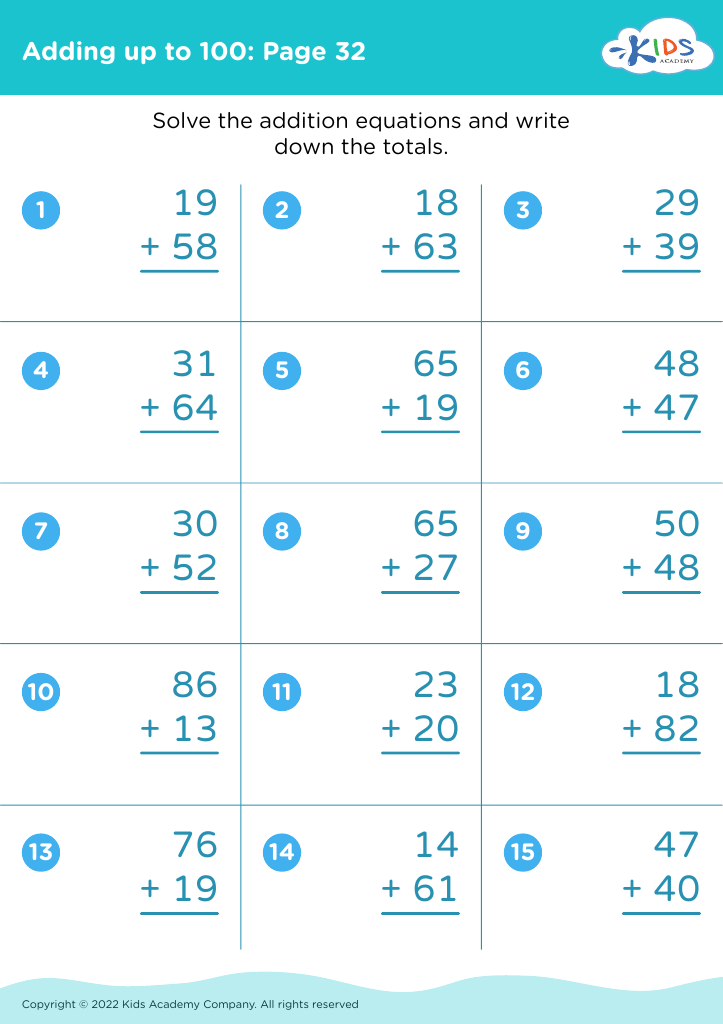
Adding up to 100: Page 32

Adding up to 100: Page 32

Adding up to 100: Page 32
Worksheet
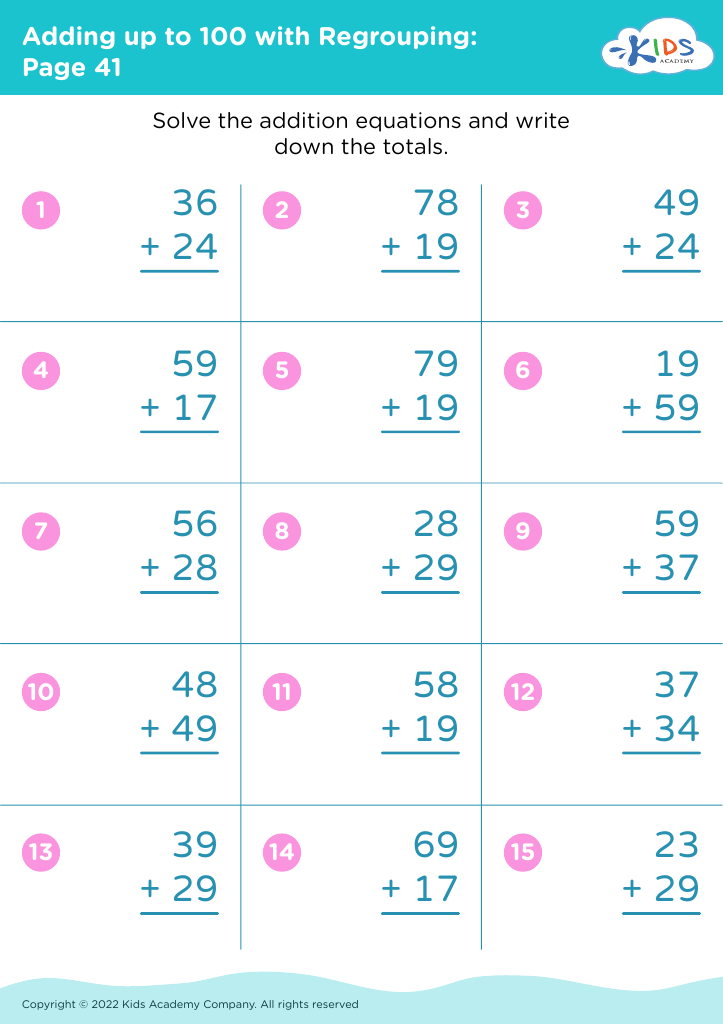
Adding up to 100 with Regrouping: Page 41
Worksheet
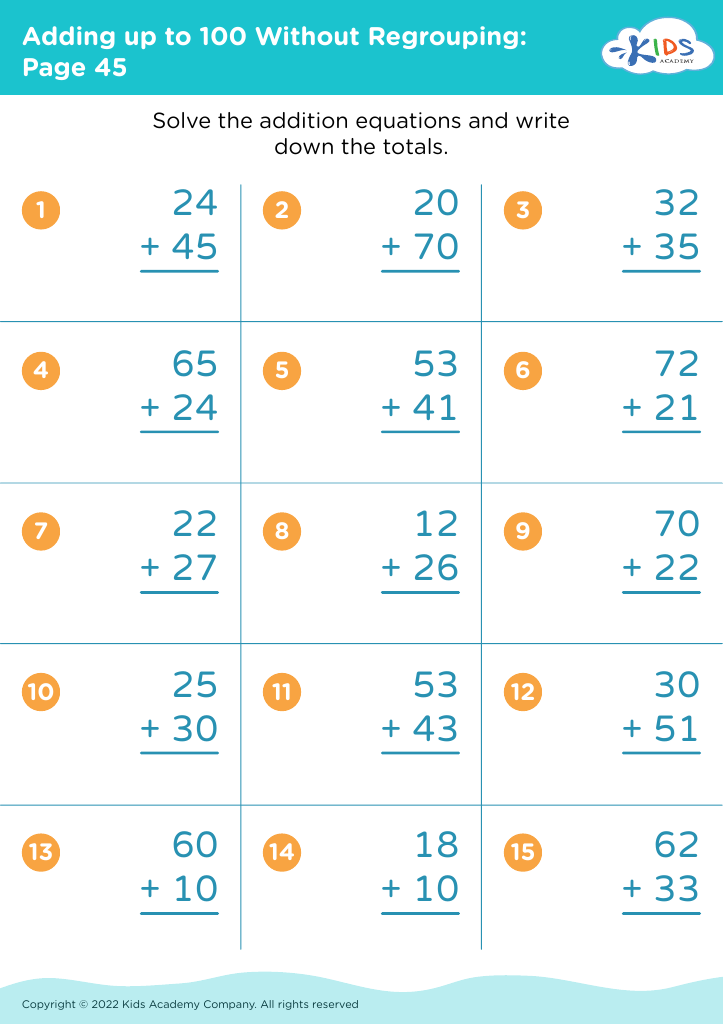
Adding up to 100 Without Regrouping: Page 45
Worksheet
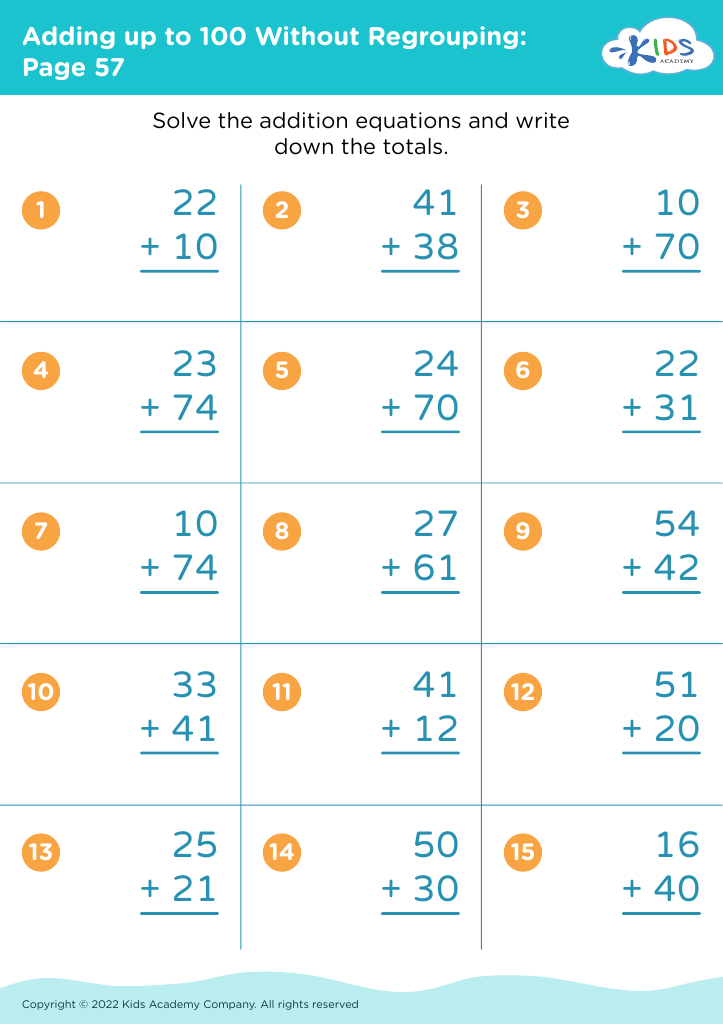
Adding up to 100 Without Regrouping: Page 57
Worksheet
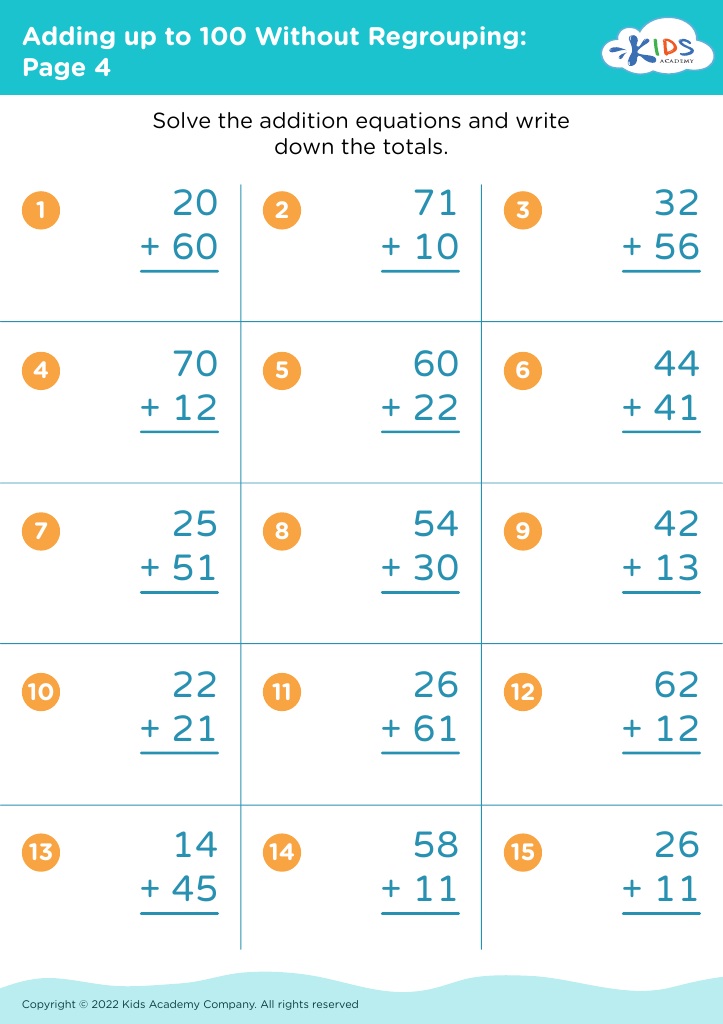
Adding up to 100 Without Regrouping: Page 4
Worksheet
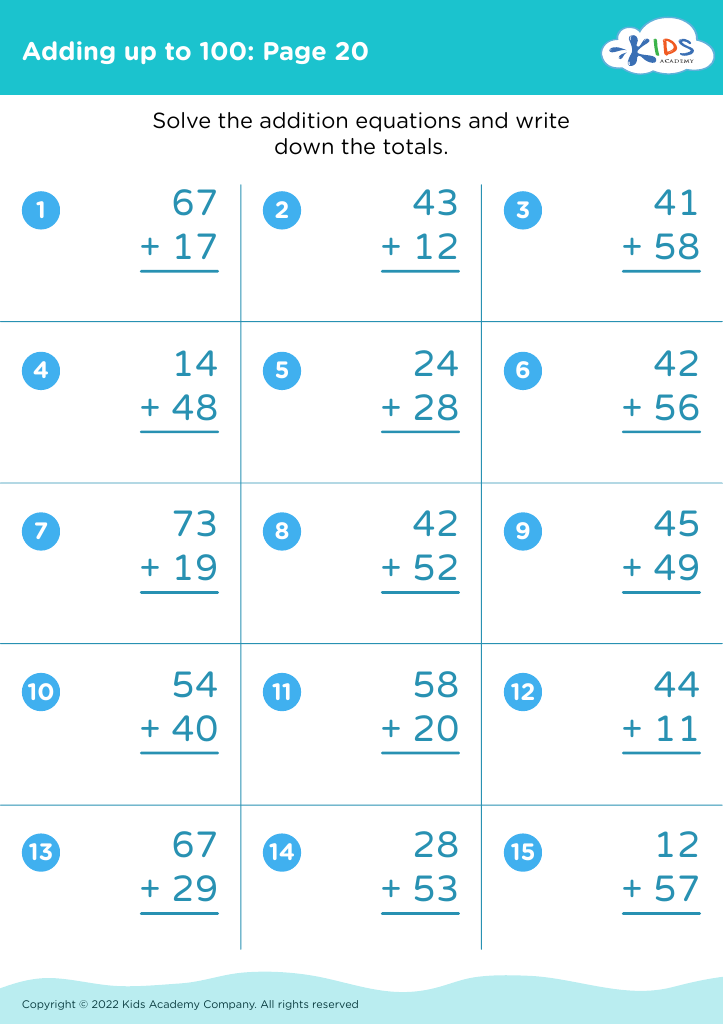
Adding up to 100: Page 20

Adding up to 100: Page 20

Adding up to 100: Page 20
Worksheet
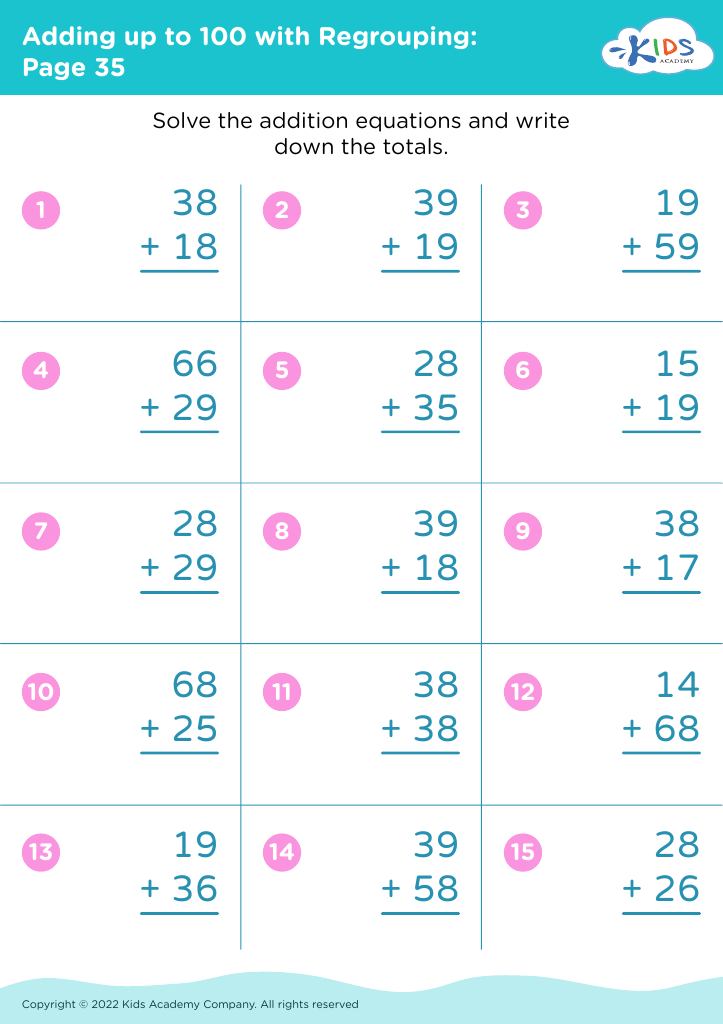
Adding up to 100 with Regrouping: Page 35
Worksheet
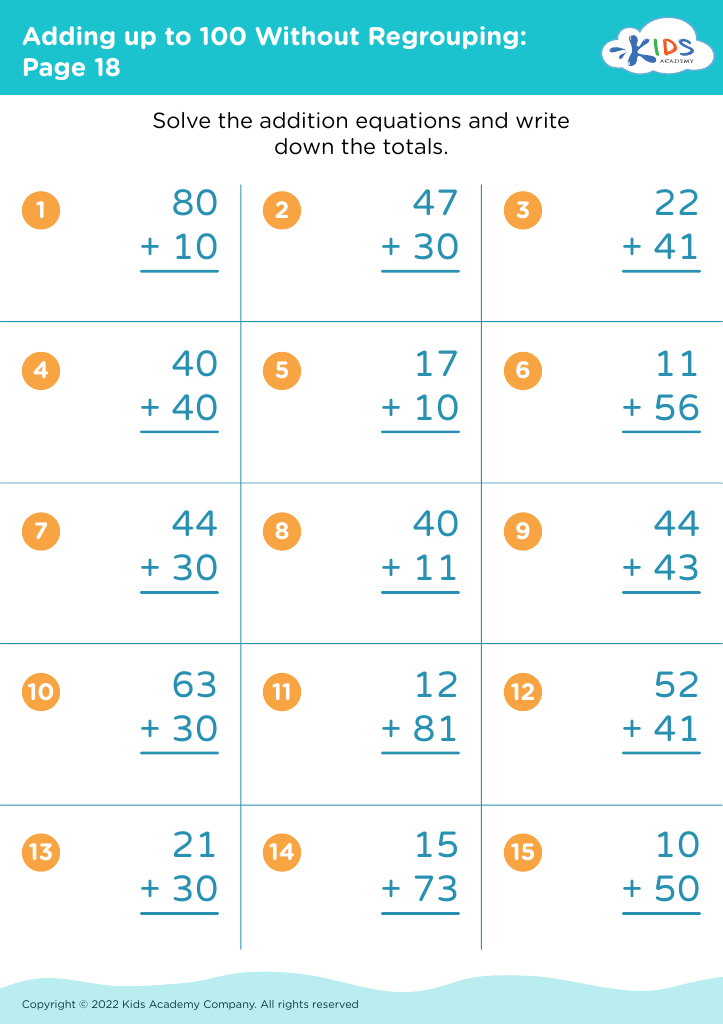
Adding up to 100 Without Regrouping: Page 18
Worksheet
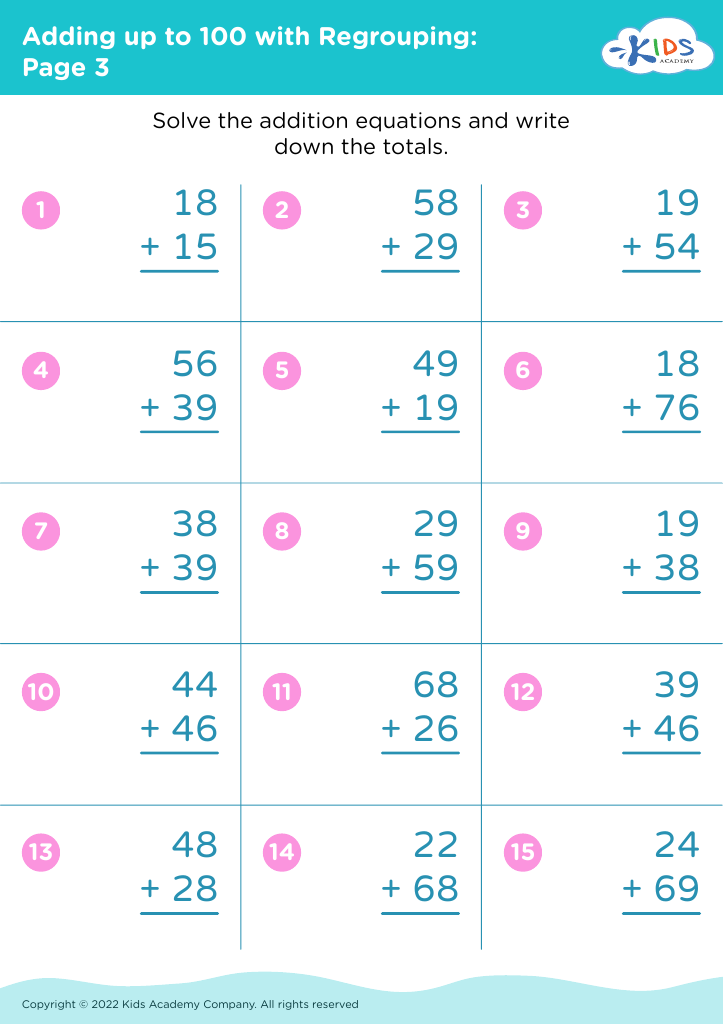
Adding up to 100 with Regrouping: Page 3
Worksheet
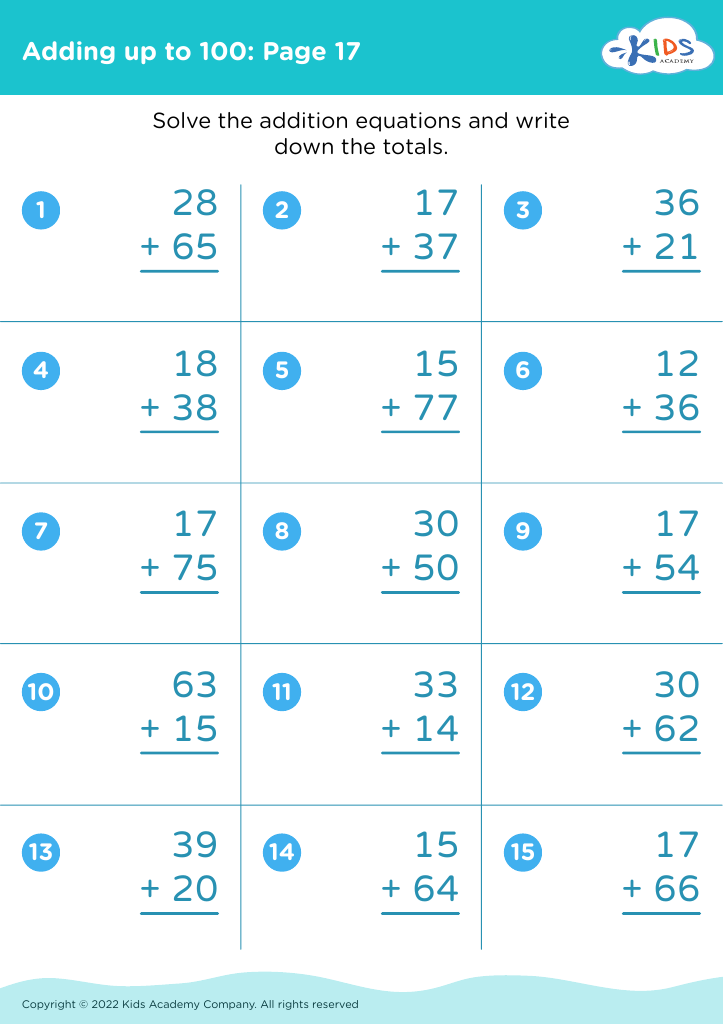
Adding up to 100: Page 17

Adding up to 100: Page 17

Adding up to 100: Page 17
Worksheet
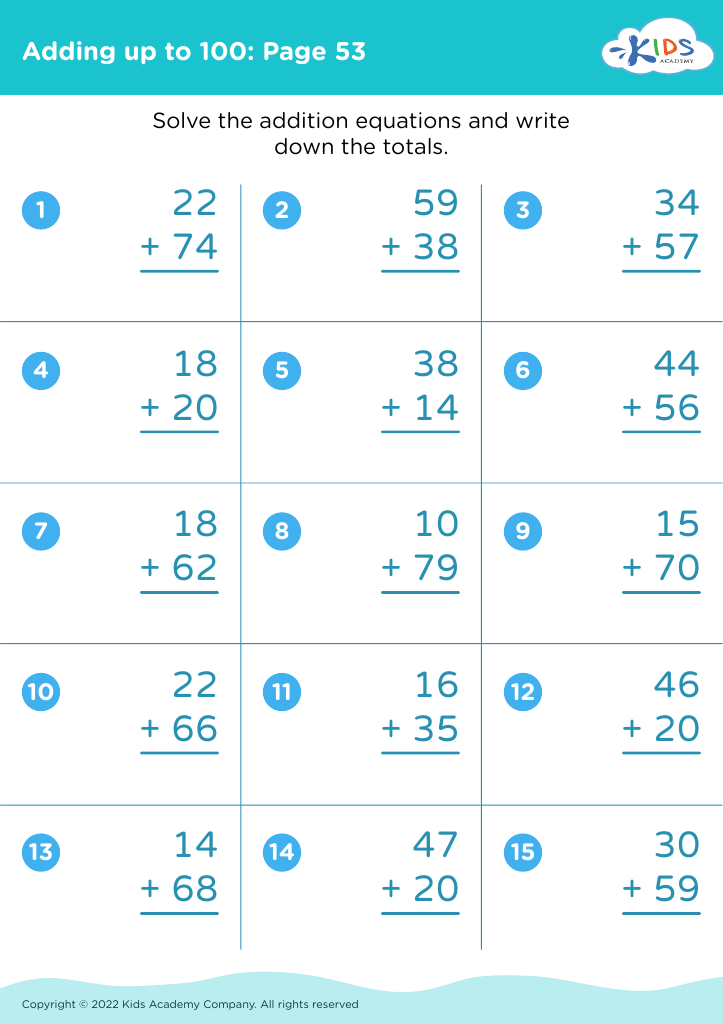
Adding up to 100: Page 53

Adding up to 100: Page 53

Adding up to 100: Page 53
Worksheet
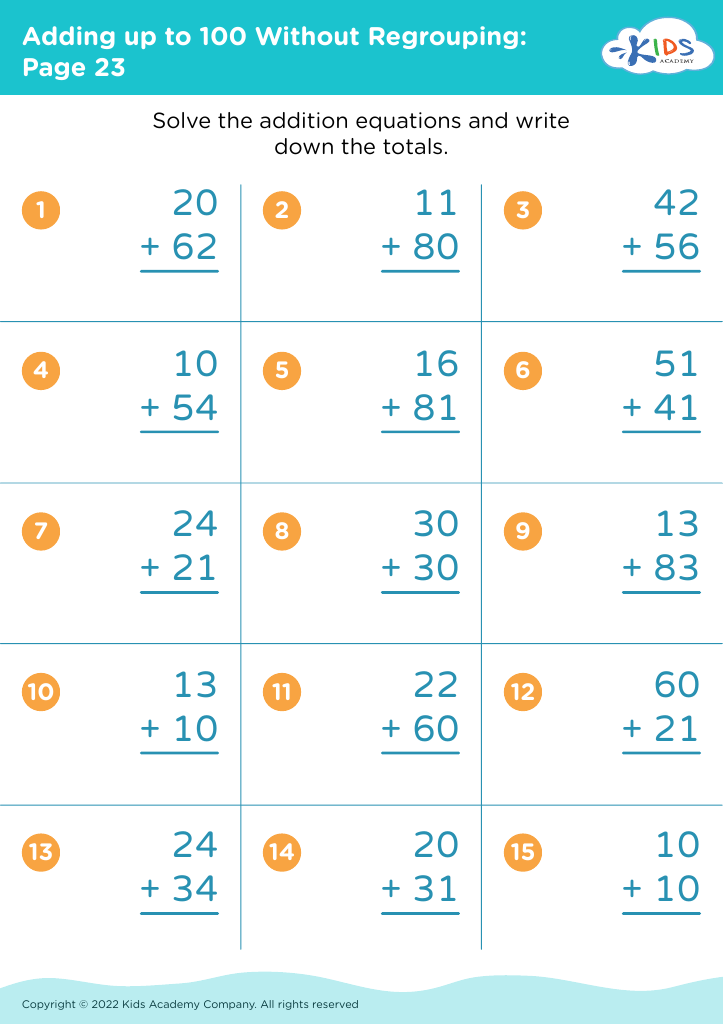
Adding up to 100 Without Regrouping: Page 23
Worksheet
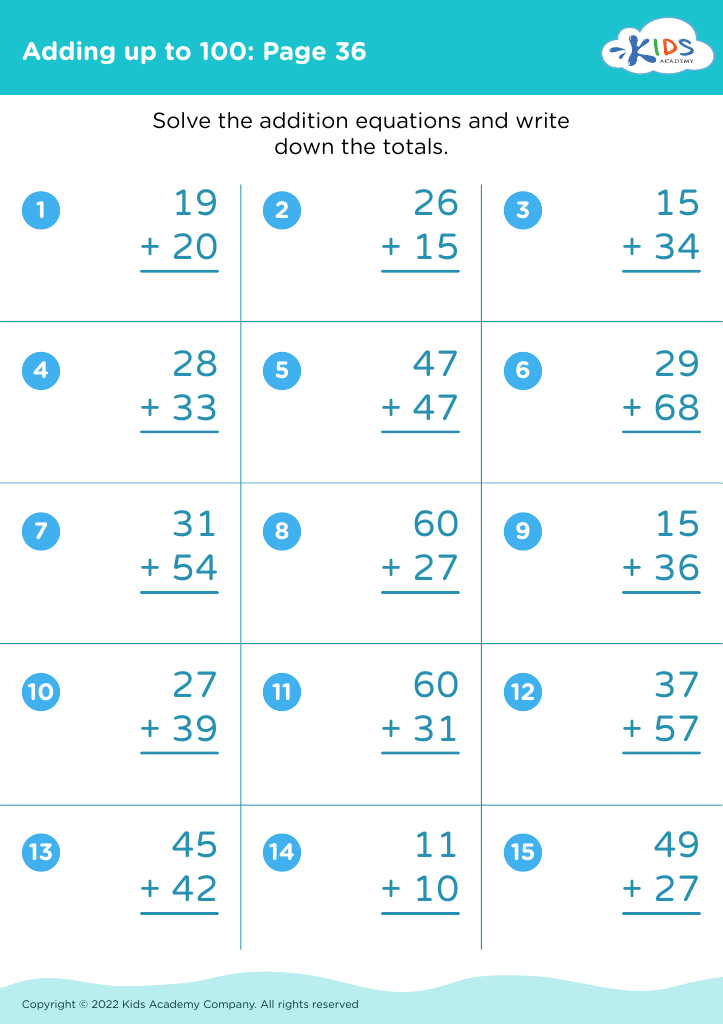
Adding up to 100: Page 36

Adding up to 100: Page 36

Adding up to 100: Page 36
Worksheet
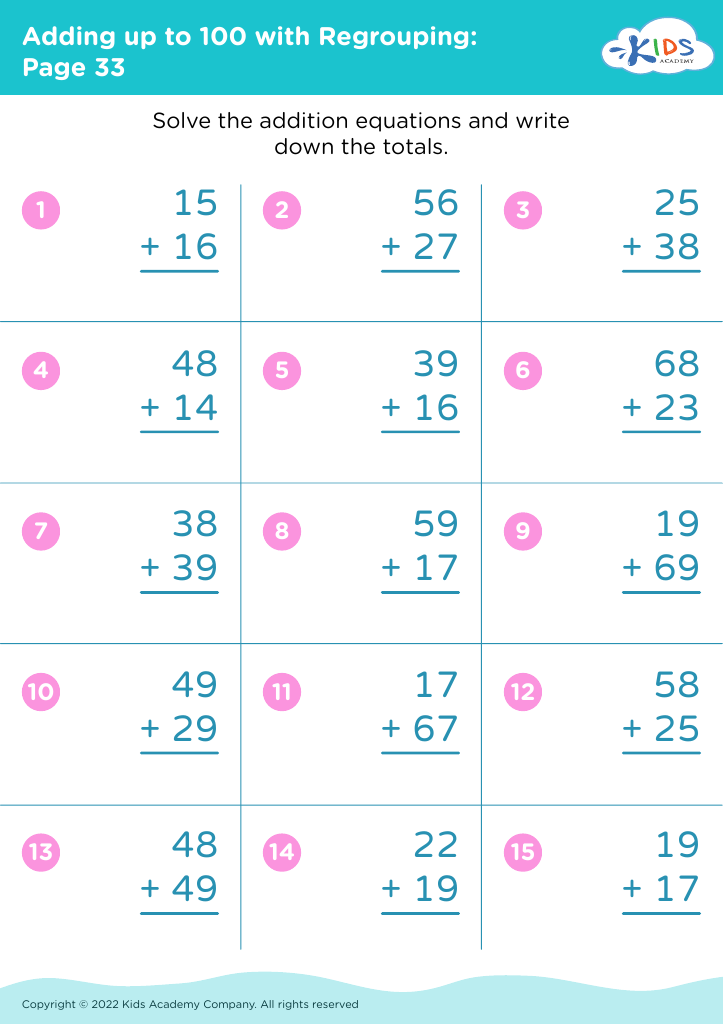
Adding up to 100 with Regrouping: Page 33
Worksheet


Teaching fraction simplification and addition up to 100 for ages 6-7 is crucial for several reasons. Firstly, it lays a fundamental groundwork for mathematical understanding. Children at this age are developing their cognitive skills, and grasping the concept of fractions enhances their ability to approach larger mathematical concepts, such as ratios and percentages, in the future.

Furthermore, mastering fractions helps children understand division and proportion, contributing to their overall numeracy skills. Simplifying fractions allows students to see relationships between numbers more clearly, fostering critical thinking and problem-solving abilities. Likewise, adding fractions cultivates a sense of accomplishment and confidence in handling numbers, encouraging them to engage further in mathematics.

From a parental and educational standpoint, strong foundational skills in mathematics correlate with better performance in future studies. Engaging children in activities that involve fractions—like cooking, which uses measurements—is not only practical but also enjoyable. It promotes real-world application, breaking down abstract concepts into tangible experiences. Moreover, these skills enhance their ability to work collaboratively with peers, which is essential for social development.

Ultimately, fostering an early interest in fraction simplification and addition sets the stage for a positive learning experience and a greater appreciation for mathematics in everyday life.