Identify shapes Adding up to 100 Worksheets for Ages 6-7
4 filtered results
-
From - To
Explore our "Identify Shapes Adding Up to 100 Worksheets" designed specifically for children aged 6-7. These engaging worksheets combine shape recognition with essential math skills, making learning both fun and educational. Your young learners will work on identifying various shapes, while simultaneously practicing their addition skills to reach sums of 100. Perfect for enhancing critical thinking, these activities reinforce geometric concepts and encourage problem-solving through creative exercises. Ideal for classroom use or at-home learning, our resources help develop foundational math and geometry skills in an interactive way. Download your worksheets today and watch your child's confidence soar in both math and shape identification!
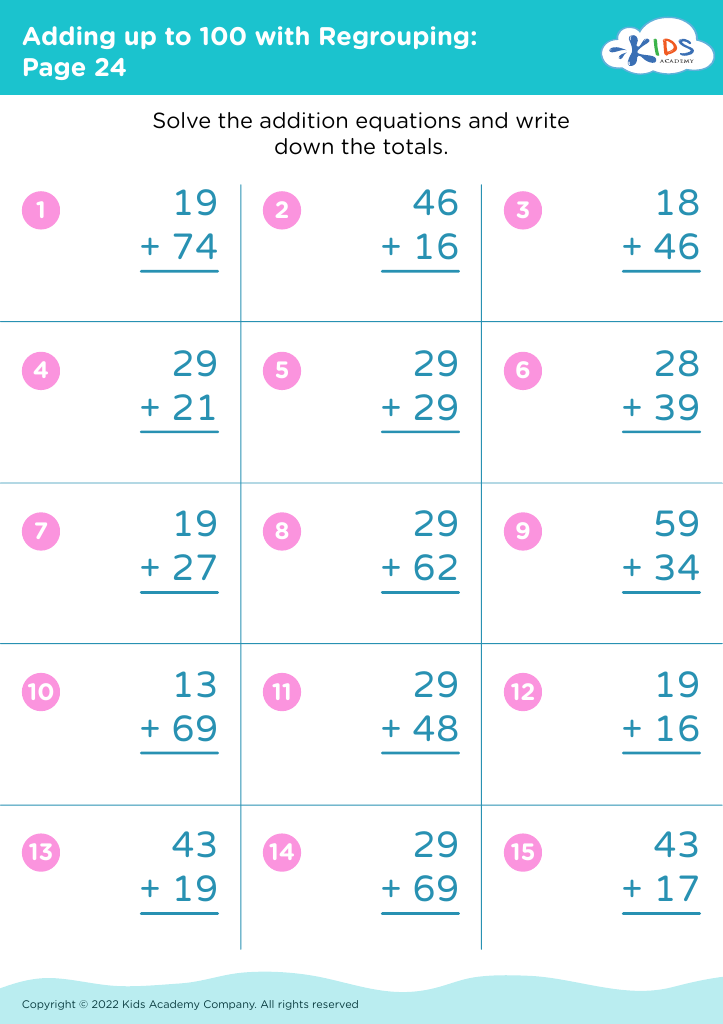
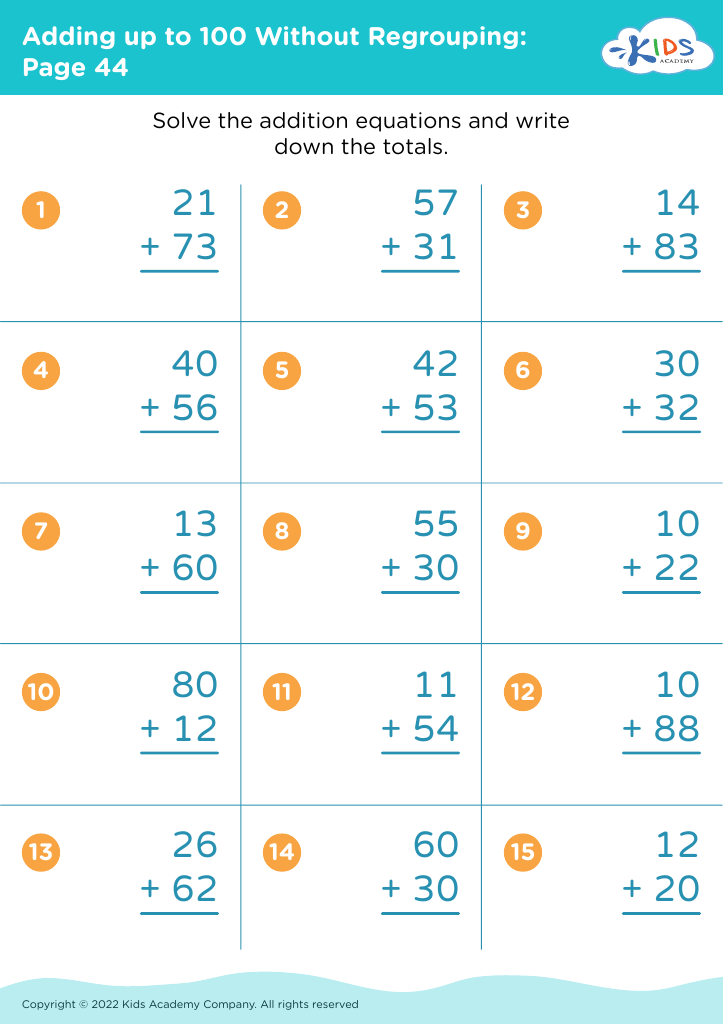
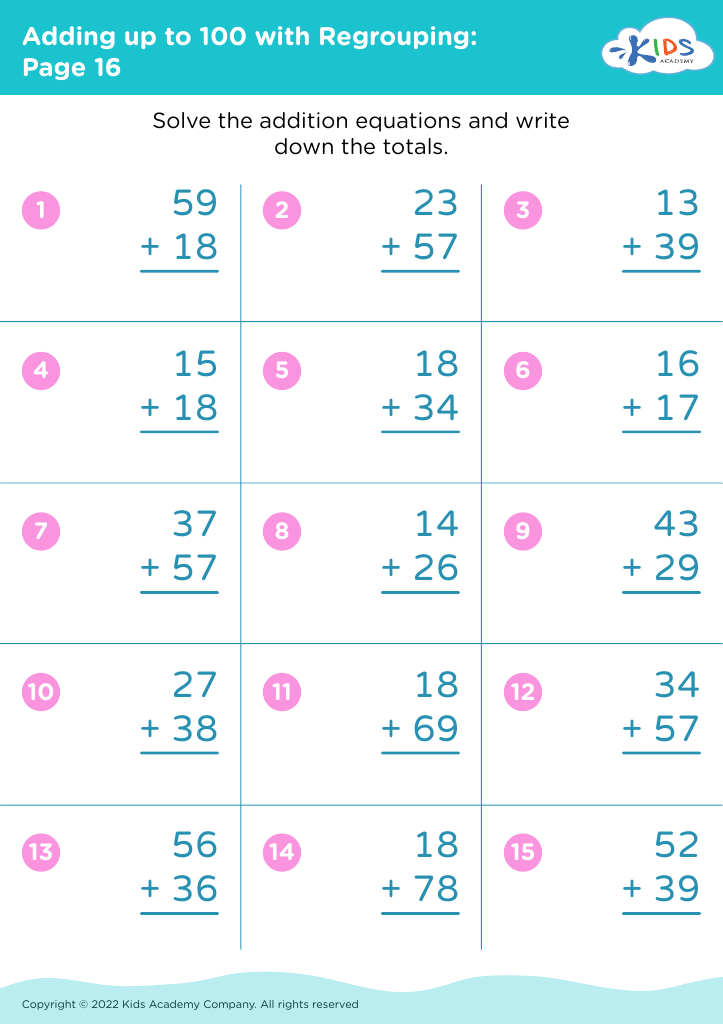
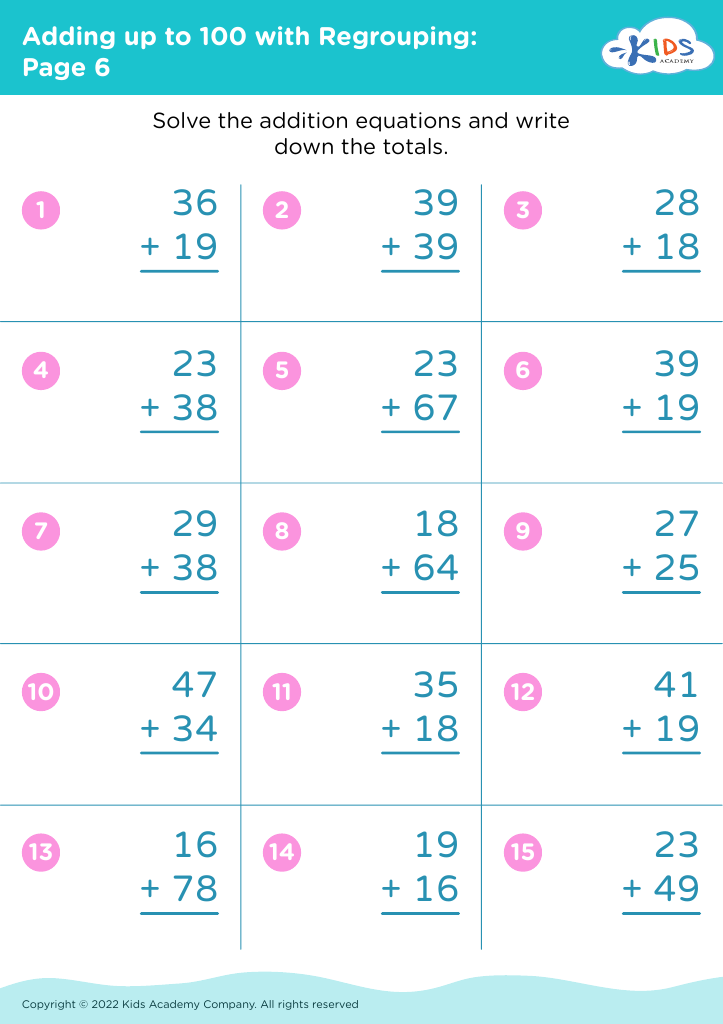


%20(1).jpg)




Identifying shapes and understanding how to add up to 100 are essential skills for children ages 6-7, and both should be prioritized by parents and teachers. First, recognizing shapes fosters spatial awareness and improves problem-solving abilities. It helps children make connections between different geometric concepts, which is crucial for future math learning, science understanding, and everyday life applications, such as recognizing patterns and understanding the environment around them.
Similarly, mastering addition and the concept of reaching the total of 100 enhances numerical fluency. At this age, children develop foundational math skills that will serve them throughout their educational journey. When children practice adding up to 100, it encourages them to explore numbers, develop mental math skills, and gain confidence in their abilities.
Both shape identification and addition build critical thinking skills necessary for more complex mathematics in later grades. Moreover, these skills are interconnected; understanding geometric parameters can help in visualizing problems involving numbers. By emphasizing these concepts, parents and teachers empower young learners, promote cognitive development, and lay a robust foundation for academic success and real-life problem-solving. Together, they can create a stimulating environment where children develop curiosity and enthusiasm for learning.








