Improving math skills Adding up to 100 Worksheets for Ages 6-7
5 filtered results
-
From - To
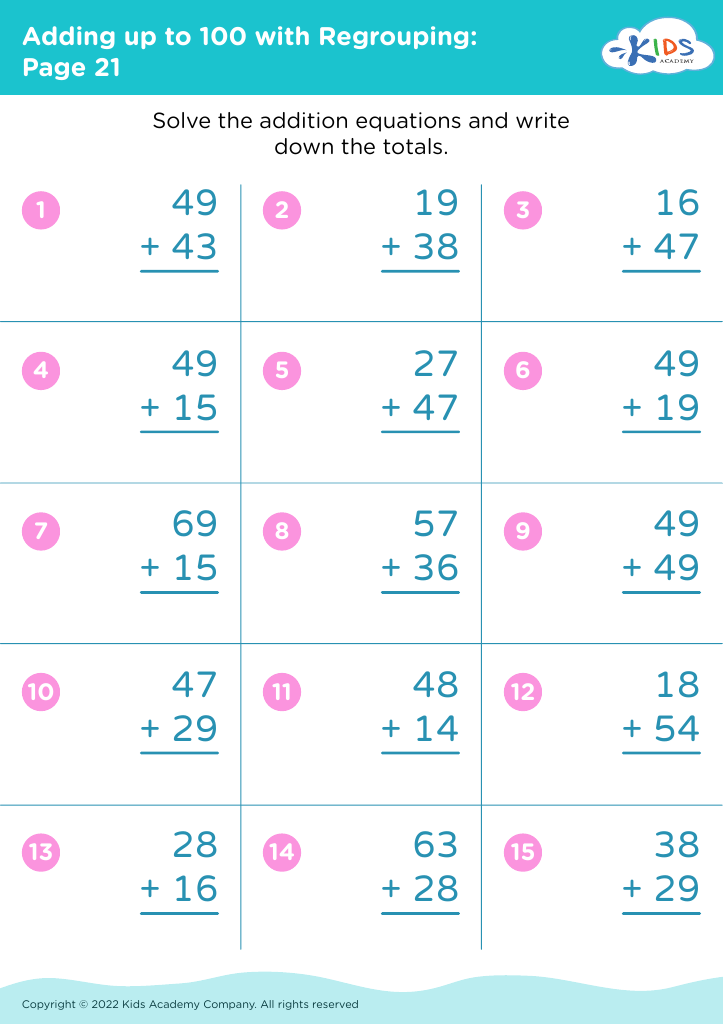
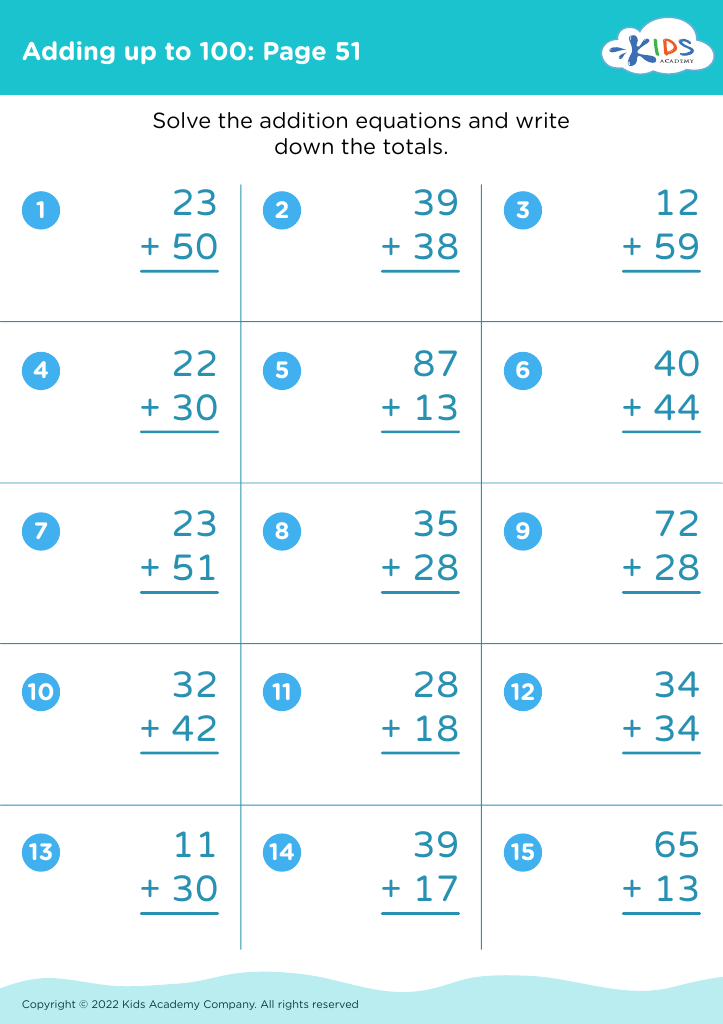
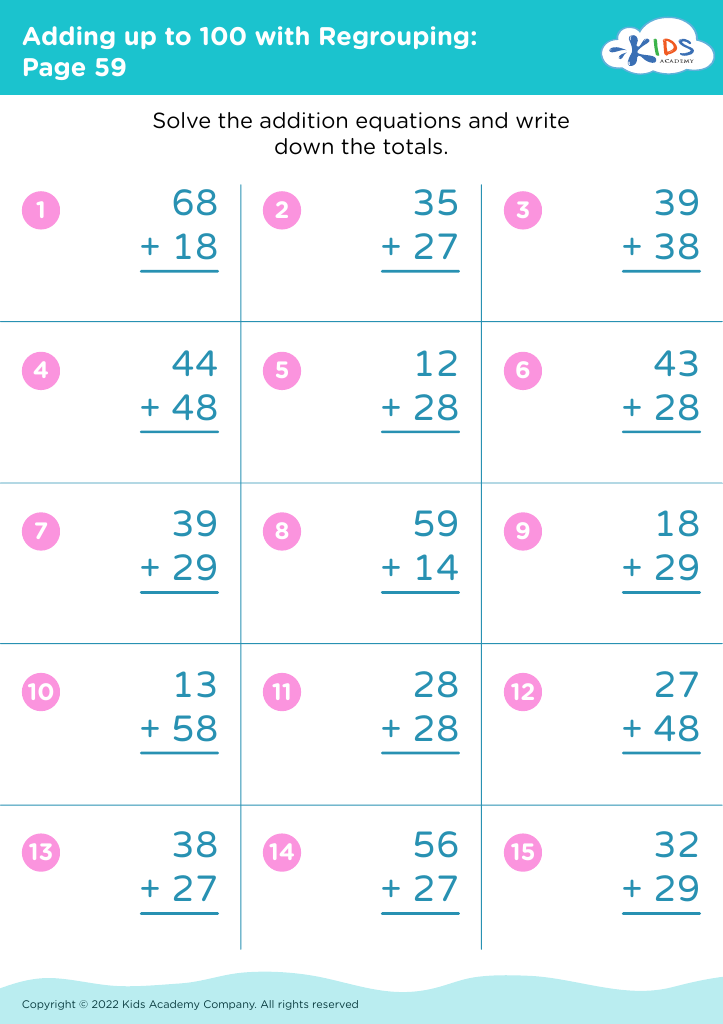
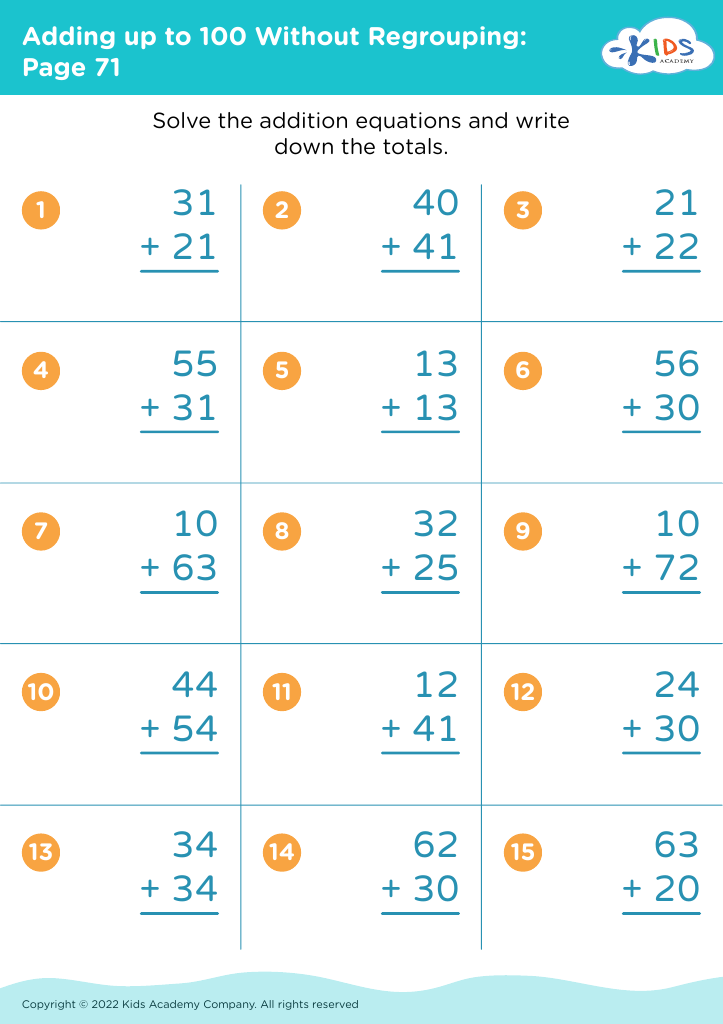
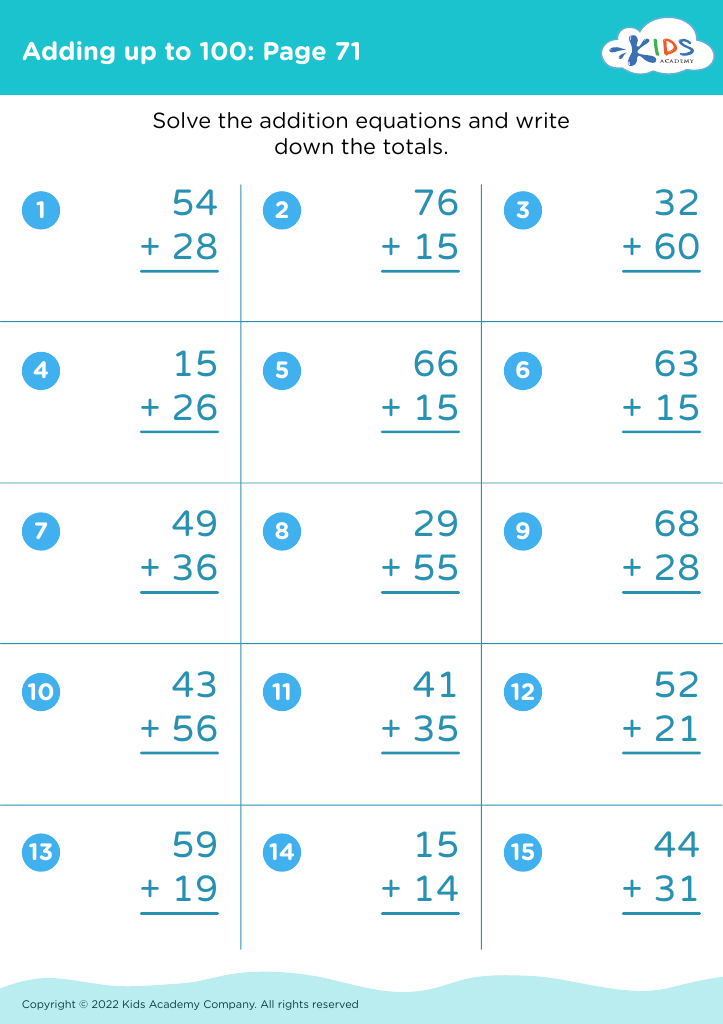
Enhance your child's math proficiency with our "Adding Up to 100 Worksheets" designed specifically for ages 6-7. These engaging resources provide a colorful and interactive approach to mastering addition, empowering young learners to boost their numerical skills and confidence. Each worksheet features a variety of exercises, from simple sums to fun math games, all aimed at reinforcing essential concepts. Ideal for both classroom and home settings, these worksheets promote independent learning, fostering critical thinking while ensuring a solid understanding of addition up to 100. Unlock your child's potential and make math enjoyable with our thoughtfully crafted materials today!




%20(1).jpg)


Improving math skills, especially the ability to add up to 100, is crucial for children aged 6 to 7 for several reasons. First, mastering addition is foundational for all future math concepts. Early proficiency builds confidence and a positive attitude towards mathematics, enabling students to tackle more complex problems as they progress in their education.
Furthermore, adding up to 100 reinforces critical thinking that goes beyond mere calculation. It allows young learners to explore number relationships and understand the importance of place value, which are key concepts in arithmetic. Engaging in activities that promote these skills can foster a love for math, making it a fun and rewarding subject rather than a daunting one.
Additionally, strong math skills are essential for real-life applications. Basic arithmetic is used in everyday situations, from budgeting allowance money to understanding time and measurements. By nurturing these skills early, parents and teachers equip children with the tools they need for academic success and everyday problem-solving. Ultimately, taking an active interest in enhancing math skills prepares children not just for assessments, but for lifelong learning and confidence in their ability to tackle challenges.








