Simplifying Fractions Adding up to 100 Worksheets for Ages 6-7
3 filtered results
-
From - To
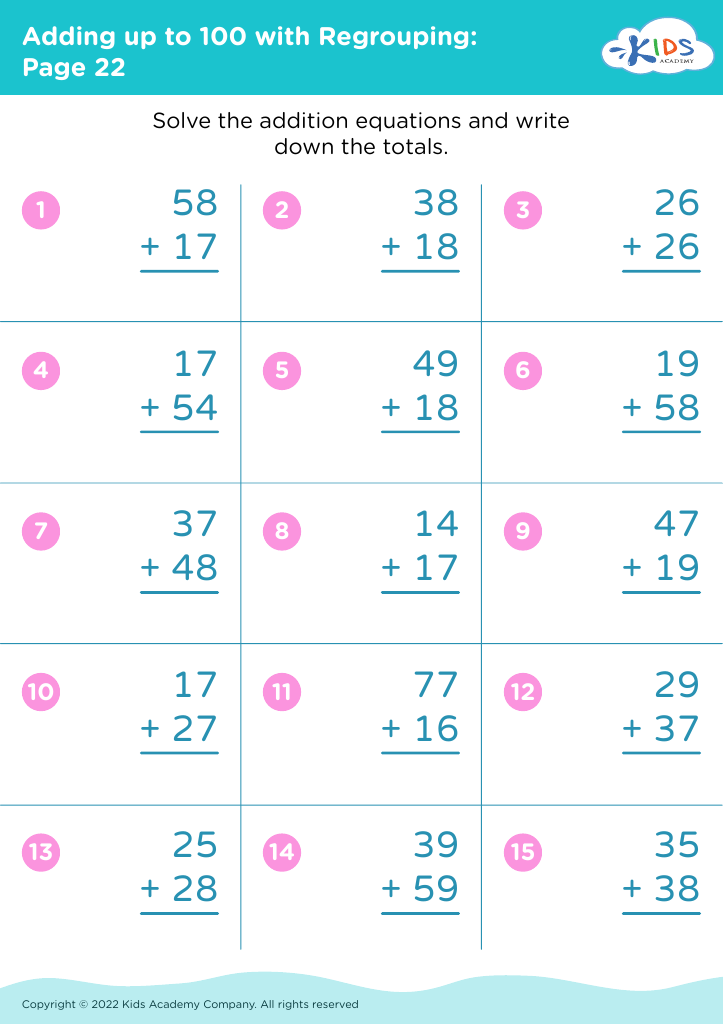
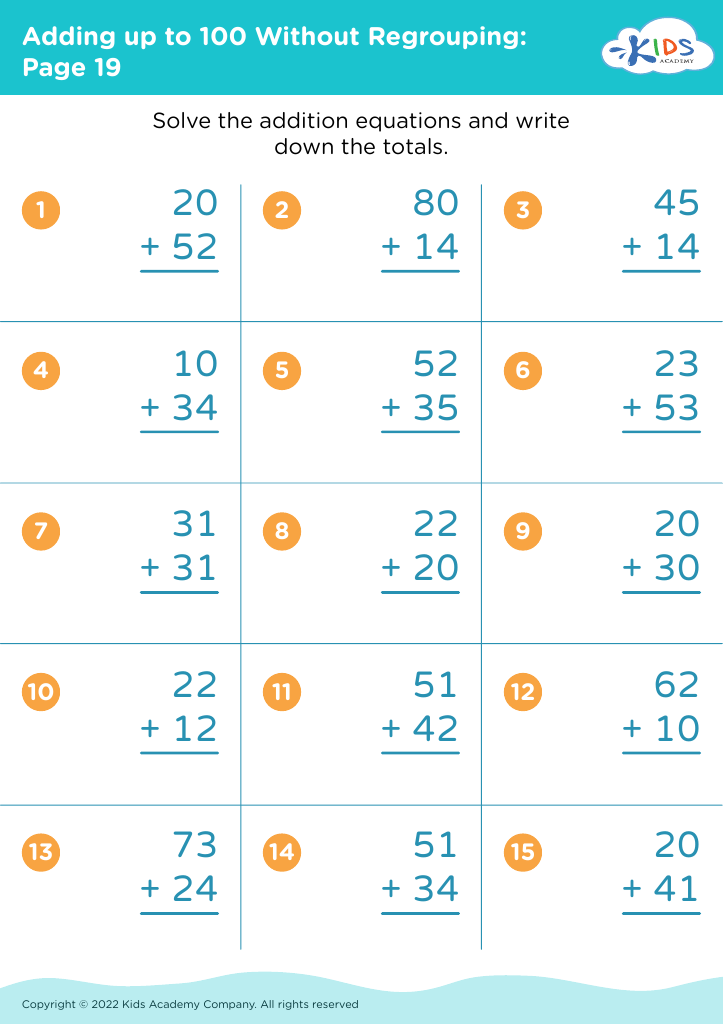
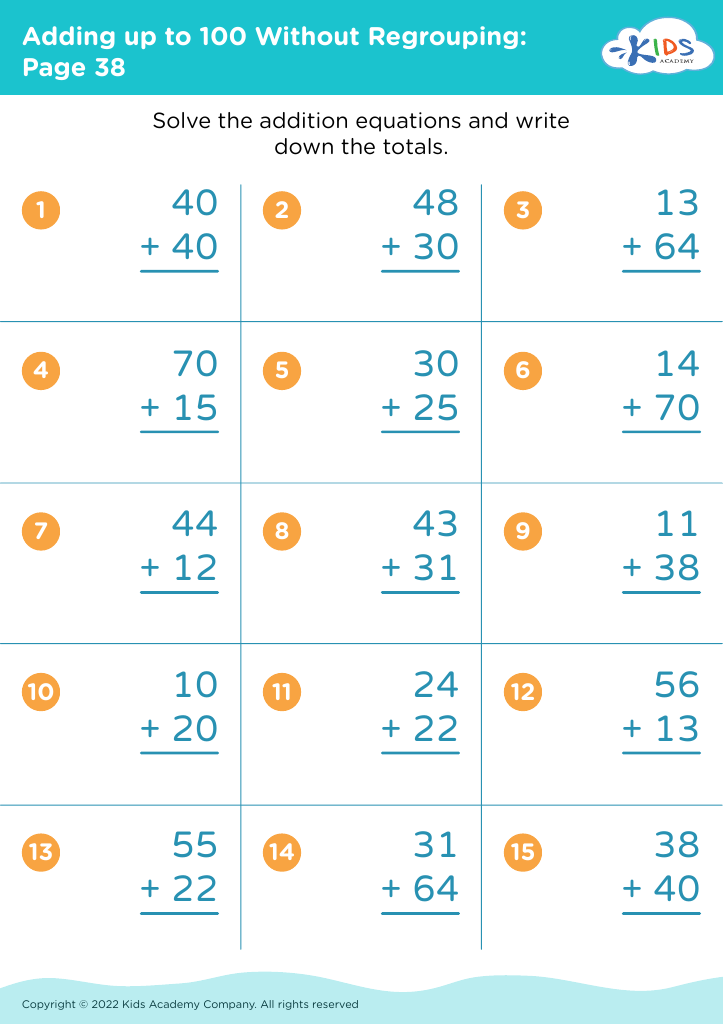
Welcome to our collection of "Simplifying Fractions Adding up to 100 Worksheets" designed specifically for children ages 6-7! These engaging worksheets provide a fun and interactive way for young learners to grasp the concept of simplifying fractions while enhancing their math skills. Utilizing colorful graphics and grade-appropriate challenges, these resources aim to make learning fractions enjoyable and effective. With problems tailored to the level of 6-7-year-olds, students will build confidence as they work towards refining their mathematical abilities. Perfect for in-class activities or at-home practice, our worksheets are a great way to introduce the exciting world of fractions!




%20(1).jpg)


Simplifying fractions that add up to 100 is an essential concept for young learners aged 6-7 as it lays the foundation for understanding basic arithmetic and fractions. At this age, children are beginning to make sense of numbers and their relationships. By learning to simplify fractions, they not only grasp the concept of equivalence but also enhance their problem-solving skills.
Engaging with fractions that add to 100 helps children visualize parts of a whole, an important skill for future mathematical concepts. For example, when fractions are simplified, they learn how to recognize patterns and make connections between numbers. This understanding can translate into improved confidence in mathematics, making students more willing to tackle challenging problems.
Moreover, this concept has real-world applications that are easily relatable for children. Understanding fractions can facilitate everyday tasks like sharing food or dividing items, reinforcing the importance of communication and cooperation with peers. Parents and teachers play a crucial role in guiding them through this learning process, creating a supportive environment that encourages exploration and inquiry. By investing in these foundational skills, we are equipping students with tools to navigate more complex math as they continue their educational journey.








