Filters

51 filtered results

Clear all filters
Favorites
With answer key
Interactive

51 filtered results

Difficulty Level

Grade


Check out this FREE Trial Lesson on Adding up to 100 for age 6-7!

My Family

Favorites
With answer key
Interactive
  • 6-7
  • Understanding fractions
  • Adding up to 100
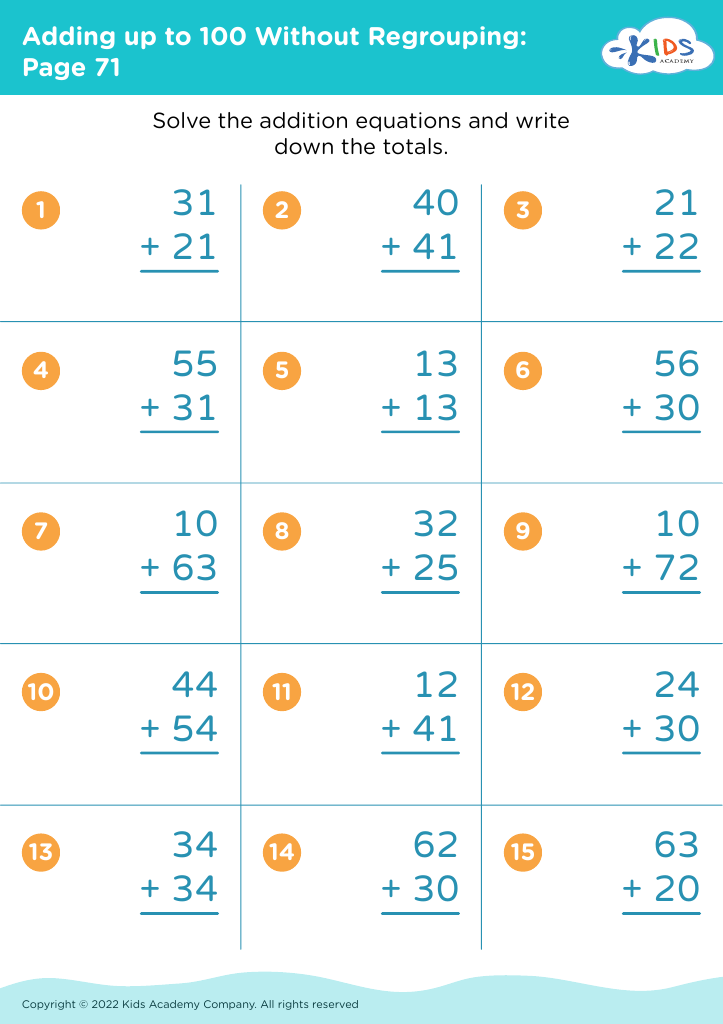
Adding up to 100 Without Regrouping: Page 71
Worksheet
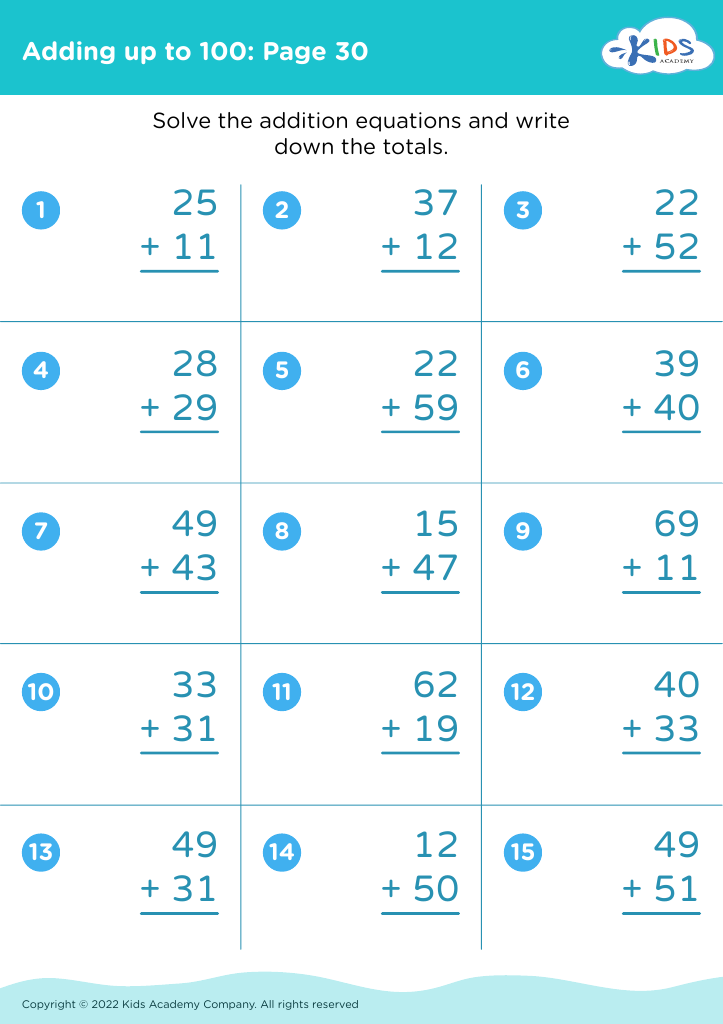
Adding up to 100: Page 30

Adding up to 100: Page 30

Adding up to 100: Page 30
Worksheet
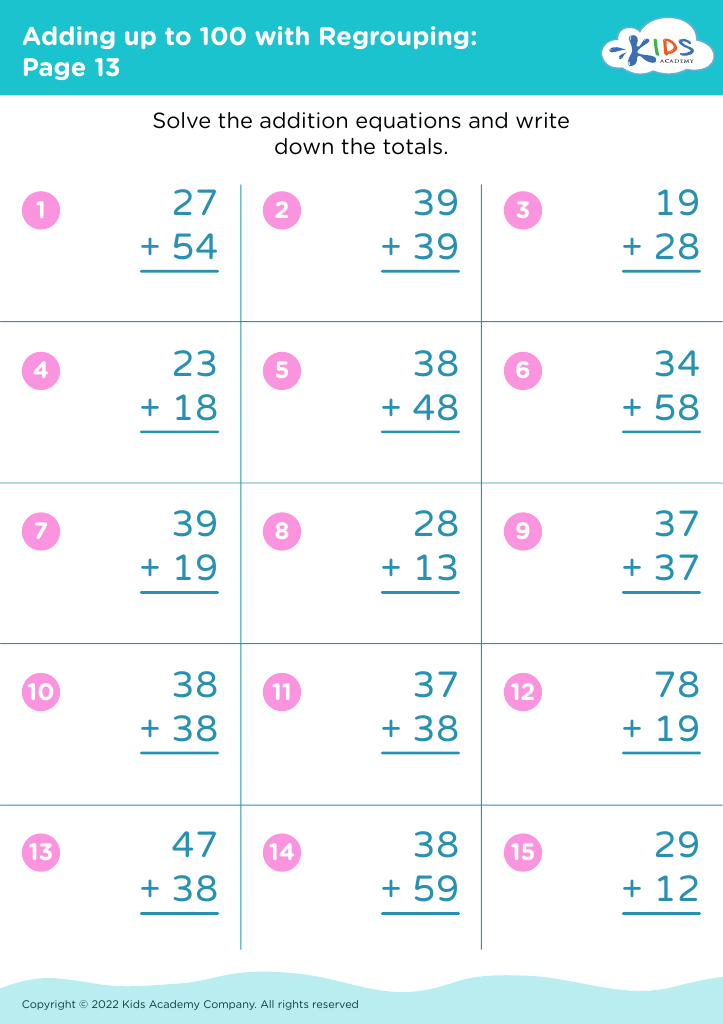
Adding up to 100 with Regrouping: Page 13
Worksheet
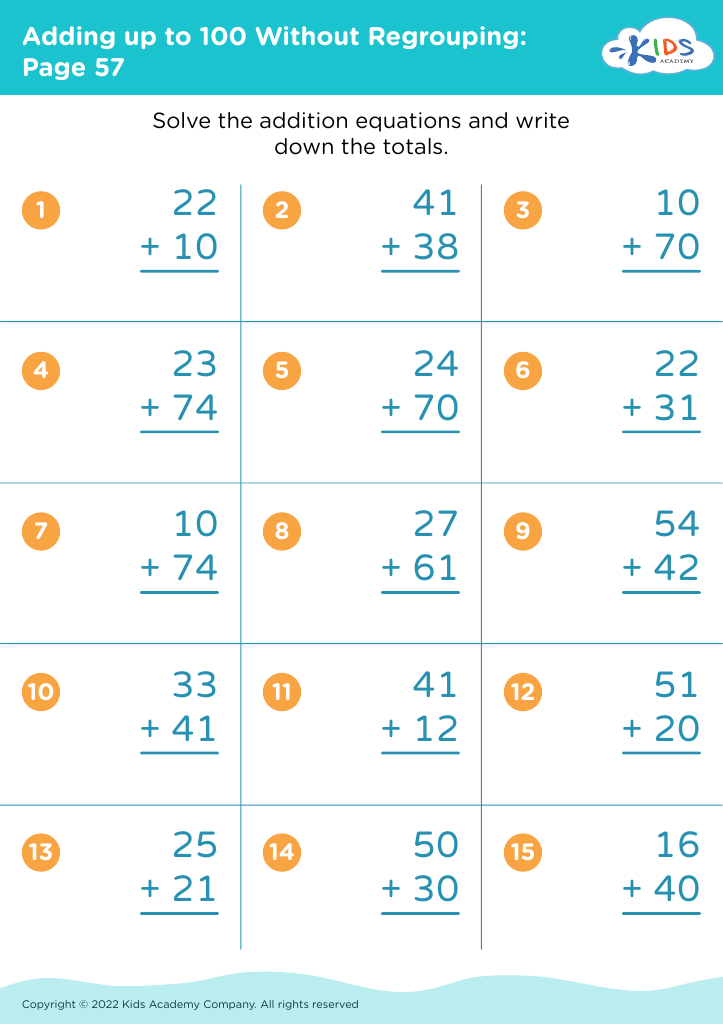
Adding up to 100 Without Regrouping: Page 57
Worksheet
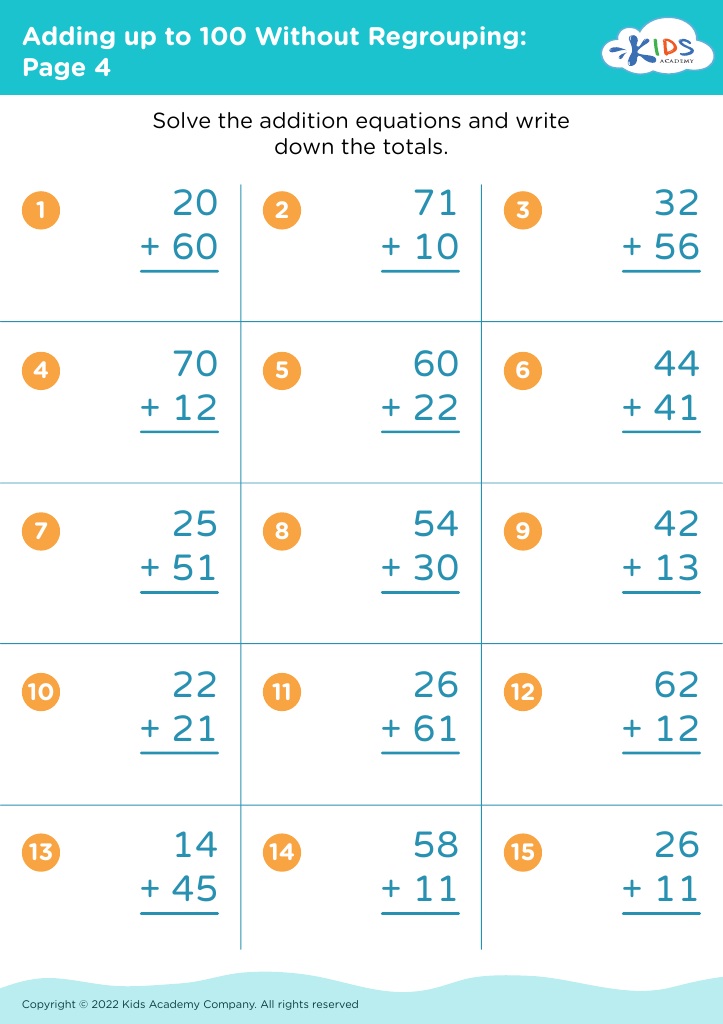
Adding up to 100 Without Regrouping: Page 4
Worksheet
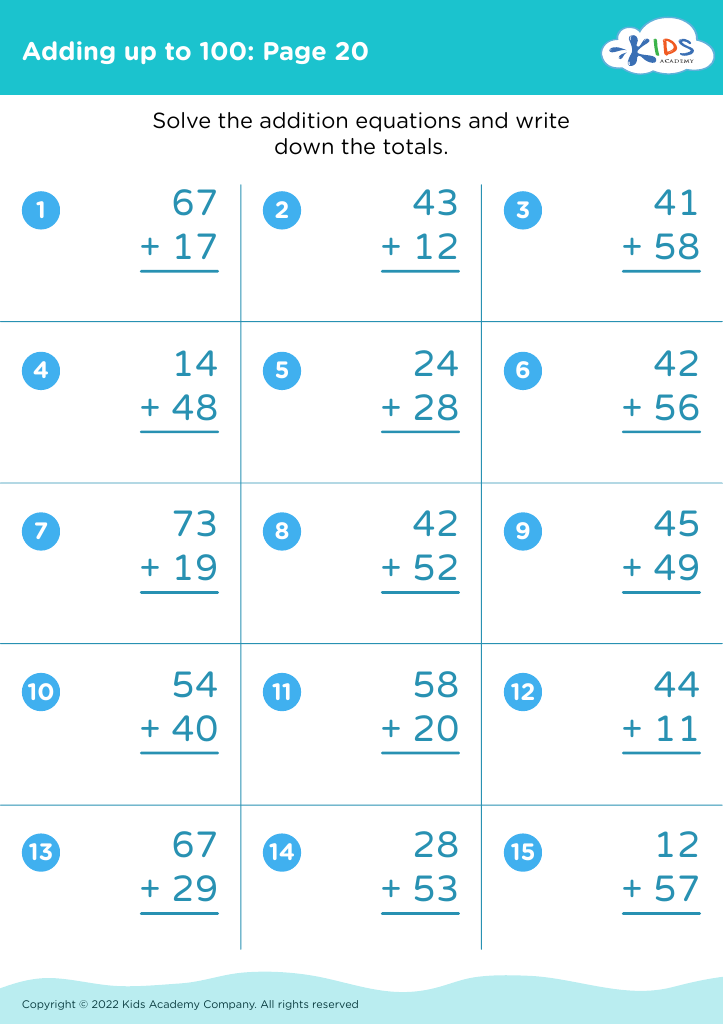
Adding up to 100: Page 20

Adding up to 100: Page 20

Adding up to 100: Page 20
Worksheet
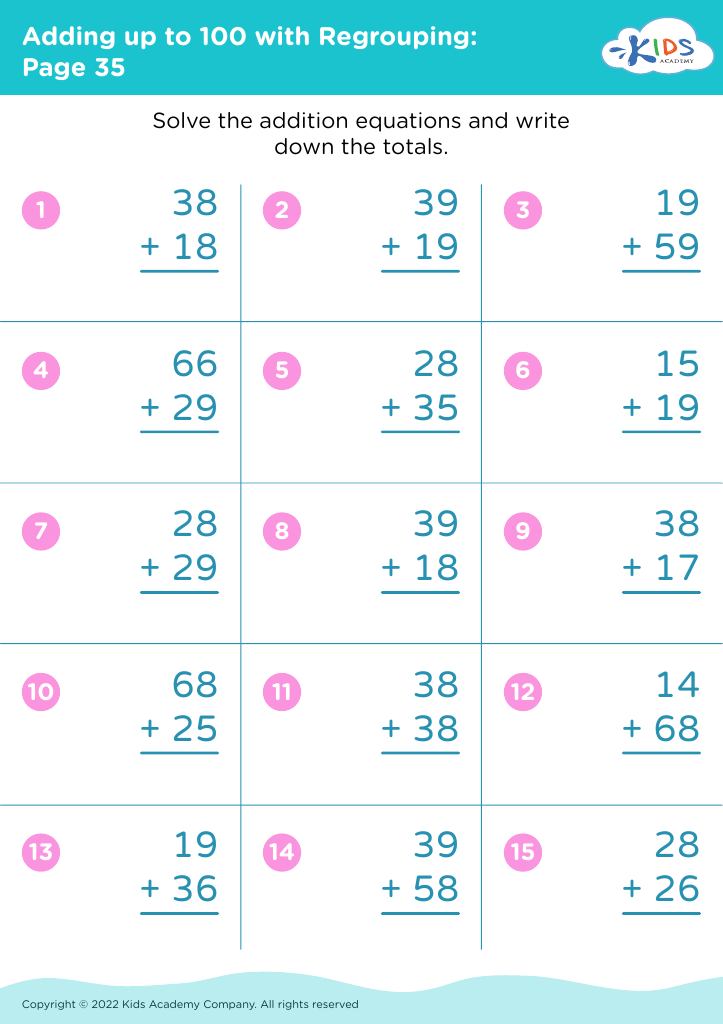
Adding up to 100 with Regrouping: Page 35
Worksheet
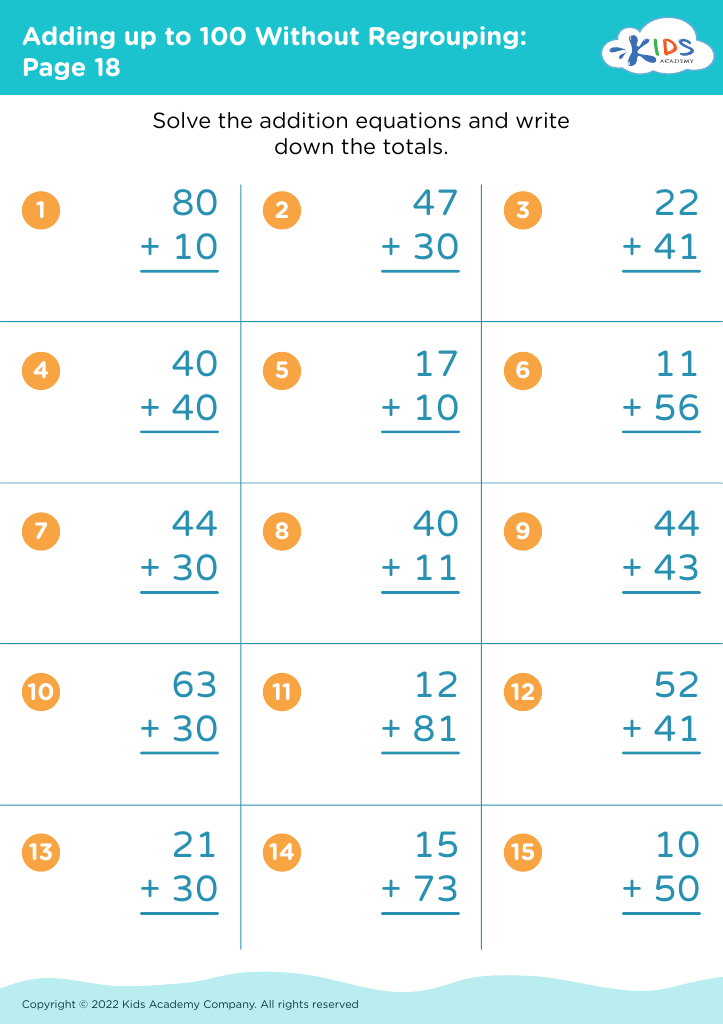
Adding up to 100 Without Regrouping: Page 18
Worksheet
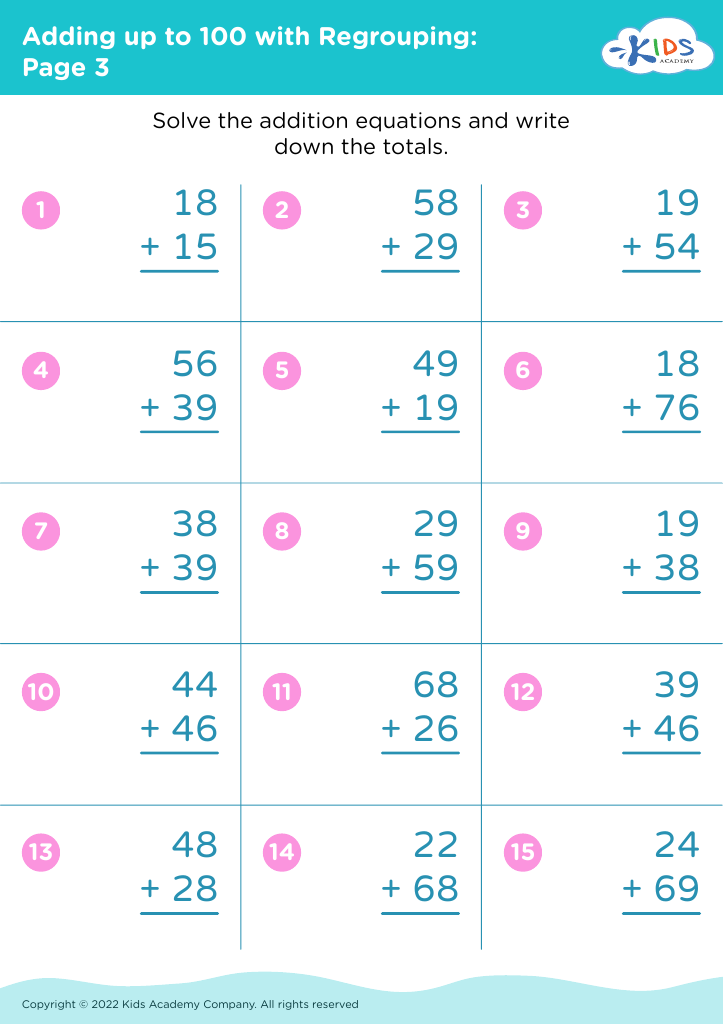
Adding up to 100 with Regrouping: Page 3
Worksheet
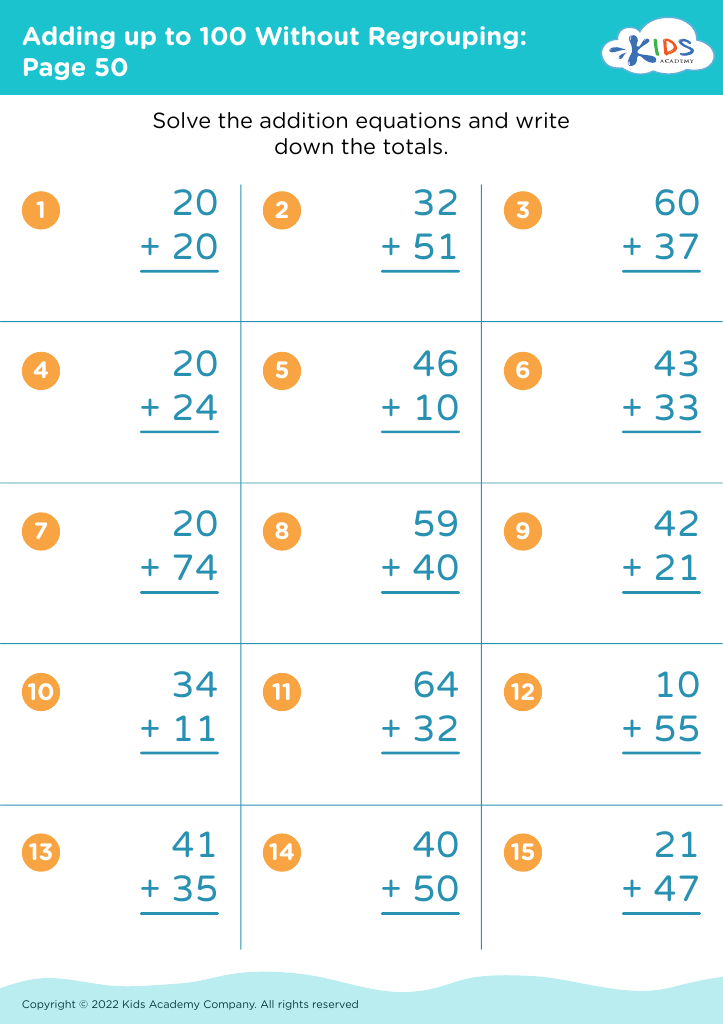
Adding up to 100 Without Regrouping: Page 50
Worksheet
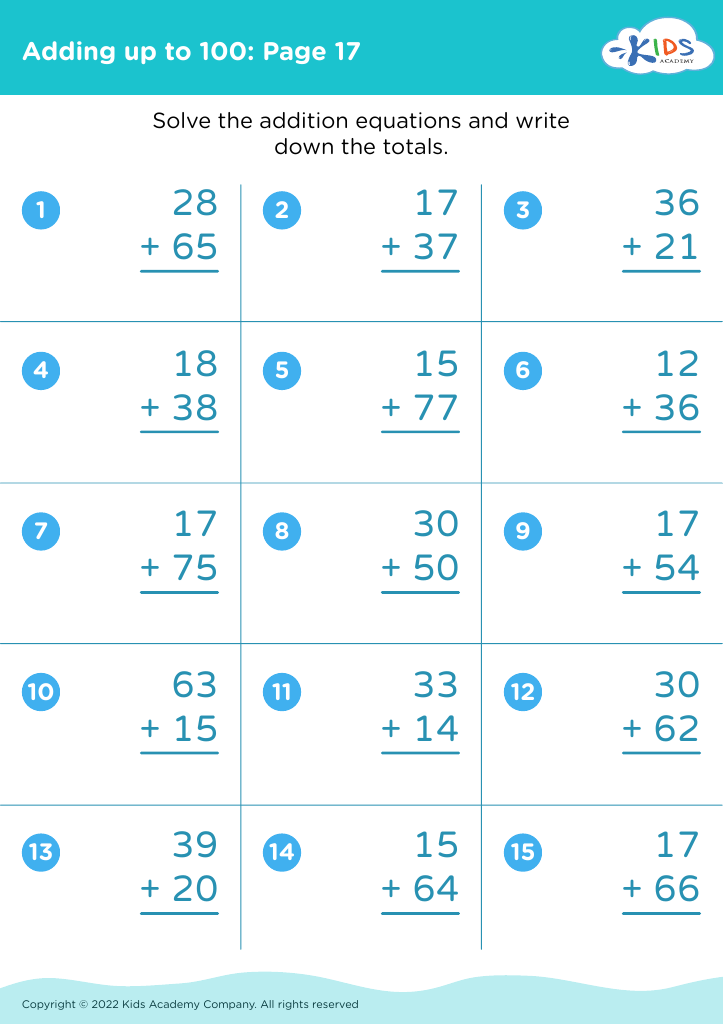
Adding up to 100: Page 17

Adding up to 100: Page 17

Adding up to 100: Page 17
Worksheet
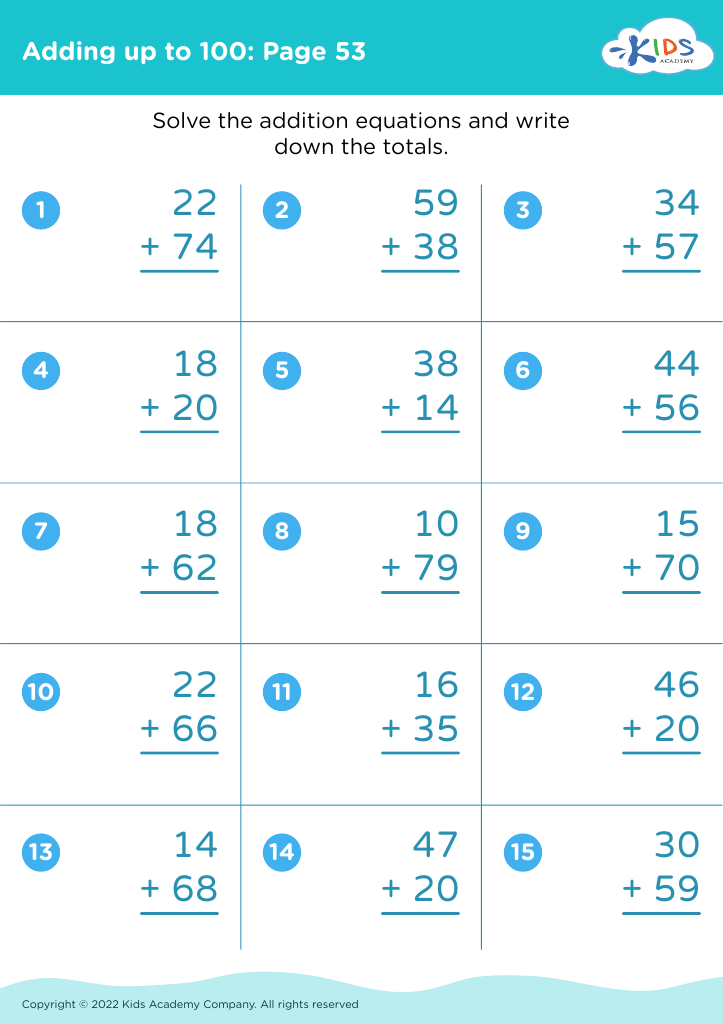
Adding up to 100: Page 53

Adding up to 100: Page 53

Adding up to 100: Page 53
Worksheet
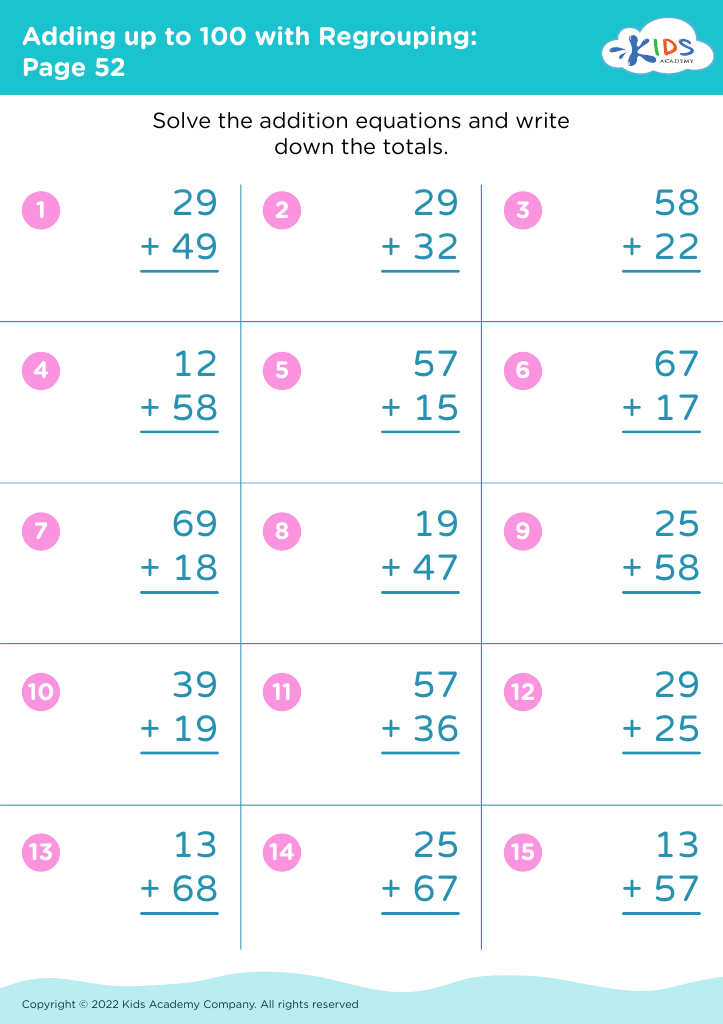
Adding up to 100 with Regrouping: Page 52
Worksheet
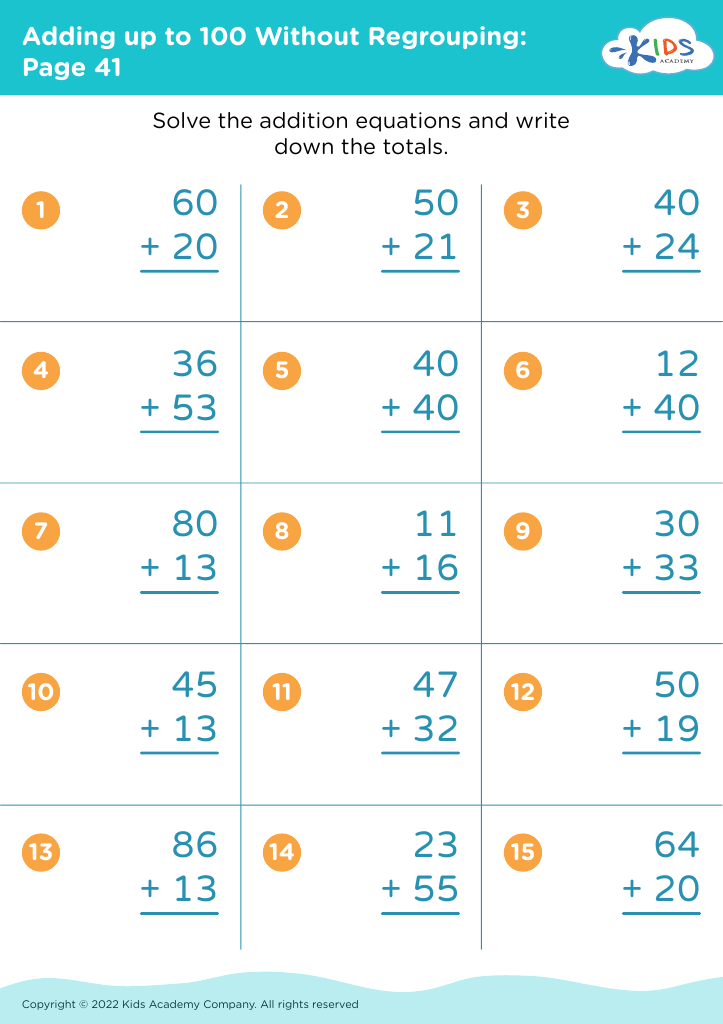
Adding up to 100 Without Regrouping: Page 41
Worksheet
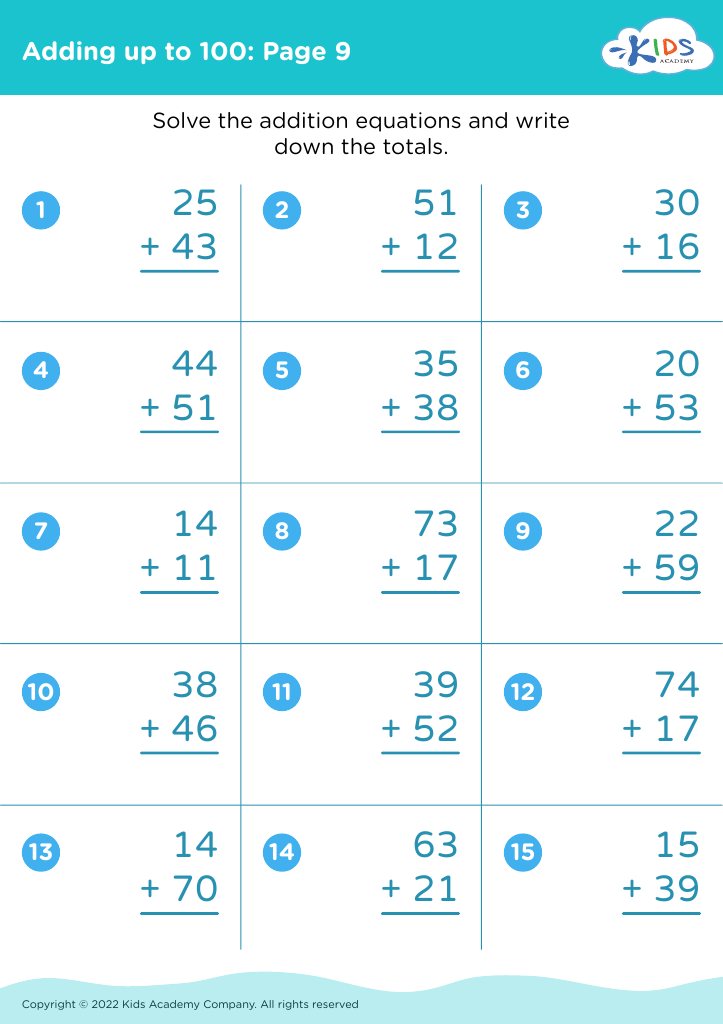
Adding up to 100: Page 9

Adding up to 100: Page 9

Adding up to 100: Page 9
Worksheet
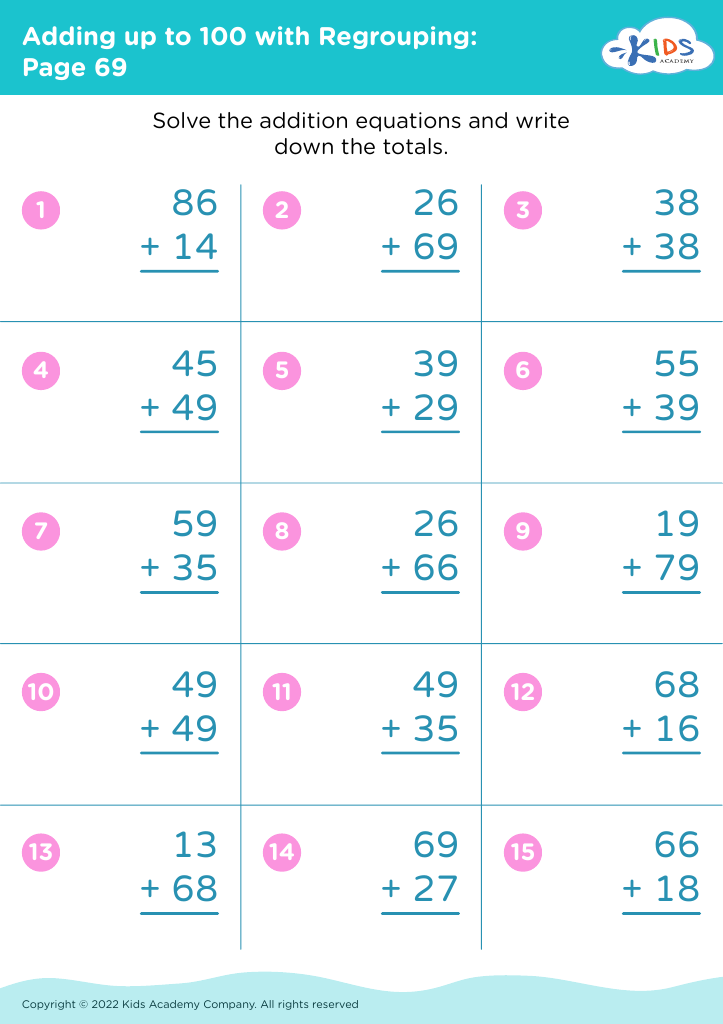
Adding up to 100 with Regrouping: Page 69
Worksheet
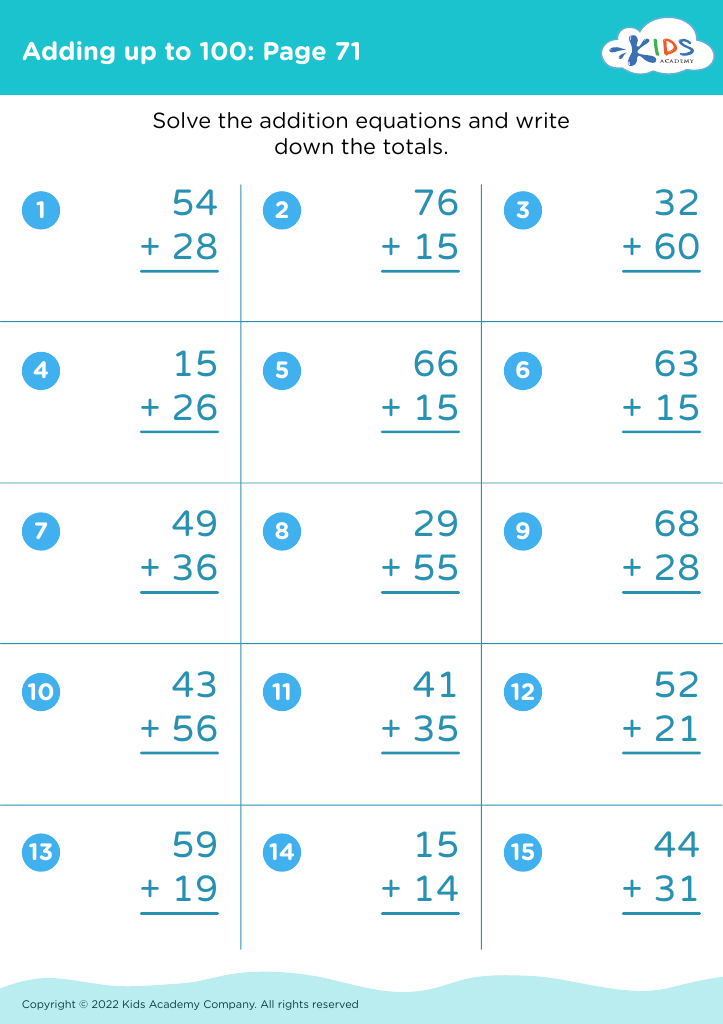
Adding up to 100: Page 71

Adding up to 100: Page 71

Adding up to 100: Page 71
Worksheet
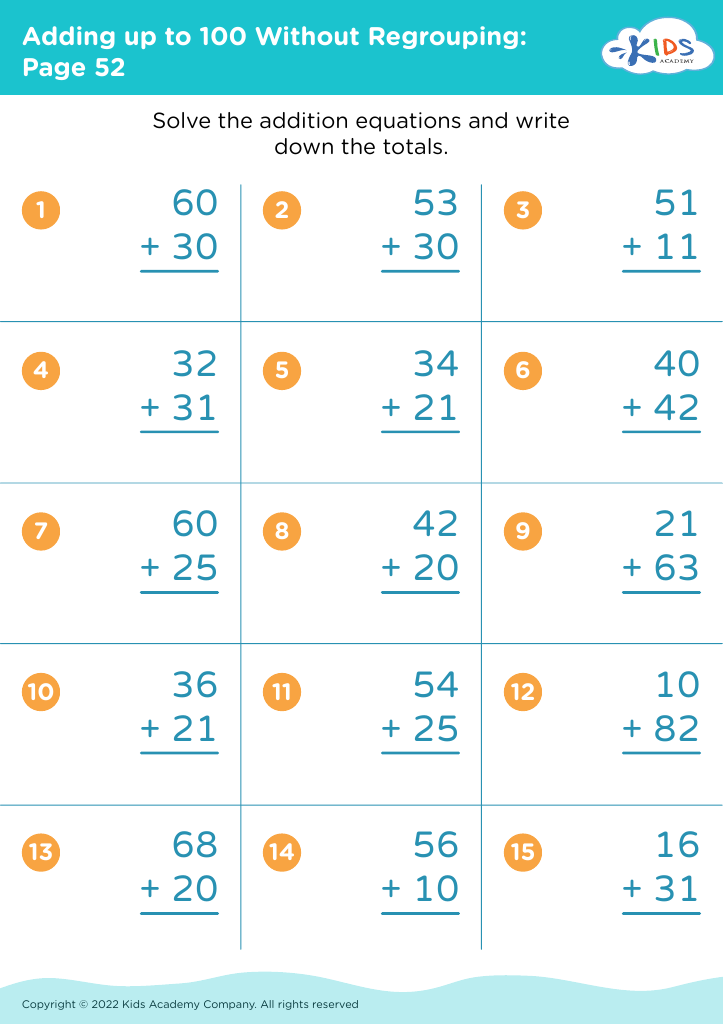
Adding up to 100 Without Regrouping: Page 52
Worksheet
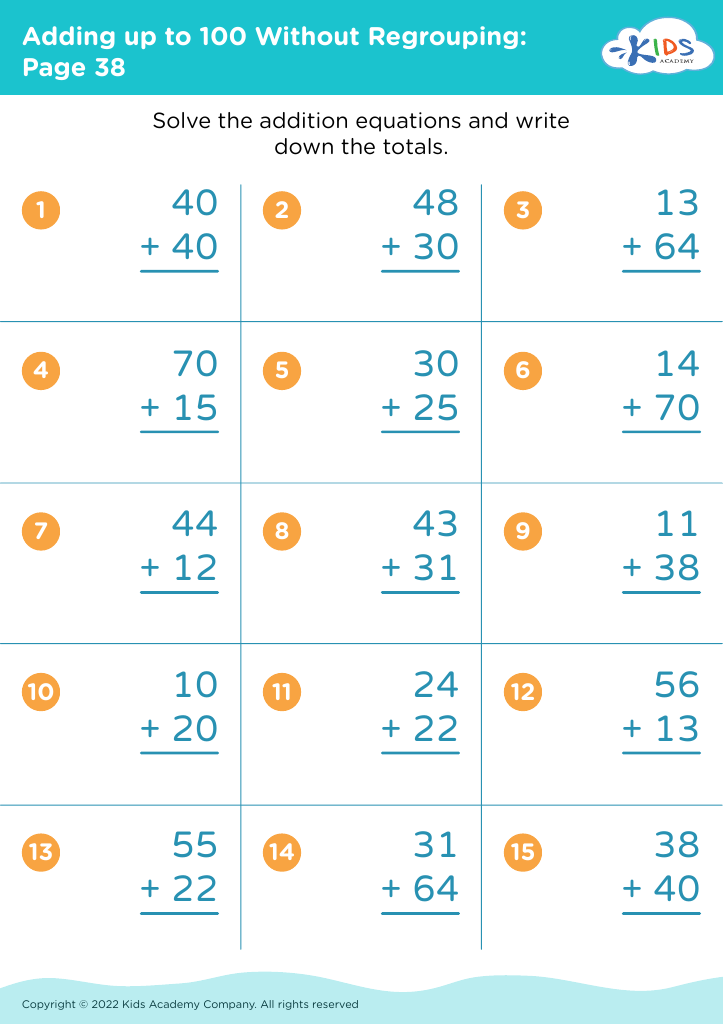
Adding up to 100 Without Regrouping: Page 38
Worksheet
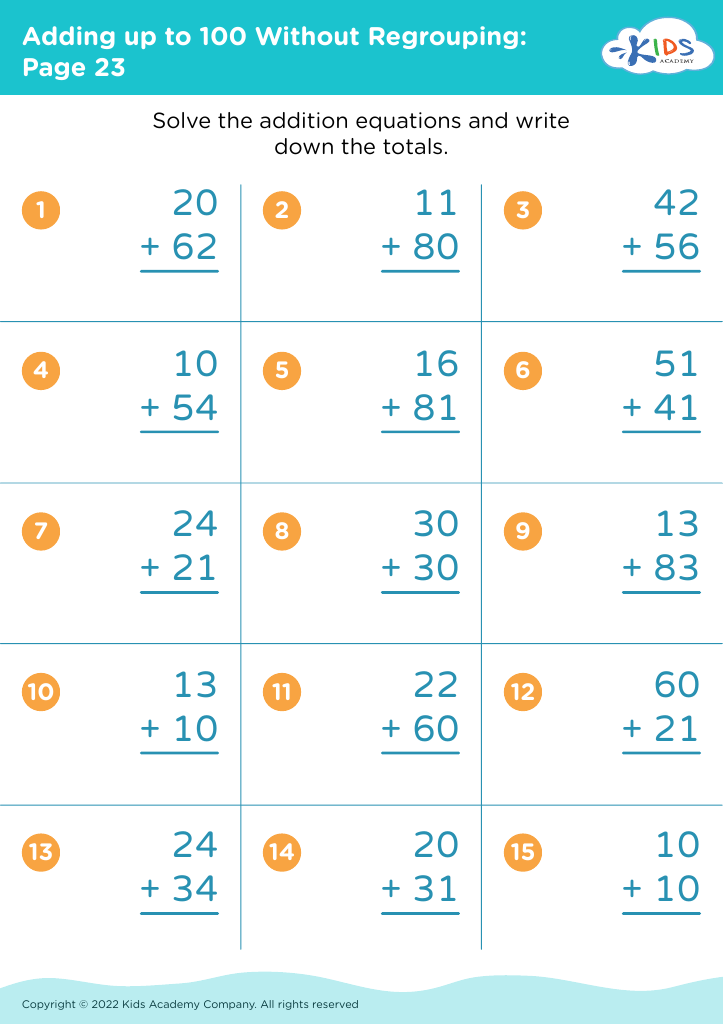
Adding up to 100 Without Regrouping: Page 23
Worksheet
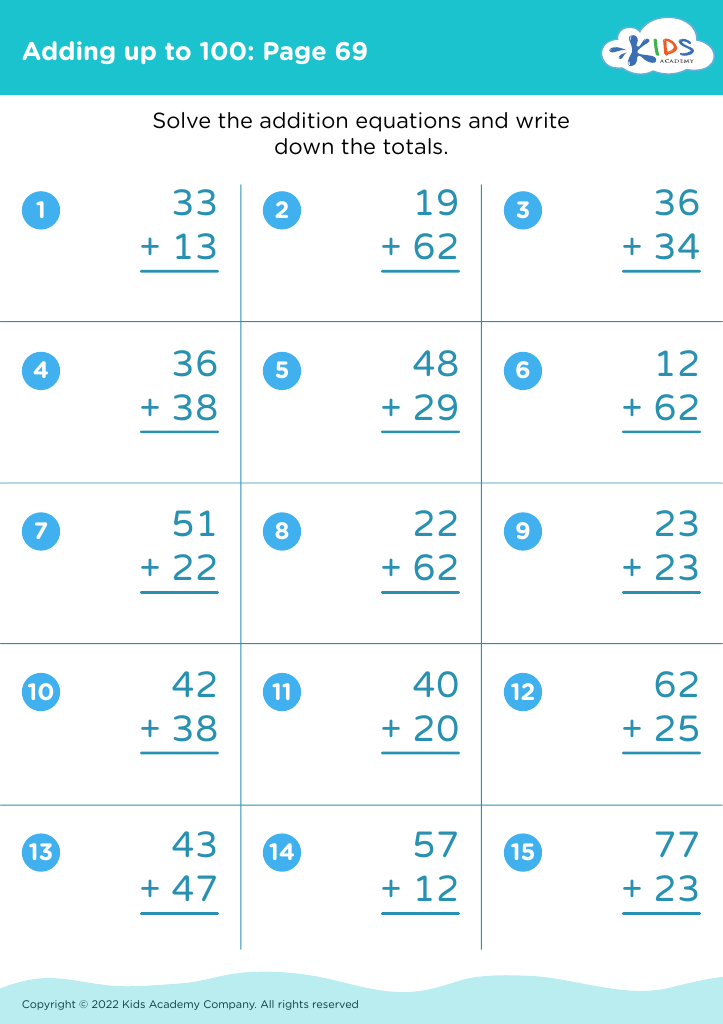
Adding up to 100: Page 69

Adding up to 100: Page 69

Adding up to 100: Page 69
Worksheet
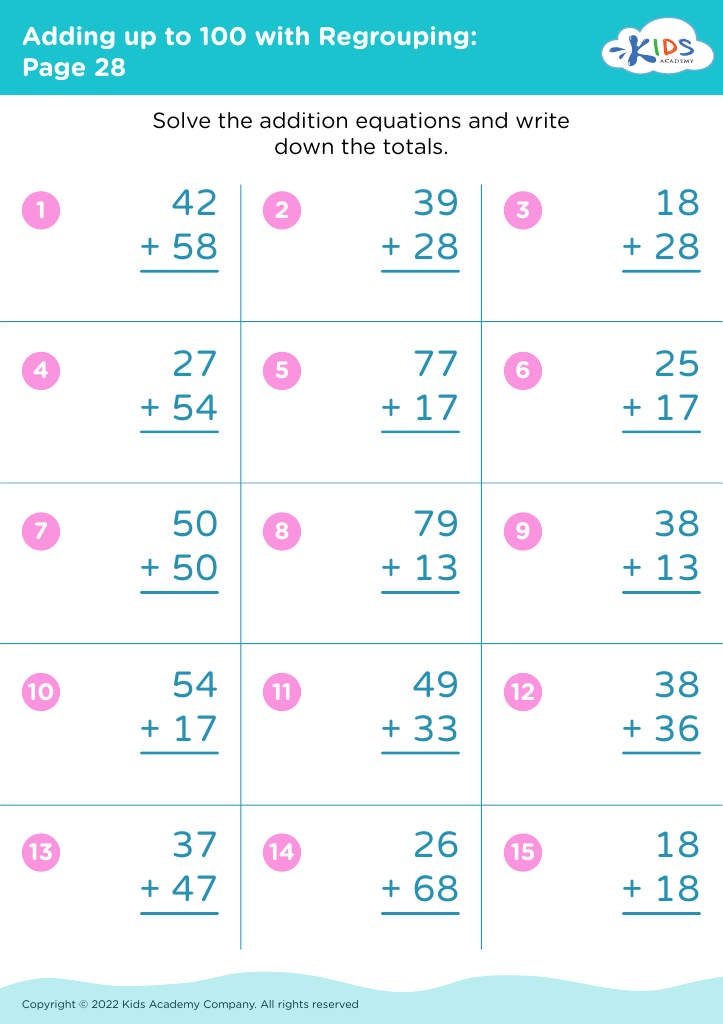
Adding up to 100 with Regrouping: Page 28
Worksheet
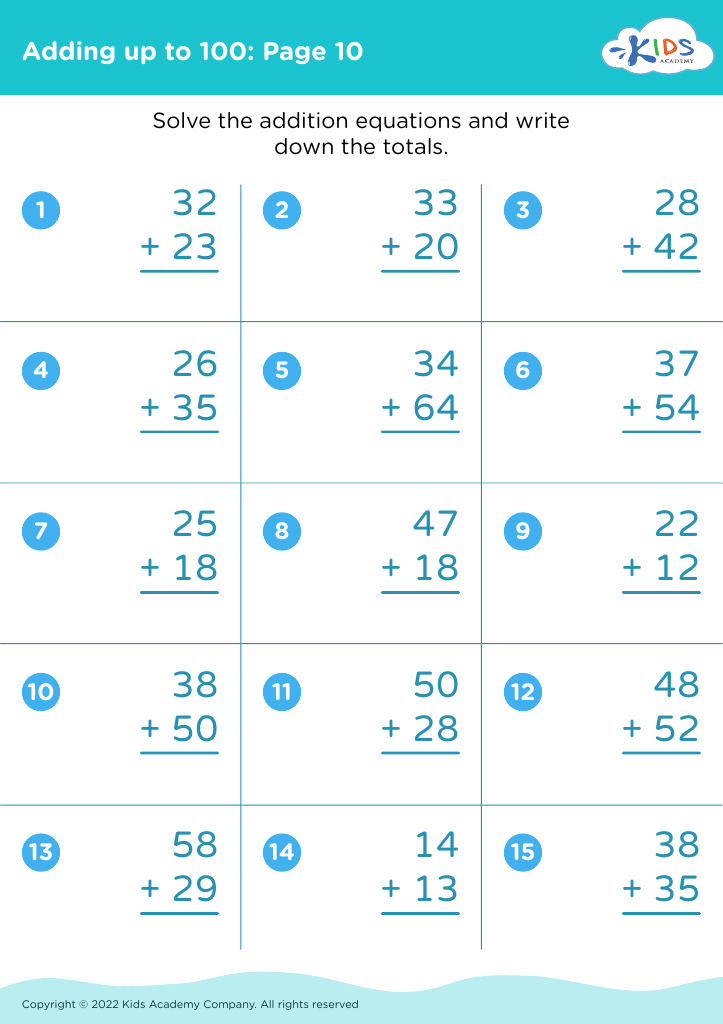
Adding up to 100: Page 10

Adding up to 100: Page 10

Adding up to 100: Page 10
Worksheet
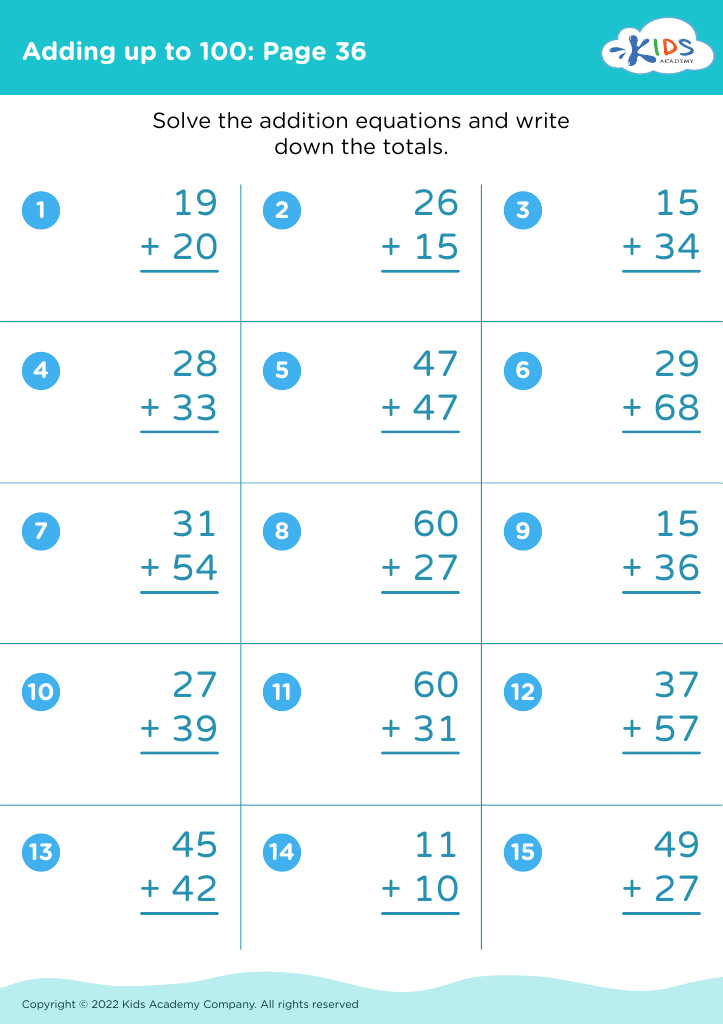
Adding up to 100: Page 36

Adding up to 100: Page 36

Adding up to 100: Page 36
Worksheet


Understanding fractions and the concept of adding up to 100 is crucial for children ages 6-7, as these skills form the foundation for more advanced mathematical concepts. At this age, children are beginning to grasp the idea of part-whole relationships, which fractions embody. Recognizing that fractions represent parts of a whole helps them develop important critical-thinking skills, enabling them to make sense of numbers and quantities in real-life situations, like sharing food or dividing items.

Moreover, learning to add fractions that total 100 introduces children to the concept of equivalence and comparisons, enhancing their confidence in handling numbers. It cultivates their ability to reason about numerical relationships and aids in reinforcing basic addition skills. As children learn fractions, they also encounter foundational concepts of measurement and ratios, broadening their understanding of mathematics.

Teachers and parents should embrace teaching fractions not just for academic achievement, but to equip children with essential problem-solving skills and to promote mathematical fluency. By fostering a healthy mathematical mindset early on, they prepare children for success in higher-level math, while also encouraging them to appreciate the practical applications of math in everyday life.