Understanding patterns Adding up to 100 Worksheets for Ages 6-7
11 filtered results
-
From - To
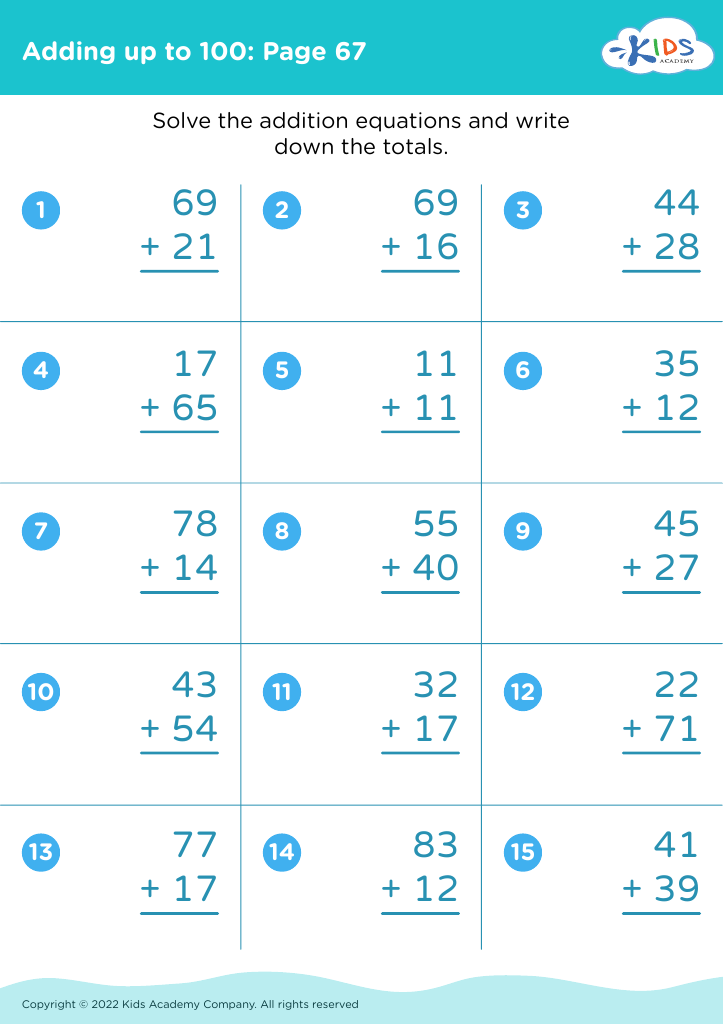
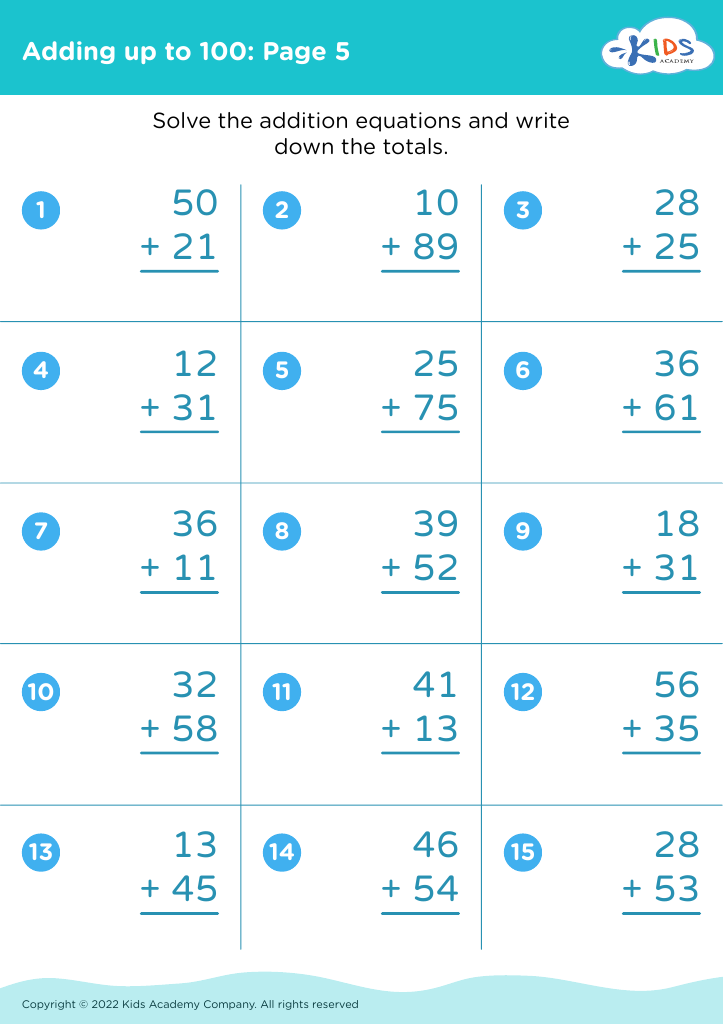
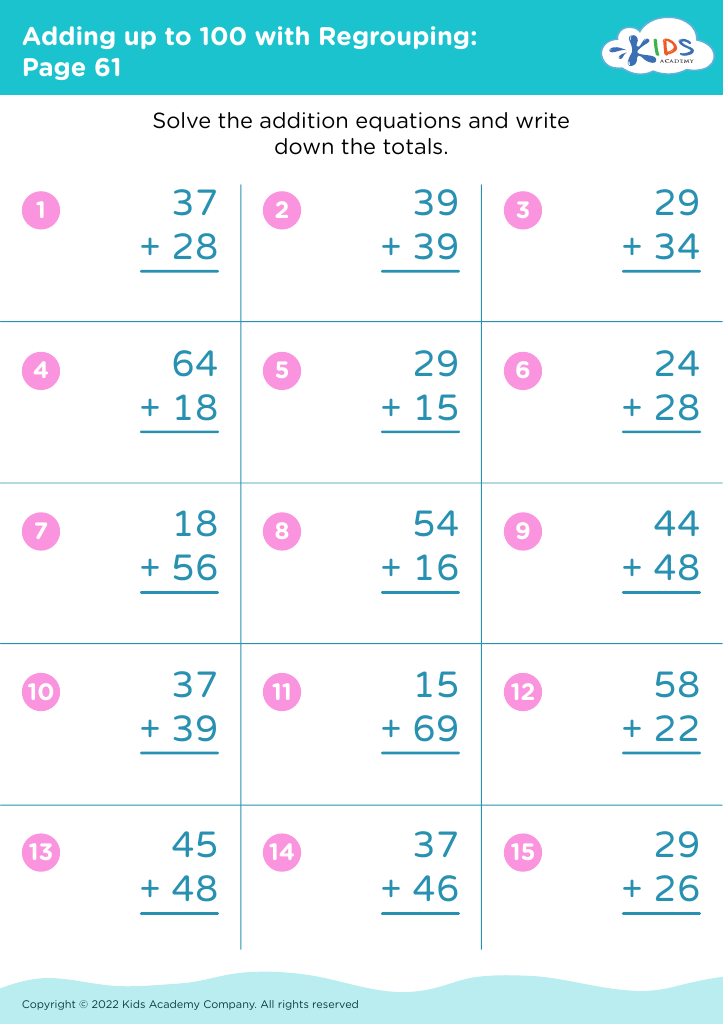
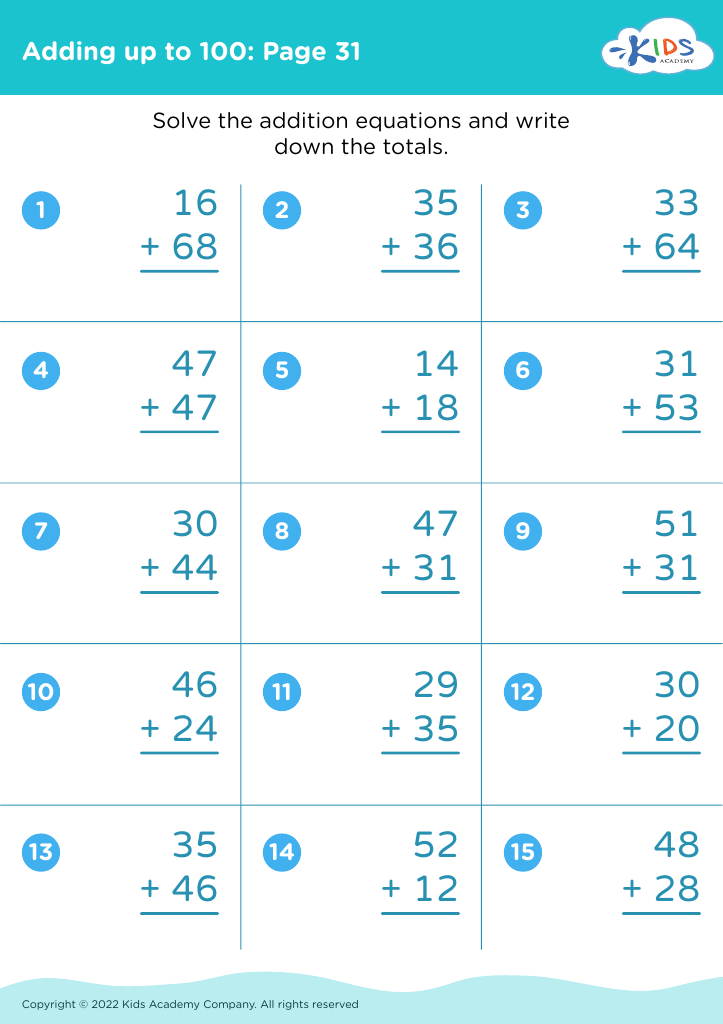
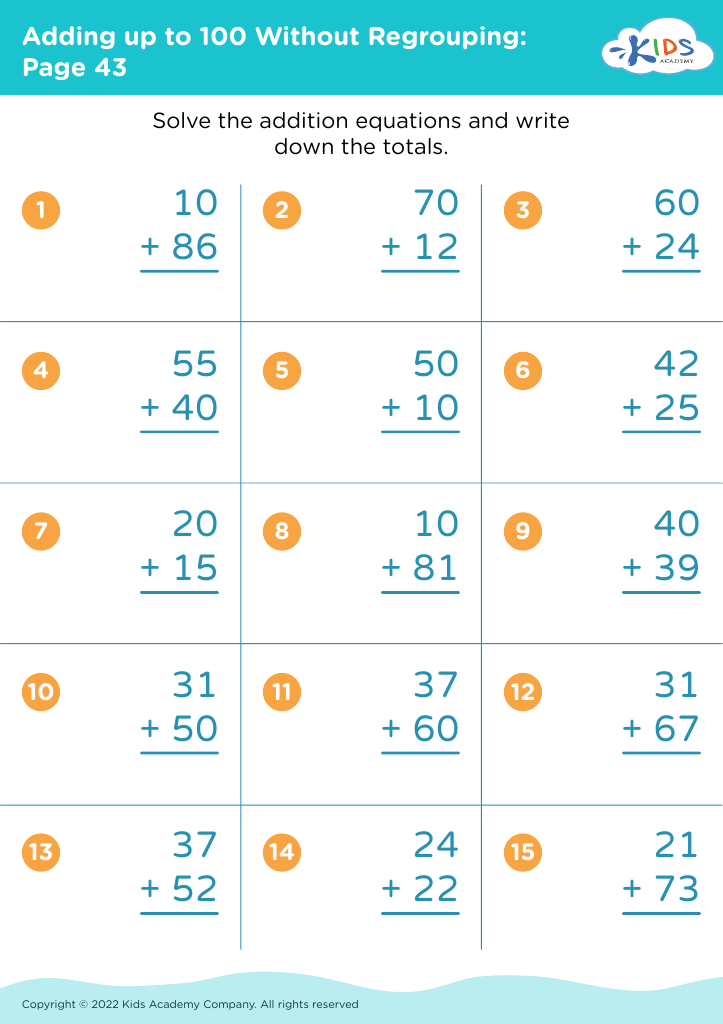
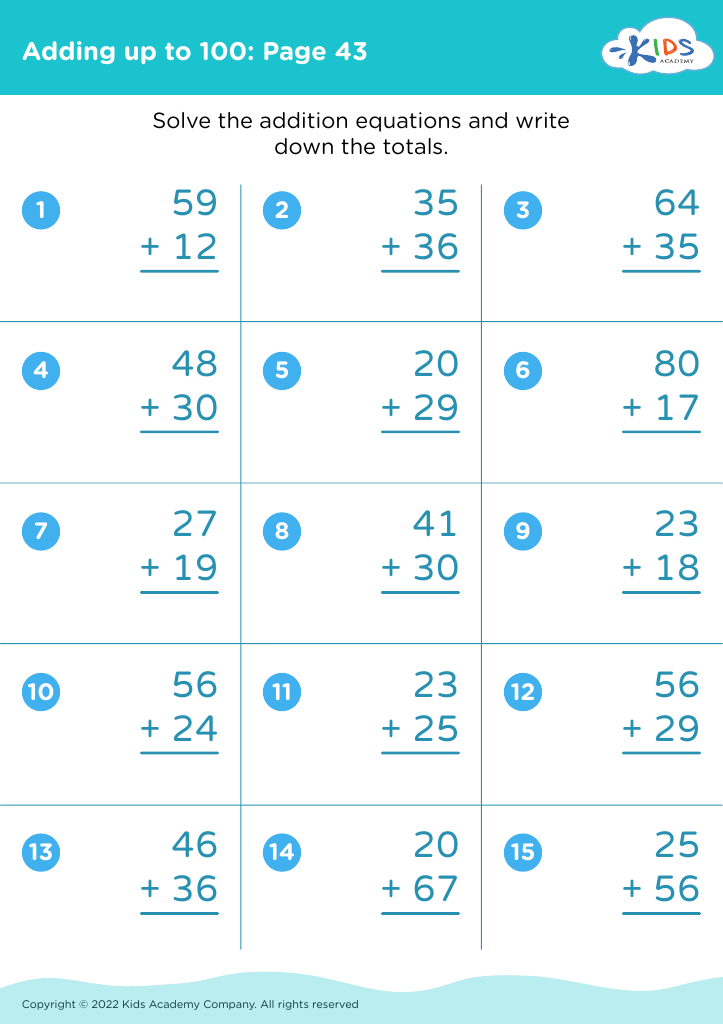
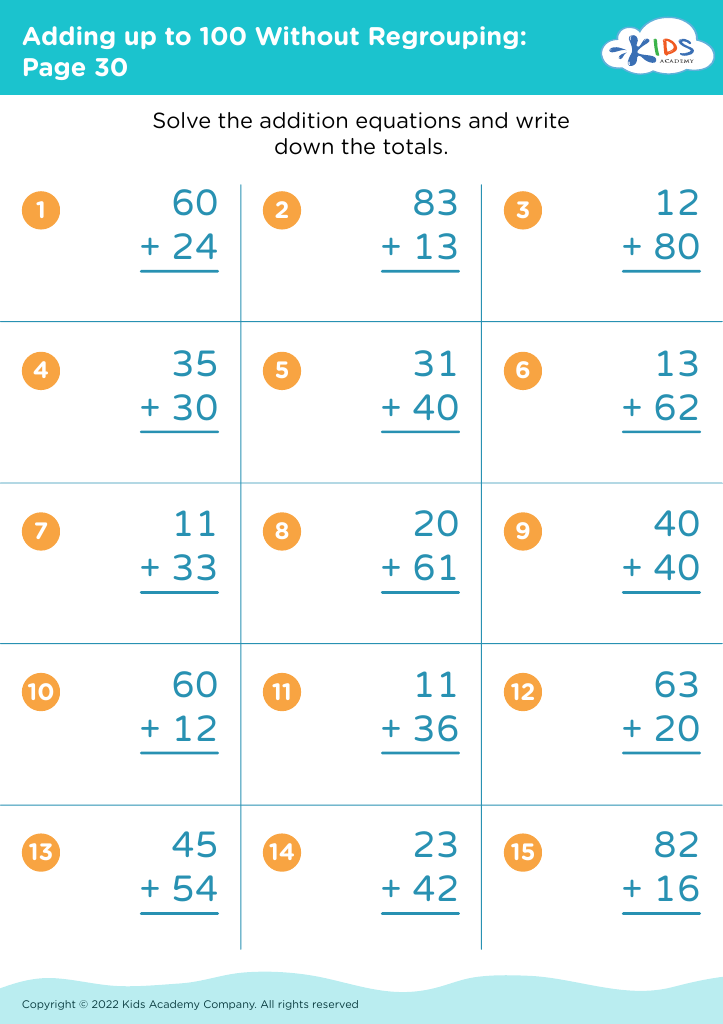
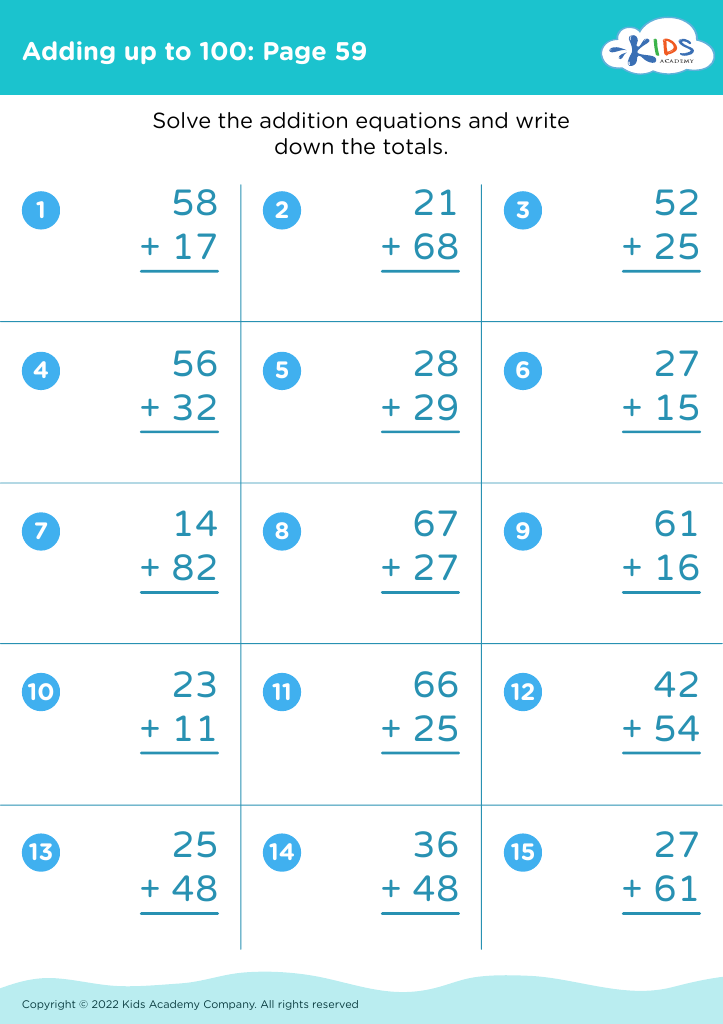
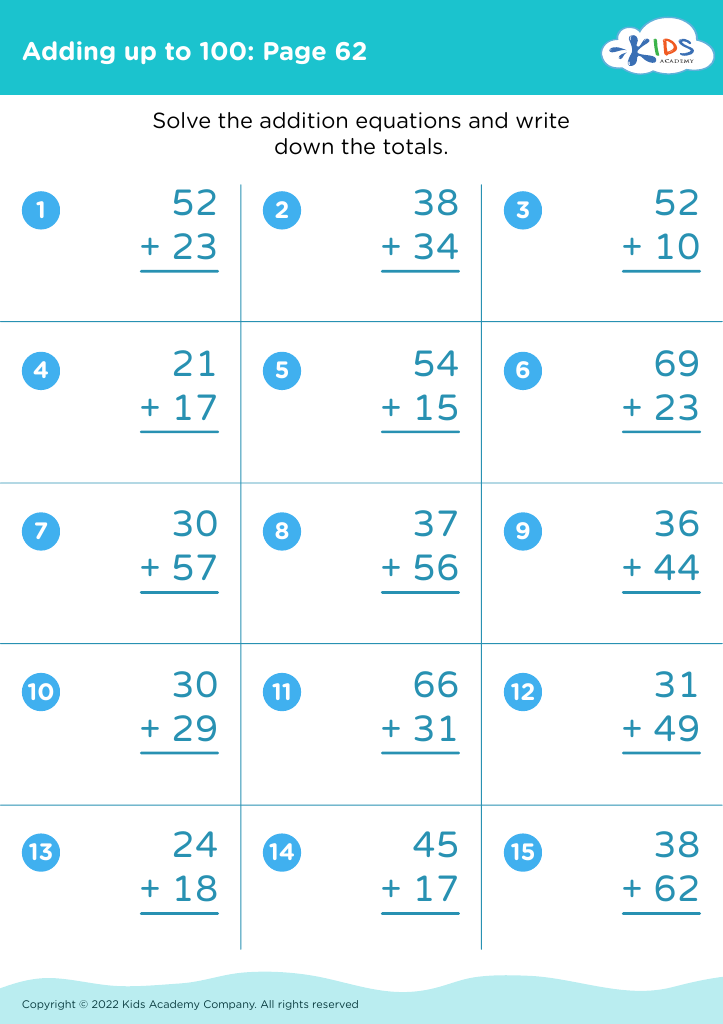
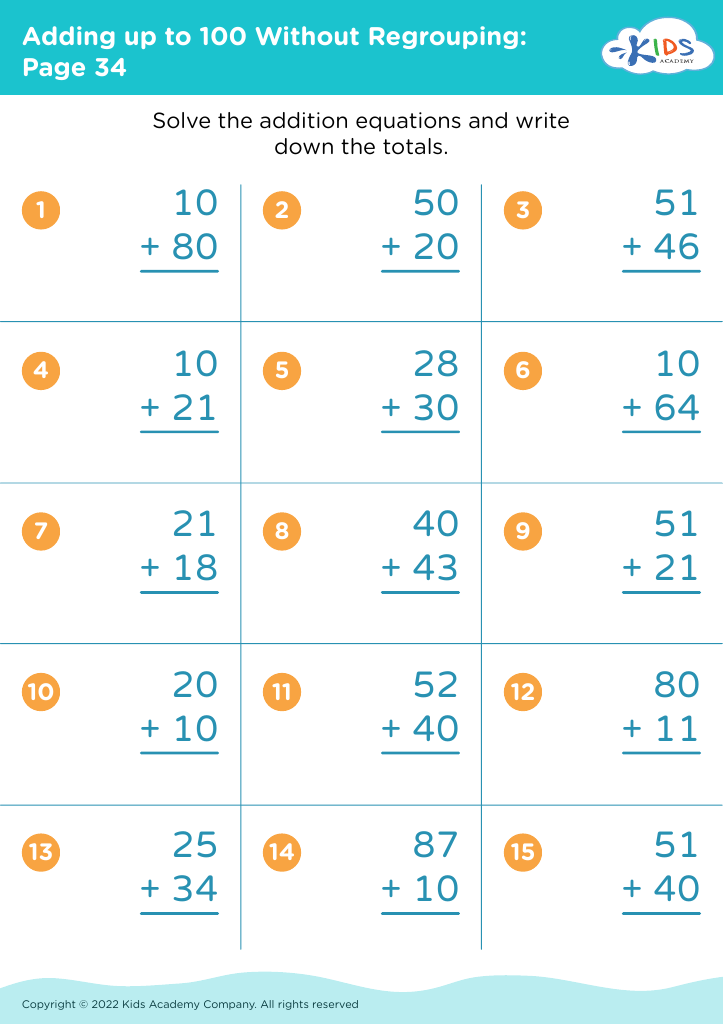
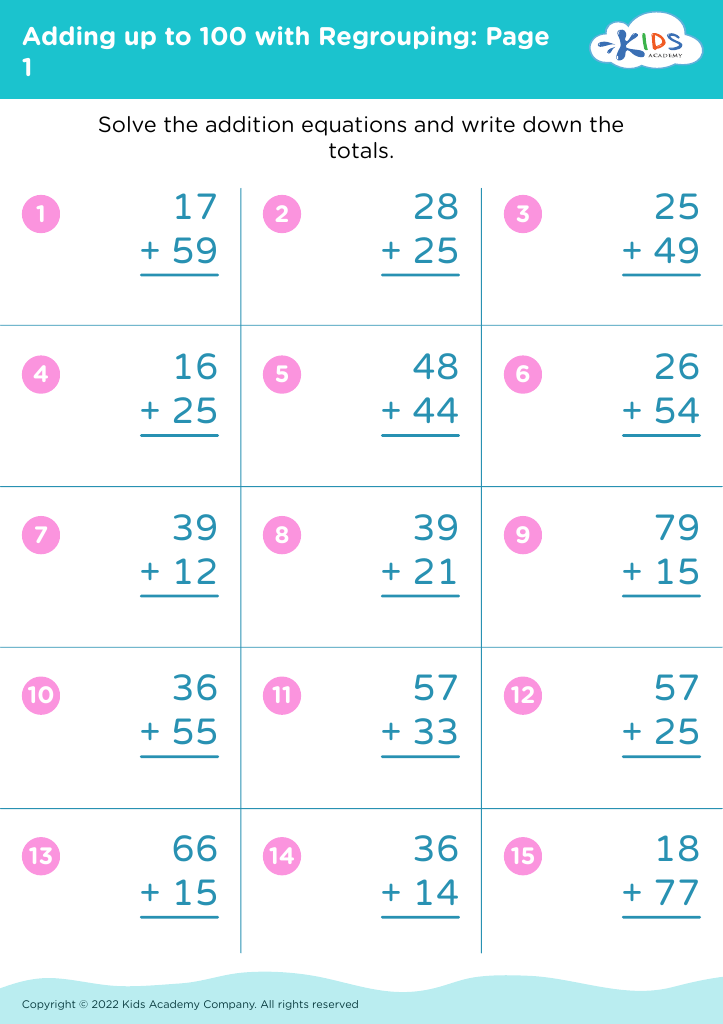
Discover our engaging "Understanding Patterns Adding up to 100 Worksheets" designed for ages 6-7. These worksheets, available on Kids Academy’s printables page, focus on helping kids master addition up to 100 while identifying and understanding numerical patterns. The activities are crafted to blend learning with fun, fostering critical thinking and problem-solving skills. Perfect for classroom use or at-home practice, these worksheets ensure your child builds a solid math foundation. Join Kids Academy today to explore these free resources and support your child's educational journey toward math excellence!






%20(1).jpg)
Understanding patterns and adding up to 100 are foundational skills for young children, typically ages 6-7. These skills are crucial for several reasons:
-
Numeracy Foundations: Learning how to identify and understand numerical patterns helps young learners grasp basic math concepts. This can include recognizing sequences, predicting what comes next, and understanding the relationship between numbers, all of which are essential for more advanced math topics.
-
Problem-Solving Skills: Pattern recognition and basic addition lay the groundwork for problem-solving abilities. Children who master these skills are better equipped to approach math problems methodically and logically, skills that translate beyond math to everyday situations.
-
Confidence Boost: Successfully understanding and manipulating numbers can boost a child's confidence. Children feel a sense of achievement when they can predict patterns and solve addition problems. This confidence often translates into a positive attitude toward learning and school in general.
-
Preparing for Future Learning: Early proficiency in these areas sets the stage for understanding more complex math concepts. Skills like multiplication, division, and algebra all build upon understanding patterns and basic addition.
In summary, investing time and effort in teaching children how to recognize patterns and add up to 100 can significantly enhance their cognitive development, setting a solid foundation for future math success. Parents and teachers should therefore prioritize these early math skills, integrating them into daily learning activities.








