Problem-Solving Skills Adding up to 1000 Without Regrouping Worksheets for Ages 6-7
6 filtered results
-
From - To
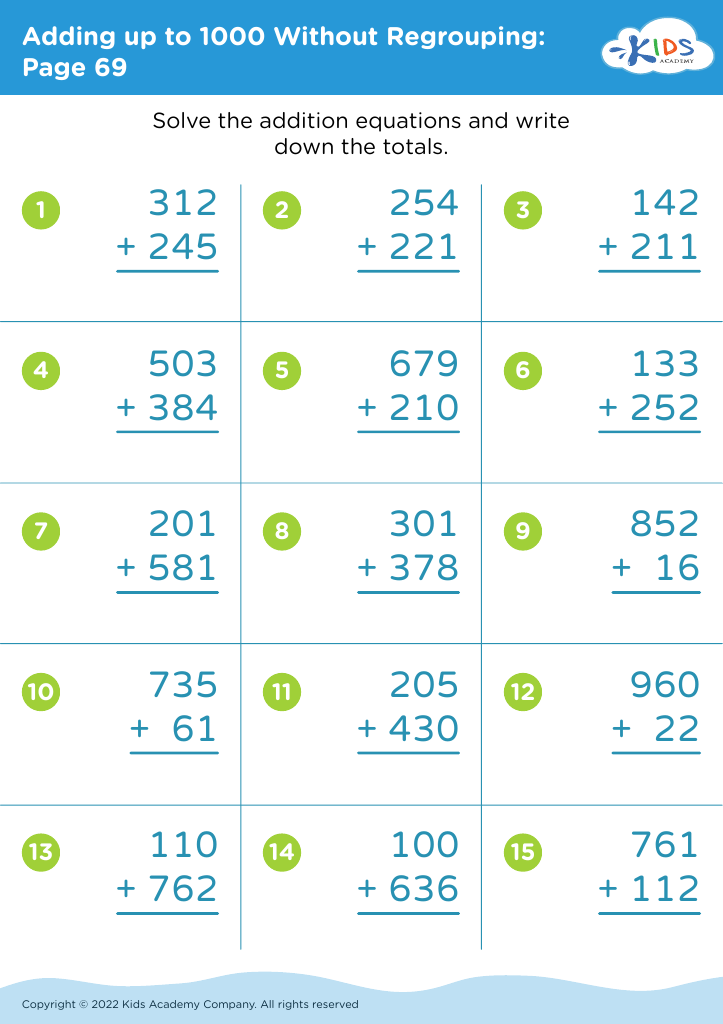
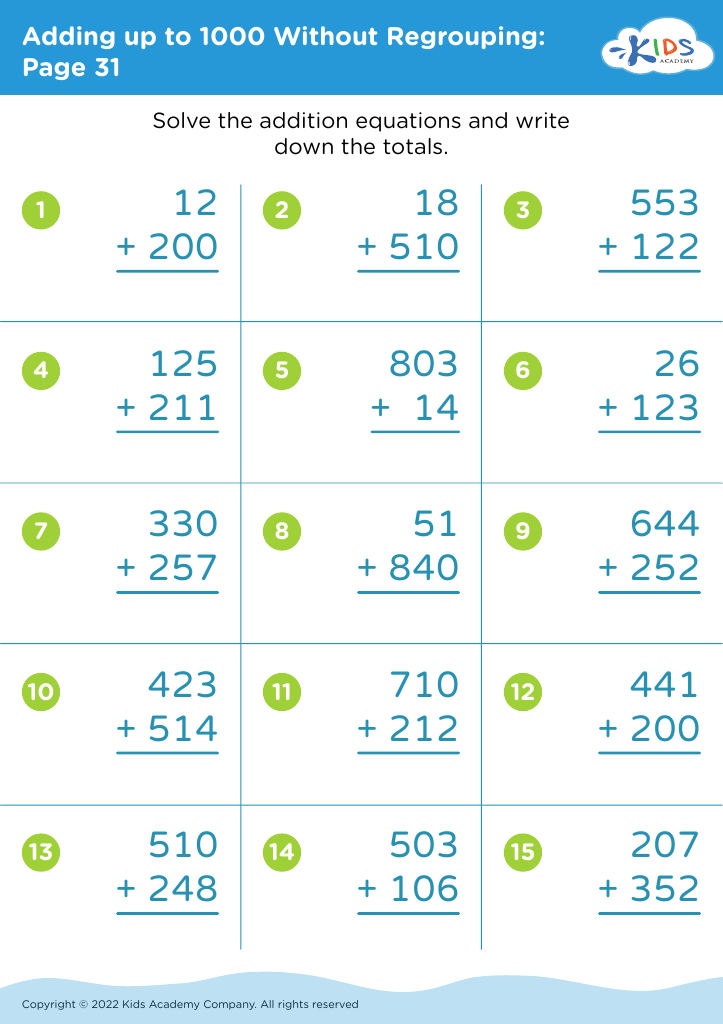
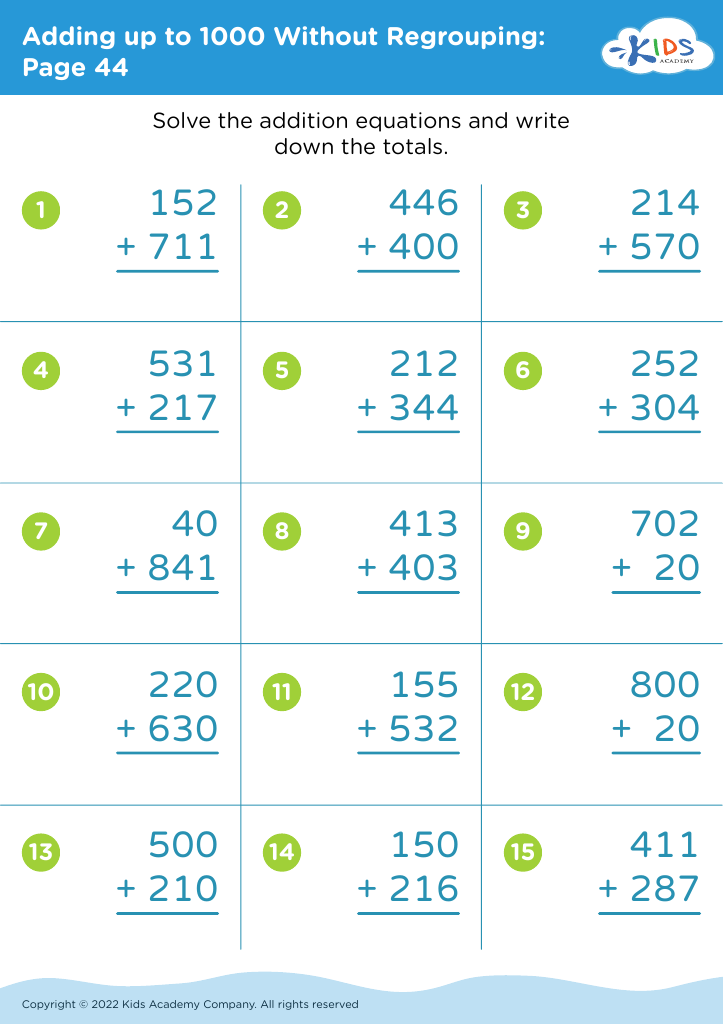
Unlock your child's potential with our Problem-Solving Skills Adding up to 1000 Without Regrouping Worksheets, designed specifically for ages 6-7. These engaging worksheets aim to enhance crucial math skills through fun activities that encourage students to gradually build their abilities in addition while solving real-world math problems. By focusing on addition concepts up to 1000 without regrouping, children can develop reasoning and critical thinking skills, paving the way for future academic success. Our worksheets promote a hands-on approach to learning, making math enjoyable and accessible. Download the worksheets today to start your child on a path to confidence in their math skills!
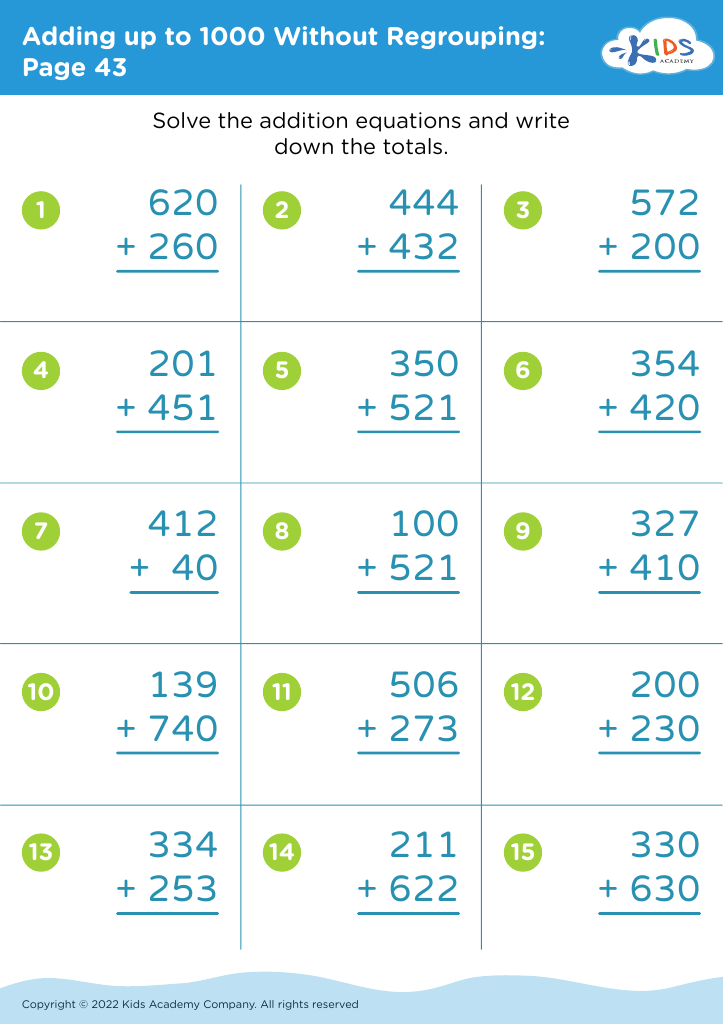
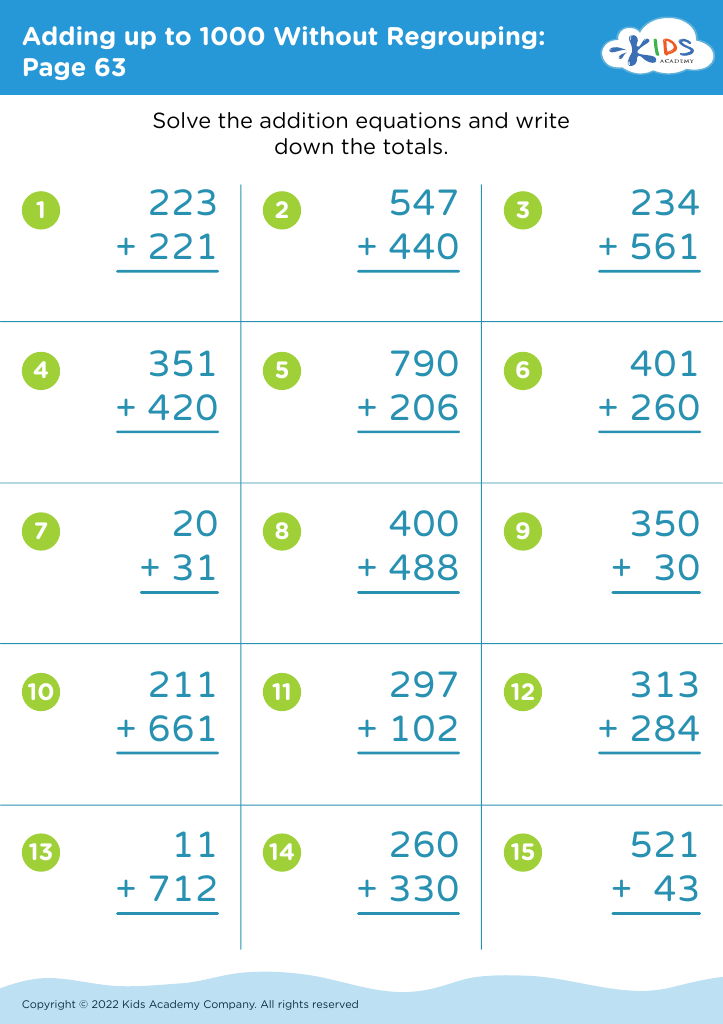
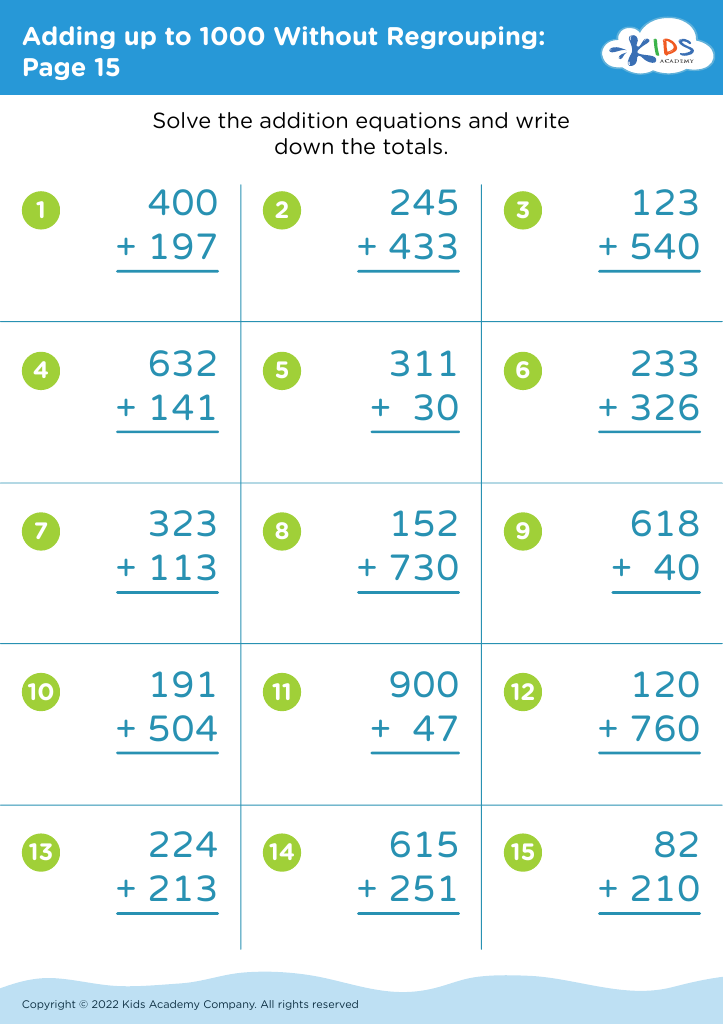


Parents and teachers should prioritize problem-solving skills related to addition, particularly adding up to 1000 without regrouping, for children aged 6-7 for several compelling reasons. First, these skills lay a foundational understanding of mathematics, which is essential as children progress in their education. Mastering addition without regrouping strengthens numerical fluency, enabling young learners to compute confidently and accurately.
Additionally, focusing on these skills enhances critical thinking and cognitive flexibility. Children learn how to approach problems from different angles, analyze their calculations, and break numbers into smaller, manageable parts. This strategic thinking goes beyond mathematics—it's transferable to everyday problem-solving situations.
Moreover, developing strong problem-solving skills at a young age fosters a growth mindset. As children experience success in addition, they gain confidence and build resilience for tackling more complex challenges in the future.
Finally, supporting these skills promotes collaboration between home and school. Engaging in math activities together encourages meaningful discussions about numbers, which stimulates curiosity and enthusiasm for learning.
In summary, investing time in building problem-solving skills in early learners is crucial for their academic growth, cognitive development, and confidence, ultimately equipping them for future mathematical success.