Adding up to 50 Worksheets for Ages 6-7 - Page 3
219 filtered results
-
From - To
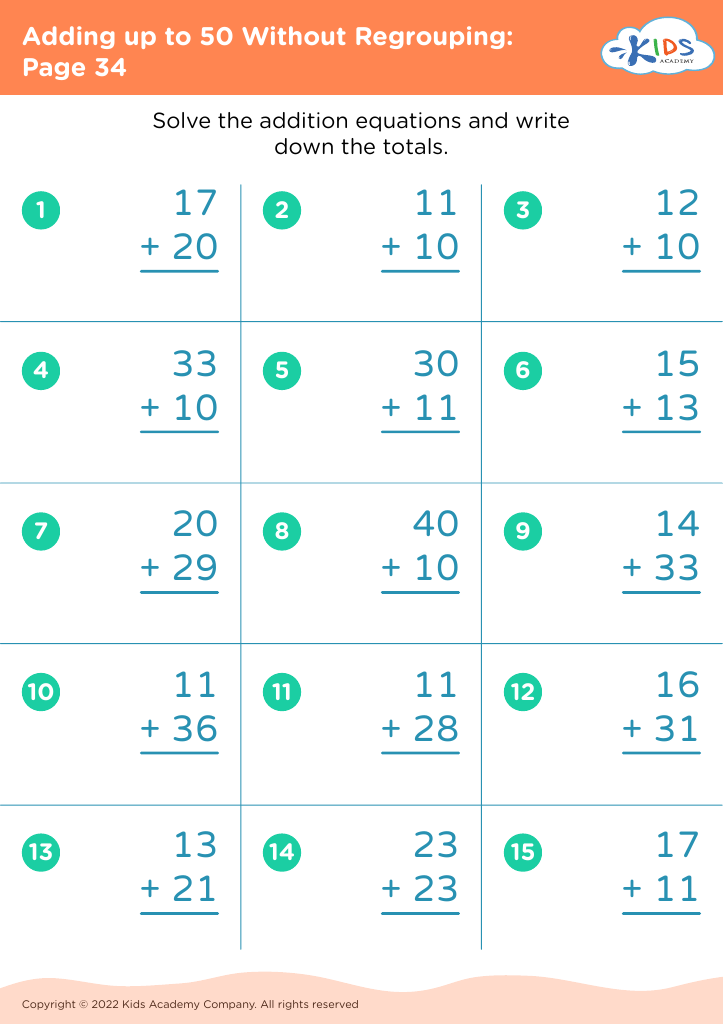
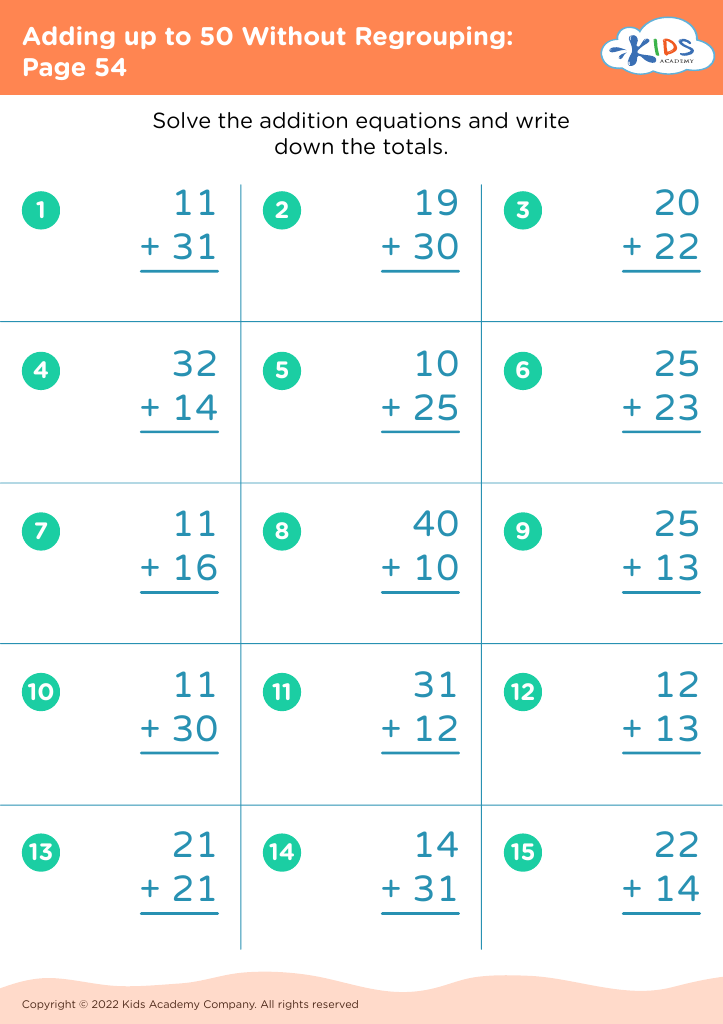
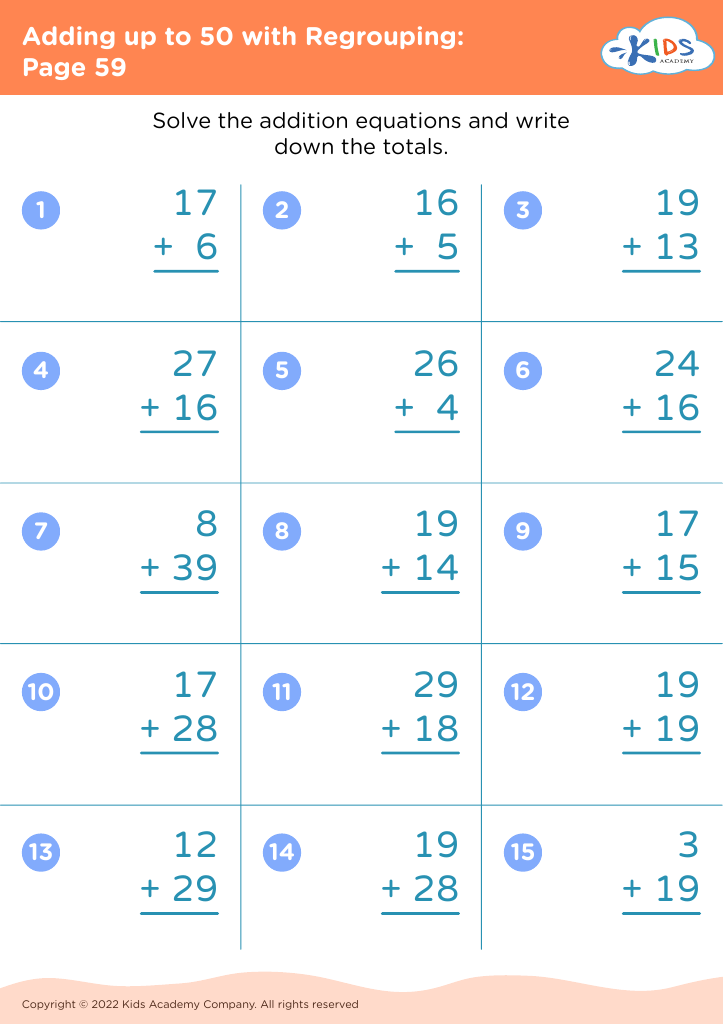
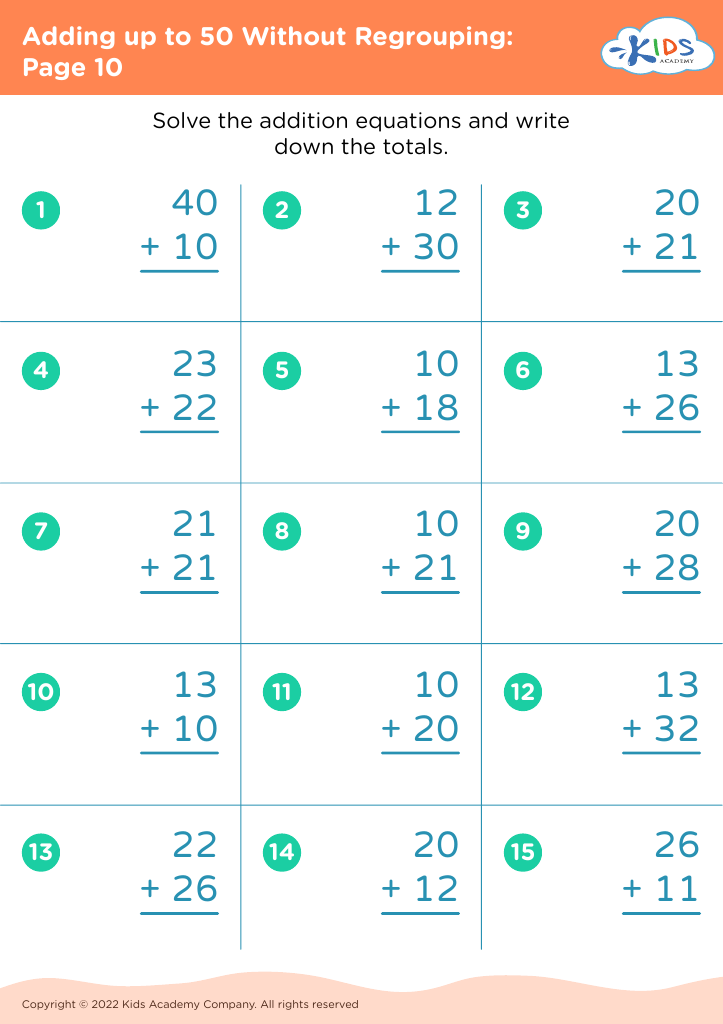
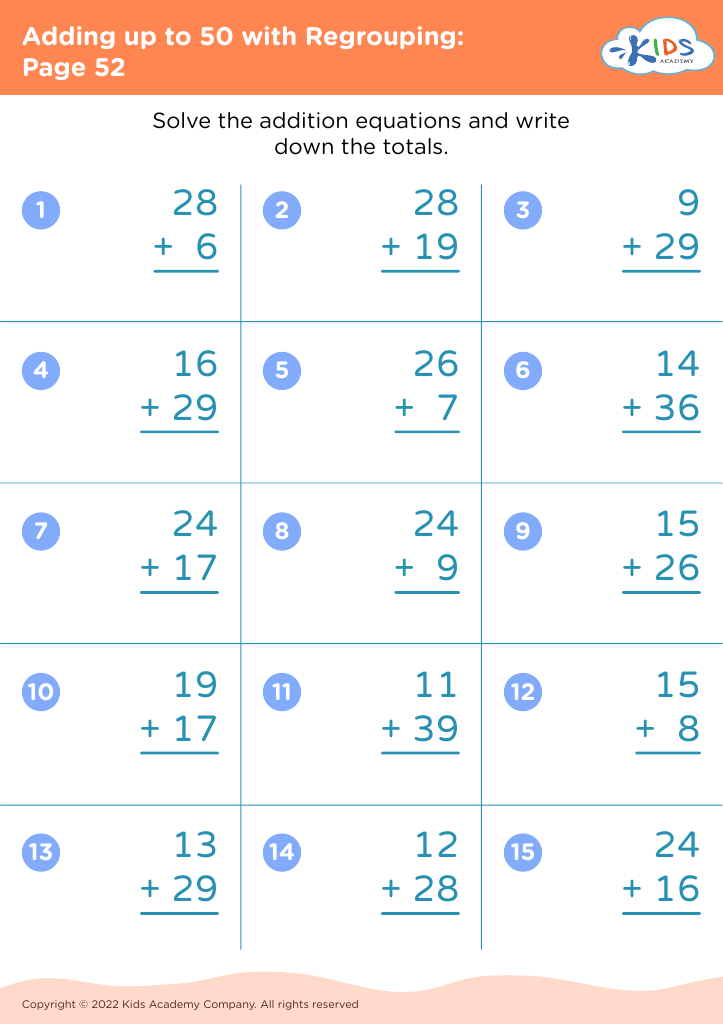
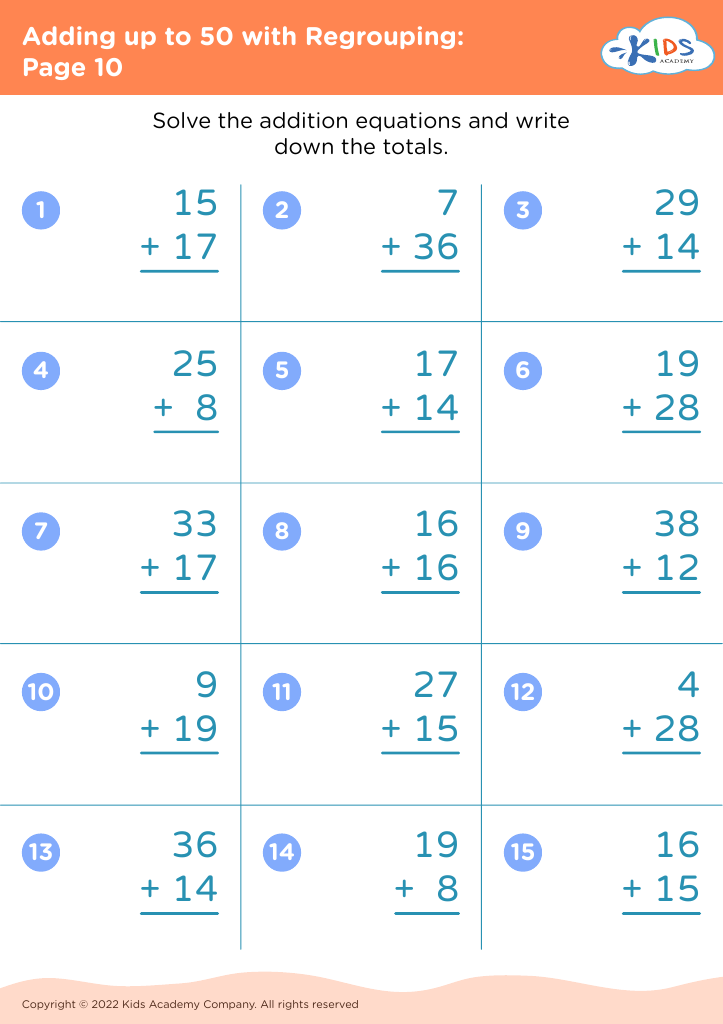
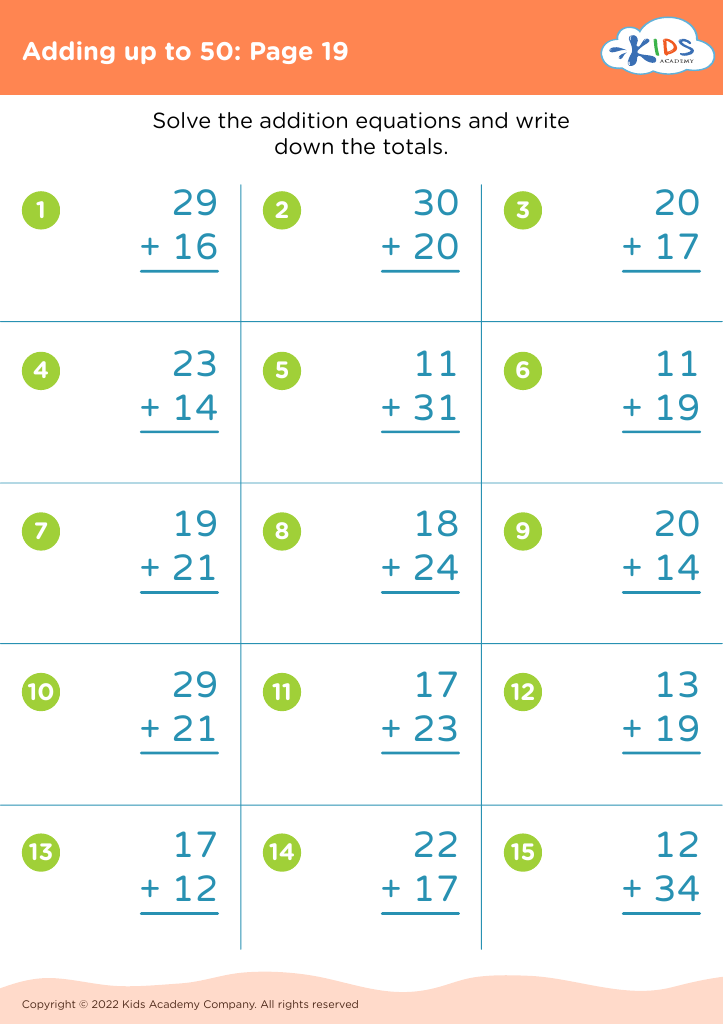
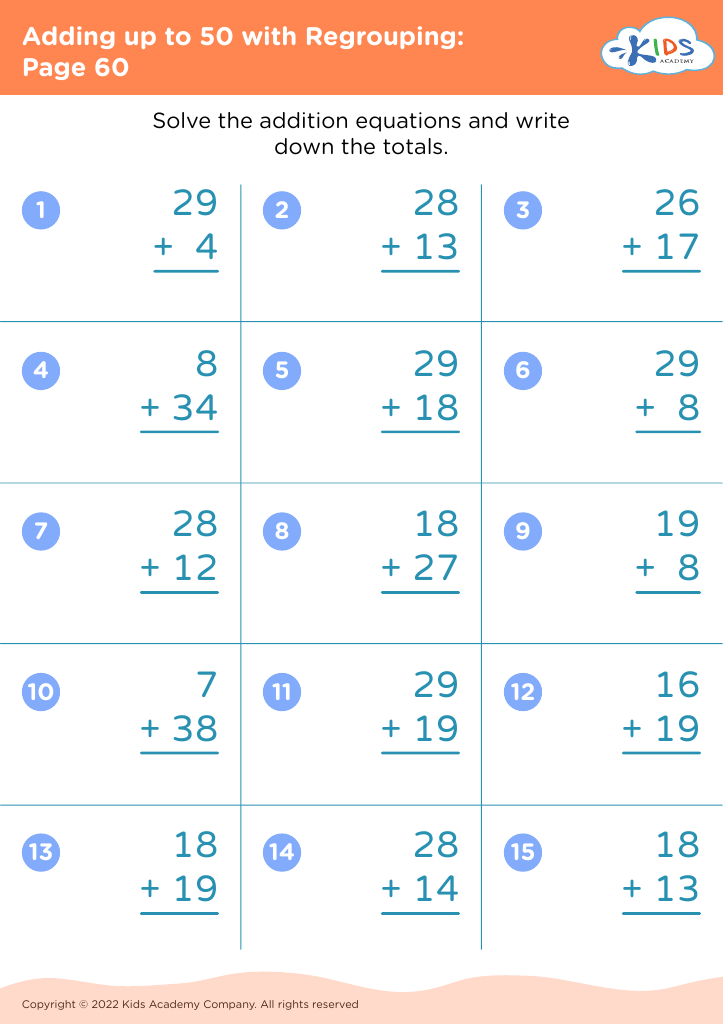
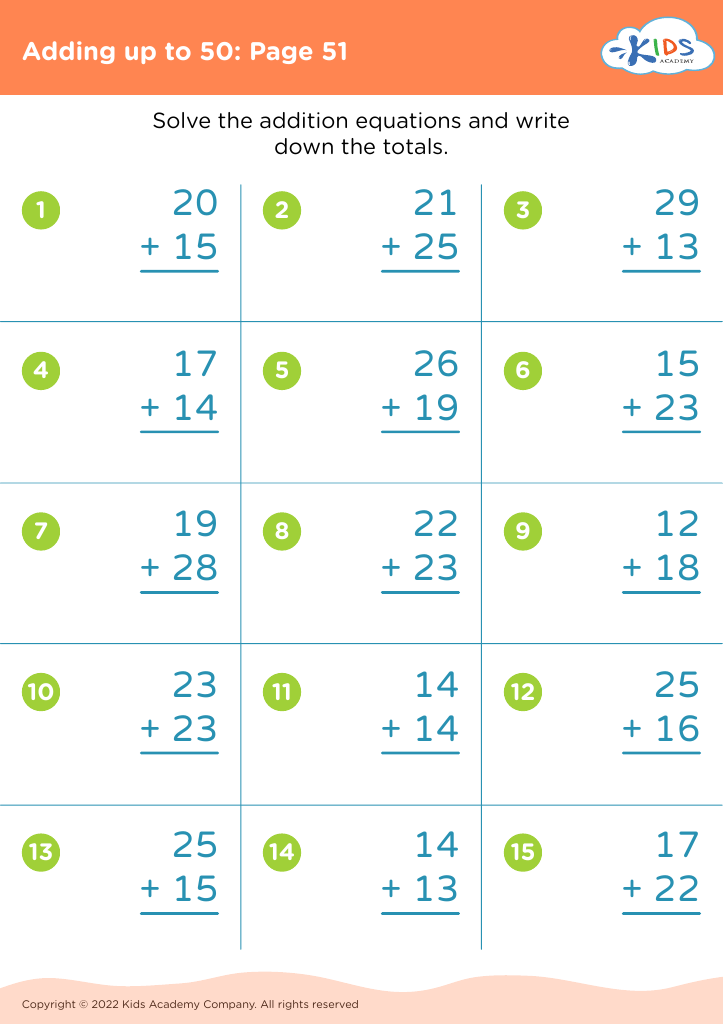
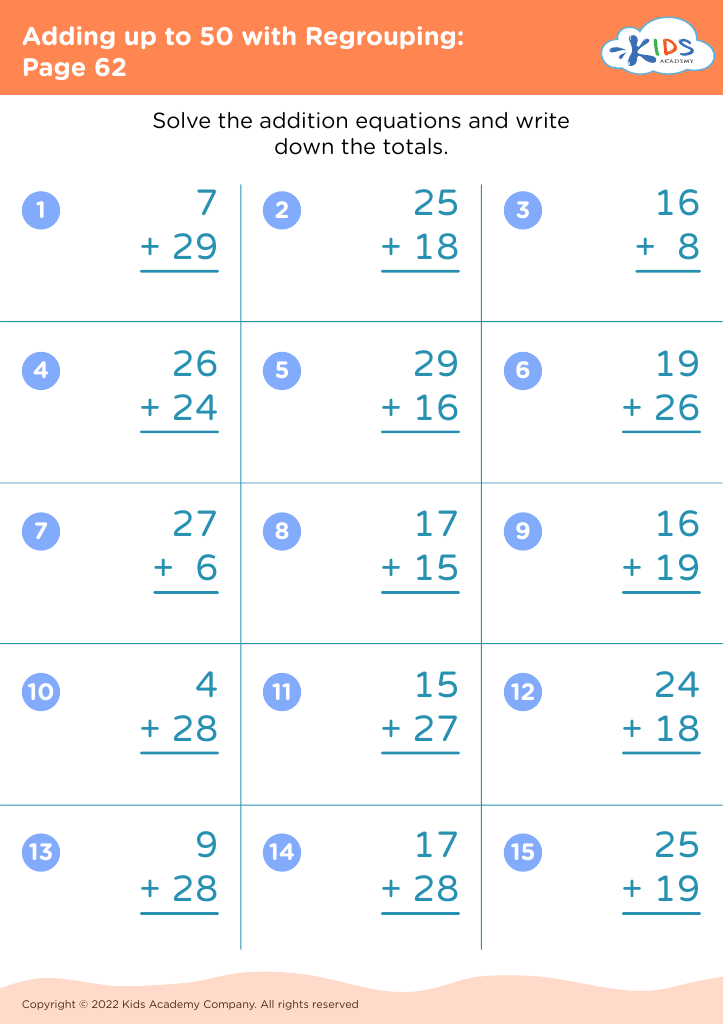
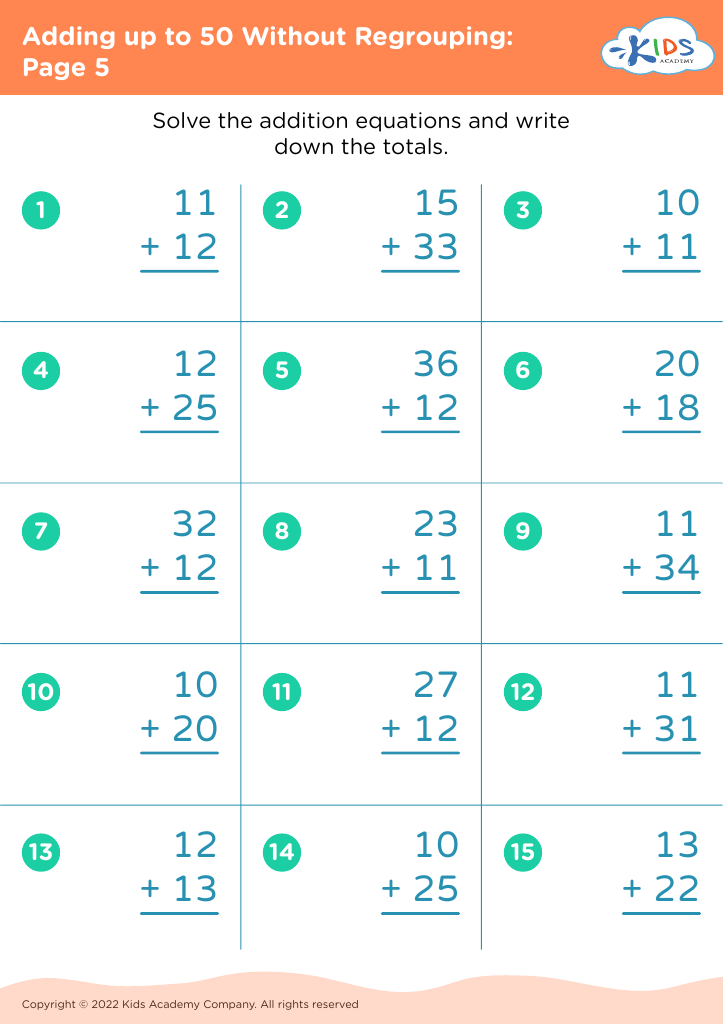
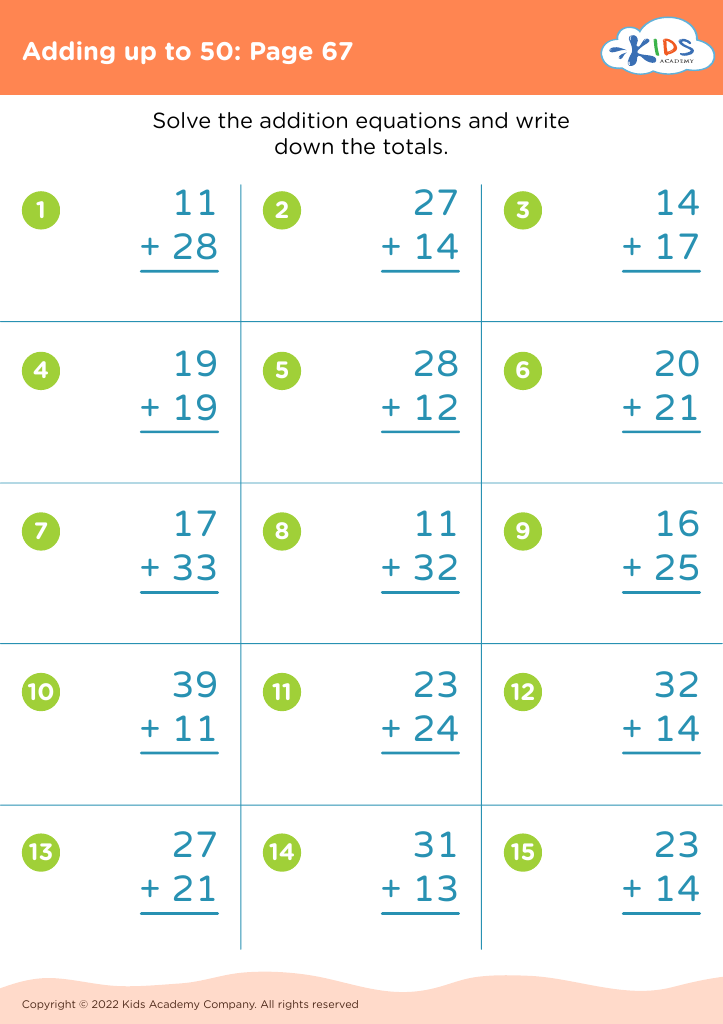
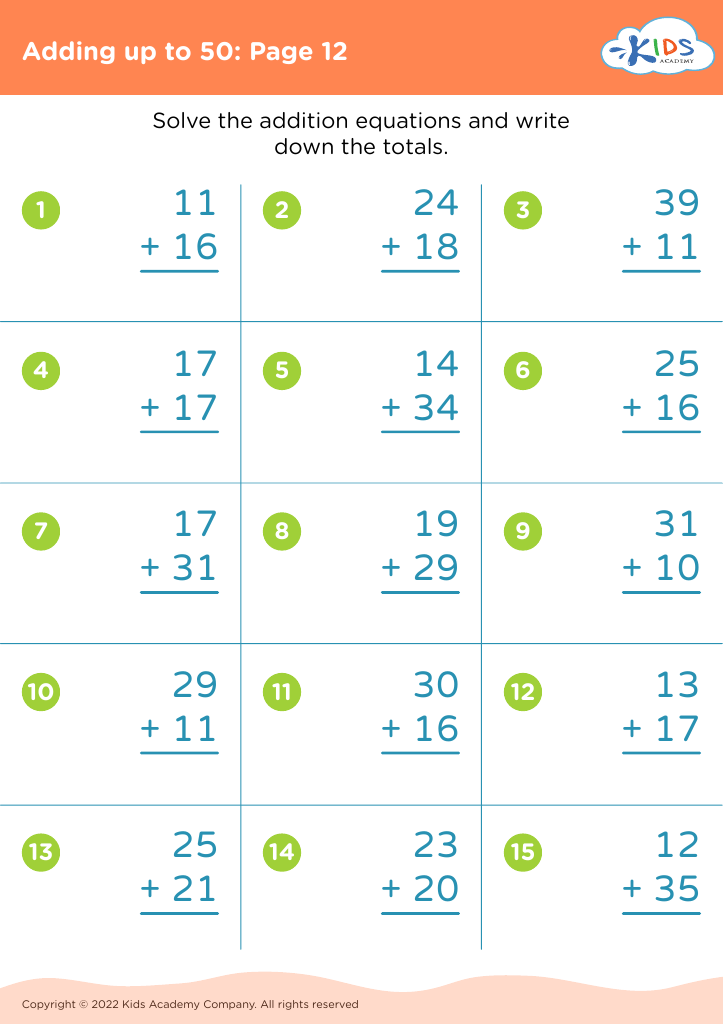
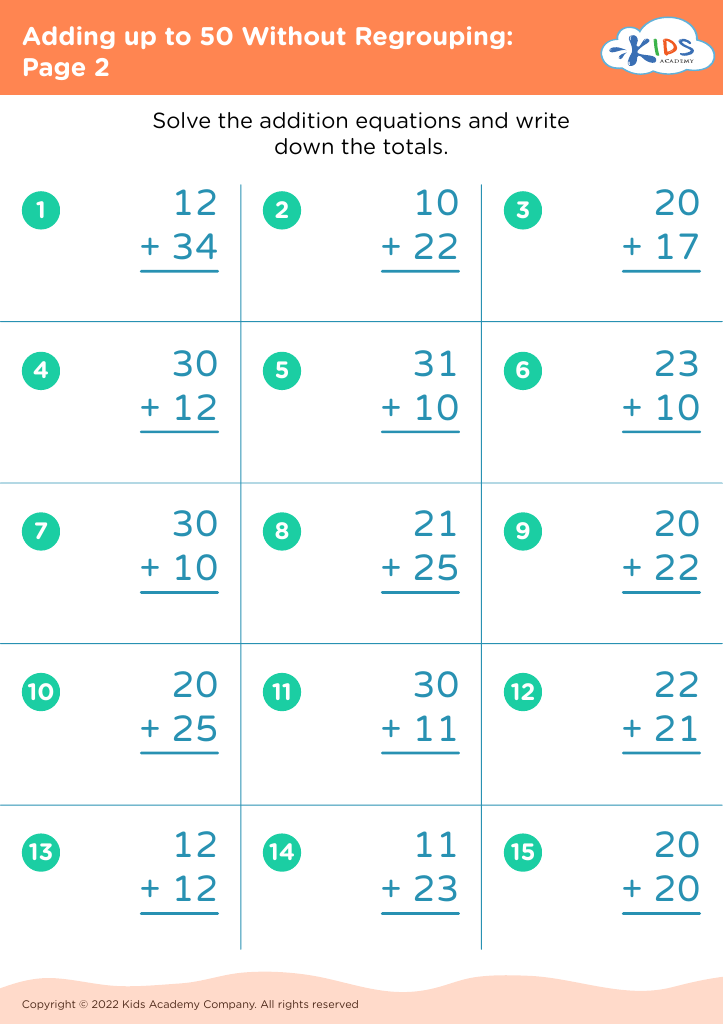
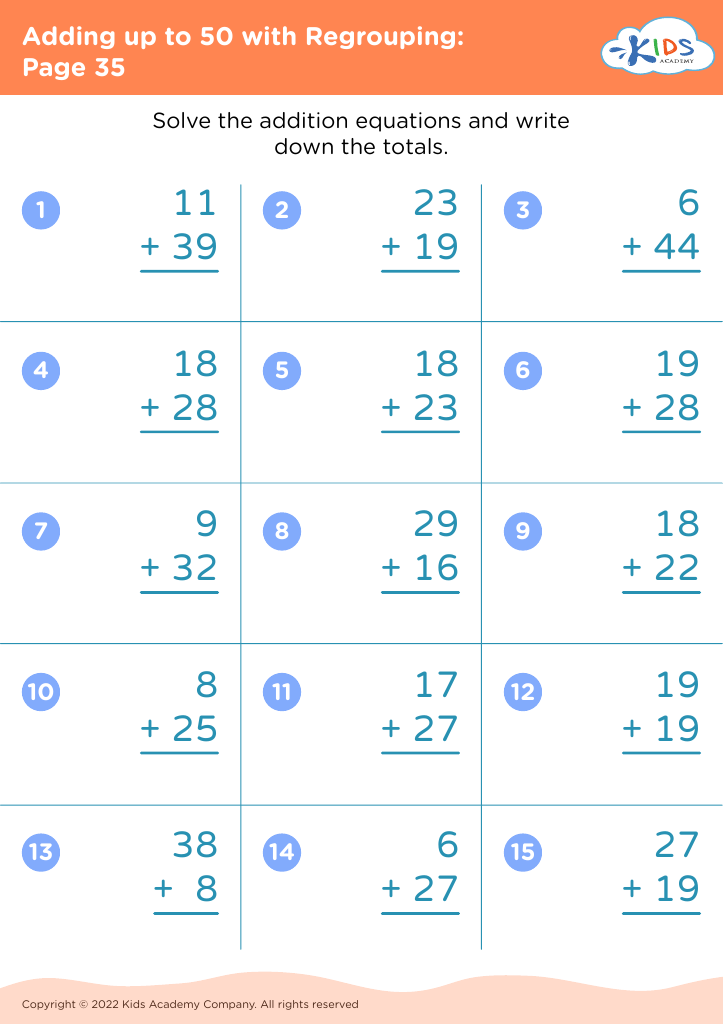
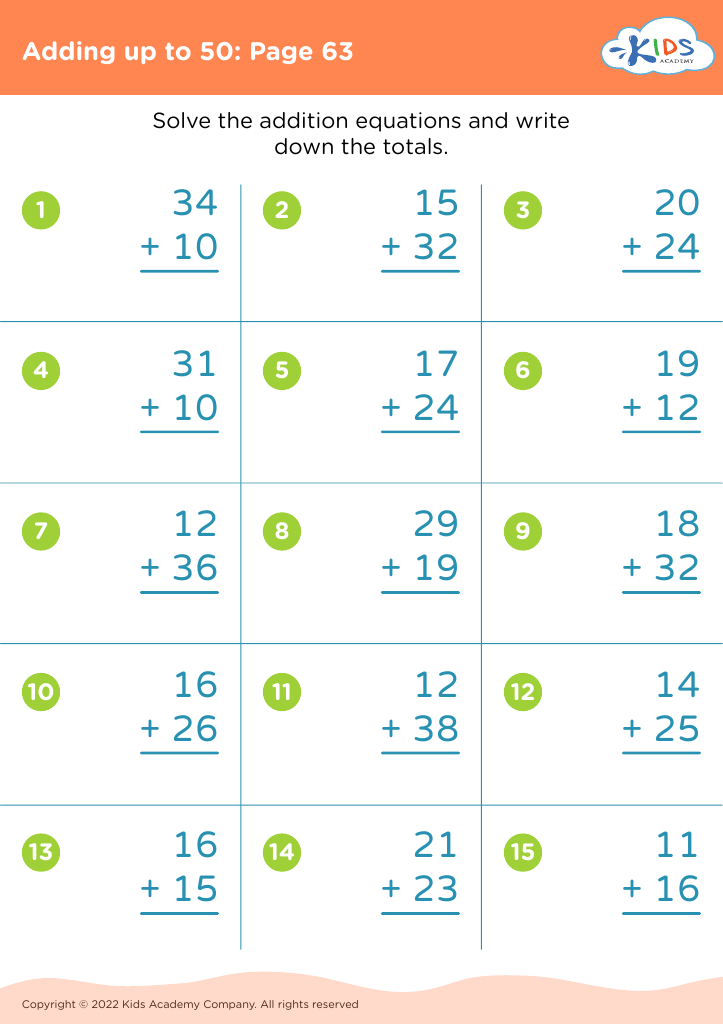
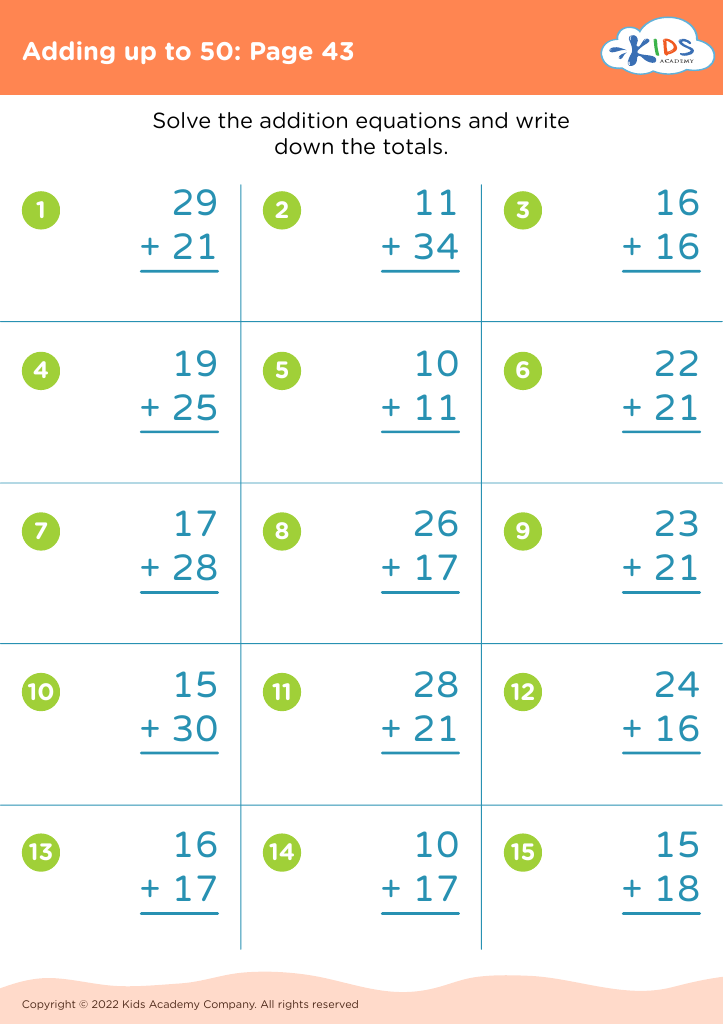
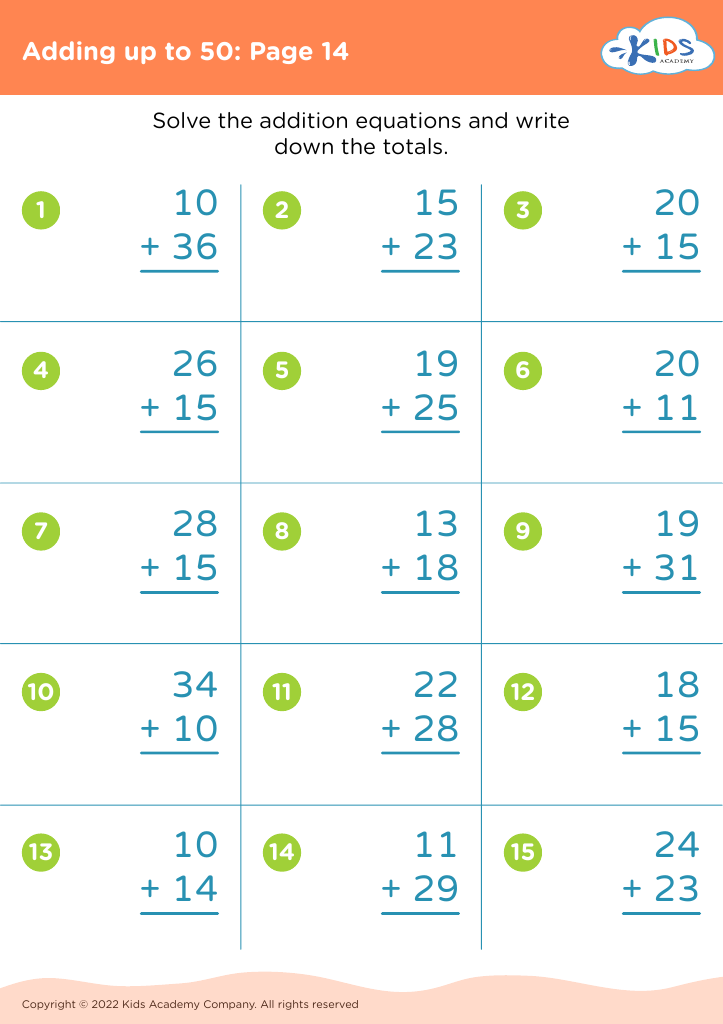
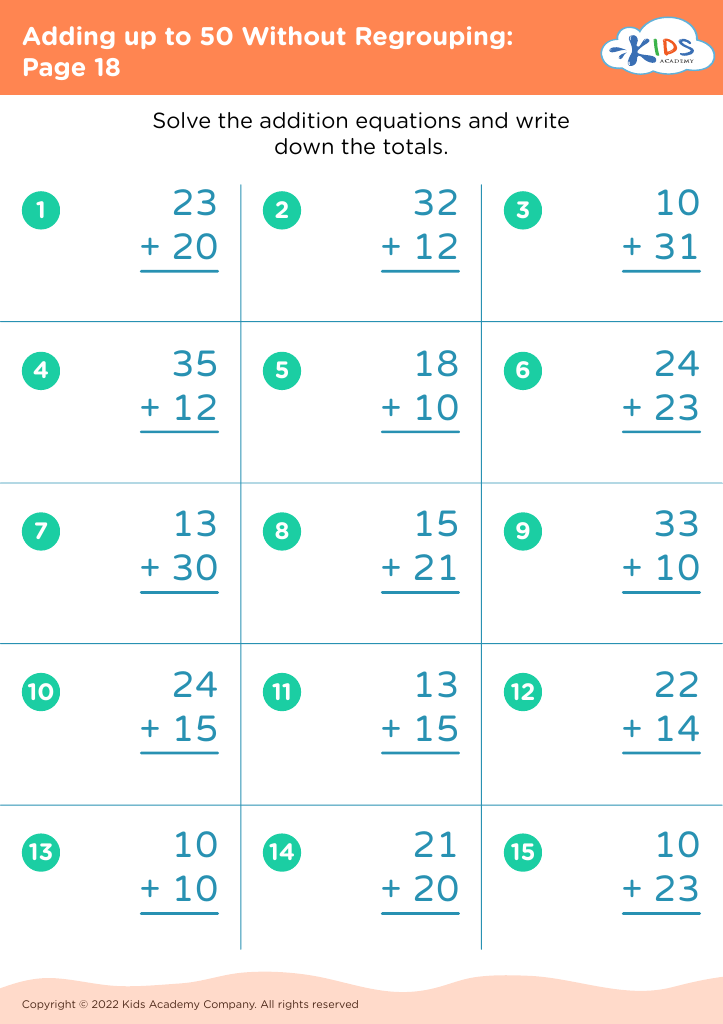
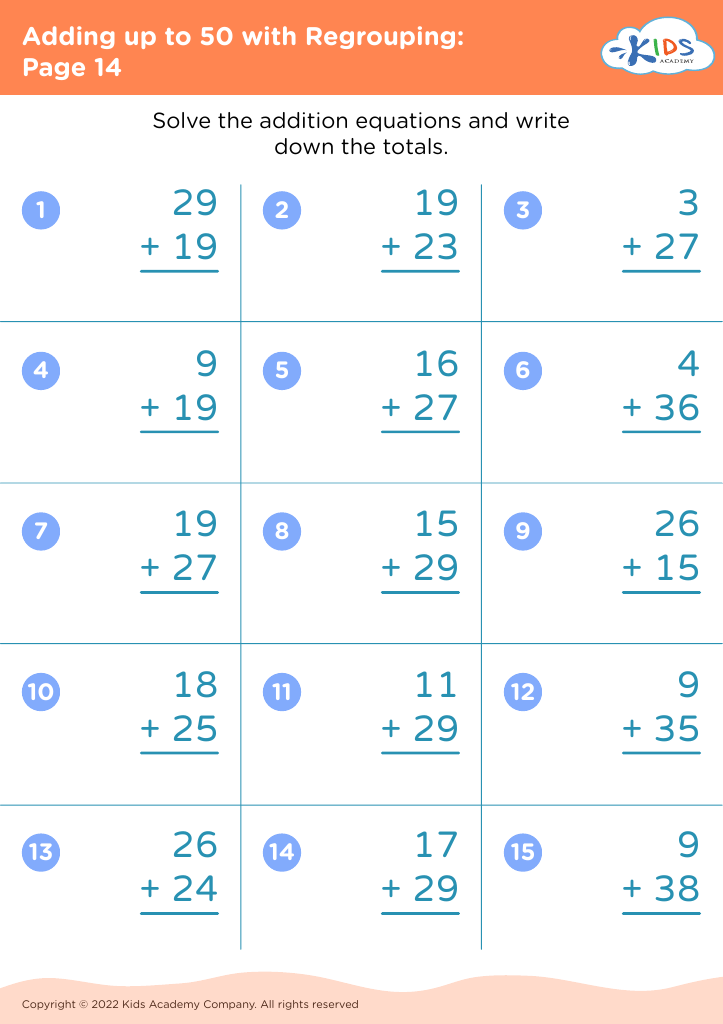
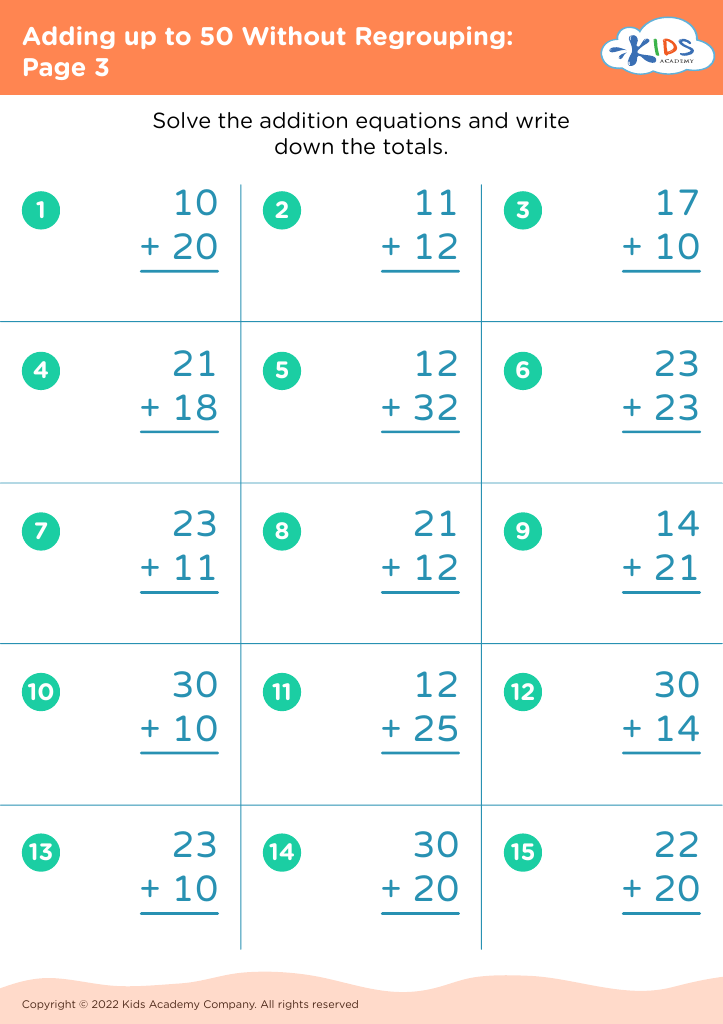
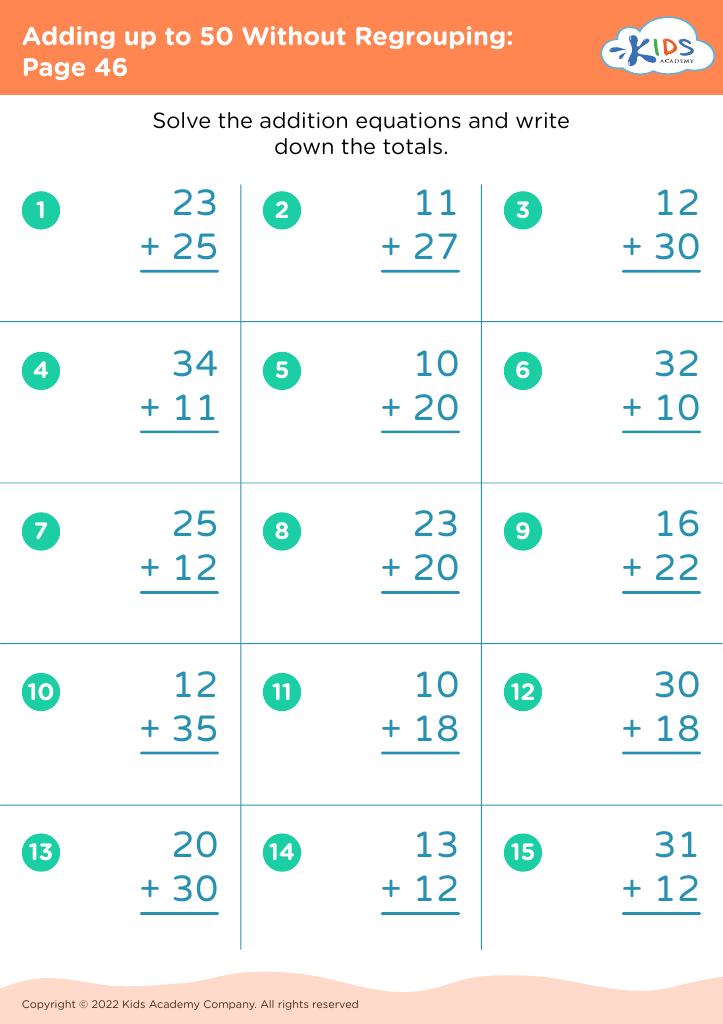
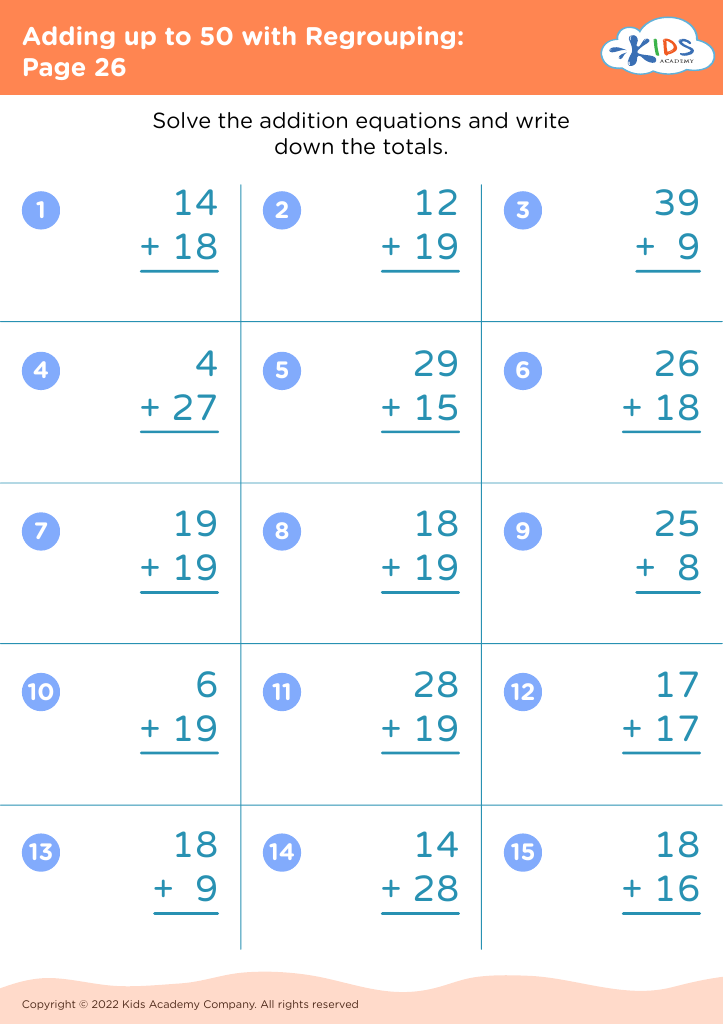
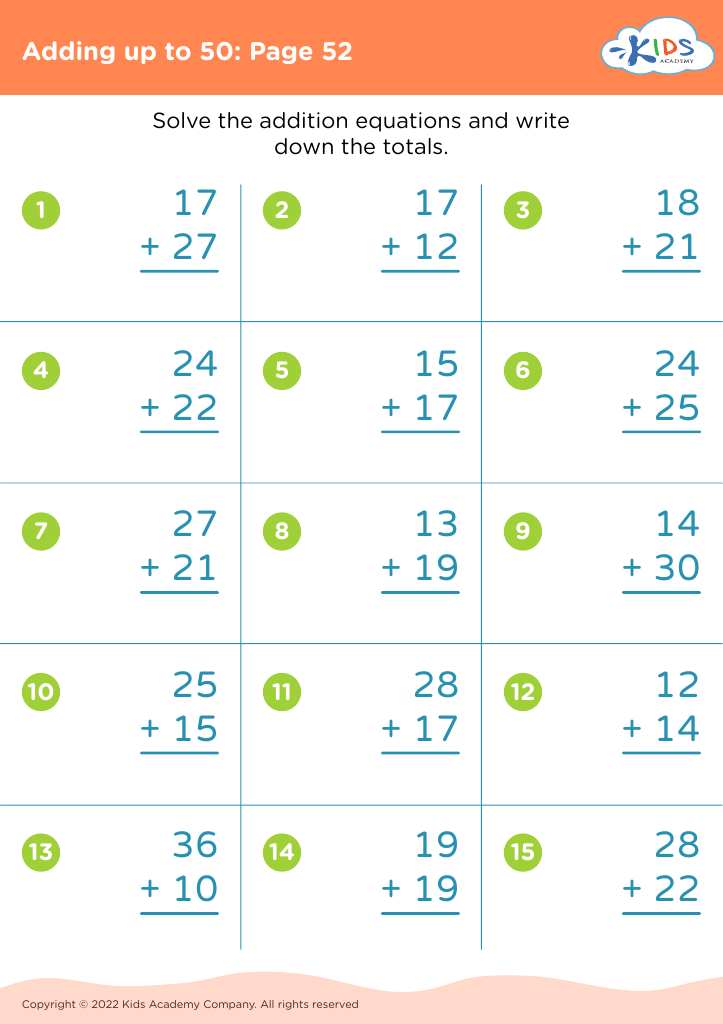




Introducing children aged 6-7 to adding up to 50 is crucial because it lays the foundational groundwork for their future mathematical understanding. At this developmental stage, young minds are particularly receptive to grasping basic arithmetic concepts, integrating them into more complex problem-solving skills.
Firstly, learning to add up to 50 helps children gain a concrete understanding of number sense. It strengthens their ability to see relationships between numbers, recognize patterns, and comprehend the significance of place value. These skills are essential as they move on to more advanced mathematical operations such as subtraction, multiplication, and division.
Secondly, mastering addition within this range enhances cognitive development and boosts confidence. When children successfully complete addition problems, it reinforces their self-esteem, fueling a positive attitude toward learning and academic challenges. This confidence can transcend math, impacting other subjects and areas of their lives.
Additionally, in an increasingly data-driven world, strong numerical skills are indispensable. Early competence in basic math prepares children for real-world applications, such as managing finances, understanding measurements, and solving everyday problems.
Ultimately, investing time in teaching children to add up to 50 not only prepares them for academic success but also equips them with essential life skills. Encouraging and supporting this learning at an early age sets the stage for a brighter, more informed future.








