Filters

16 filtered results

Clear all filters
Favorites
With answer key
Interactive

16 filtered results

Difficulty Level

Grade


Enhance your child's math skills with our Counting Practice: Adding up to 50 worksheets designed specifically for ages 6-7. These engaging worksheets provide interactive exercises that help young learners master addition while reinforcing their counting abilities. With a variety of fun activities, your child will enjoy solving problems that increase in complexity, promoting a strong foundational understanding of numbers. Our resources are perfect for homeschoolers, classroom use, or extra practice at home, ensuring kids can confidently add up to 50 in no time. Start your child's math journey today with these valuable tools!
Check out this FREE Trial Lesson on Adding up to 50 for age 6-7!

Short and Long Vowel Sort

Favorites
With answer key
Interactive
  • 6-7
  • Counting practice
  • Adding up to 50
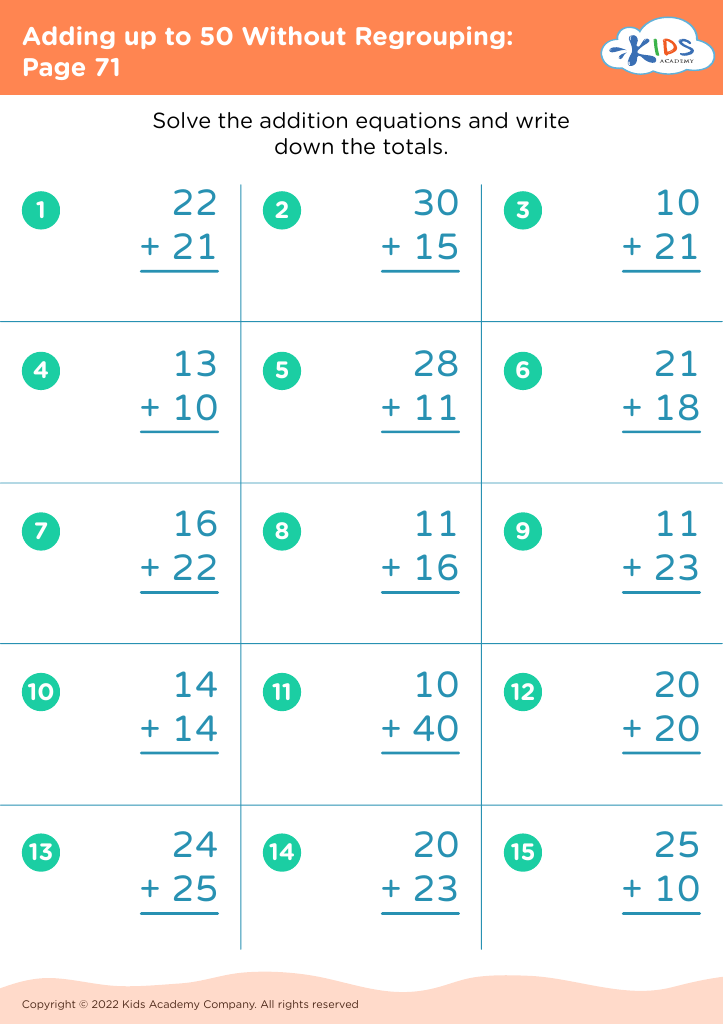
Adding up to 50 Without Regrouping: Page 71
Worksheet
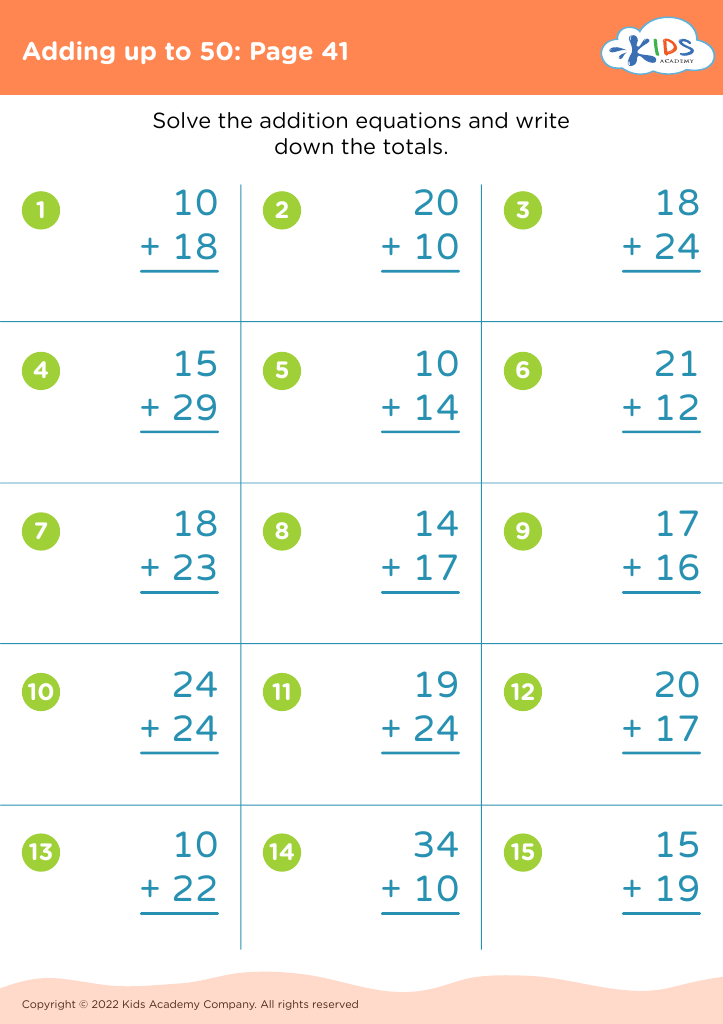
Adding up to 50: Page 41

Adding up to 50: Page 41

Adding up to 50: Page 41
Worksheet
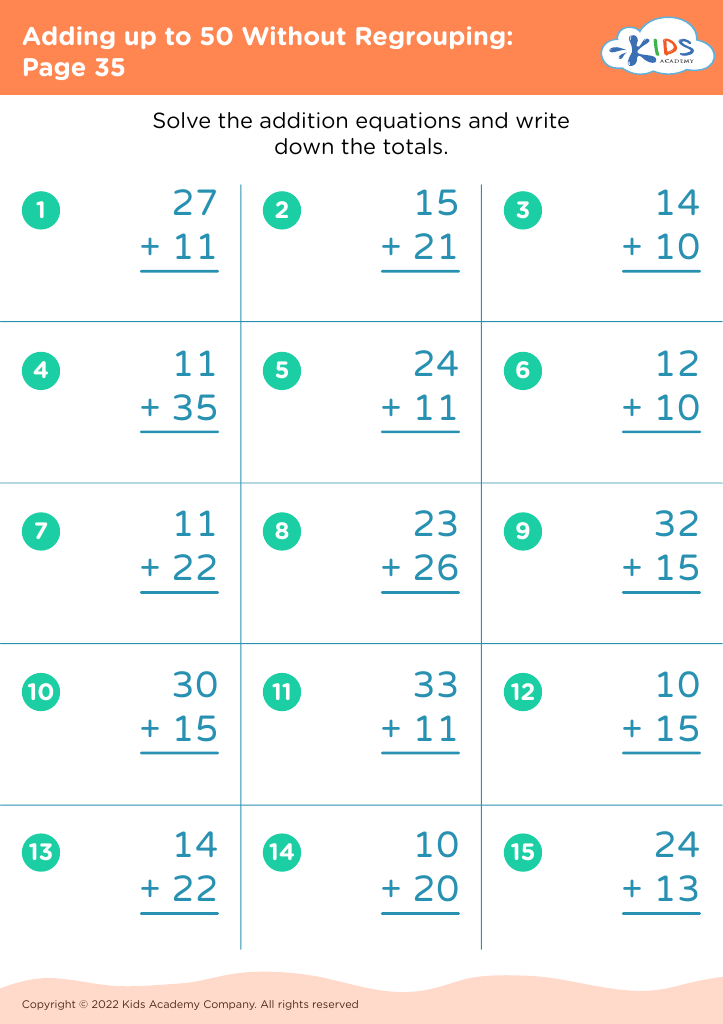
Adding up to 50 Without Regrouping: Page 35
Worksheet
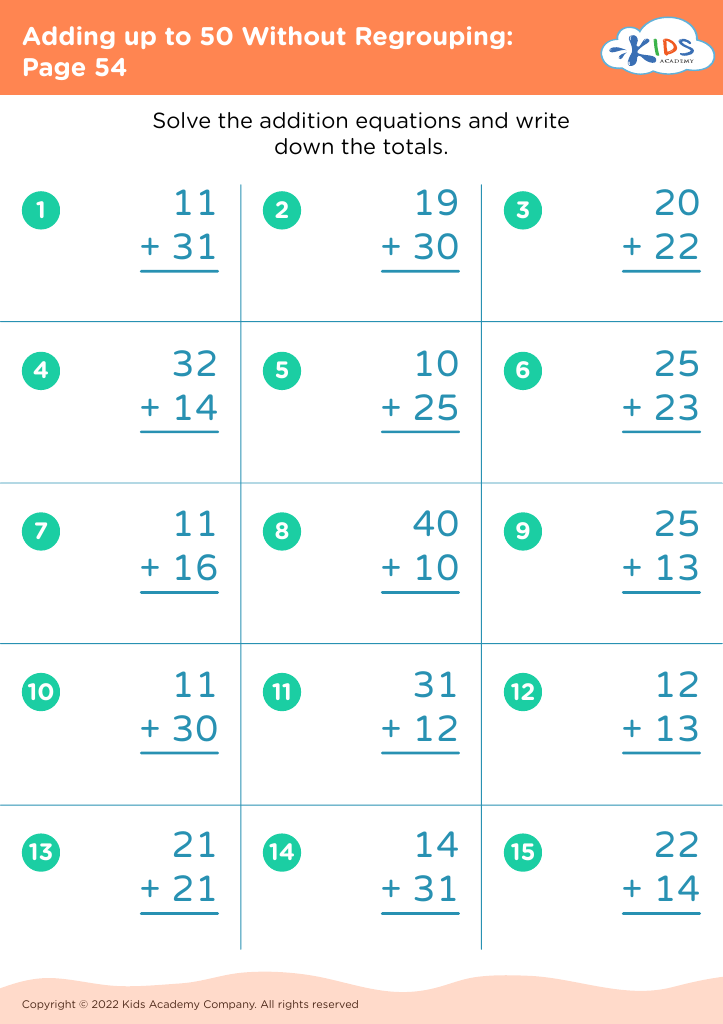
Adding up to 50 Without Regrouping: Page 54
Worksheet
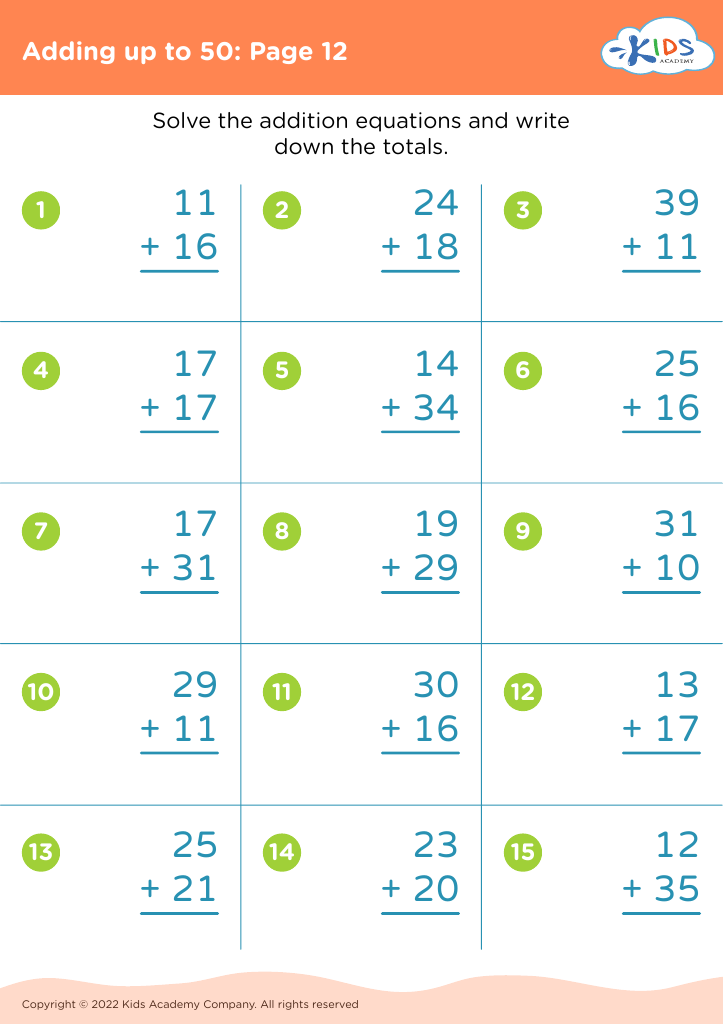
Adding up to 50: Page 12

Adding up to 50: Page 12

Adding up to 50: Page 12
Worksheet
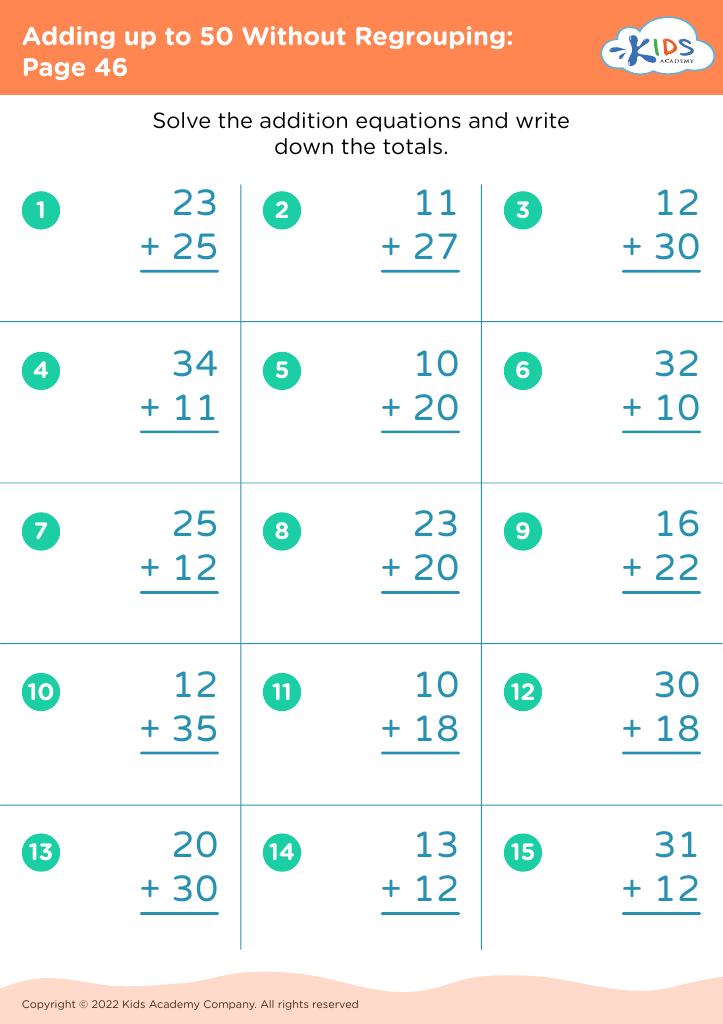
Adding up to 50 Without Regrouping: Page 46
Worksheet
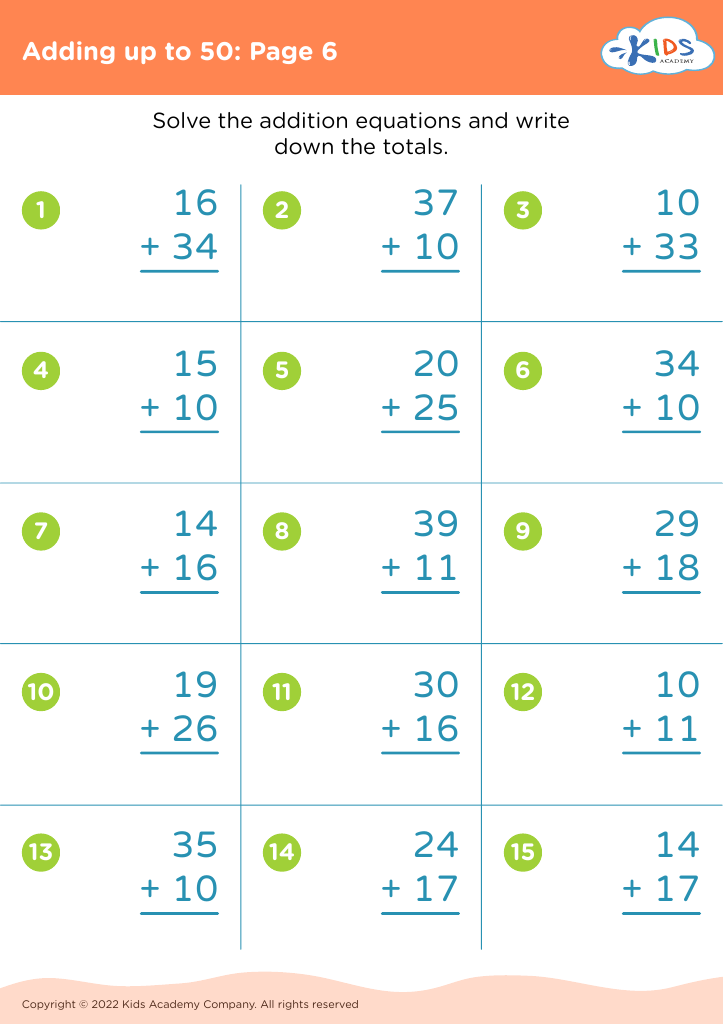
Adding up to 50: Page 6

Adding up to 50: Page 6

Adding up to 50: Page 6
Worksheet
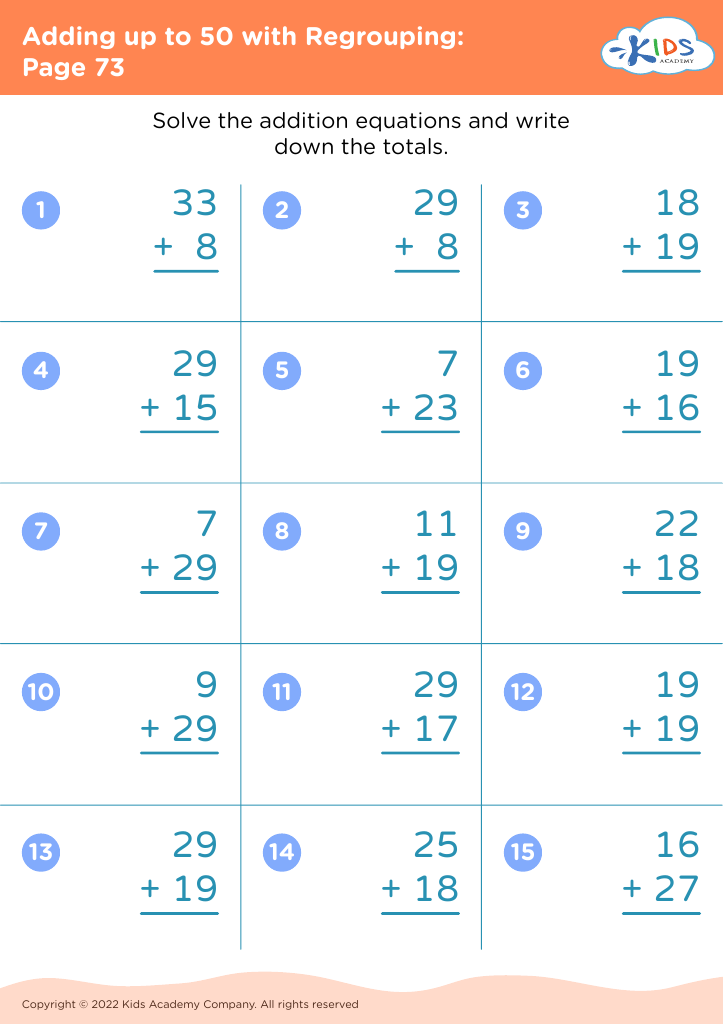
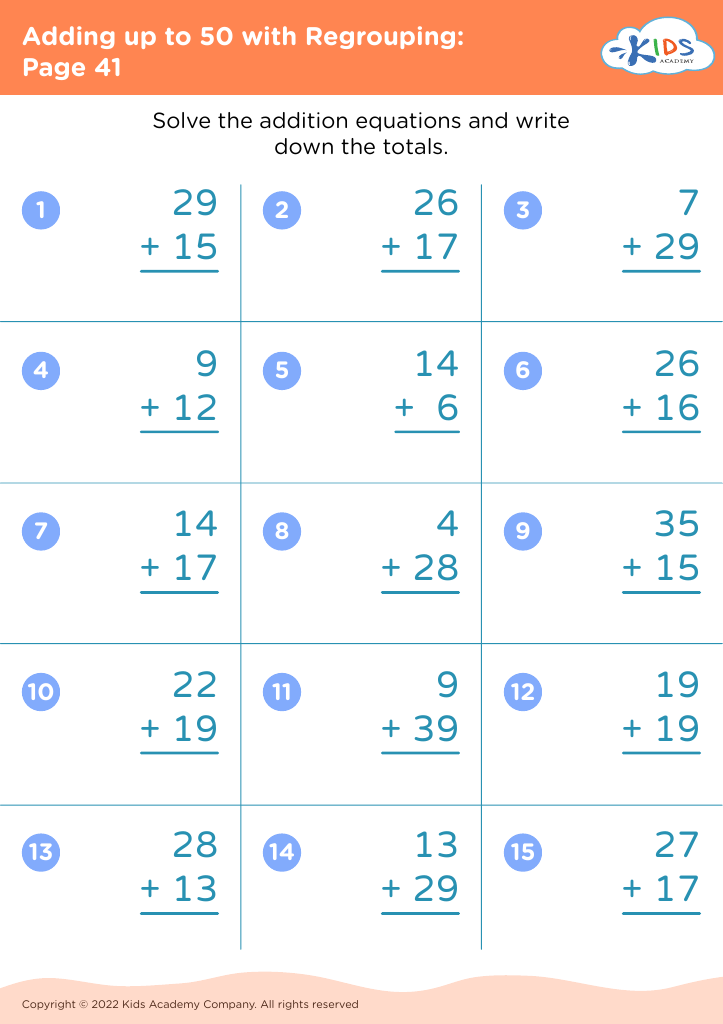
Adding up to 50 with Regrouping: Page 73
Worksheet
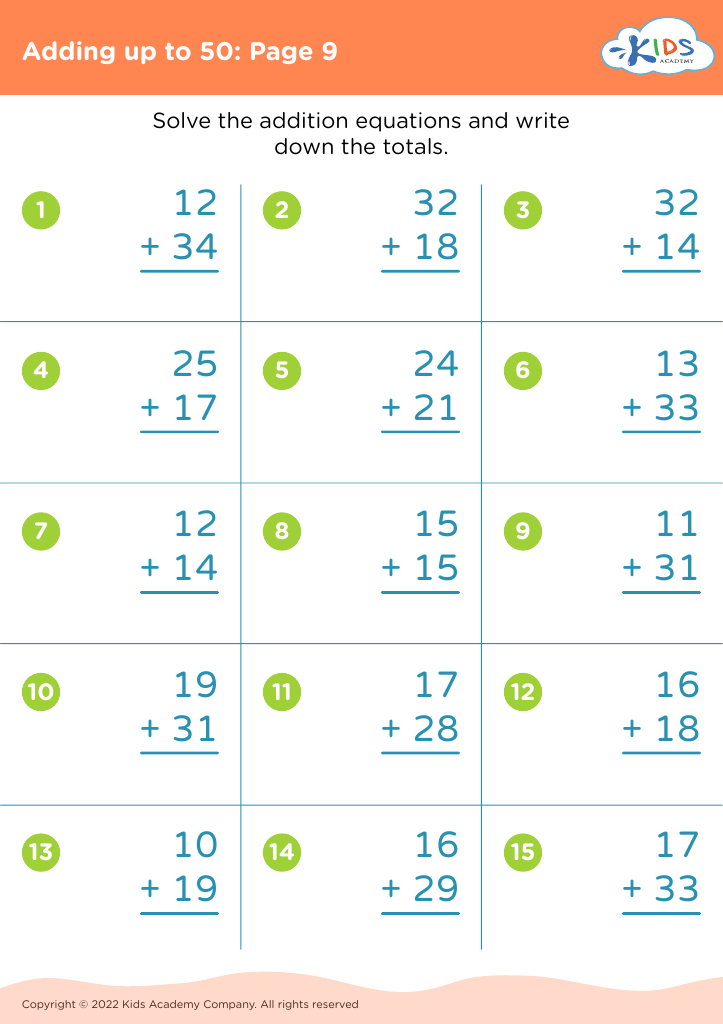
Adding up to 50: Page 9

Adding up to 50: Page 9

Adding up to 50: Page 9
Worksheet
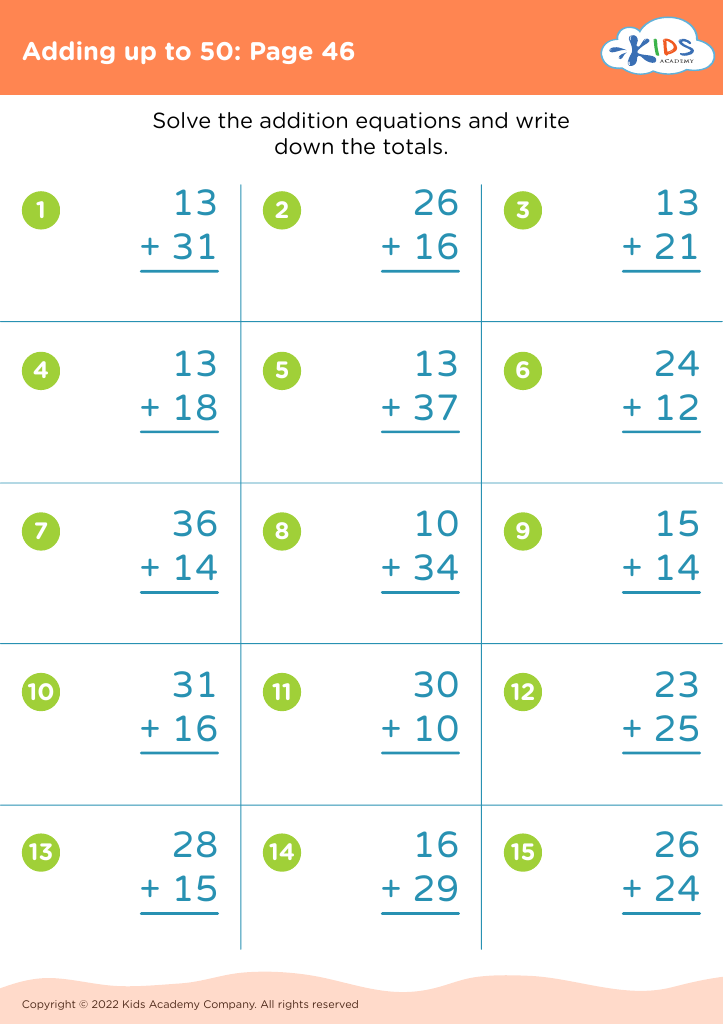
Adding up to 50: Page 46

Adding up to 50: Page 46

Adding up to 50: Page 46
Worksheet
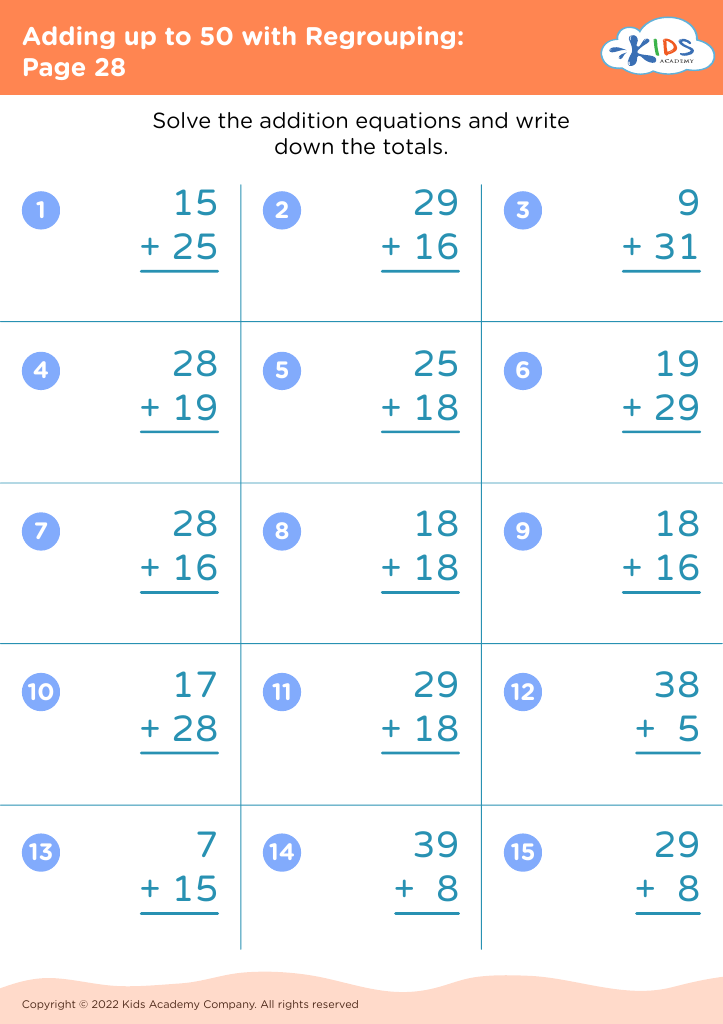
Adding up to 50 with Regrouping: Page 28
Worksheet
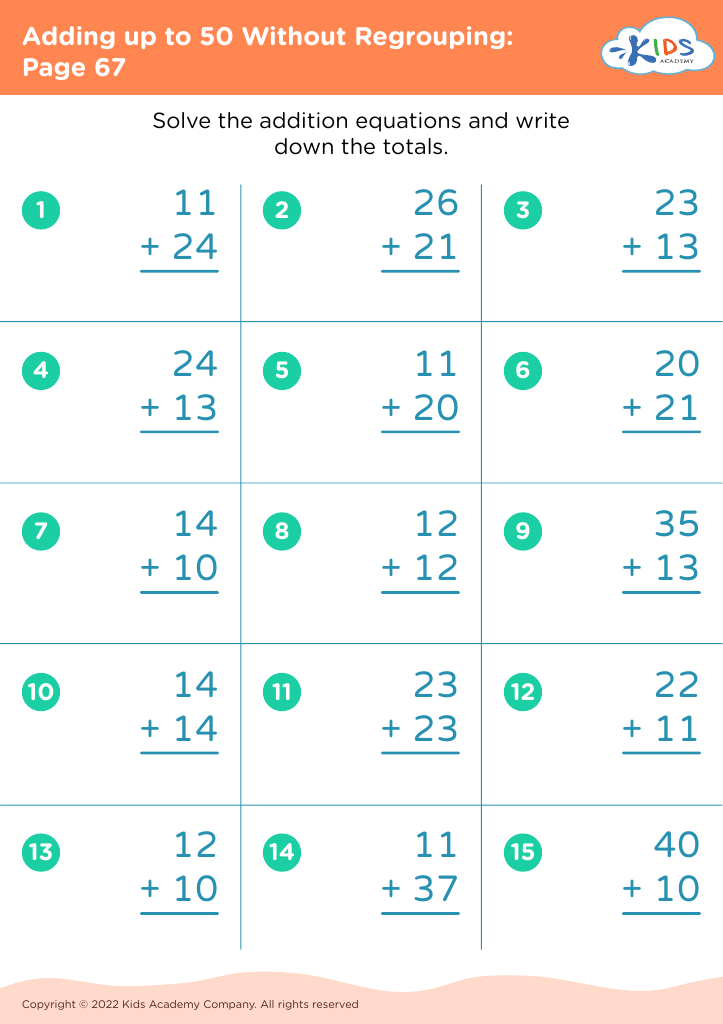
Adding up to 50 Without Regrouping: Page 67
Worksheet
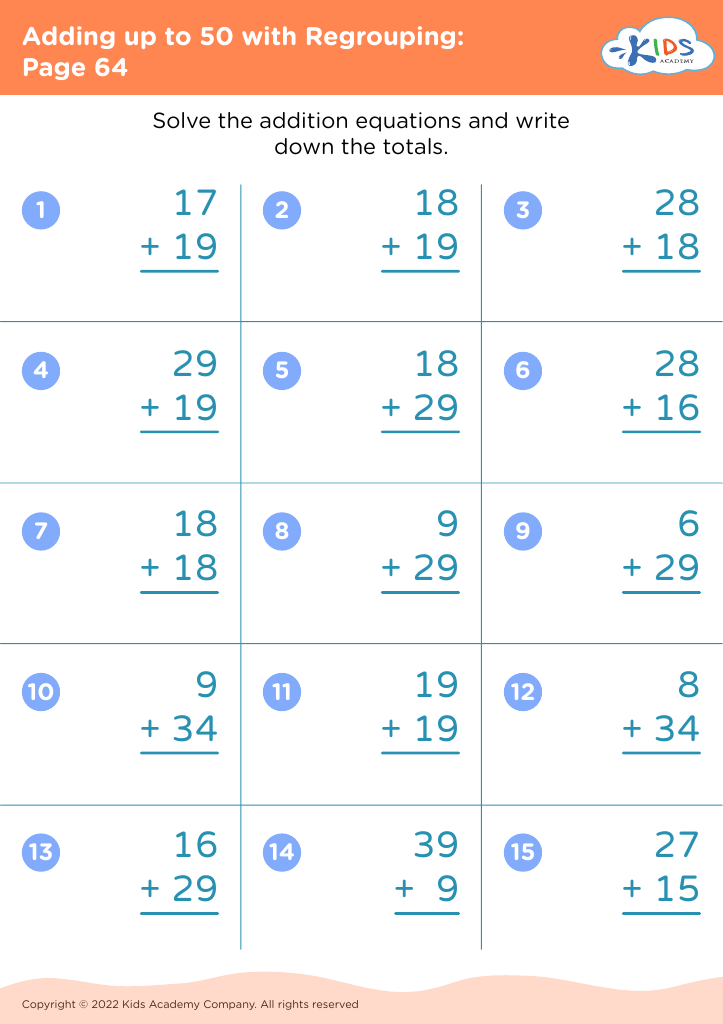
Adding up to 50 with Regrouping: Page 64
Worksheet
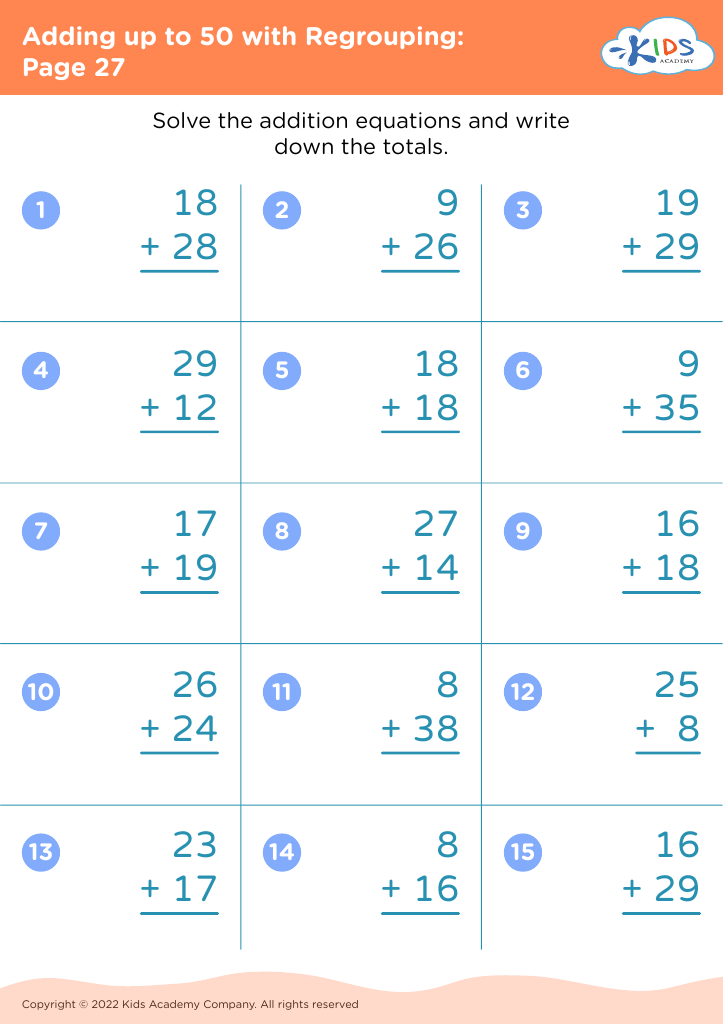
Adding up to 50 with Regrouping: Page 27
Worksheet
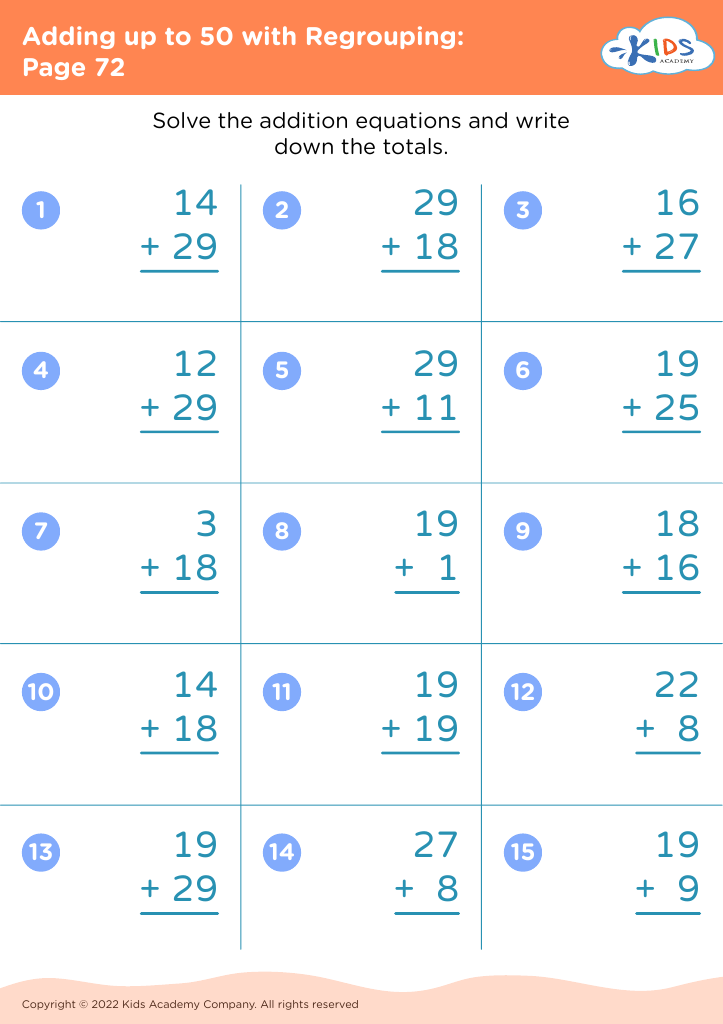
Adding up to 50 with Regrouping: Page 72
Worksheet
Adding up to 50 with Regrouping: Page 41
Worksheet


Counting practice, particularly focusing on adding up to 50, plays a crucial role in the foundational development of mathematics skills for children aged 6-7. At this age, children are typically in the early stages of understanding numbers, their relationships, and how to manipulate them through addition. Mastery of counting to 50 builds confidence and strengthens their number sense, which is essential for more advanced mathematical concepts in later grades.

Moreover, addition skills include not just the ability to perform arithmetic operations but also to develop critical thinking and problem-solving skills. Engaging in counting practice fosters cognitive development as children learn to group numbers and recognize patterns, enhancing their overall analytical abilities. This early exposure to addition sets the groundwork for future mathematical learning, aiding in the understanding of concepts such as subtraction, multiplication, and division.

Additionally, parents and teachers can promote interactive and enjoyable counting games. These activities encourage collaboration and communication, making learning a positive and fun experience. Ultimately, prioritizing counting practice for young learners supports their academic growth and instills a lifelong appreciation for mathematics. Thus, parents and teachers should recognize the importance of such practice in nurturing successful, numerate individuals.