Critical Thinking Addition and Subtraction Word Problems Worksheets for Ages 6-7
5 filtered results
-
From - To
Unlock your child's potential with our "Critical Thinking Addition and Subtraction Word Problems Worksheets" designed for ages 6-7. These engaging worksheets encourage young learners to enhance their problem-solving skills by tackling real-life scenarios through mathematical reasoning. Featuring relatable word problems tailored to their age group, students will learn to analyze information, develop logic, and apply their addition and subtraction skills effectively. Ideal for both classroom and home learning, these resources promote critical thinking while ensuring your child gains confidence in math. Explore a variety of fun and challenging problems to enrich their understanding and love for mathematics!
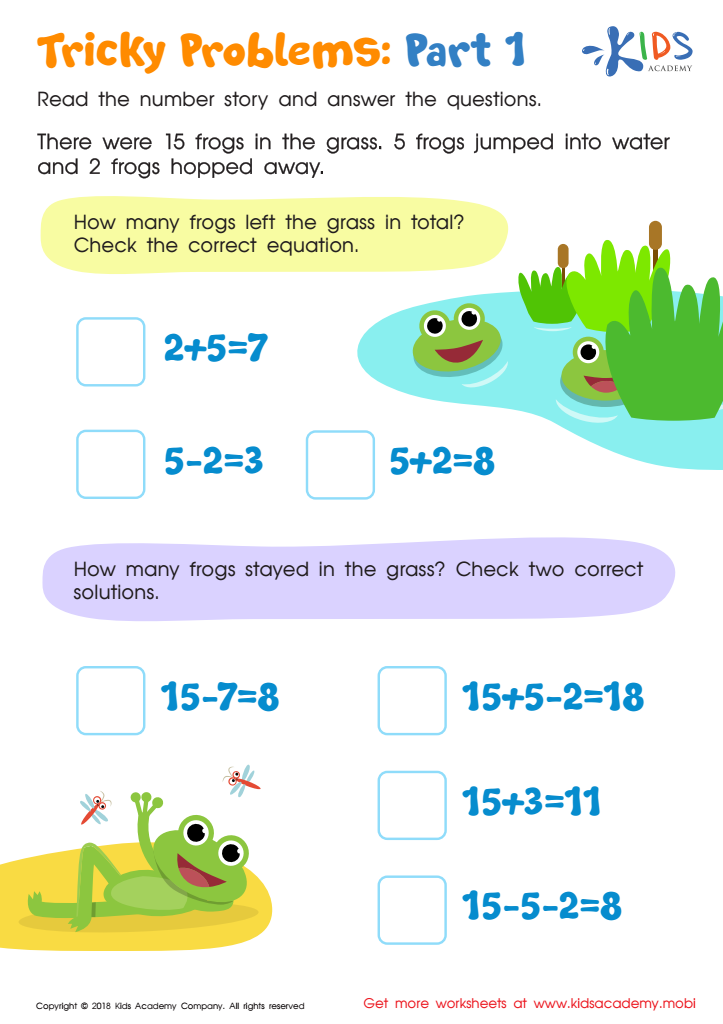
Tricky Problems Worksheet: Part 1
 Assign to My Students
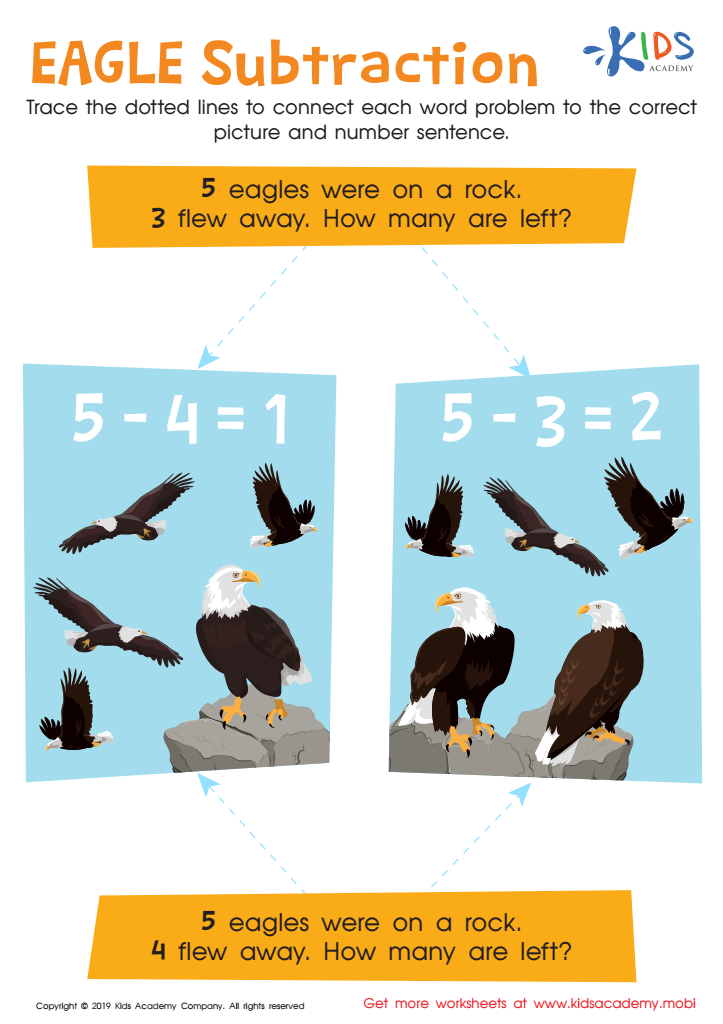
Eagle Subtraction Worksheet
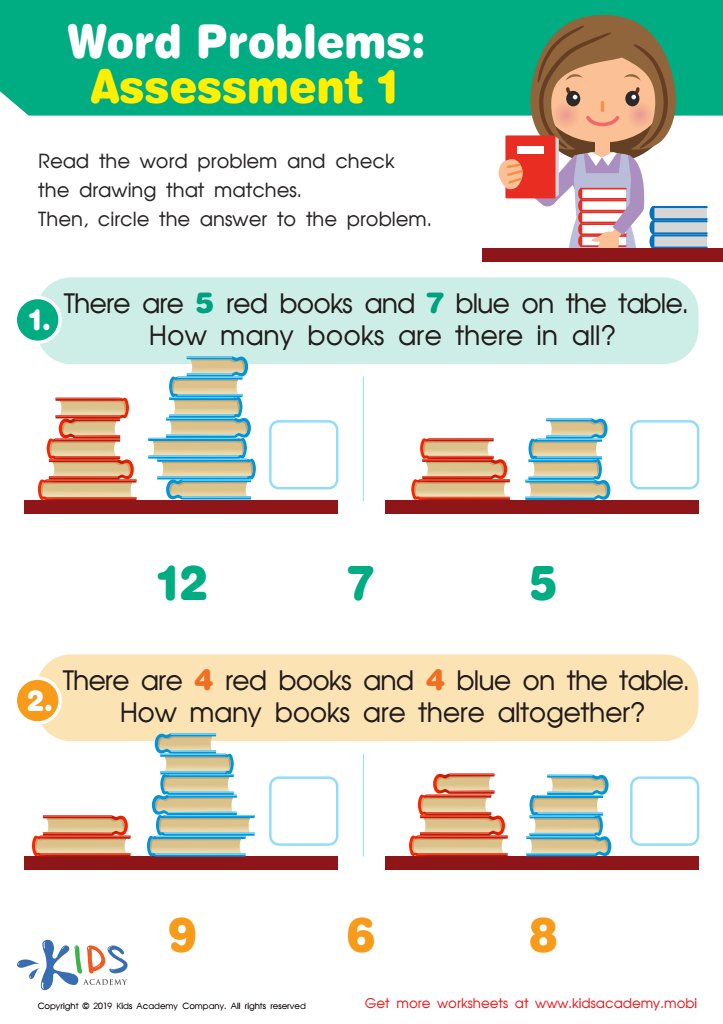
Word Problems: Assessment 1 Worksheet
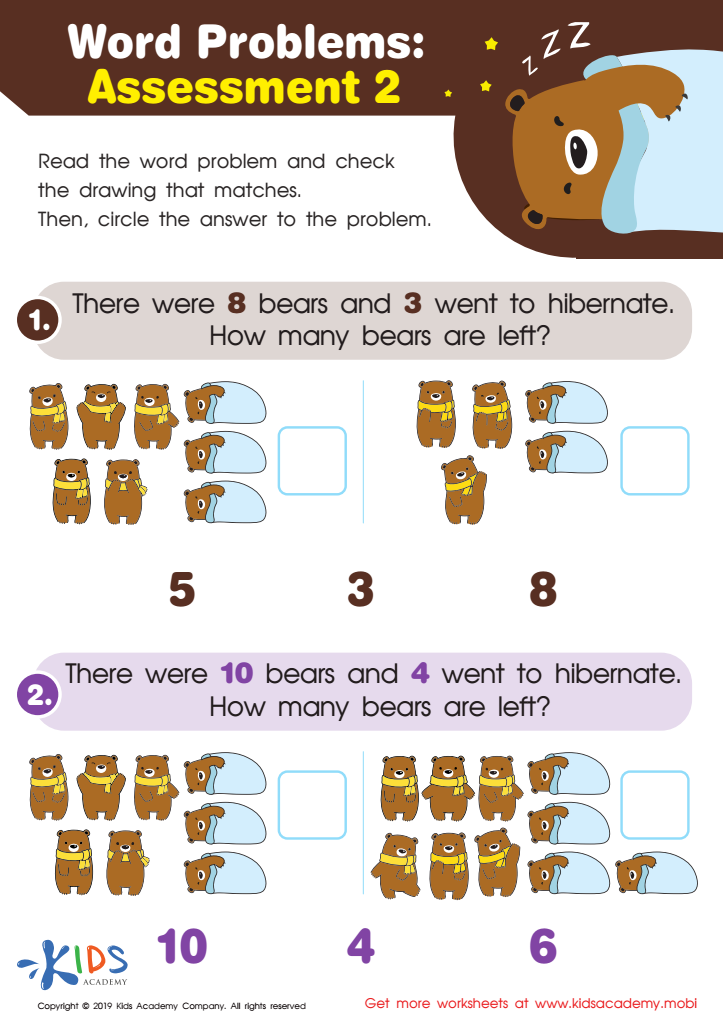
Word Problems: Assessment 2 Worksheet
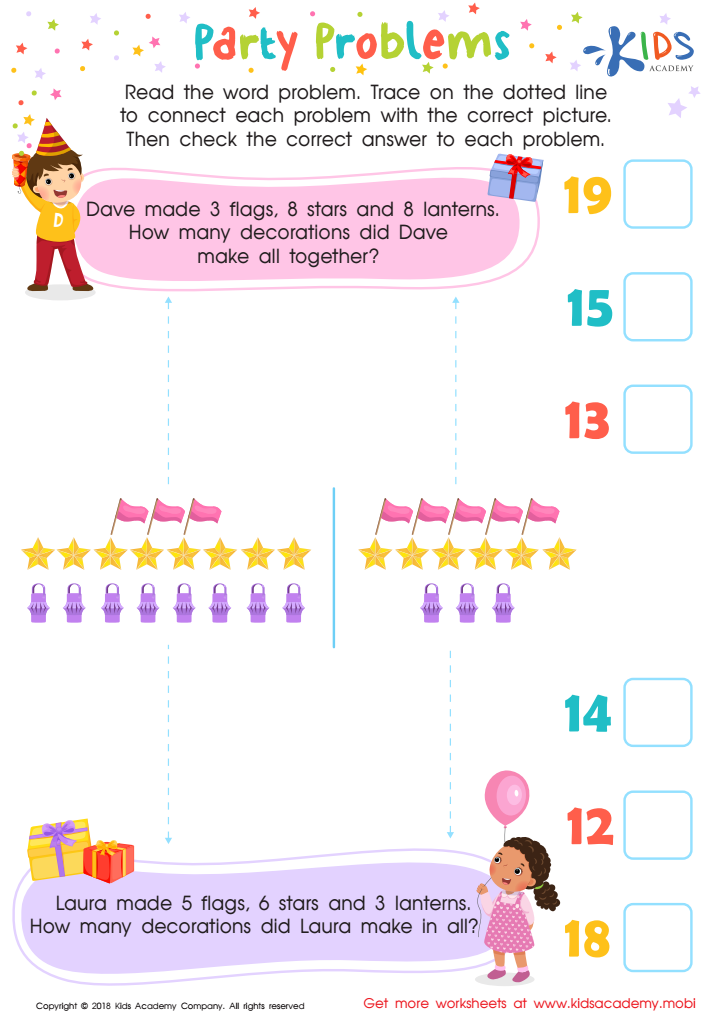
Party Problems Worksheet








Parents and teachers should care about Critical Thinking Addition and Subtraction Word Problems for children aged 6-7 because these skills form the foundation of mathematical understanding and problem-solving abilities. At this developmental stage, children are not just learning how to compute numbers; they are beginning to interpret information, make inferences, and apply their knowledge to real-life situations.
Word problems encourage young learners to analyze scenarios, identify relevant information, and decide whether to add or subtract. This practice fosters critical thinking by requiring students to think beyond simple calculations, promoting reasoning and abstract thinking. Solving these problems enhances their ability to clearly articulate their thought processes and develop persistence when faced with challenges.
Additionally, mastery in word problems builds confidence in math, making students more willing to engage in complex tasks. As these foundational skills are established, children become more adept thinkers, preparing them for higher-level reasoning needed in future academic pursuits. Finally, promoting this critical thinking early on equips children with valuable life skills, nurturing informed decision-makers who are capable of assessing their surroundings and making sense of them. This holistic approach to comprehension supports overall cognitive development, ensuring educational success as they progress.