Discover our engaging Basic Arithmetic Practice Addition & Subtraction Worksheets designed specifically for children aged 6-7! These worksheets provide a fun and effective way to bolster foundational math skills while helping young learners develop confidence in addition and subtraction. Each worksheet is crafted to enhance critical thinking and number sense through a variety of exercises, including simple calculations, word problems, and visual aids. Perfect for homeschooling, tutoring, or classroom use, these worksheets cater to diverse learning styles, ensuring every child can thrive in their mathematical journey. Download and print today to support your child's path to math mastery!
Check out this FREE Trial Lesson on Addition & Subtraction for age 6-7!

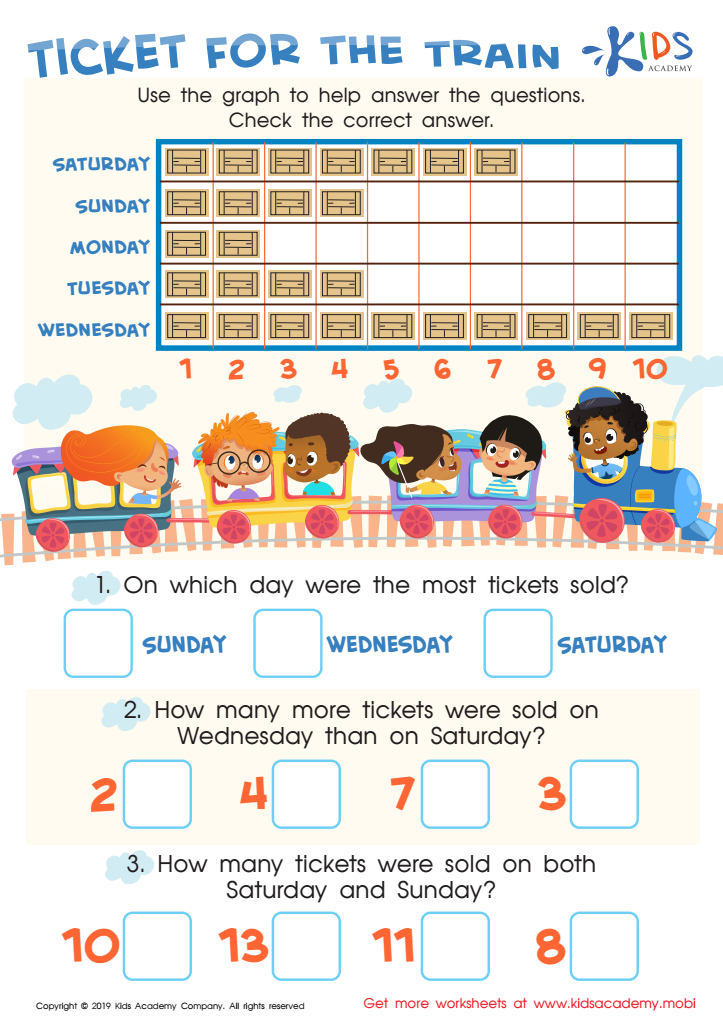
Picture Graphs Word Problems

Favorites
With answer key
Interactive
  • 6-7
  • Basic arithmetic practice
  • Addition & Subtraction
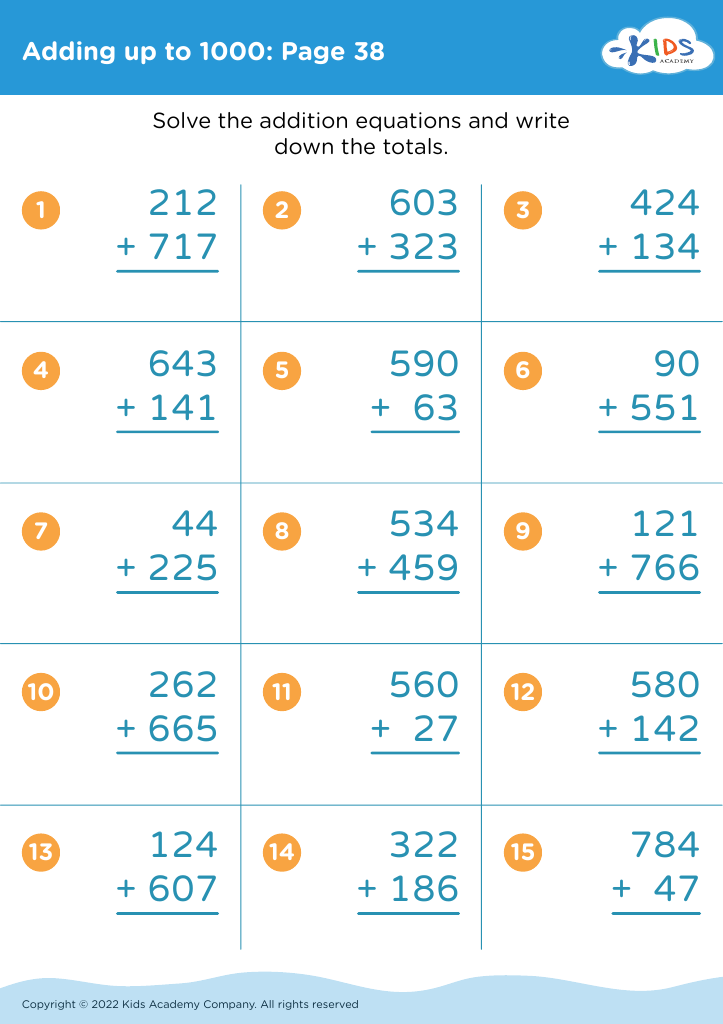
Adding up to 1000: Page 38

Adding up to 1000: Page 38

Adding up to 1000: Page 38
Worksheet
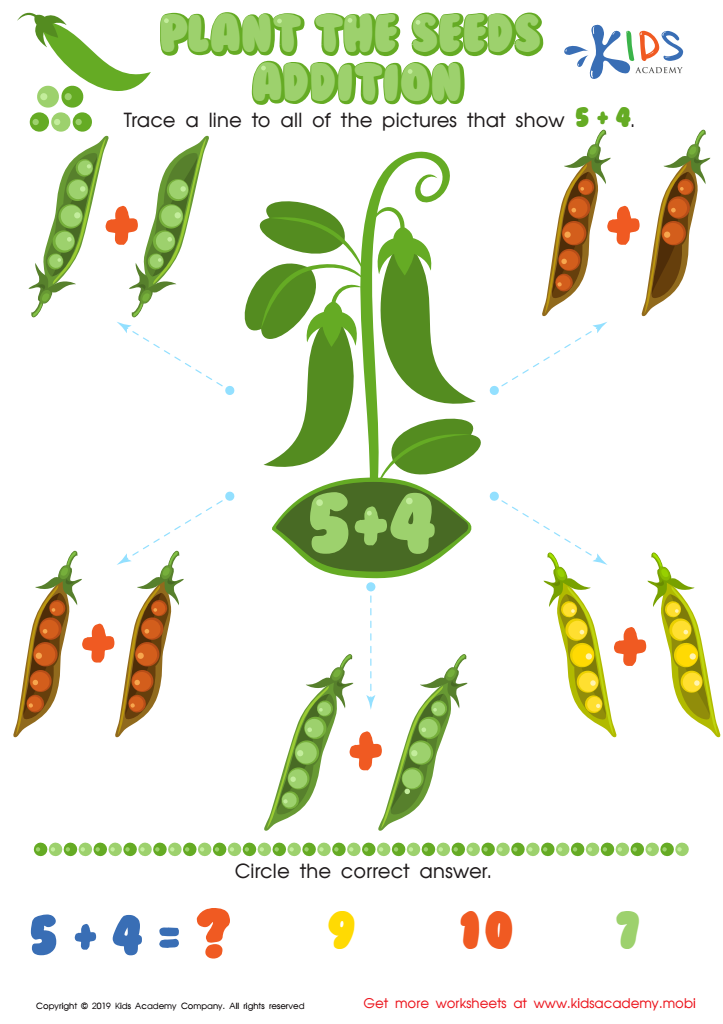
Plant the Seeds Addition Worksheet

Plant the Seeds Addition Worksheet

This worksheet combines math and learning about plants. Ask kids to name their favorite plants and which ones they see the most. Have them trace a line to all pictures in the middle which show the equation 5+4. Enjoy the beauty of plants while introducing math skills!
Plant the Seeds Addition Worksheet
Worksheet
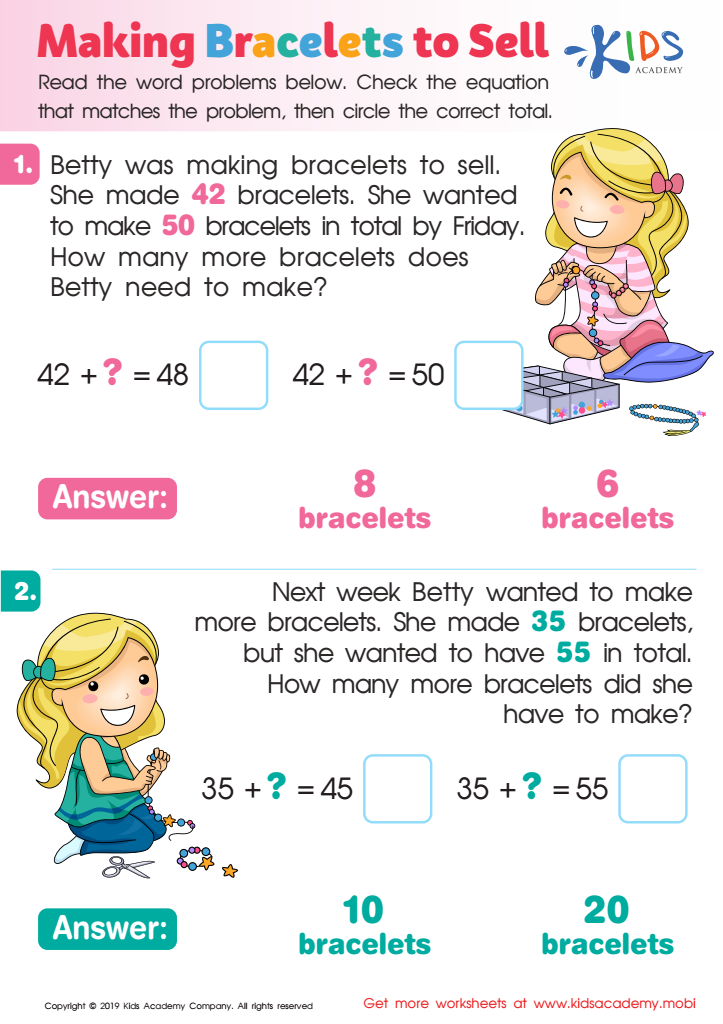
Making Bracelets to Sell Worksheet

Making Bracelets to Sell Worksheet

Got kids who love crafting? This worksheet will be right up their alley! Let them use their creative and problem-solving skills to check equations and decide the correct total. It's just like making beads into a bracelet but on paper! Print out this downloadable PDF and get ready for a fun craft session.
Making Bracelets to Sell Worksheet
Worksheet
Second Grade Math Worksheets

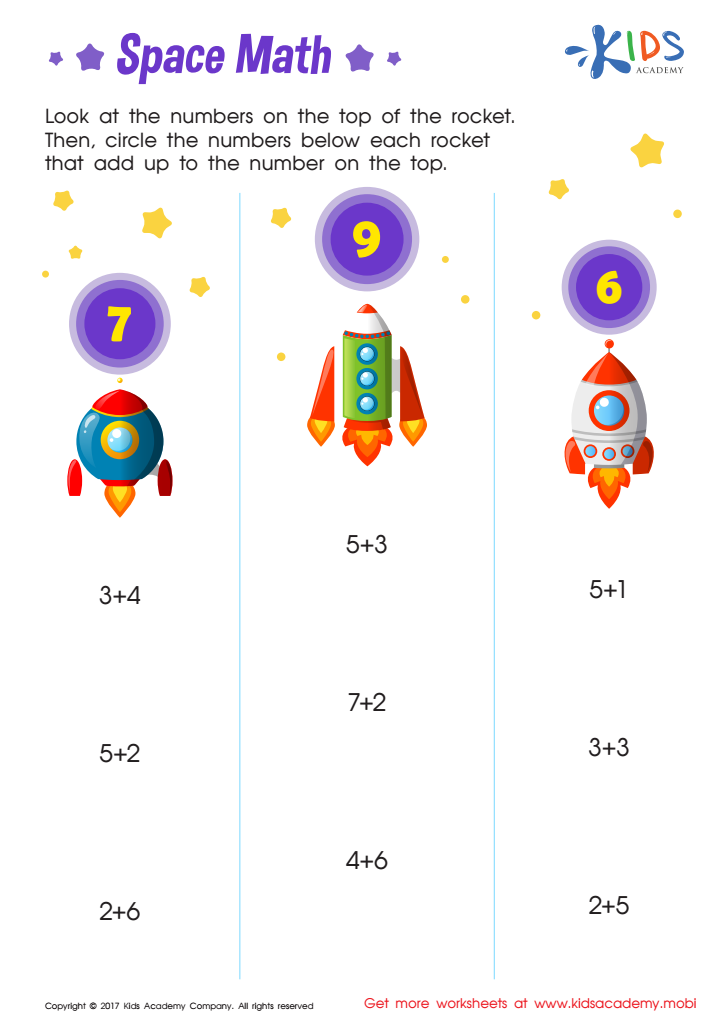
Addition: Space Math Worksheet

Fun and engaging space-themed practice with vivid pictures and matching numbers will make learning more meaningful. Take their math skills out of this galaxy today with Kids Academy!
Addition: Space Math Worksheet
Worksheet
Ticket for the Train Worksheet
Ticket for the Train Worksheet

It's important to use fun scenarios with familiar objects when teaching kids. Try discussing train rides and the accompanying picture graph. Ask questions about it, then help kids check the correct answers. Let them enjoy the learning process!
Ticket for the Train Worksheet
Worksheet
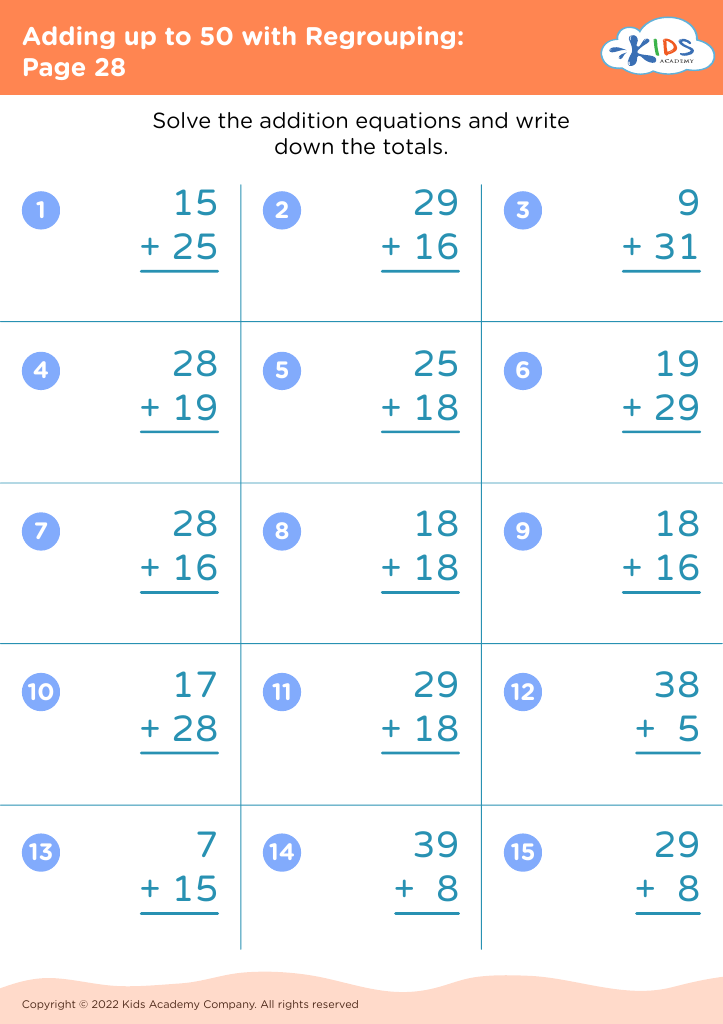
Adding up to 50 with Regrouping: Page 28
Worksheet
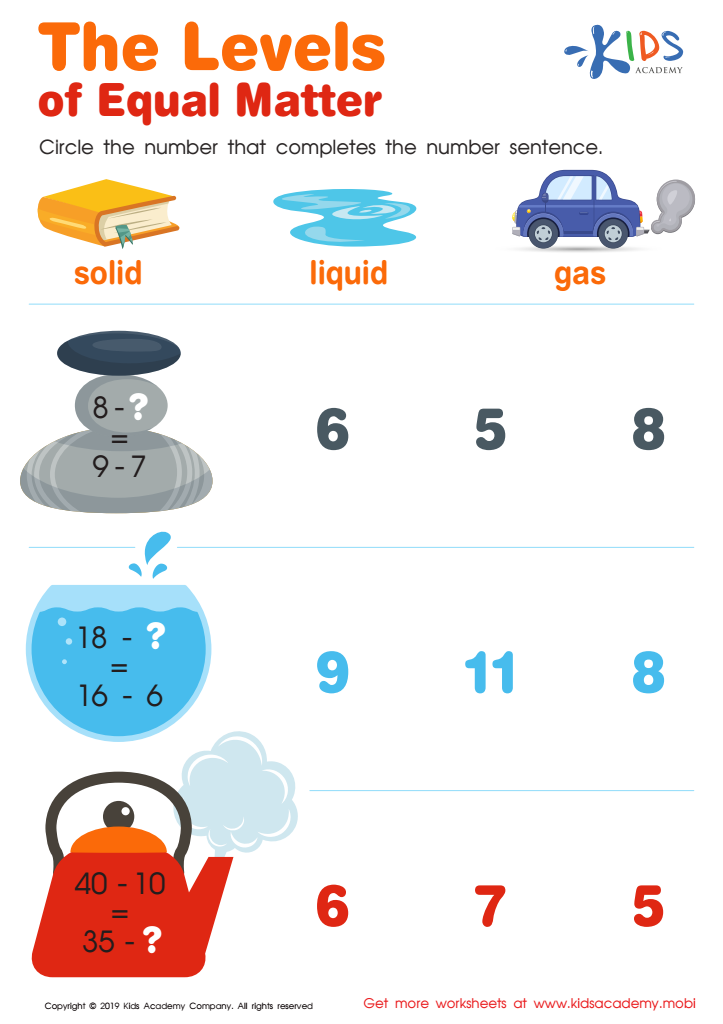
The Levels of Equal Matter Worksheet

The Levels of Equal Matter Worksheet

Matter is anything that has weight and occupies space. Common examples include people, animals, objects and liquids. Have your kids understand this concept by looking at the levels of matter in this worksheet and completing the number sentence mathematical problems beneath.
The Levels of Equal Matter Worksheet
Worksheet
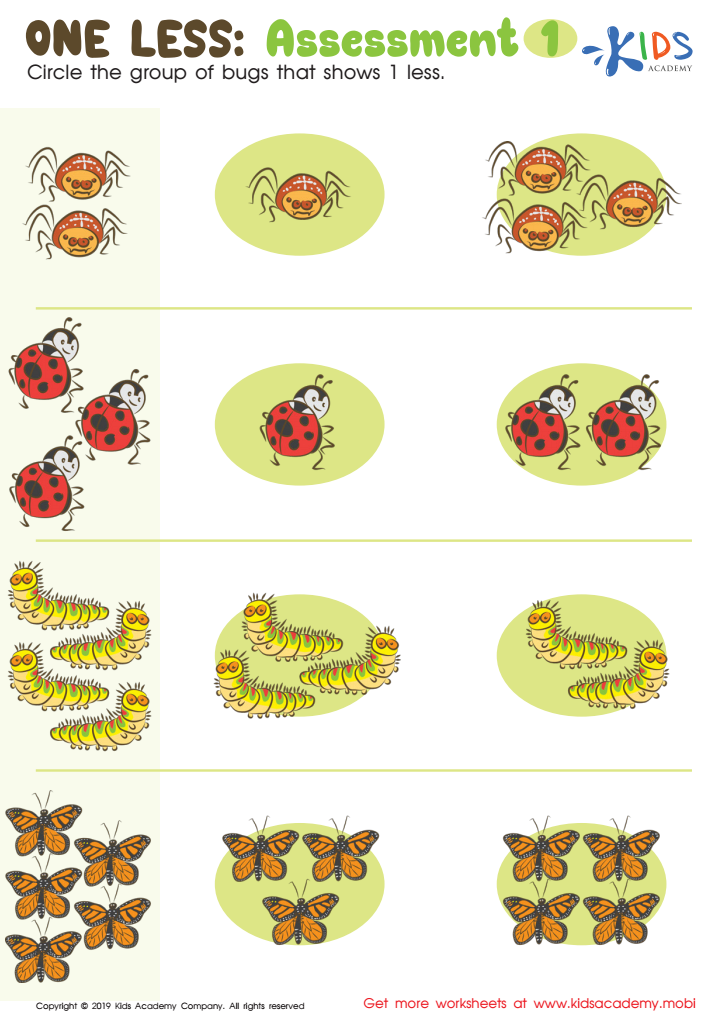
One Less: Assessment 1 Worksheet


One Less: Assessment 1 Worksheet

Help your kids with counting using this worksheet that has pictures of bugs! There are four different bugs and insects. Show them each one and ask them to count, then circle the group that has 1 less than the previous group. Don't worry if your kids don't like bugs - it's just a picture!
One Less: Assessment 1 Worksheet

Worksheet


Basic arithmetic practice in addition and subtraction is crucial for children aged 6-7, as it serves as the foundation for their mathematical understanding and overall cognitive development. At this age, children are typically in the transition from concrete to abstract thinking, meaning they are beginning to grasp more complex concepts but still need solid foundational skills to build upon.

Mastering basic addition and subtraction enhances children’s problem-solving abilities, boosts their confidence, and improves their early math skills essential for future learning. Proficiency in these operations ensures they can tackle standardized assessments and face real-world challenges, such as budgeting or handling money.

Moreover, engaging in arithmetic practice fosters critical thinking skills; children learn to approach problems methodically and increase their numerical fluency, which is vital as they progress through higher-grade levels. Parents and teachers play a pivotal role in this process by providing supportive environments, encouraging practice through games, activities, and daily interactions that reinforce these concepts.

Finally, when teachers and parents prioritize these skills, they not only prepare children for academic success but also cultivate a positive attitude towards mathematics, helping to combat math anxiety and setting them on a path towards lifelong learning.