Color Identification Addition & Subtraction Worksheets for Ages 6-7 - Page 2
26 filtered results
-
From - To
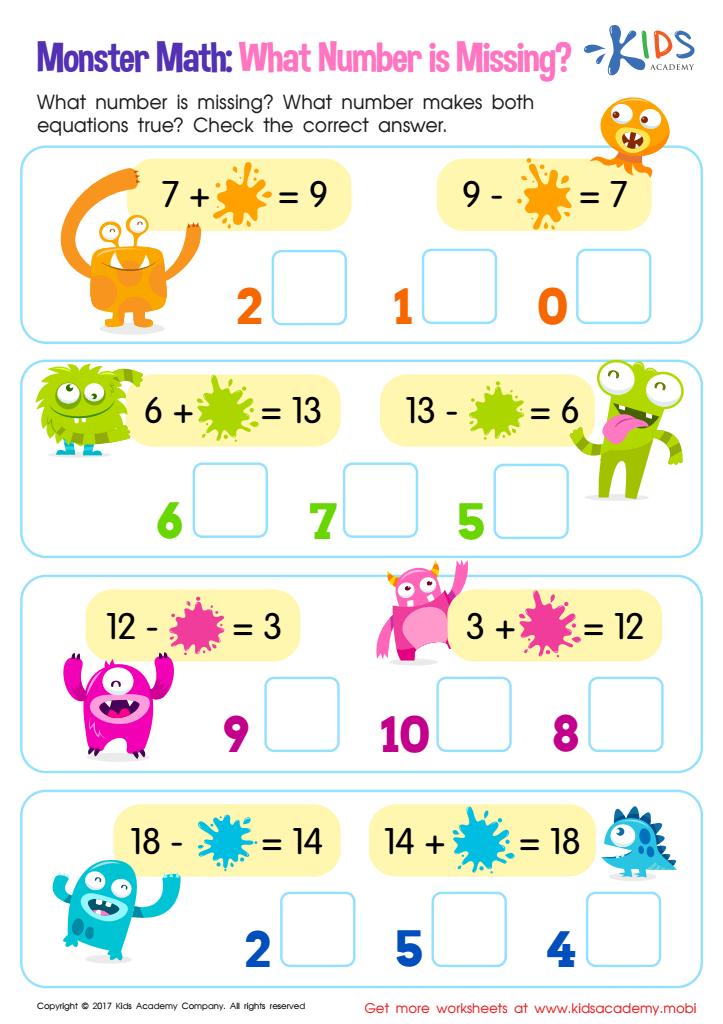
Missing Number: Monster Math Worksheet
 Assign to My Students
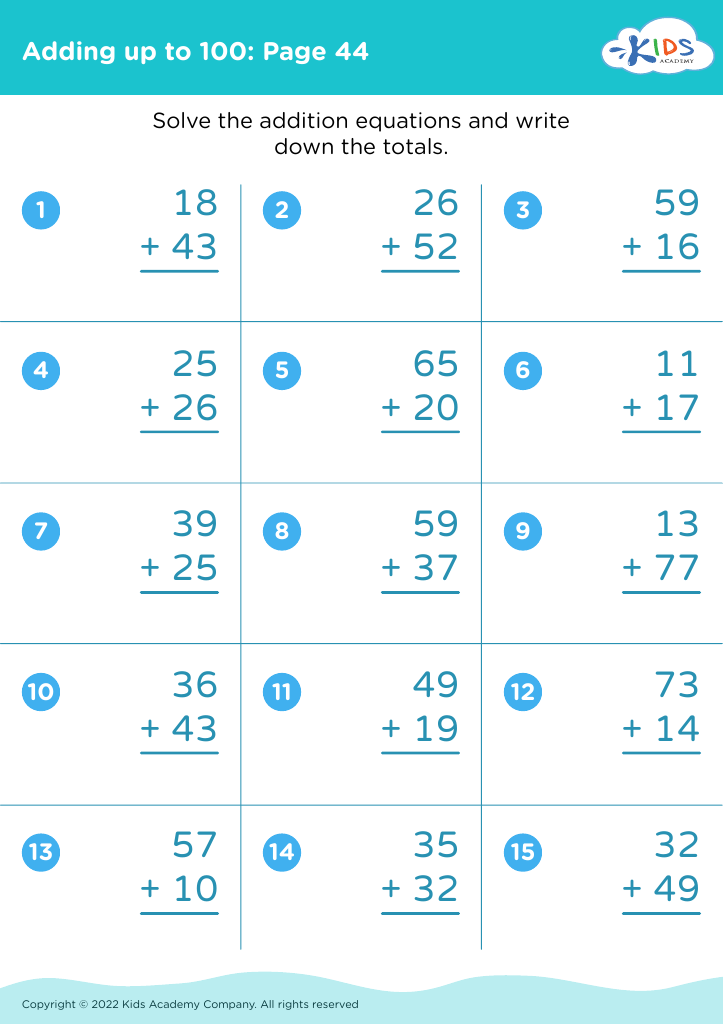








Color identification, particularly when combined with basic addition and subtraction, is crucial for children ages 6-7 for several reasons. First, it enhances cognitive development. Engaging with colors while solving math problems provides multifaceted learning, allowing children to connect visual and numerical skills. This blended approach not only keeps lessons interactive and enjoyable but also reinforces their understanding of concepts.
Second, color identification assists in improving attention and focus. Bright colors can capture children's interest, making them more likely to engage actively in learning activities. Using colors to differentiate between items in math problems helps children organize their thoughts and categorize information more effectively.
Furthermore, mastering color identification alongside math skills also paves the way for deeper learning. As children advance in their education, they will encounter more complex, multi-step problems that require critical thinking and problem-solving abilities. By integrating colors into early math practice, parents and teachers cultivate a strong foundation for these essential skills.
Ultimately, focusing on color identification in addition and subtraction enables children to view math as a creative and meaningful subject, laying a solid groundwork for lifelong learning and enthusiasm for education. This winning combination nurtures well-rounded young learners prepared for future academic challenges.








