Filters

143 filtered results

Clear all filters
Favorites
With answer key
Interactive

143 filtered results

Difficulty Level

Grade


Check out this FREE Trial Lesson on Addition & Subtraction for age 6-7!

Writing Equations Addition

Favorites
With answer key
Interactive
  • 6-7
  • Counting skills
  • Addition & Subtraction
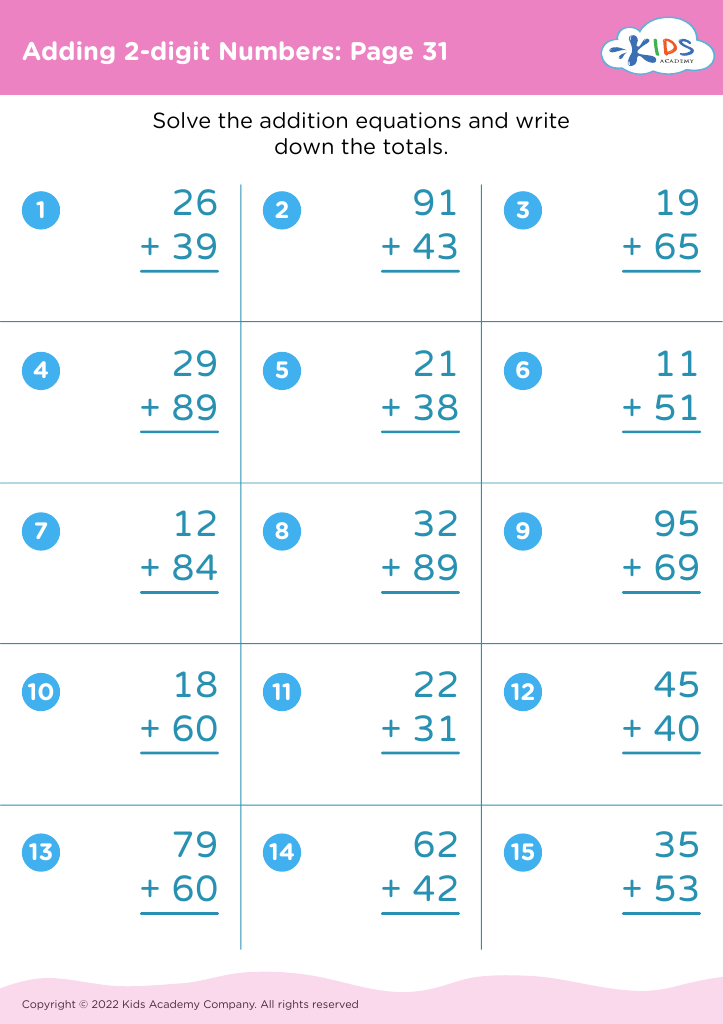
Adding 2-digit Numbers: Page 31

Adding 2-digit Numbers: Page 31

Adding 2-digit Numbers: Page 31
Worksheet
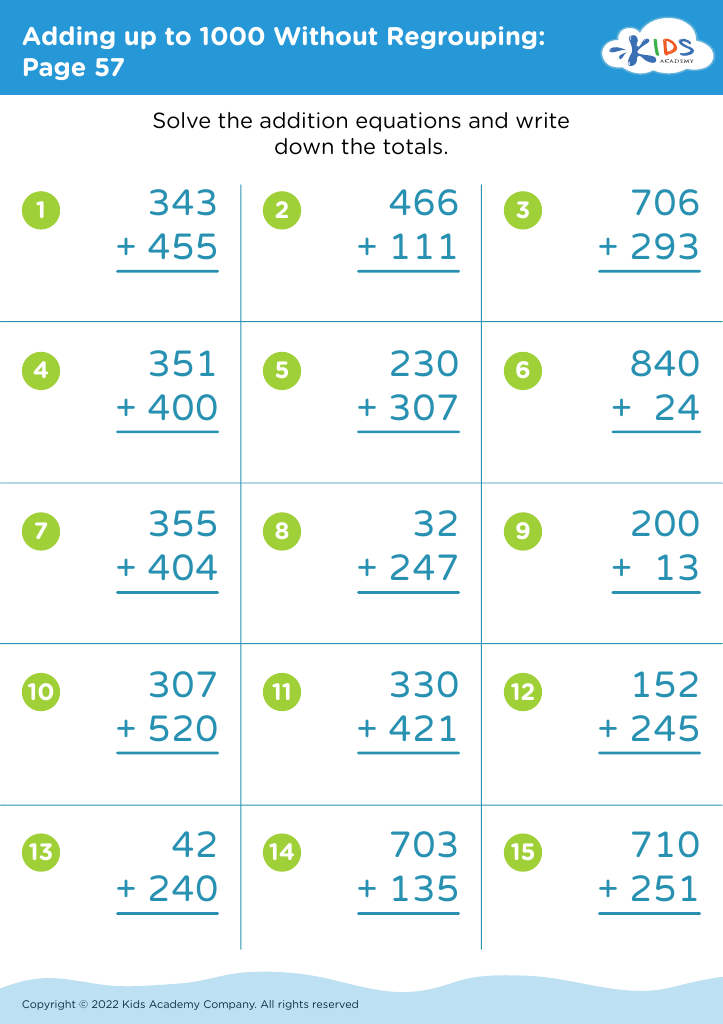
Adding up to 1000 Without Regrouping: Page 57
Worksheet
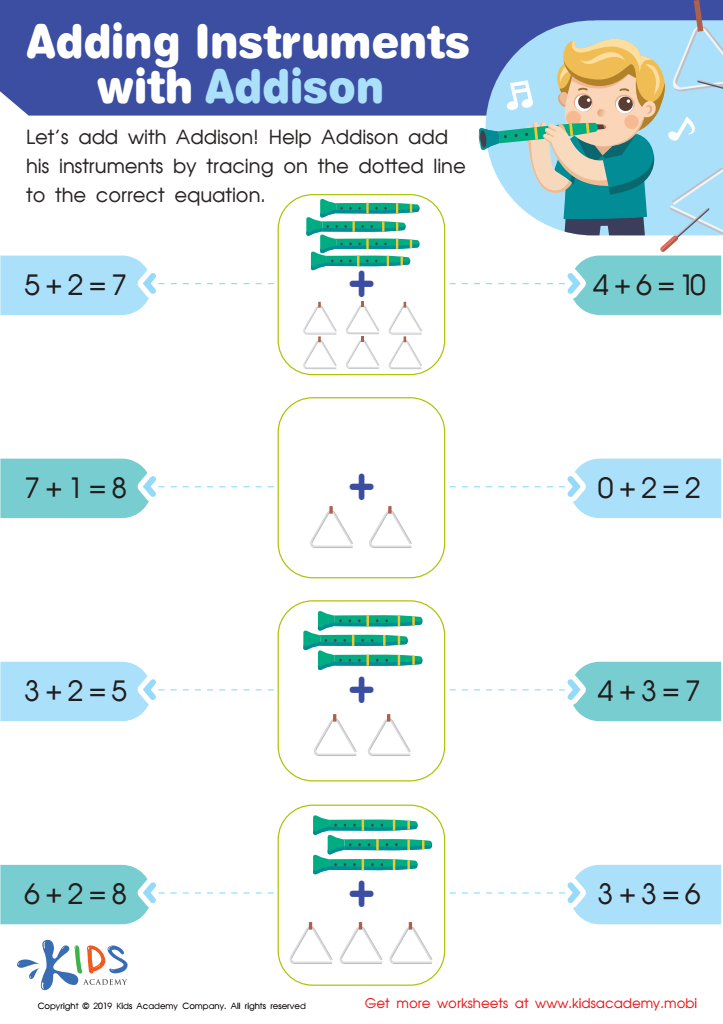
Adding Instruments with Addison Worksheet

Adding Instruments with Addison Worksheet

Your math stars will enjoy assisting Addison as he adds his instruments. This worksheet has 10 basic addition problems with pictures of instruments to aid children. They match the pics and sentences, then connect them to the correct problem using the lines. A fun way to learn and practice addition!
Adding Instruments with Addison Worksheet
Worksheet
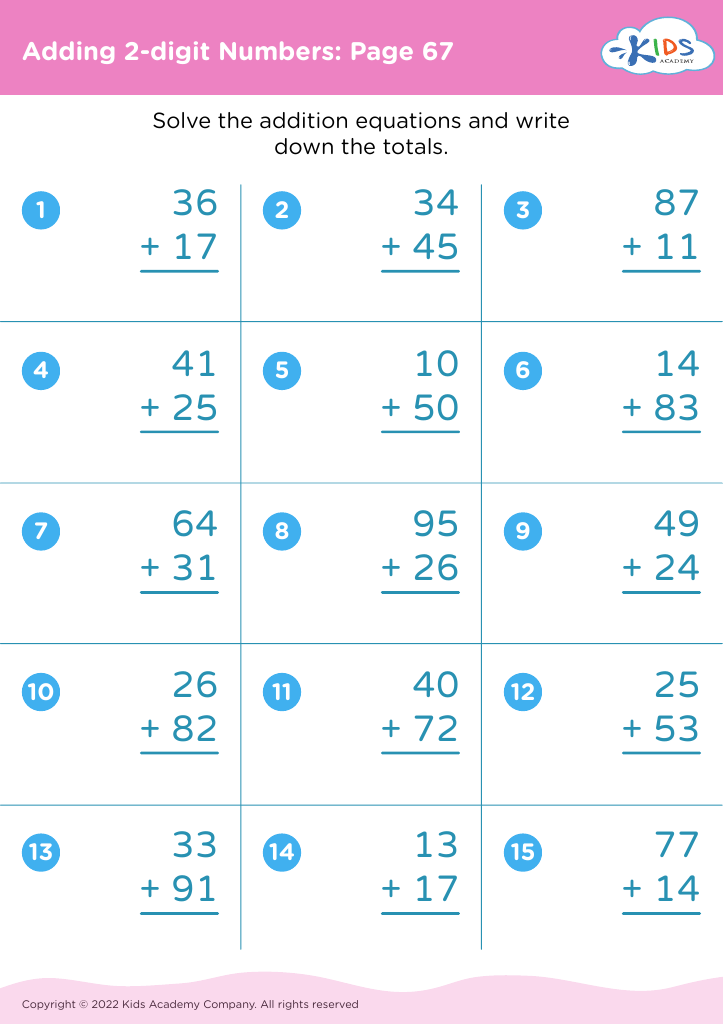
Adding 2-digit Numbers: Page 67

Adding 2-digit Numbers: Page 67

Adding 2-digit Numbers: Page 67
Worksheet
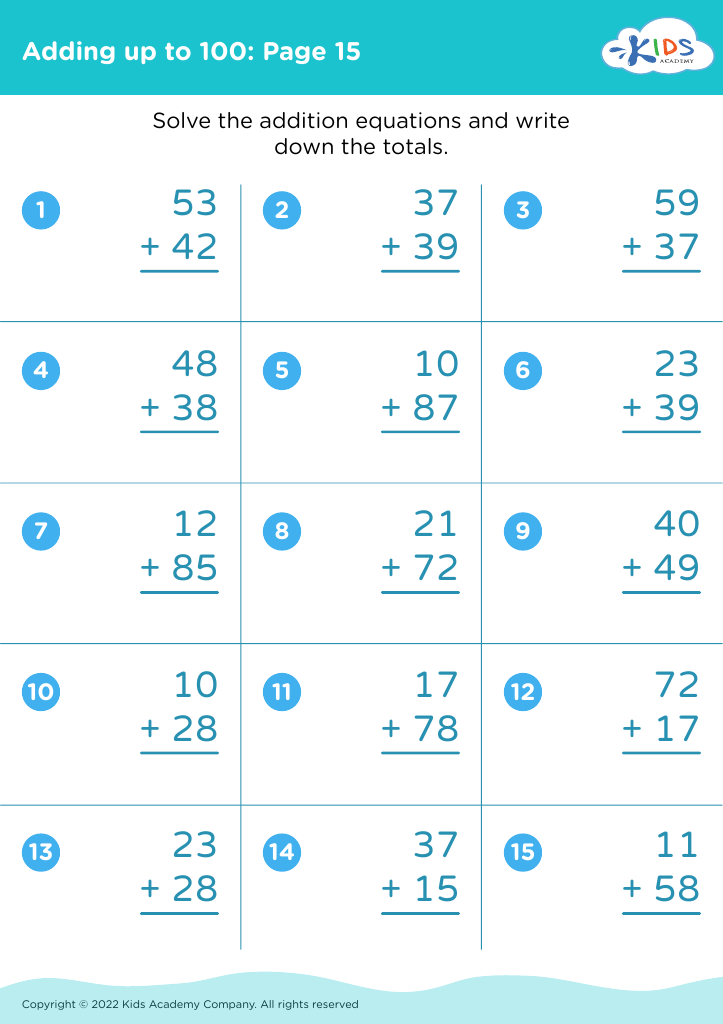
Adding up to 100: Page 15

Adding up to 100: Page 15

Adding up to 100: Page 15
Worksheet
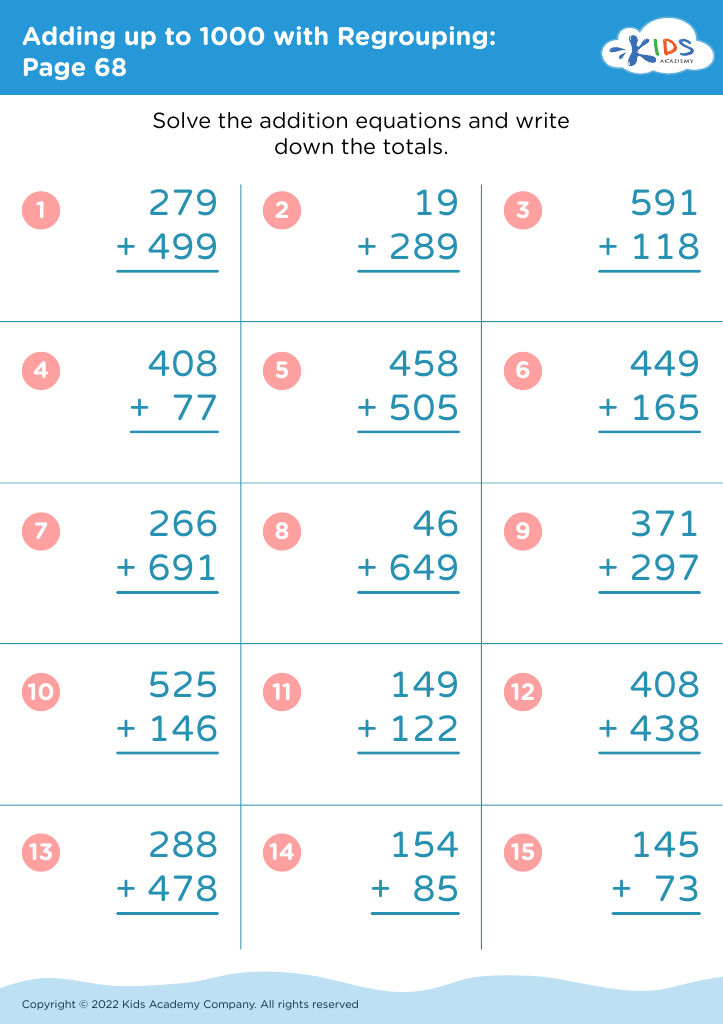
Adding up to 1000 with Regrouping: Page 68
Worksheet
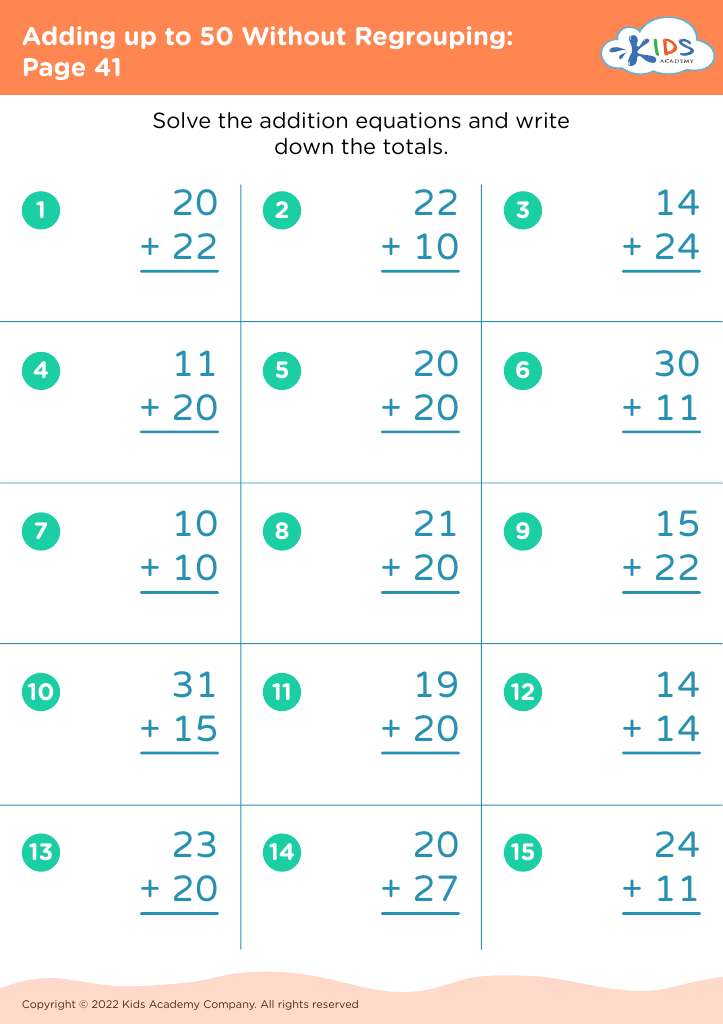
Adding up to 50 Without Regrouping: Page 41
Worksheet
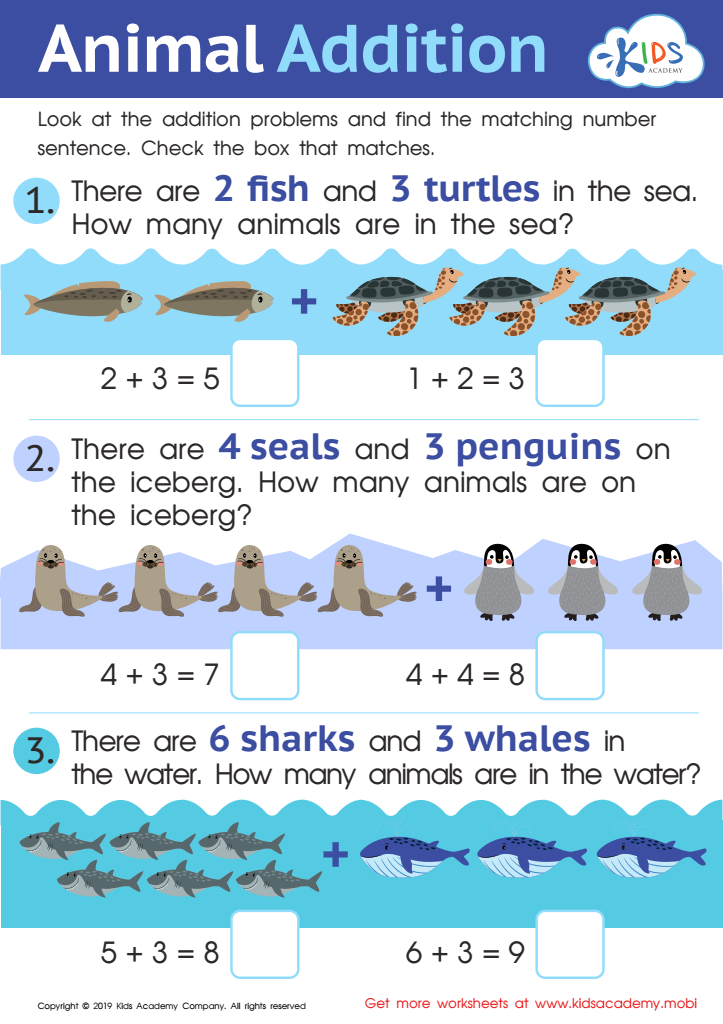
Animal Addition Worksheet

Animal Addition Worksheet

Get your kids learning addition and subtraction with this fun worksheet! Show them that solving equations can be enjoyable and help them match number sentences to the correct boxes. By doing this together, you'll create a positive learning experience that your kids won't forget.
Animal Addition Worksheet
Worksheet
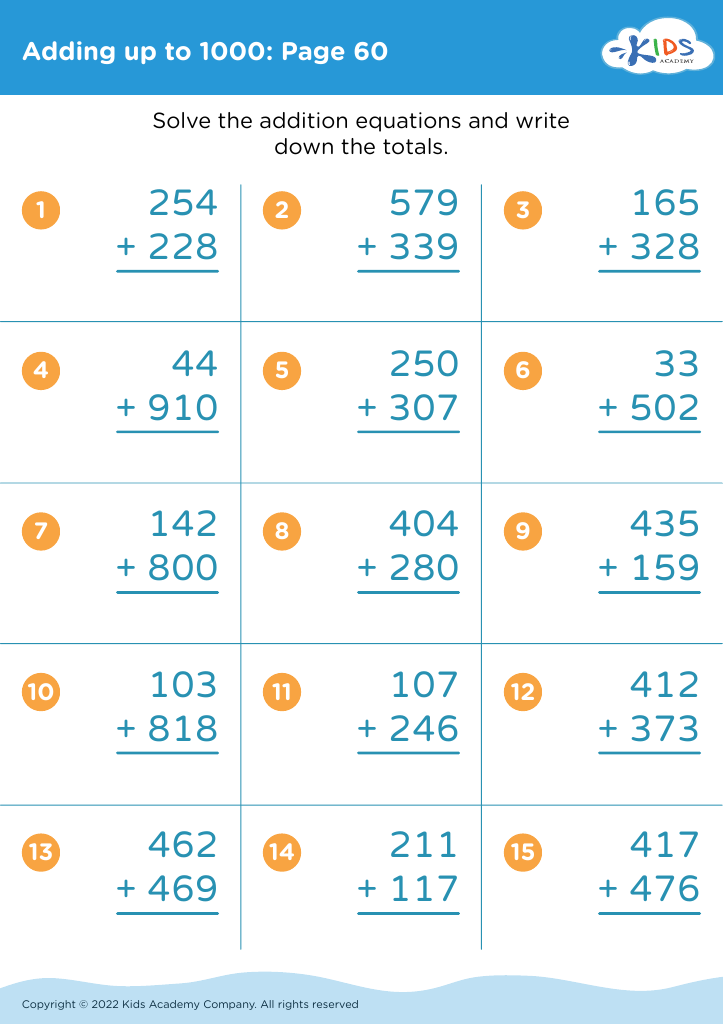
Adding up to 1000: Page 60

Adding up to 1000: Page 60

Adding up to 1000: Page 60
Worksheet
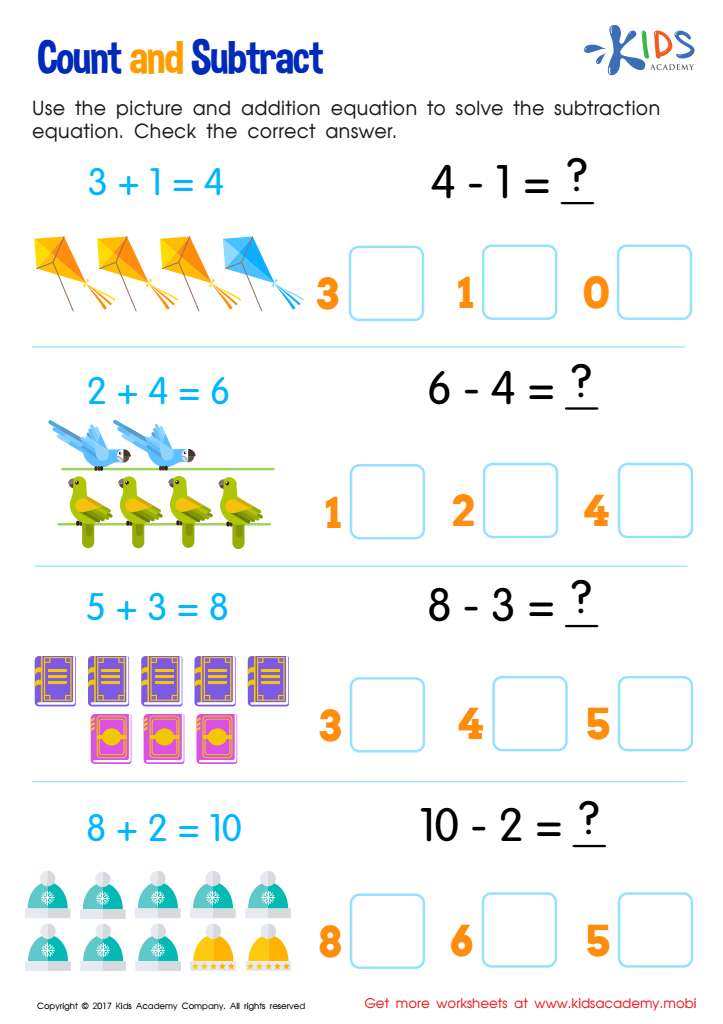
Count and Subtract Worksheet

Count and Subtract Worksheet

This worksheet helps your child learn math via colorful pictures and equations. Count the items together, adding and subtracting as necessary. Your child will be challenged to get the correct total, thereby developing their math skills.
Count and Subtract Worksheet
Worksheet
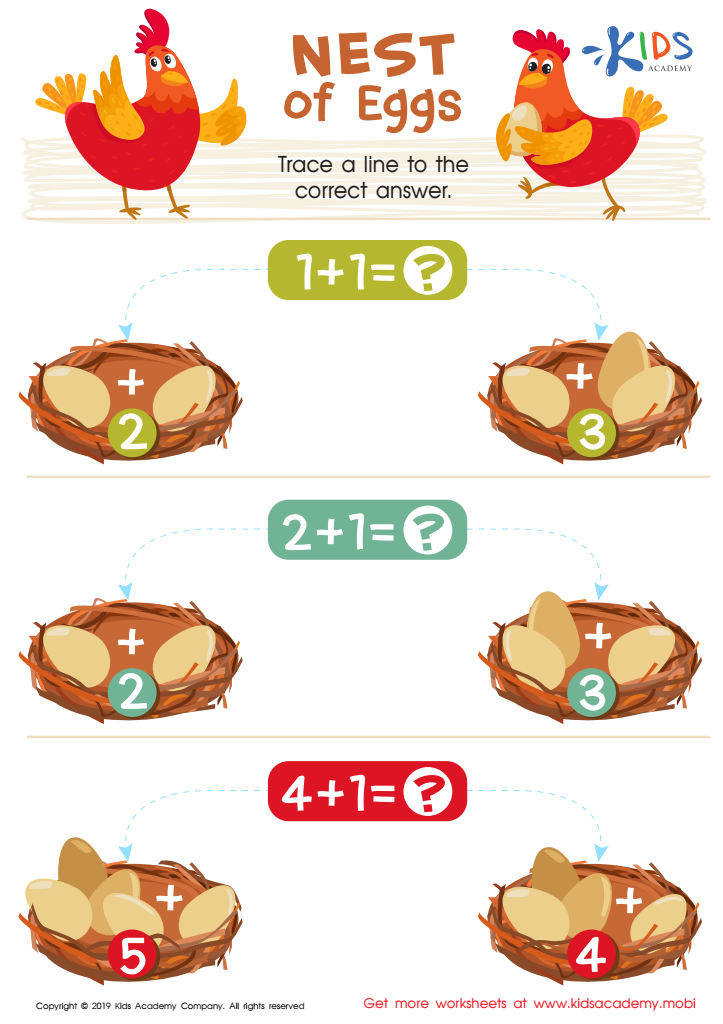
Nest of Eggs Worksheet

Nest of Eggs Worksheet

Help your kids learn math with this worksheet. First discuss the picture with them and then work through the three equations. Encourage them to trace the correct answer afterwards. With your assistance, they'll soon be able to confidently add numbers.
Nest of Eggs Worksheet
Worksheet
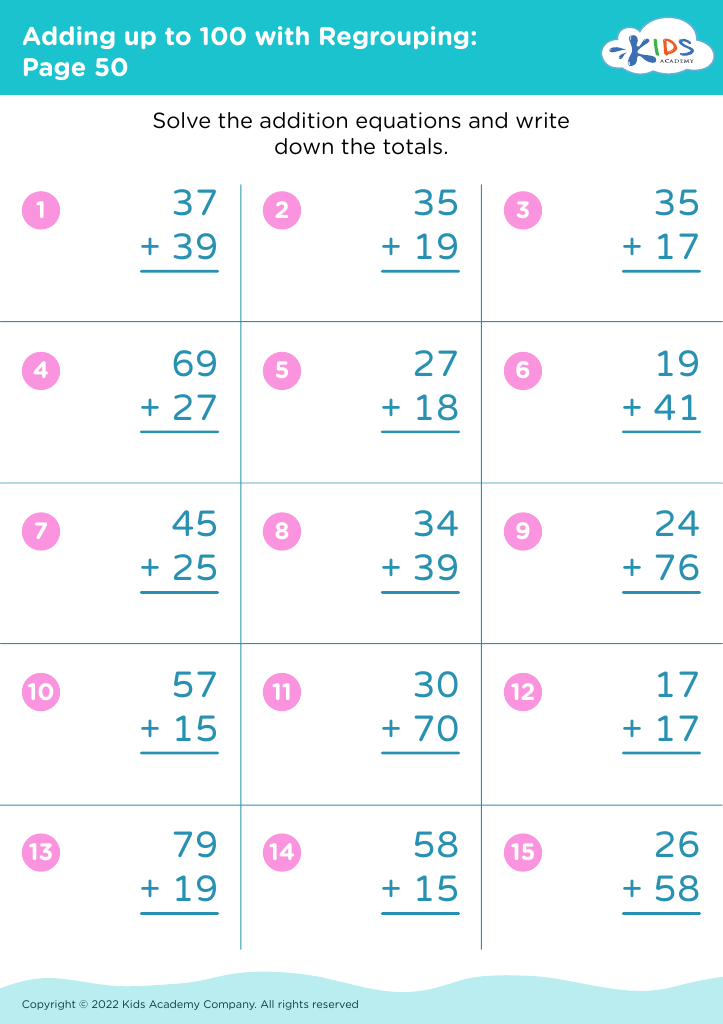
Adding up to 100 with Regrouping: Page 50
Worksheet
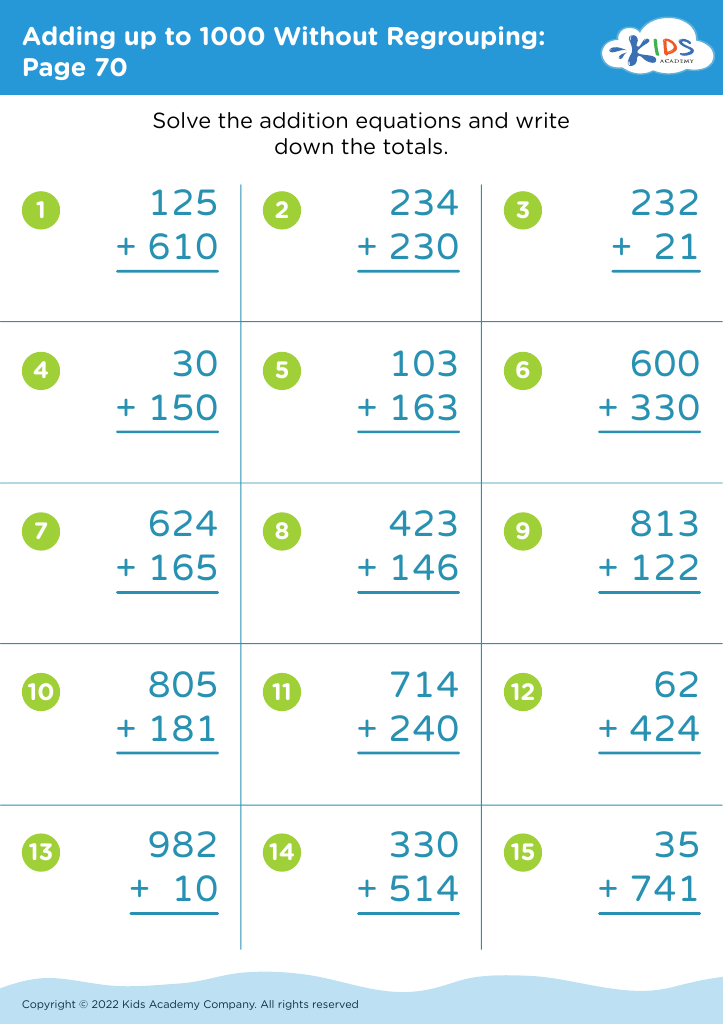
Adding up to 1000 Without Regrouping: Page 70
Worksheet
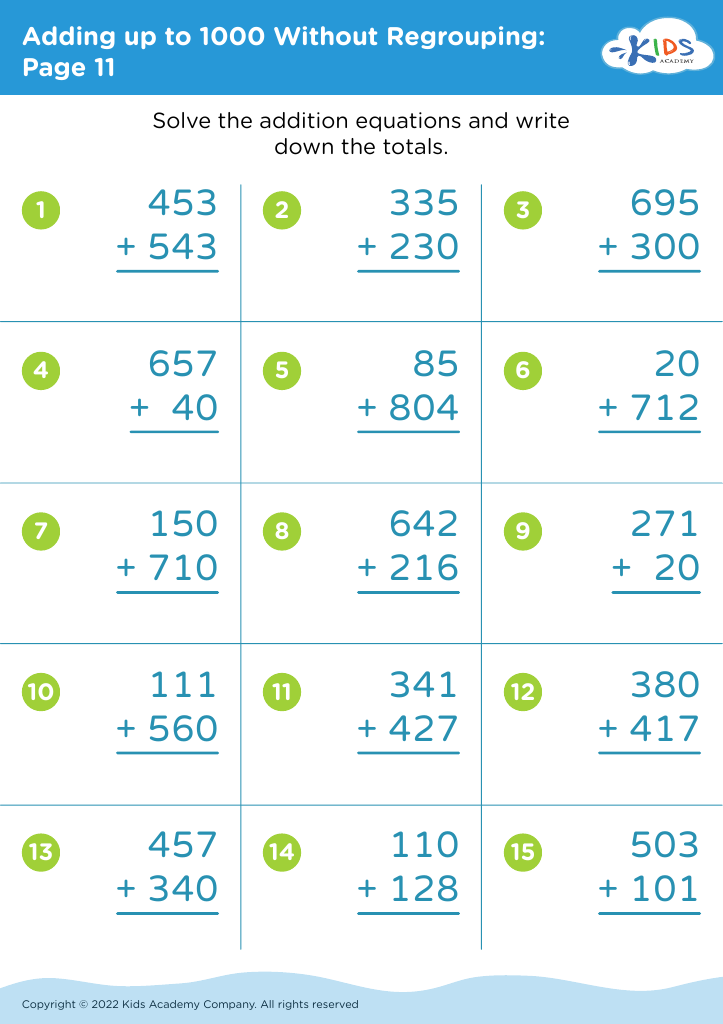
Adding up to 1000 Without Regrouping: Page 11
Worksheet
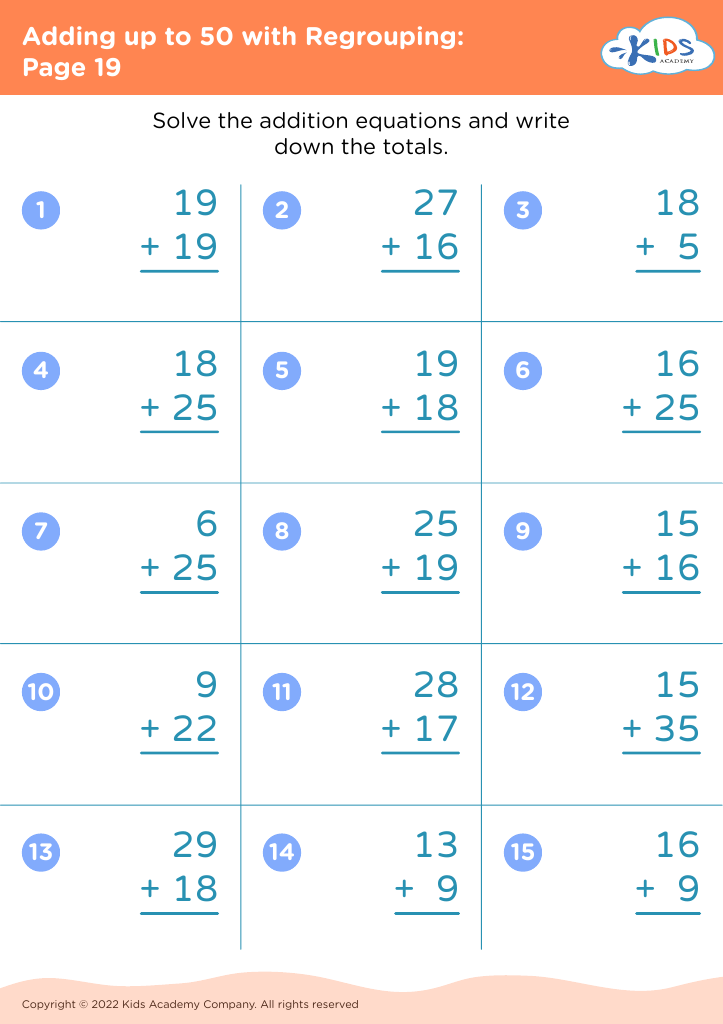
Adding up to 50 with Regrouping: Page 19
Worksheet
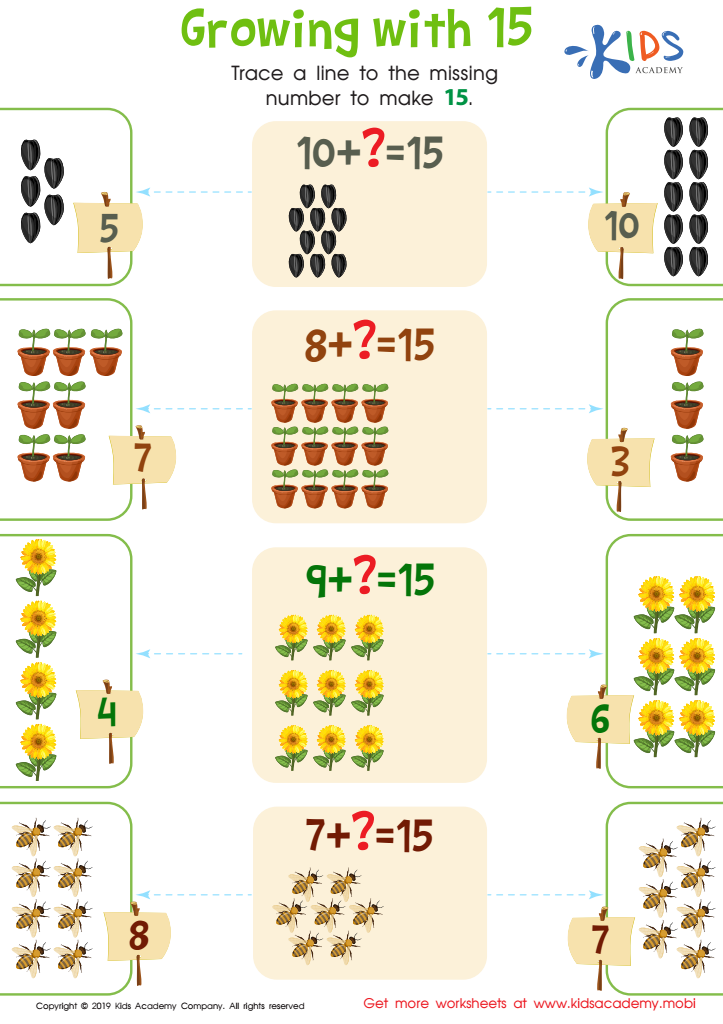
Growing with 15 Worksheet

Growing with 15 Worksheet

Remind your kids that adding different sets of numbers can give the same total (e.g. 2+3=5, 4+1=5). Test their understanding by asking them for more examples. Move onto the worksheet: count objects, then trace the line to the number making a total of 15.
Growing with 15 Worksheet
Worksheet
One Less: Assessment 1 Worksheet
One Less: Assessment 1 Worksheet
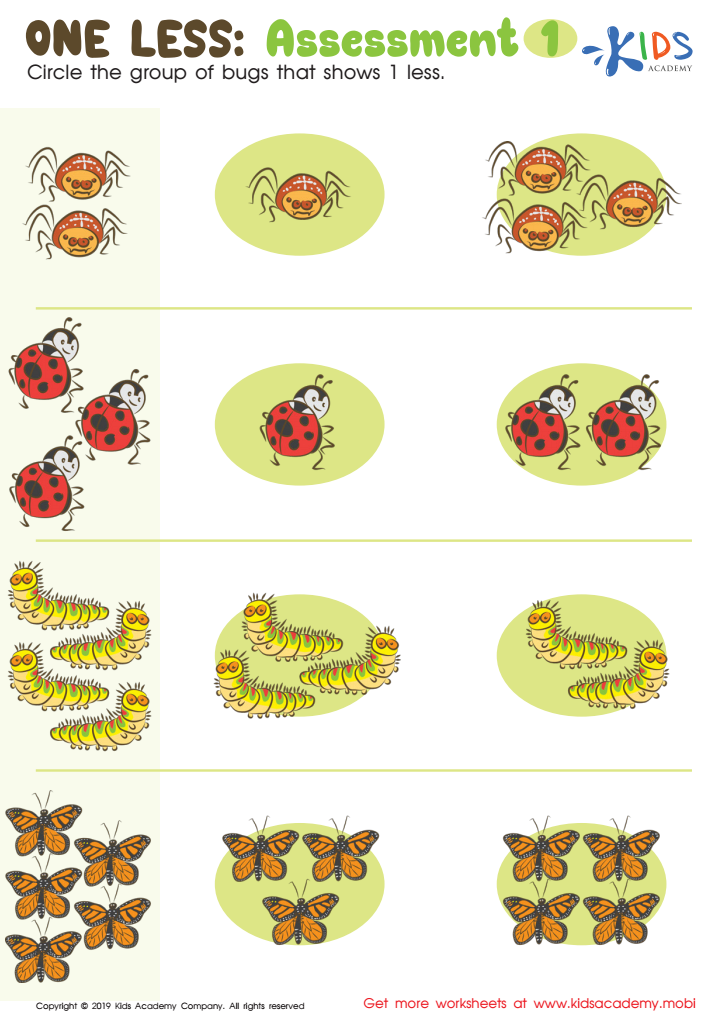
Help your kids with counting using this worksheet that has pictures of bugs! There are four different bugs and insects. Show them each one and ask them to count, then circle the group that has 1 less than the previous group. Don't worry if your kids don't like bugs - it's just a picture!
One Less: Assessment 1 Worksheet
Worksheet
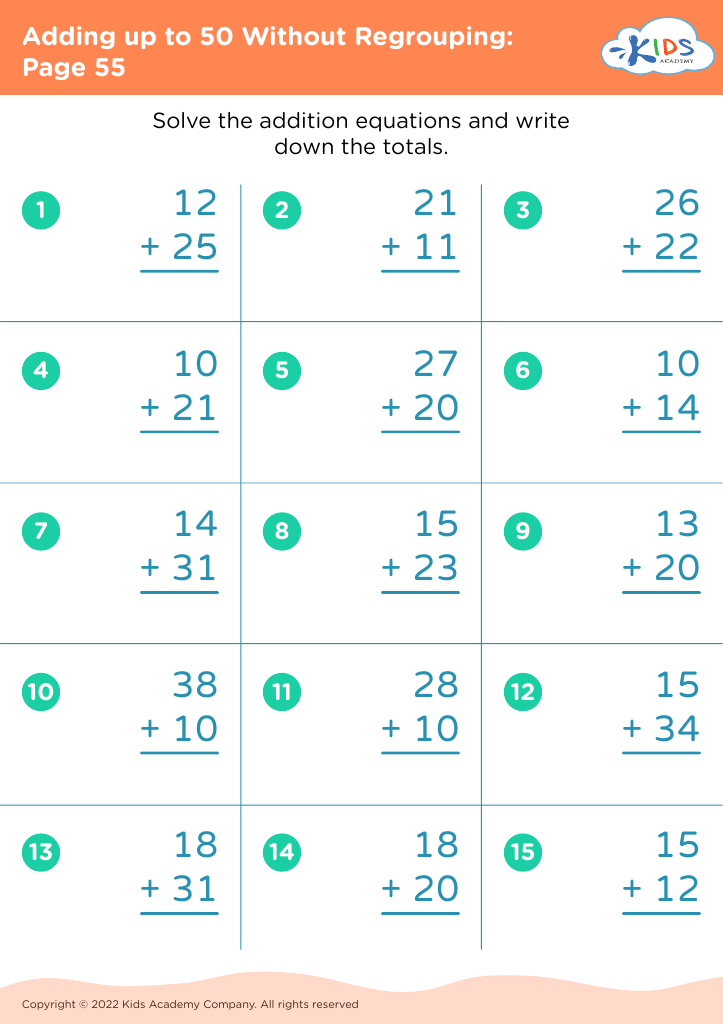
Adding up to 50 Without Regrouping: Page 55
Worksheet
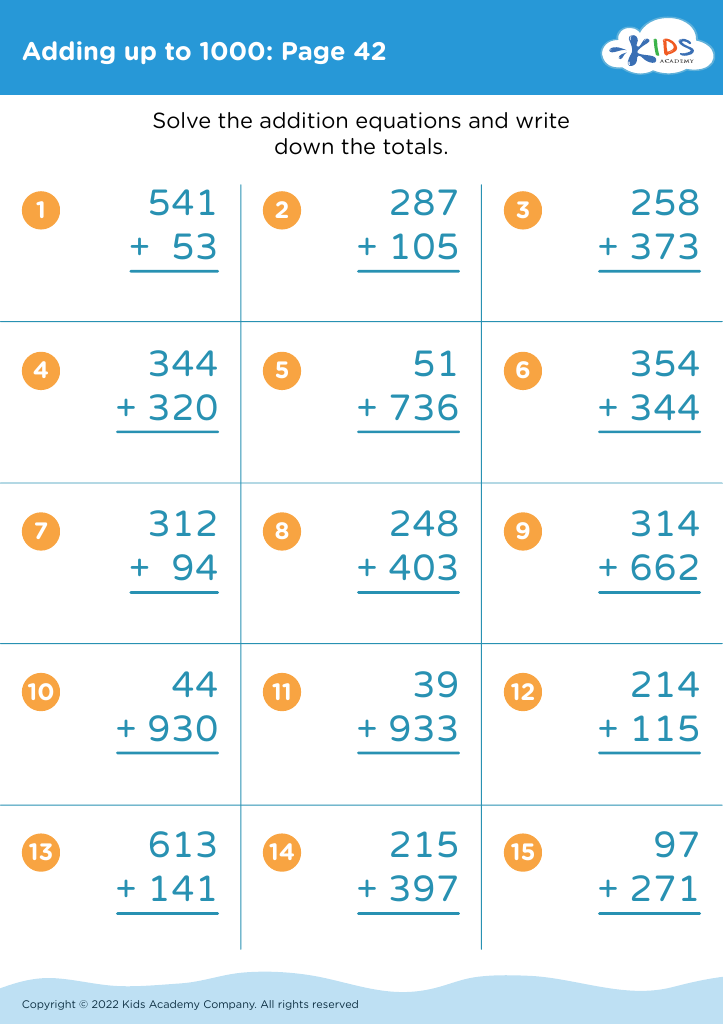
Adding up to 1000: Page 42

Adding up to 1000: Page 42

Adding up to 1000: Page 42
Worksheet
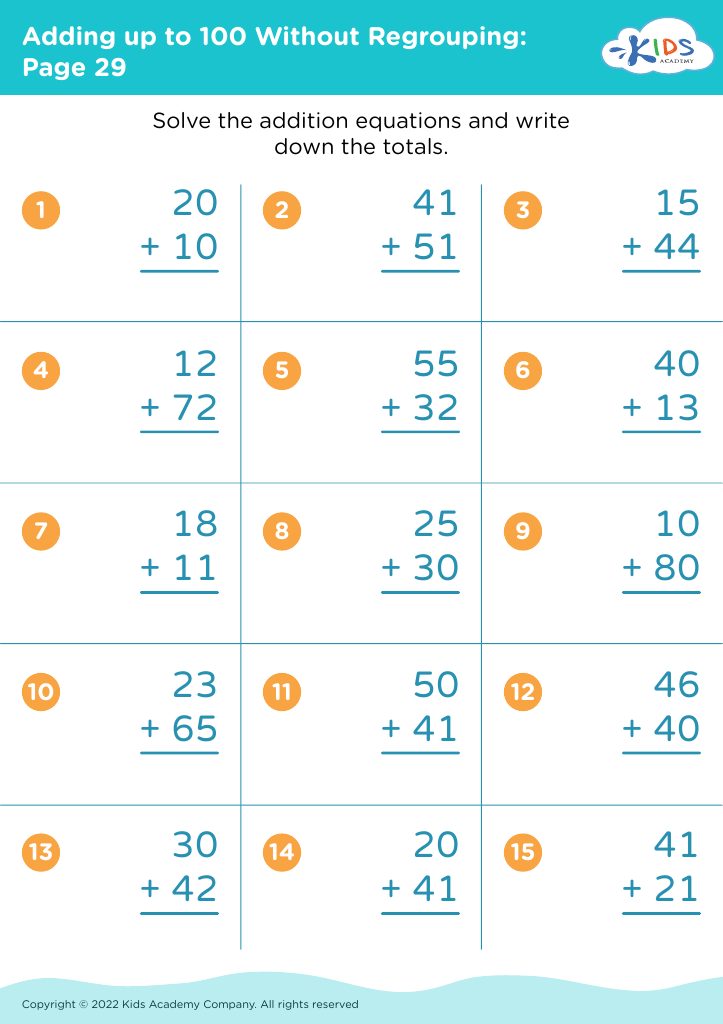
Adding up to 100 Without Regrouping: Page 29
Worksheet
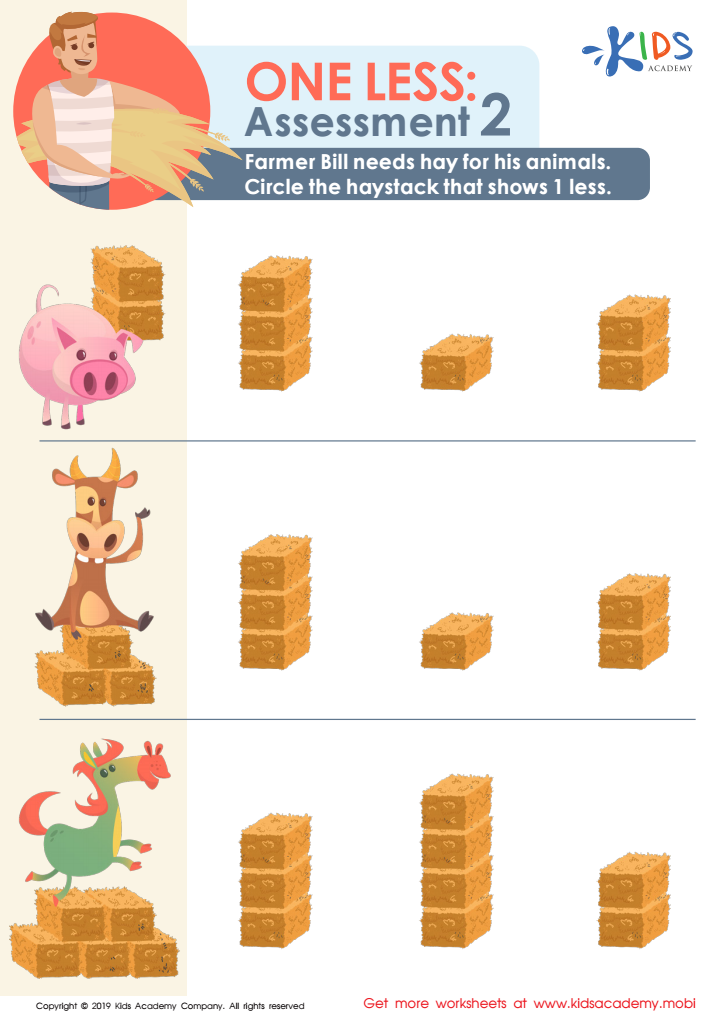
One Less: Assessment 2 Worksheet
One Less: Assessment 2 Worksheet

Farmers are vital to our community. They raise animals and crops which provide us with food. Kids can learn a lot by visiting a farm—ask them to name the animals and crops they saw! Farmer Bill in this worksheet needs hay. Point to the haystacks, and ask your child to circle the one with 1 less.
One Less: Assessment 2 Worksheet

Worksheet
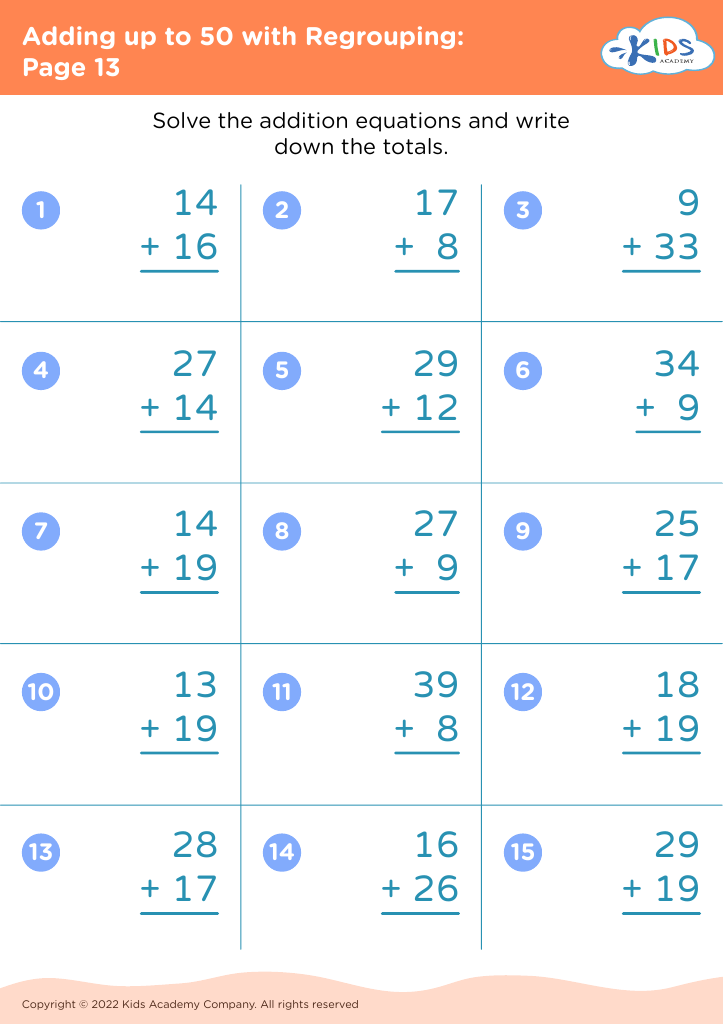
Adding up to 50 with Regrouping: Page 13
Worksheet
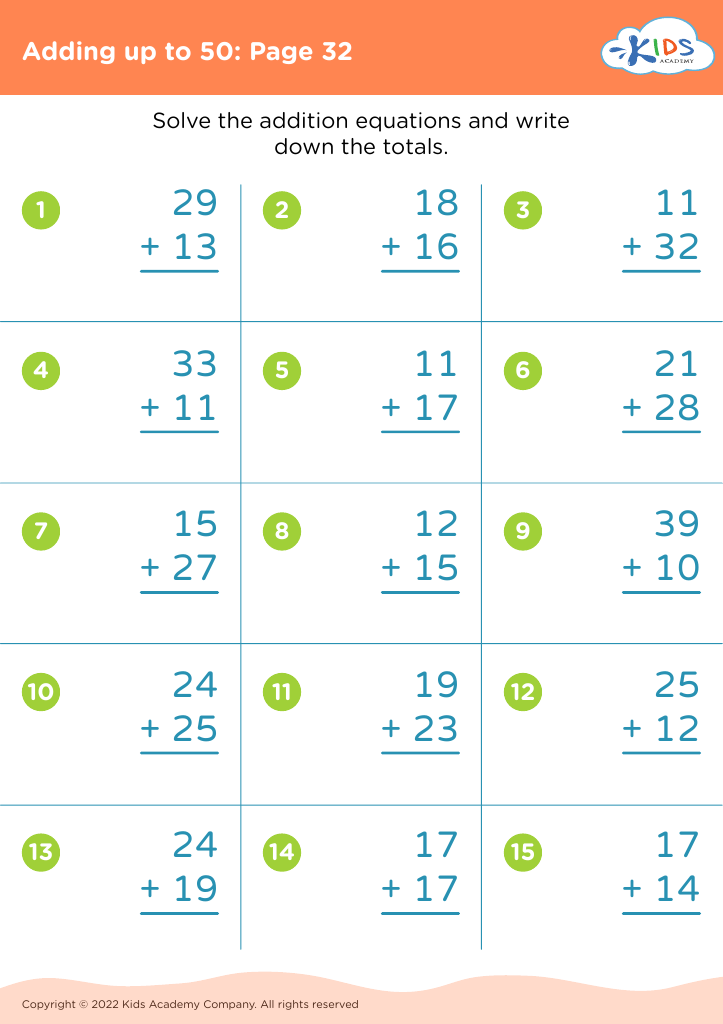
Adding up to 50: Page 32

Adding up to 50: Page 32

Adding up to 50: Page 32
Worksheet


... 5 6

Counting skills, particularly in addition and subtraction, are foundational for children aged 6-7, and it's crucial for parents and teachers to prioritize these abilities. At this developmental stage, children begin to build the cognitive frameworks that support more complex math concepts. Strong counting skills foster number sense, which is essential for understanding quantity, relationships, and problem-solving.

Addition and subtraction are not just mathematical operations; they help children develop critical thinking and analytical skills. Learning to add and subtract enhances cognitive development, allowing students to make connections with everyday situations, such as budgeting, time management, and resource allocation. This practical application solidifies their understanding and makes math relevant and engaging.

Additionally, a solid grasp of these concepts boosts children's confidence in their abilities and nurtures a positive attitude towards learning. Skillful practice in addition and subtraction can also improve overall academic performance and promote persistence in problem-solving. Furthermore, early proficiency in counting sets the foundation for future mathematical success, paving the way for more advanced topics in later years. Ultimately, supporting counting skills in this formative stage contributes significantly to a child's overall development and lifelong learning opportunities.