
Handwriting practice Addition & Subtraction Worksheets for Ages 6-7
5 filtered results
Difficulty Level
Grade
Age
-
From - To
Subject
Activity
Standards
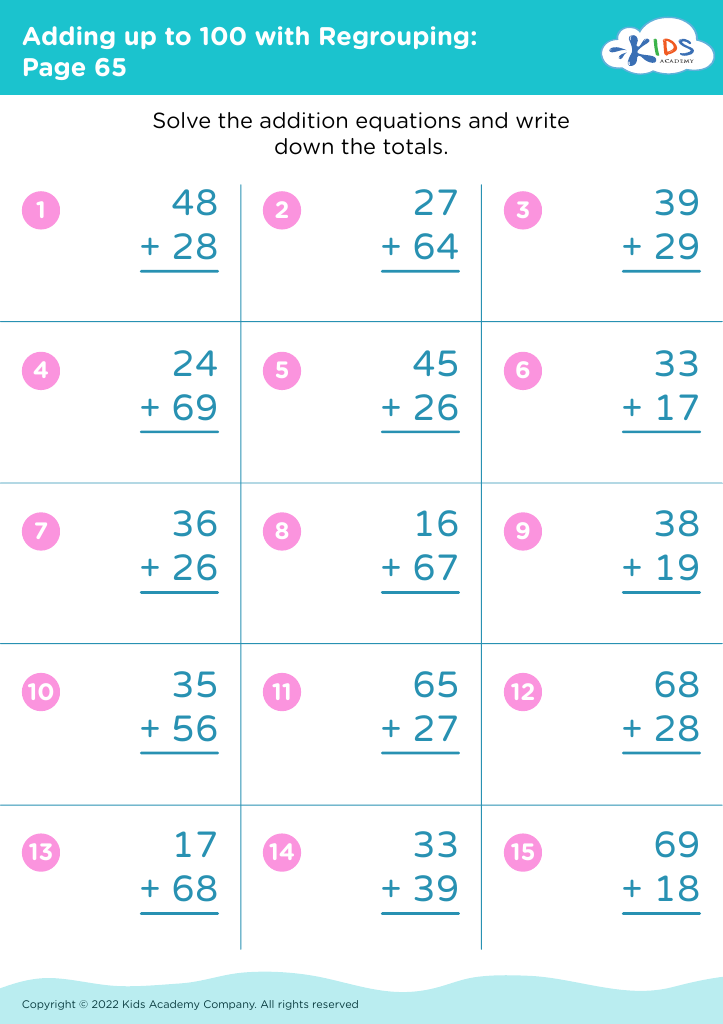
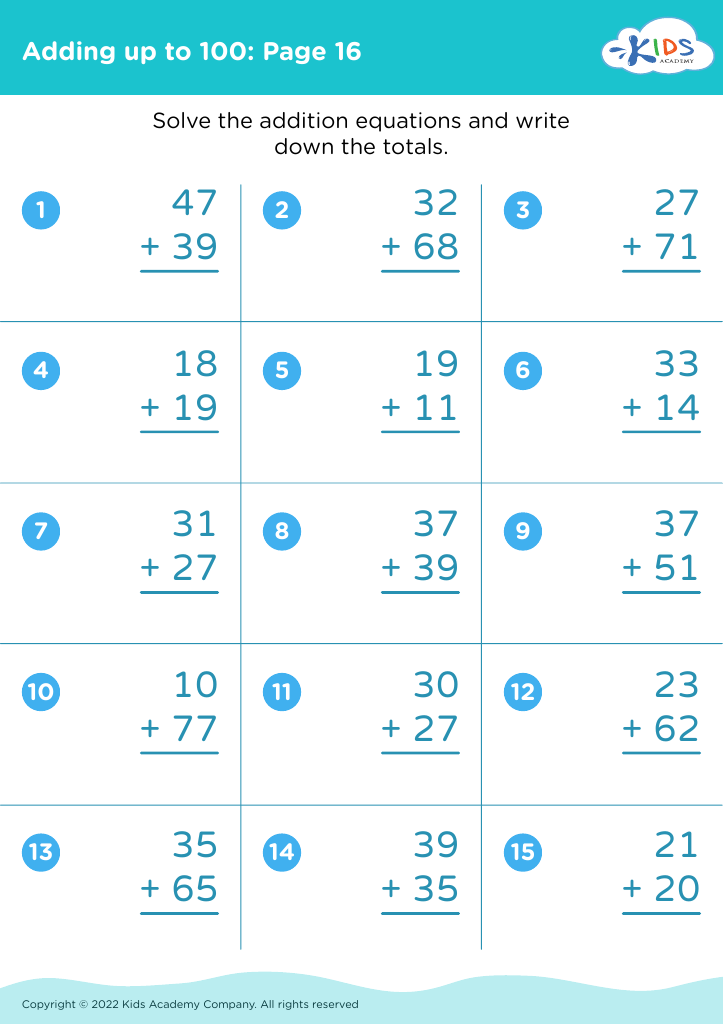
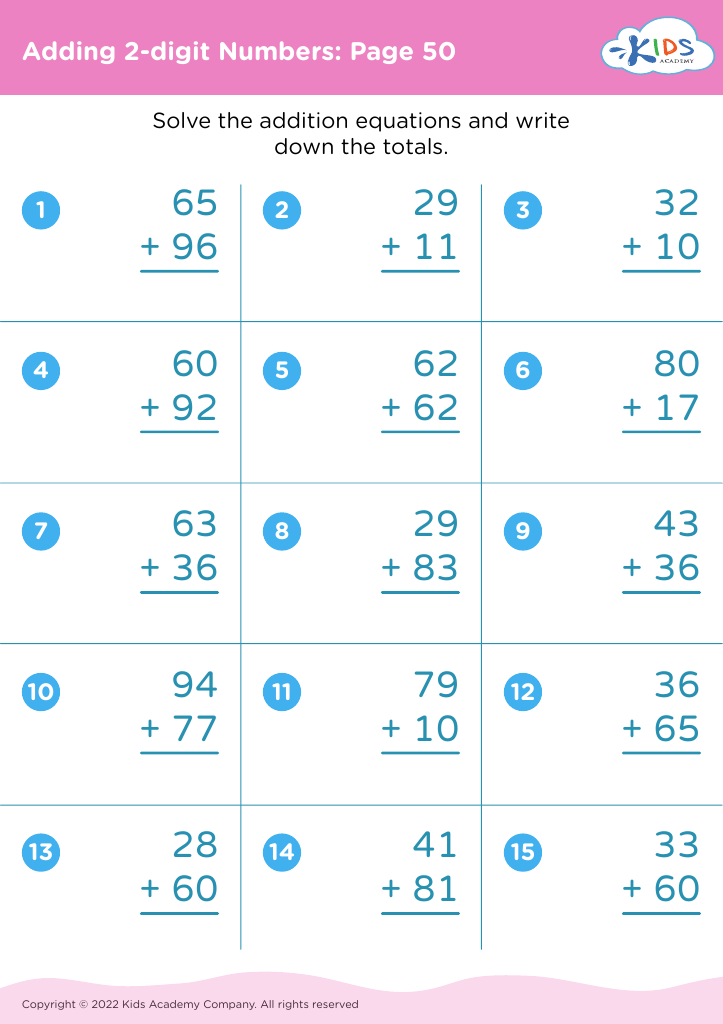
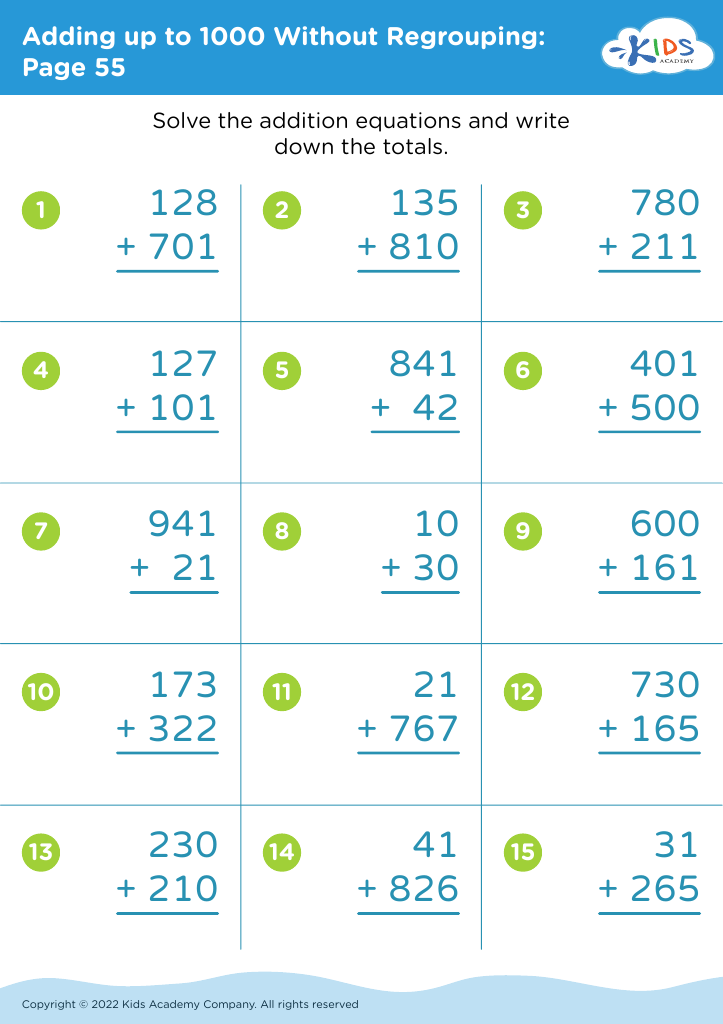
Boost your child's math and handwriting skills with our Handwriting Practice Addition & Subtraction Worksheets for ages 6-7. Designed for young learners, our printable worksheets seamlessly combine essential math practice with handwriting training. Featuring engaging exercises, kids will practice adding and subtracting while also honing fine motor skills. Ideal for both classroom and at-home learning, these worksheets build a strong foundation in numeracy and penmanship, promoting confidence and competence in each subject. Strengthen your child's abilities with our specially crafted, easy-to-use resources today!
Favorites
With answer key
Interactive
Join Kids Academy for Free
Who is primarily going to use this learning content?








It's crucial for parents and teachers to emphasize handwriting practice on addition and subtraction exercises for children aged 6-7 for several reasons. First, this practice blends fine motor skills development with cognitive skills in math. Children at this age are still developing the muscle coordination required for writing legibly, and working on math problems offers a structured, meaningful way to refine these skills.
Mathematical addition and subtraction for young children form the cornerstone of their future mathematical learning. As they scribble numbers and perform operations, they reinforce their understanding of fundamental concepts like count sequencing, number bonds, and place value. Writing by hand promotes deeper cognitive processing, aiding memory retention and reinforcing learning in ways typing or clicking on screens cannot.
Simultaneously working on handwriting and math ensures a holistic development approach. It teaches patience, focus, and attention to detail. When children see their progress on paper, it imbues them with a sense of accomplishment and boosts their confidence, motivating them for more complex tasks later. Writing numbers also helps in understanding their shapes and securing a mental image, which is critical for recognizing patterns and solving arithmetic problems correctly and efficiently.
Therefore, integrating handwriting practice with basic math exercises at this developmental stage supports comprehensive educational development and sets a strong foundation for future academic success.








