Logical thinking Addition & Subtraction Worksheets for Ages 6-7
9 filtered results
-
From - To
Enhance your child's mathematical abilities with our expertly designed Logical Thinking Addition & Subtraction Worksheets for Ages 6-7. These engaging and interactive worksheets are crafted to develop your child's logical reasoning and problem-solving skills while mastering essential math concepts. Perfect for young learners, each worksheet offers a variety of fun and educational activities that keep children focused and motivated. As they navigate through these carefully structured exercises, kids will build a strong foundation in addition and subtraction, setting the stage for future success in mathematics. Visit Kids Academy to unlock your child's potential with our premium resources.
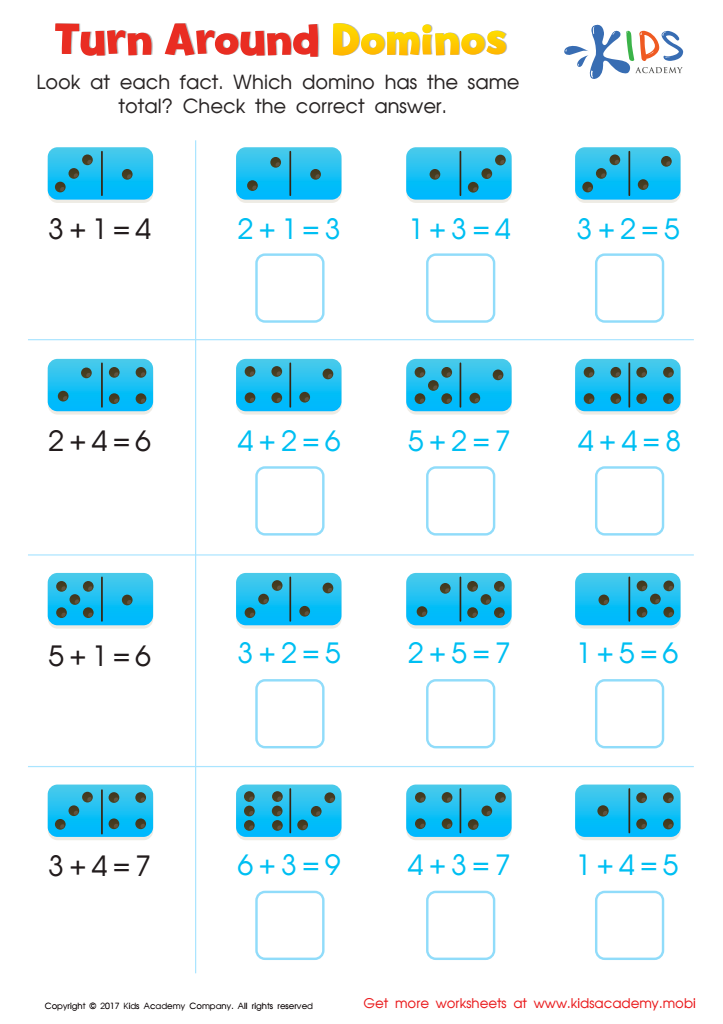
Turn Around Dominos Worksheet
 Assign to My Students
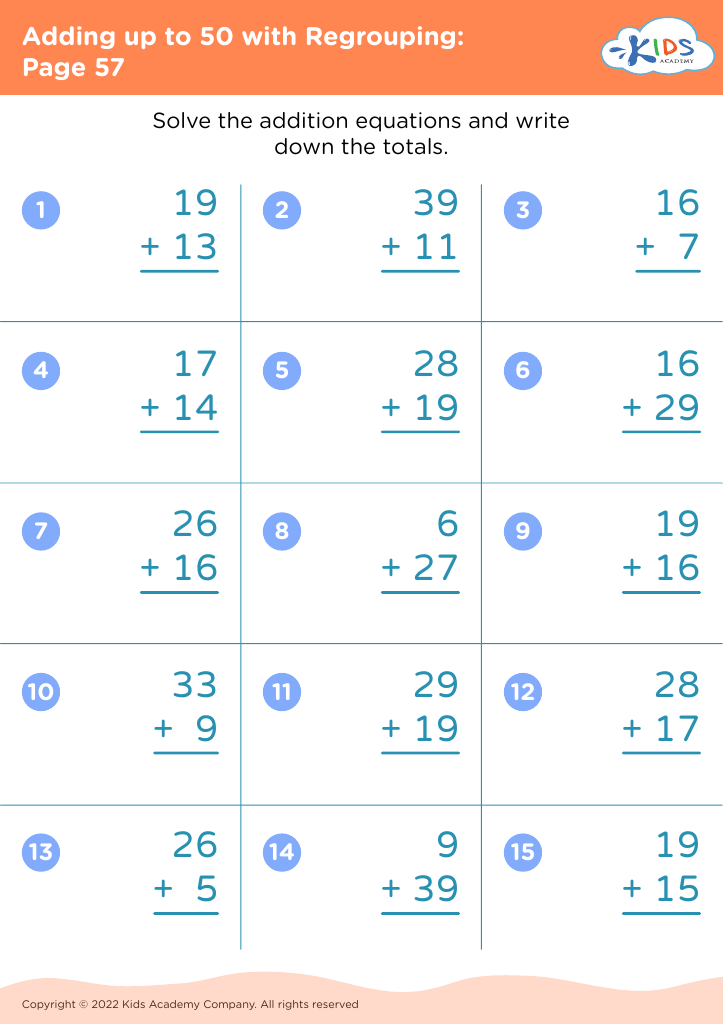
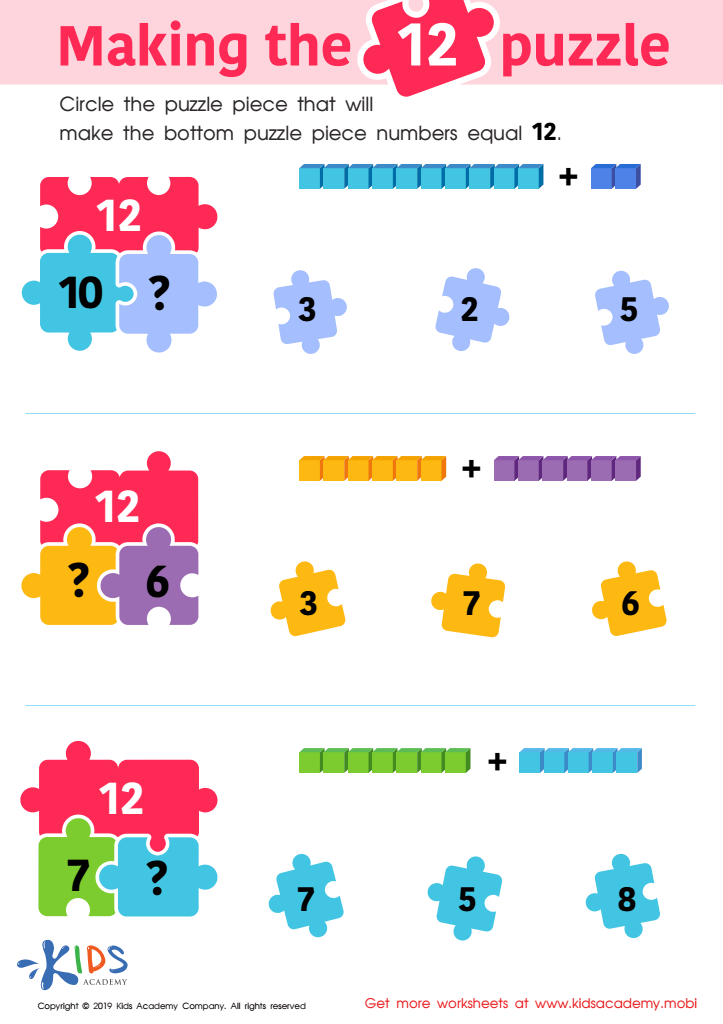
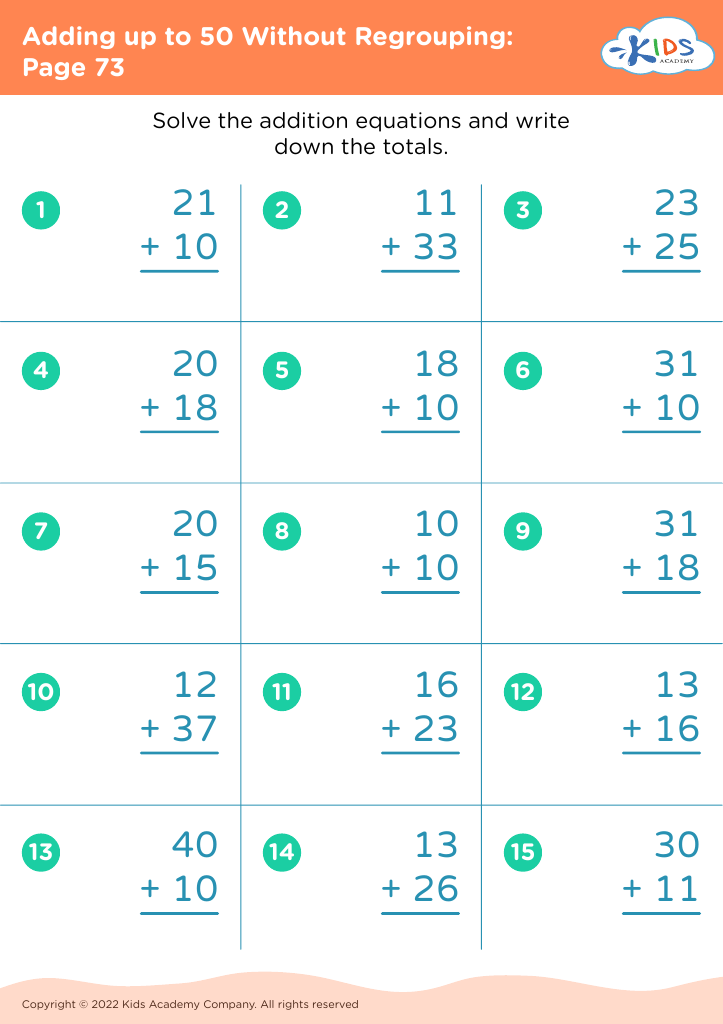
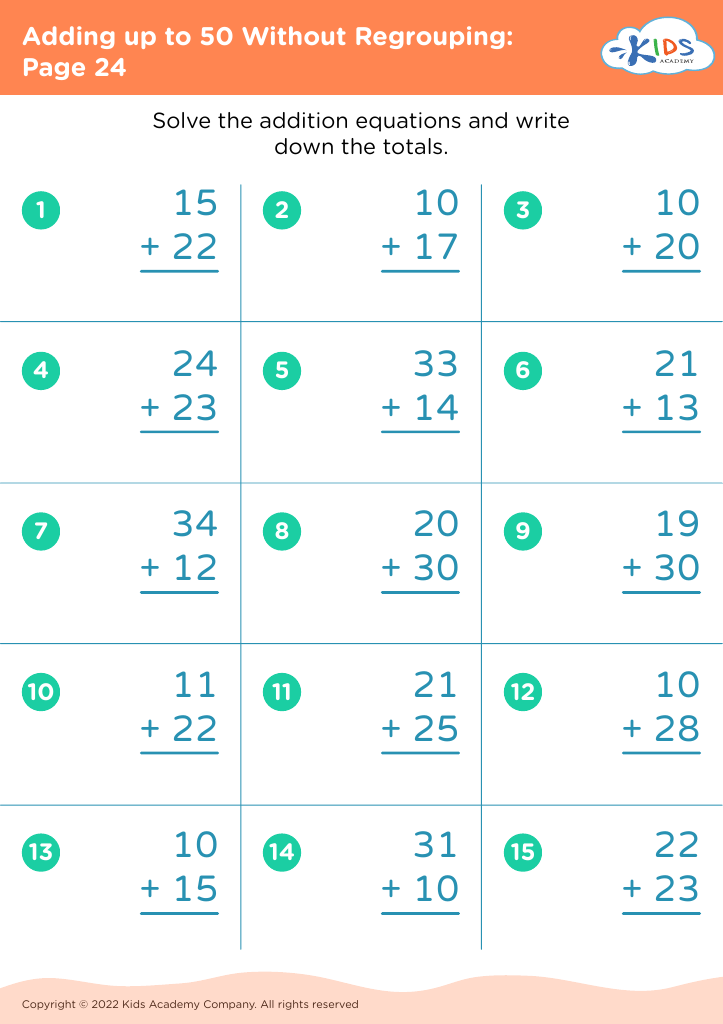
Making the 12 Puzzle Worksheet
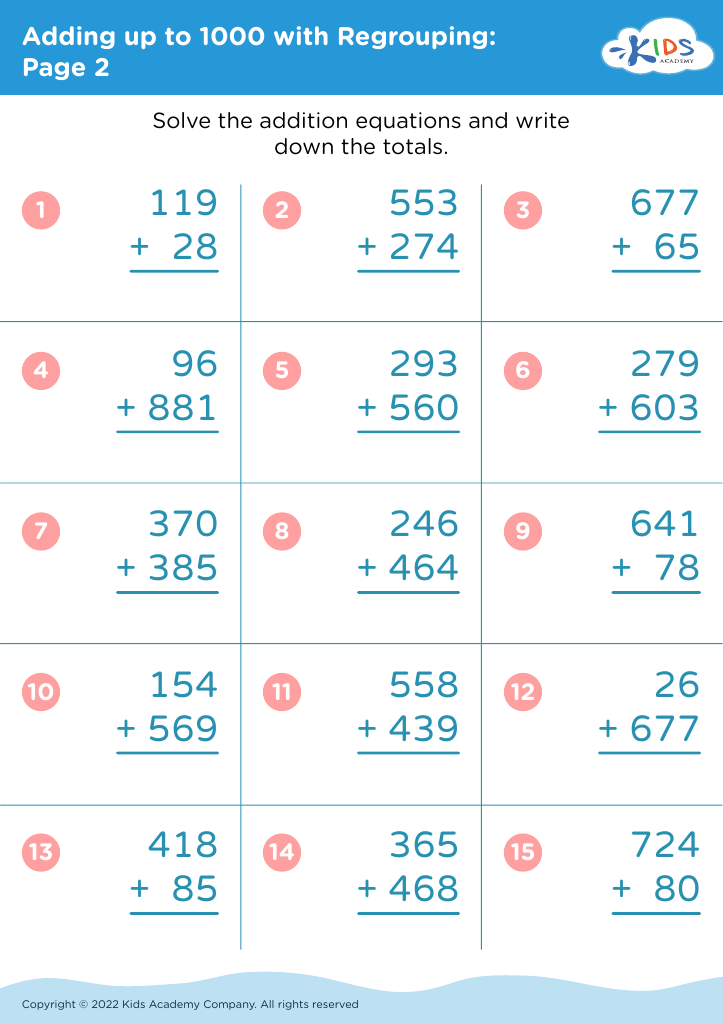








Parents and teachers should prioritize logical thinking in addition and subtraction for children aged 6-7 because these foundational skills are crucial for cognitive development and future academic success. At this tender age, children are developing their problem-solving abilities, and engaging with logical thinking enhances their ability to understand how numbers and operations relate to one another. This promotes mathematical fluency as they learn to compute with confidence and accuracy.
Logical thinking in mathematics involves recognizing patterns, understanding sequences, and grasping how numbers combine or break apart. When children practice logical addition and subtraction, they are not merely memorizing facts but are also developing an analytical mindset that will aid in tackling complex problems in later grades. Moreover, these skills are transferable; children who can think logically tend to excel in other subjects, such as science and reading comprehension, because they can analyze and draw conclusions more effectively.
For teachers, incorporating logical thinking exercises in math lessons encourages active learning and critical thinking. For parents, fostering a home environment supportive of these skills can result in more engaged and curious learners. Consistently practicing addition and subtraction in context — using games, puzzles, or real-life scenarios — not only solidifies these math basics but also nurtures a lifelong love for learning and intellectual exploration.








