Filters

35 filtered results

Clear all filters
Favorites
With answer key
Interactive

35 filtered results

Difficulty Level

Grade


Check out this FREE Trial Lesson on Addition & Subtraction for age 6-7!

Making 10's

Favorites
With answer key
Interactive
  • 6-7
  • Mathematical reasoning
  • Addition & Subtraction
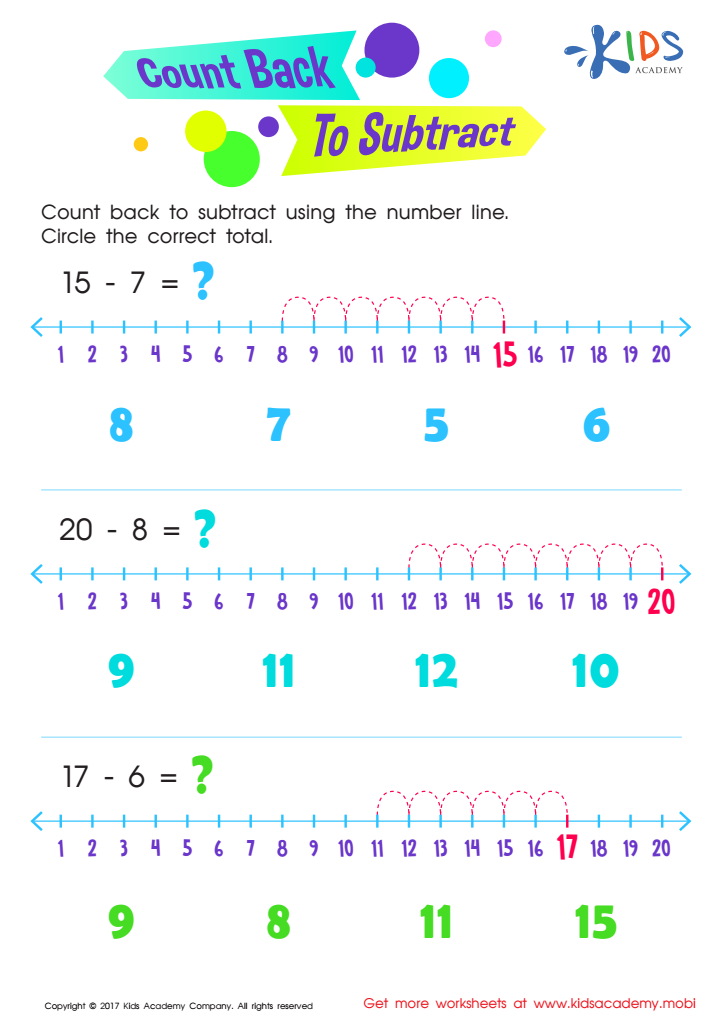
Count Back to Subtract

Count Back to Subtract Substraction Worksheet

With this worksheet, your child can visually see and count each number they’re subtracting. This worksheet provides a number line to help your child master subtraction visually. Counting back on the line will give them a deeper understanding of the concept. It's a great way to teach subtraction and help children gain confidence with the subject.
Count Back to Subtract Substraction Worksheet
Worksheet
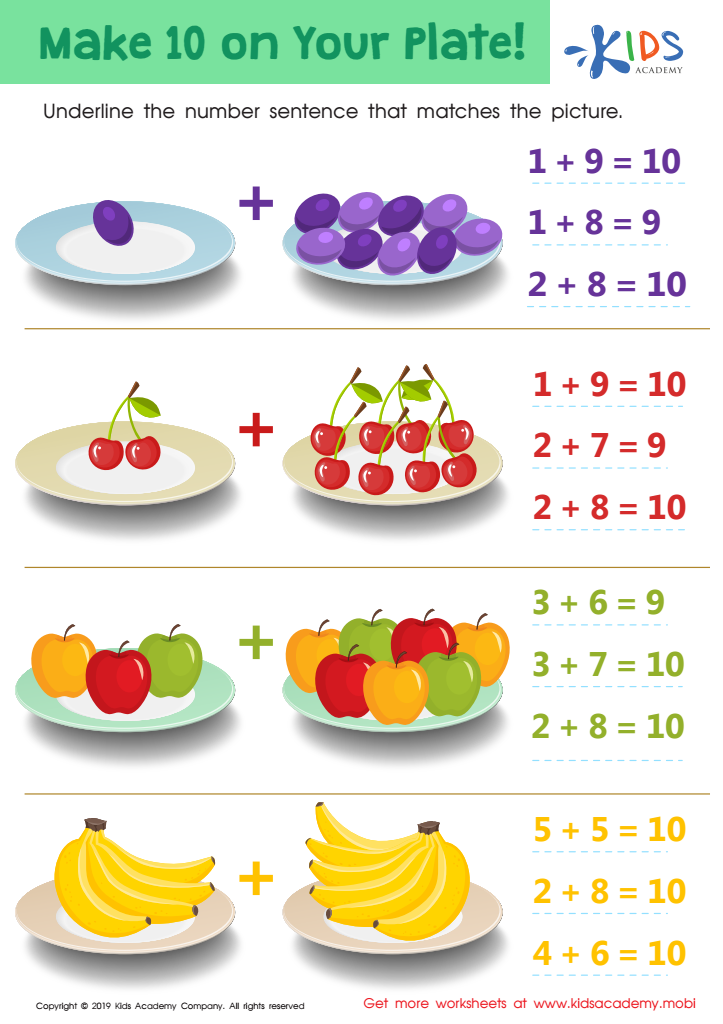
Make 10 on Your Plate! Worksheet

Make 10 on Your Plate! Worksheet

Get your students interested in this exercise by asking them to identify the fruits in the picture. Then, carefully count all the groups of fruit and add them up. Help preschoolers underline the number sentence that matches the picture. Engage their taste buds in a fun way with four different equations!
Make 10 on Your Plate! Worksheet
Worksheet
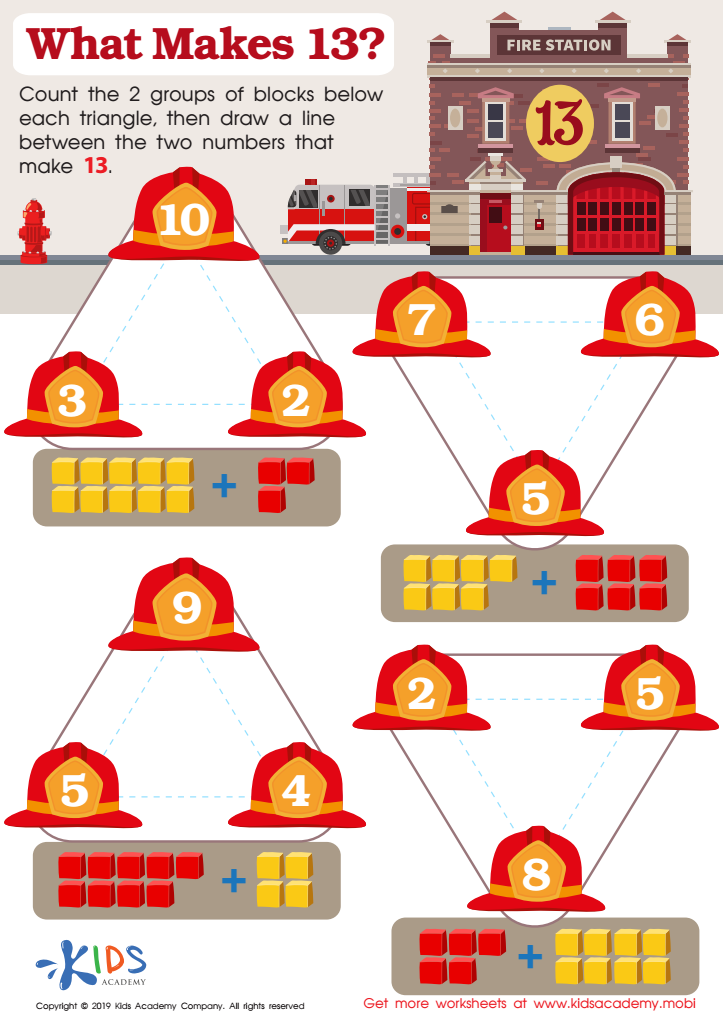
What Makes 13 Worksheet

What Makes 13 Worksheet

Help your kids practice maths with this worksheet! With colourful images and simple equations, your kids will be more engaged in learning. Go through the four equations and help them add up the numbers. Then, draw a line between the numbers that make 13. Doing this will aid their learning and understanding.
What Makes 13 Worksheet
Worksheet
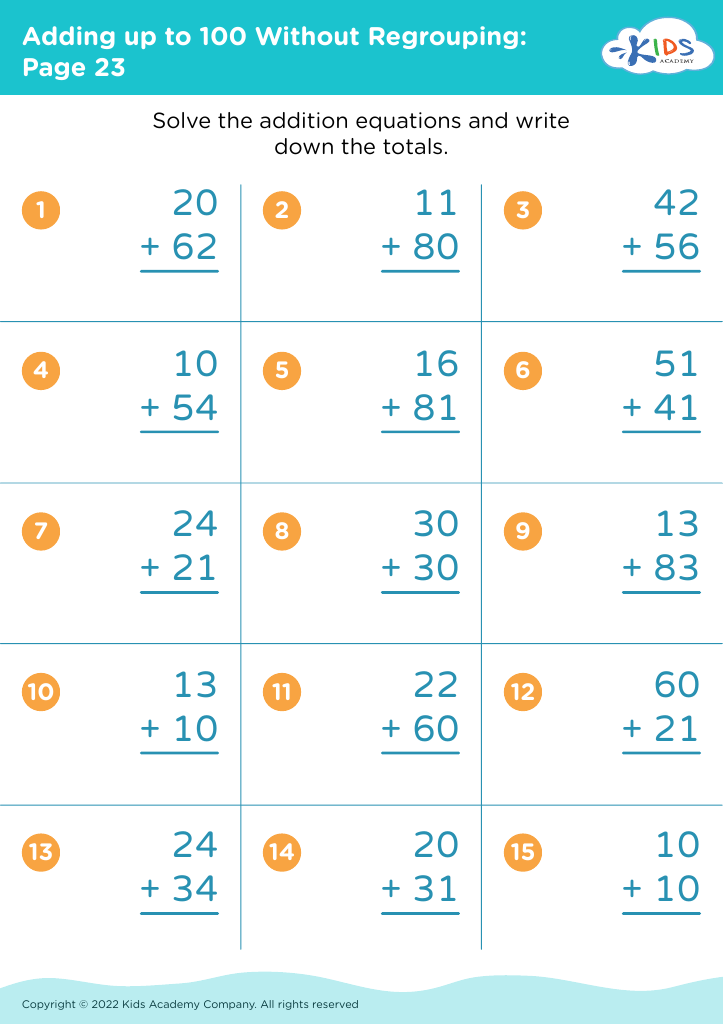
Adding up to 100 Without Regrouping: Page 23
Worksheet
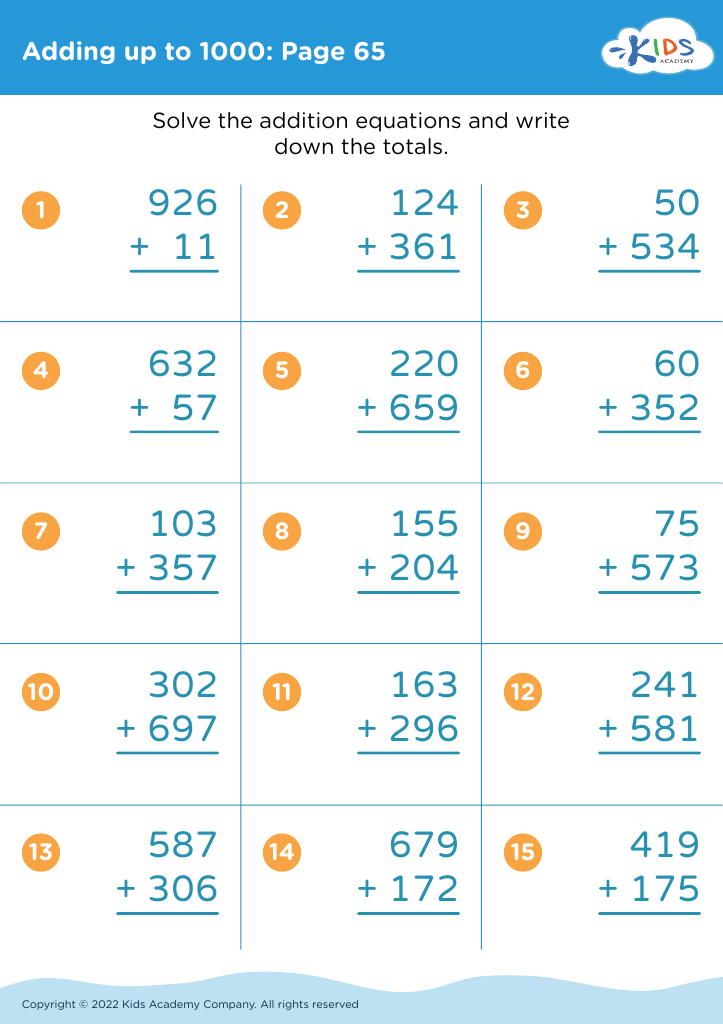
Adding up to 1000: Page 65

Adding up to 1000: Page 65

Adding up to 1000: Page 65
Worksheet
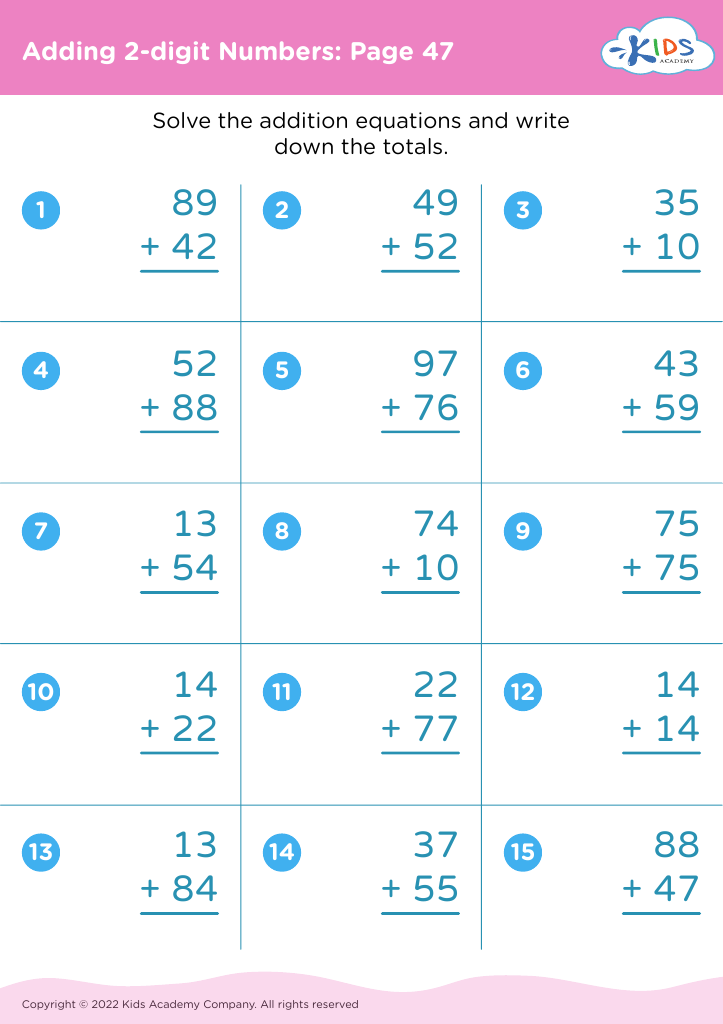
Adding 2-digit Numbers: Page 47

Adding 2-digit Numbers: Page 47

Adding 2-digit Numbers: Page 47
Worksheet
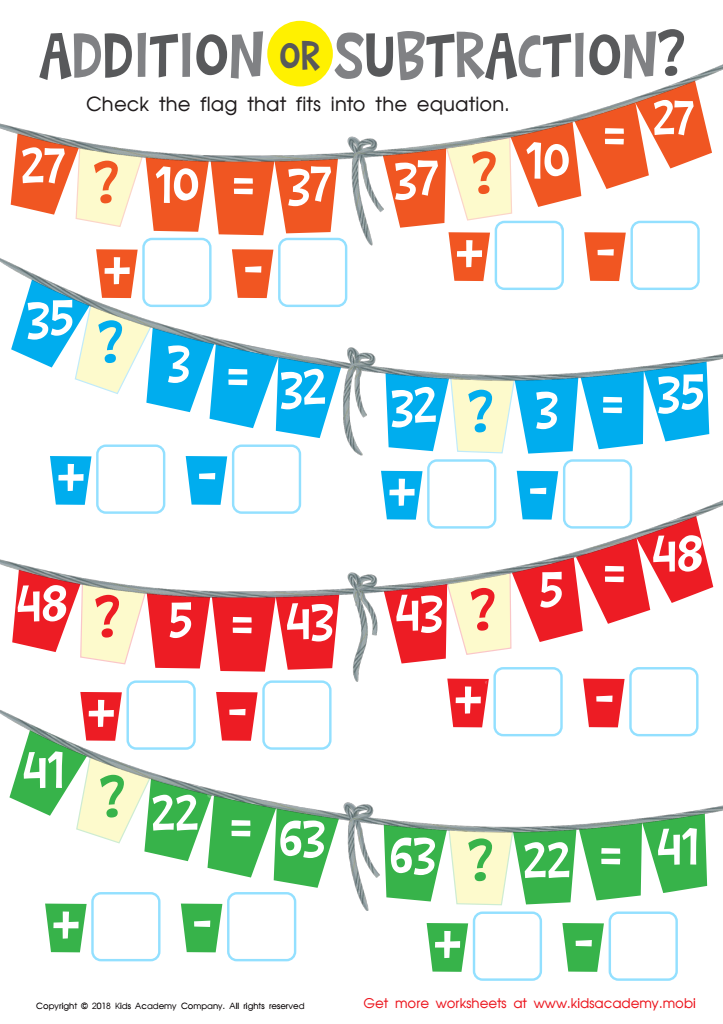
Addition or Subtraction? Worksheet
Addition or Subtraction? Worksheet
Help your math whiz's number skills advance with these colorful flag equations! With the free PDF, they'll learn to solve addition and subtraction facts by following the correct orders of operation. And the best part? They'll develop a deeper understanding of how the different operations work together within equations. Give it a try and watch their skills soar!
Addition or Subtraction? Worksheet
Worksheet
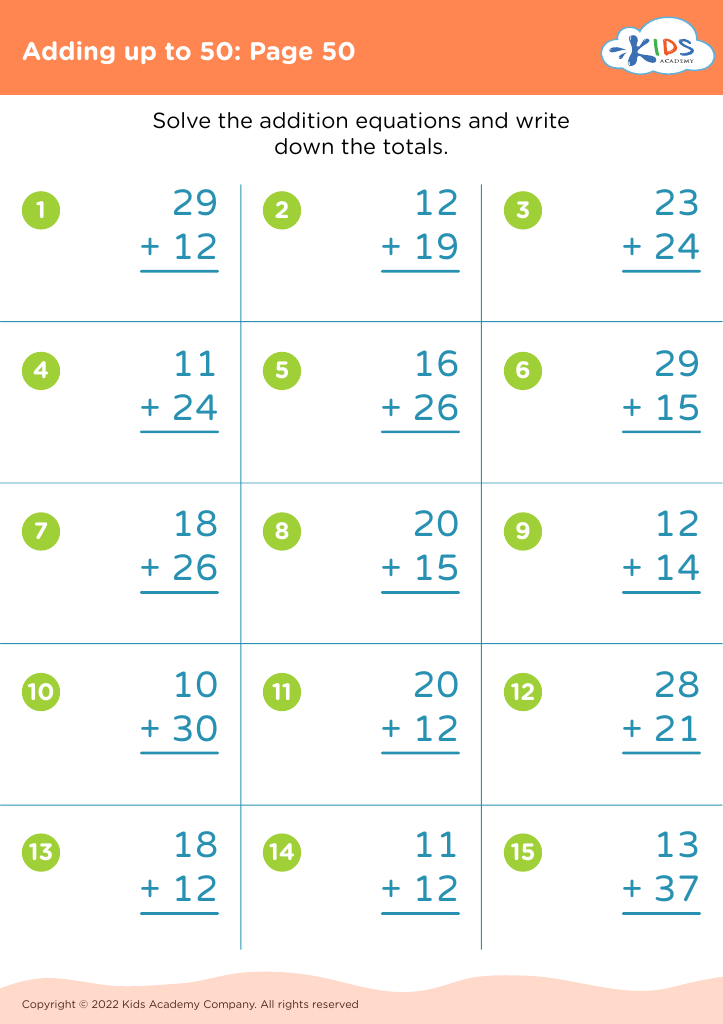
Adding up to 50: Page 50

Adding up to 50: Page 50

Adding up to 50: Page 50
Worksheet
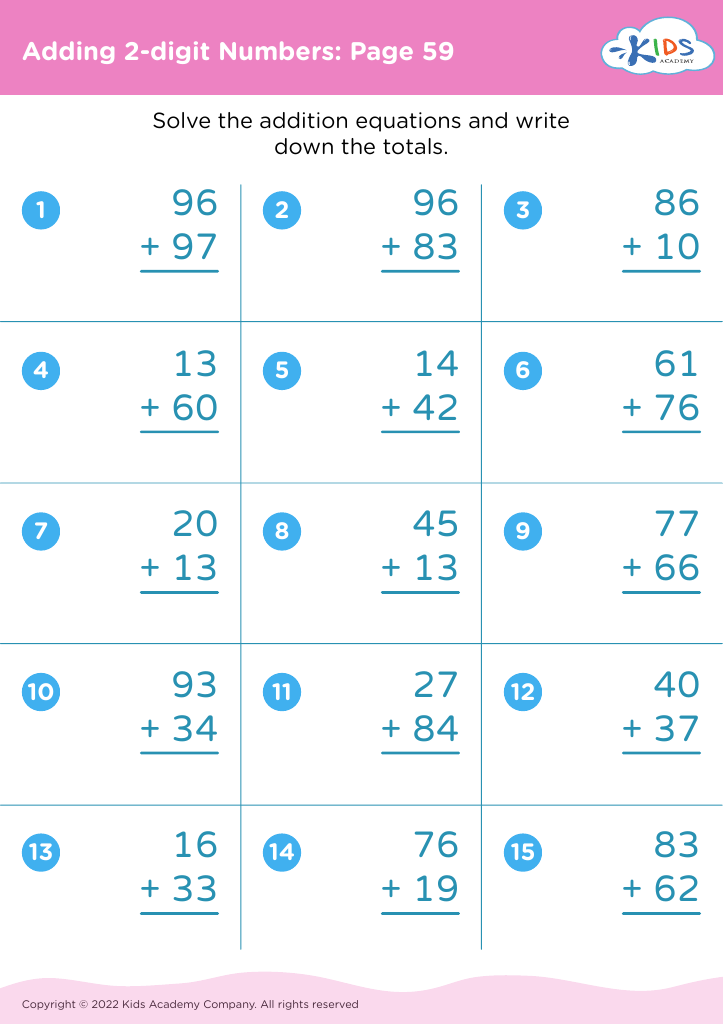
Adding 2-digit Numbers: Page 59

Adding 2-digit Numbers: Page 59

Adding 2-digit Numbers: Page 59
Worksheet
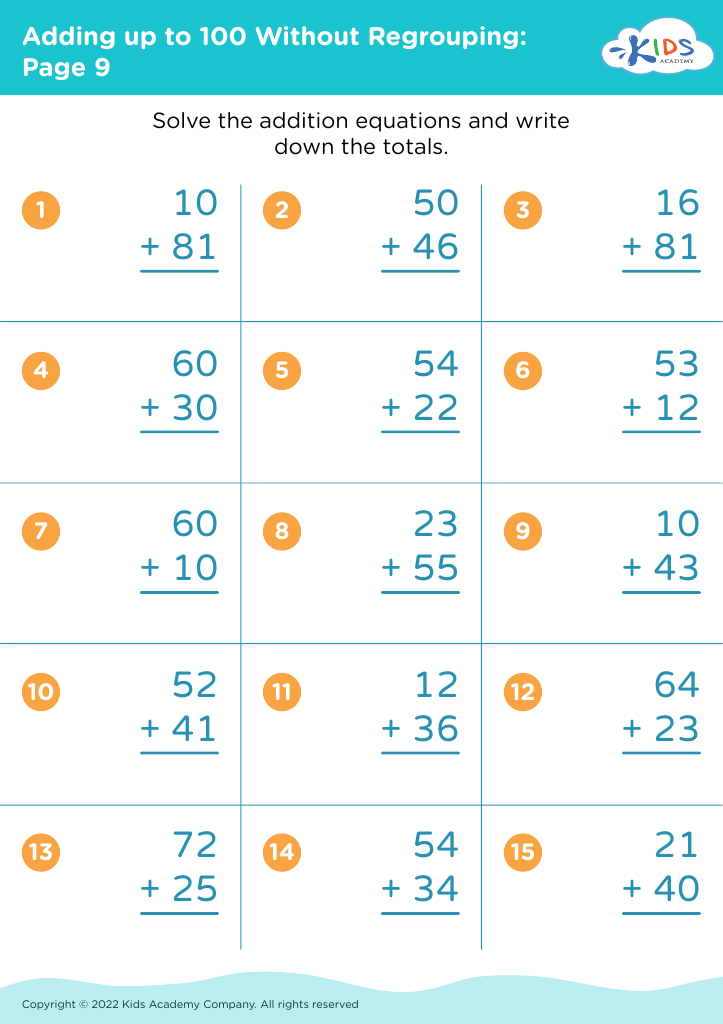
Adding up to 100 Without Regrouping: Page 9
Worksheet
Worksheet: subtraction word problems

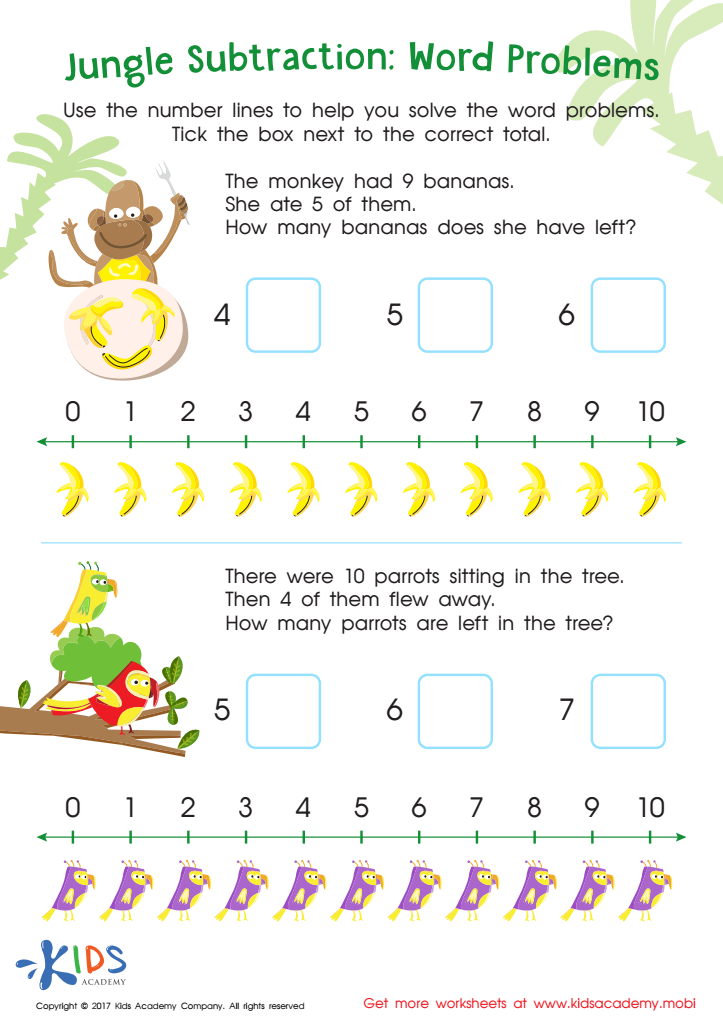
Jungle Subtraction Word Problems Substraction Worksheet
Kids will love this jungle-themed worksheet: subtraction word problems! Help the monkey work out how many bananas he has, using the number line. Encourage your child to use colorful parrots to subtract with ease and make calculations fun!
Jungle Subtraction Word Problems Substraction Worksheet

Worksheet


Mathematical reasoning in addition and subtraction for children aged 6-7 is crucial because it lays the foundation for their overall mathematical understanding and future academic success. At this age, children not only learn to perform basic operations but also start to develop problem-solving skills and logical thinking. When parents and teachers emphasize mathematical reasoning, they encourage children to understand the "why" behind operations rather than just memorizing procedures.

By engaging in mathematical reasoning, children learn to make sense of the relationships between numbers, recognize patterns, and apply strategies to solve problems. This promotes a deeper conceptual understanding, allowing them to tackle more complex mathematical situations in the future. Furthermore, reasoning enhances critical thinking skills, as children assess different approaches to arrive at a solution.

Supporting children in this area also fosters confidence and a positive attitude towards math. When students develop reasoning skills, they become more adaptable learners, which benefits them across all subject areas and helps in daily decision-making. Involving parents and teachers in this process creates a supportive learning environment, reinforcing the importance of mathematics in everyday life and setting a strong foundation for lifelong learning.