Problem-solving abilities Addition & Subtraction Worksheets for Ages 6-7 - Page 2
29 filtered results
-
From - To
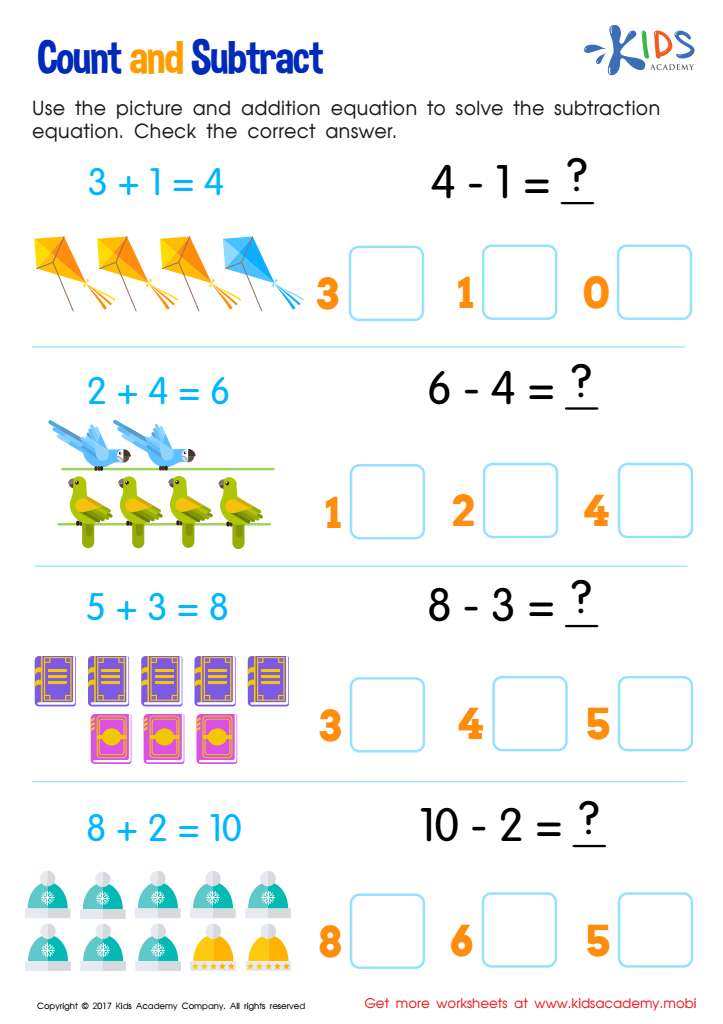
Count and Subtract Worksheet
 Assign to My Students
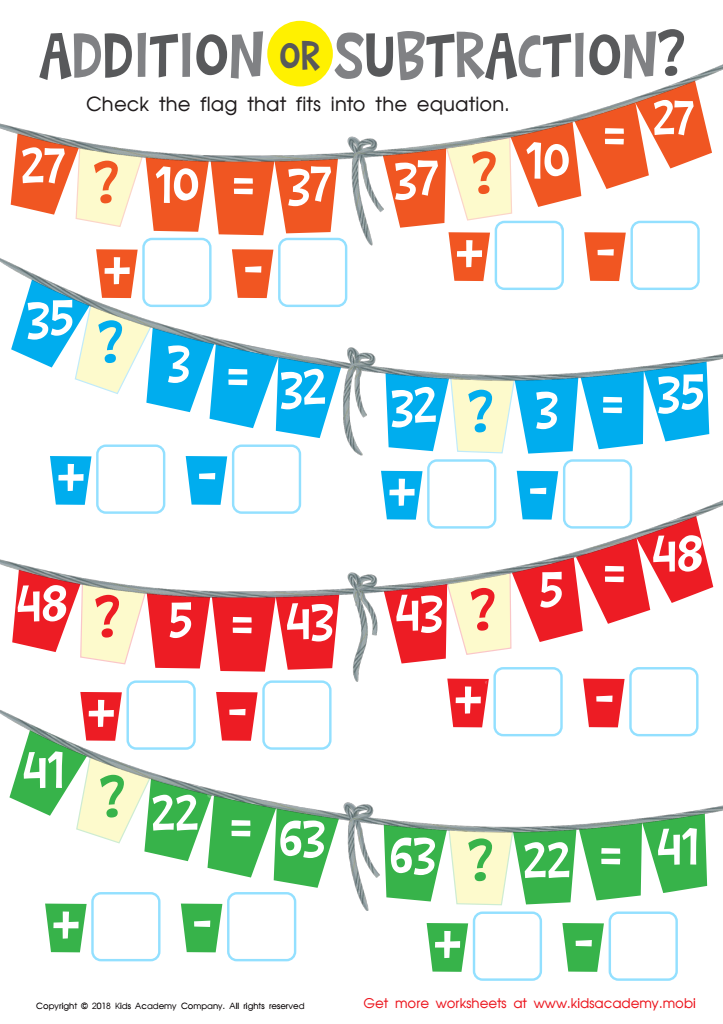
Addition or Subtraction? Worksheet
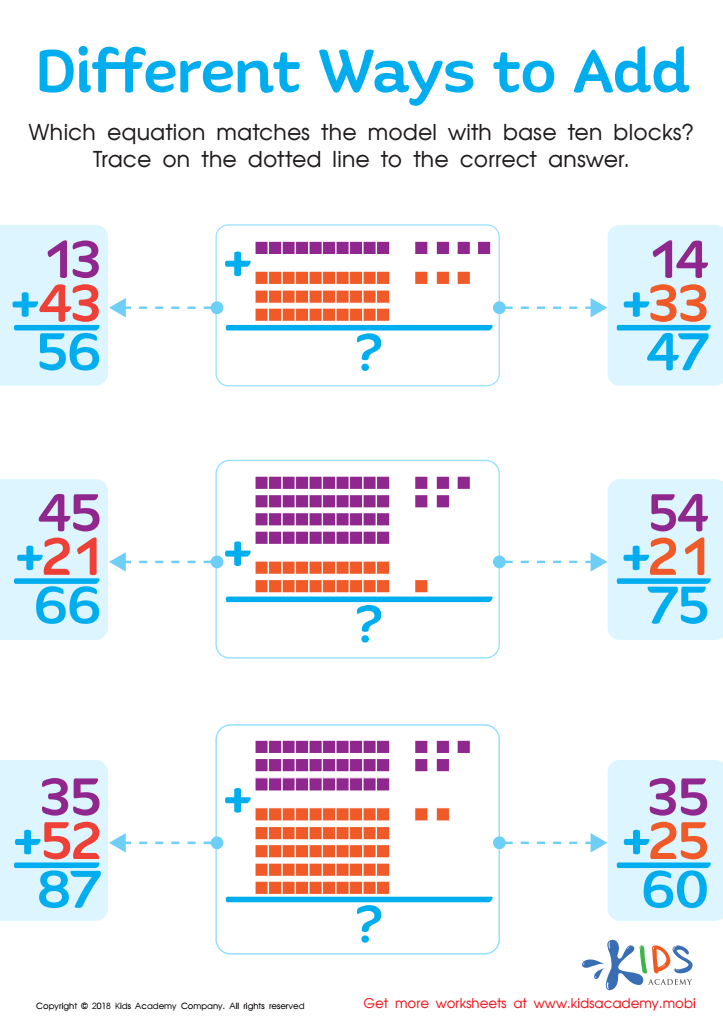
Different Ways to Add Worksheet
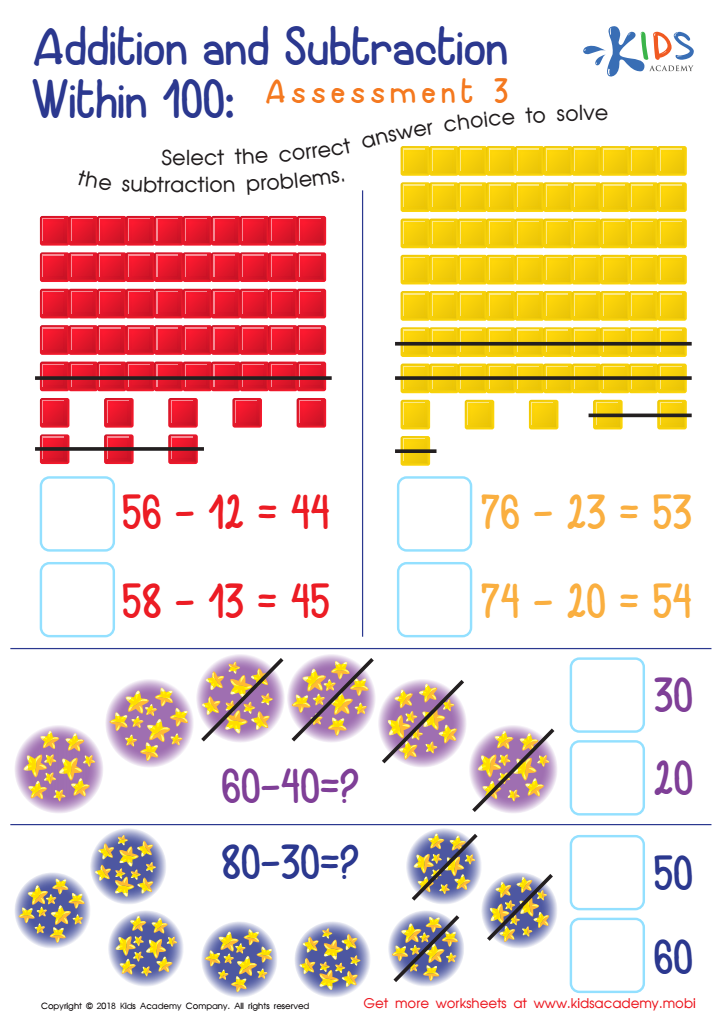
Addition and Subtraction Within 1: Assessment 3 Worksheet
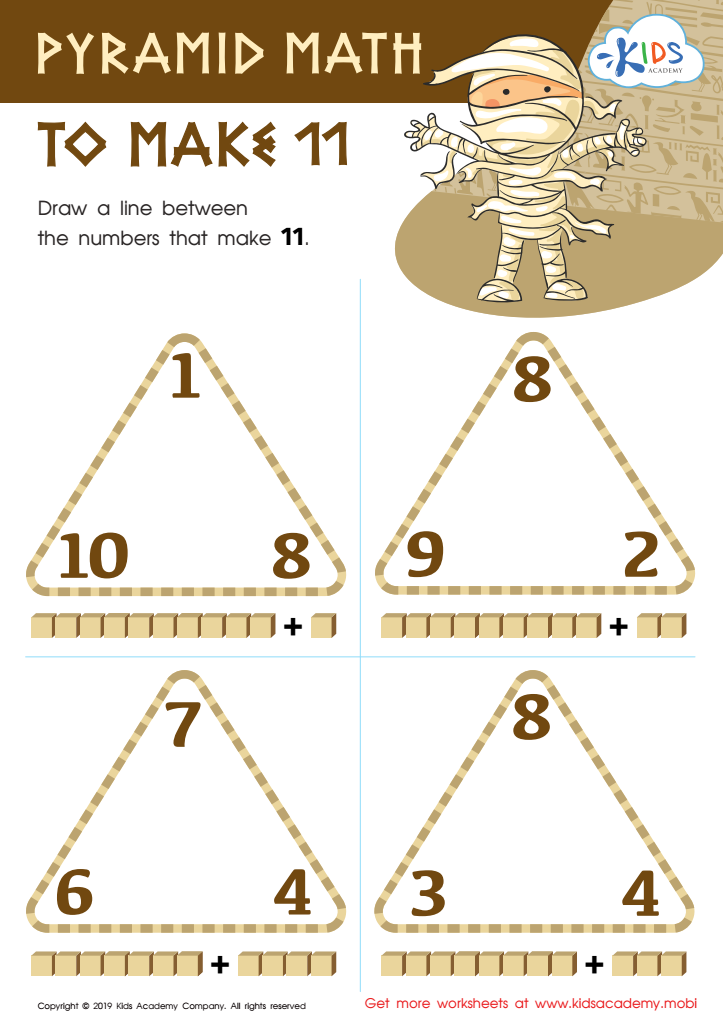
Pyramid Math to Make 11 Worksheet








Parents and teachers should place a strong emphasis on problem-solving abilities, including addition and subtraction, for 6–7-year-olds because these skills are fundamental for their cognitive and academic development. At this age, children are in their formative stages of learning when their brains are highly adaptable and receptive. Understanding addition and subtraction establishes a critical foundation for more advanced mathematical concepts they will encounter later in life, such as multiplication, division, and algebra.
Moreover, problem-solving in math helps children develop logical thinking and resilience. When kids solve addition and subtraction problems, they learn to evaluate different approaches, make decisions, and understand the consequences of those decisions. This not only boosts their mathematical skills but also enhances their overall problem-solving capabilities that are applicable in everyday life.
Problem-solving also improves memory and attention. Engaging in tasks that require addition and subtraction sharpens children’s memory and concentration levels, which positively impacts their performance in other subjects and activities. Socially, being competent in mathematics can boost a child's confidence and encourage a positive attitude towards learning.
Additionally, early math skills are strong predictors of later academic success. Research has shown that early competency in math is a more accurate predictor of future academic achievement than early reading skills. Therefore, investing in the development of problem-solving abilities in arithmetic for young children is crucial for their long-term educational and personal success.








