Visual representation comprehension Addition & Subtraction Worksheets for Ages 6-7
5 filtered results
-
From - To
Our "Visual Representation Comprehension Addition & Subtraction Worksheets" for ages 6-7 enhance young learners’ math skills with engaging, easy-to-understand activities. These worksheets utilize pictures, charts, and diagrams to visually explain addition and subtraction, helping kids grasp fundamental concepts more effectively. Designed by education experts, each worksheet aims to improve problem-solving abilities through interactive exercises. Perfect for classroom use or homeschooling, our worksheets cater to the diverse learning styles of young children, ensuring no child is left behind. Stimulate your child’s math development today with our enriching, fun-filled worksheets!
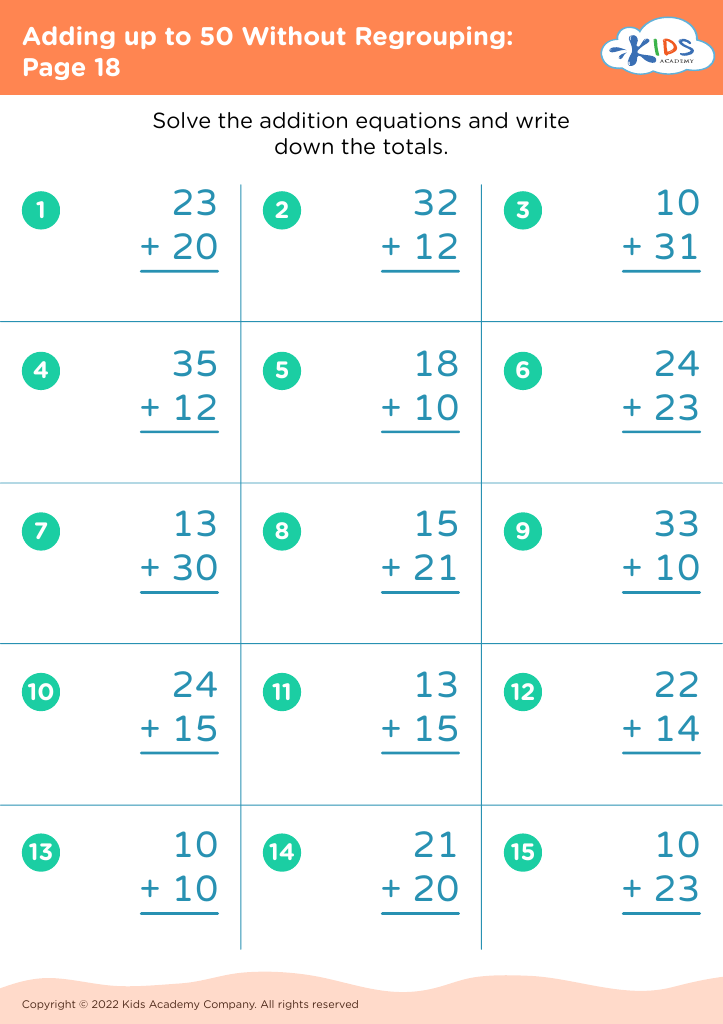
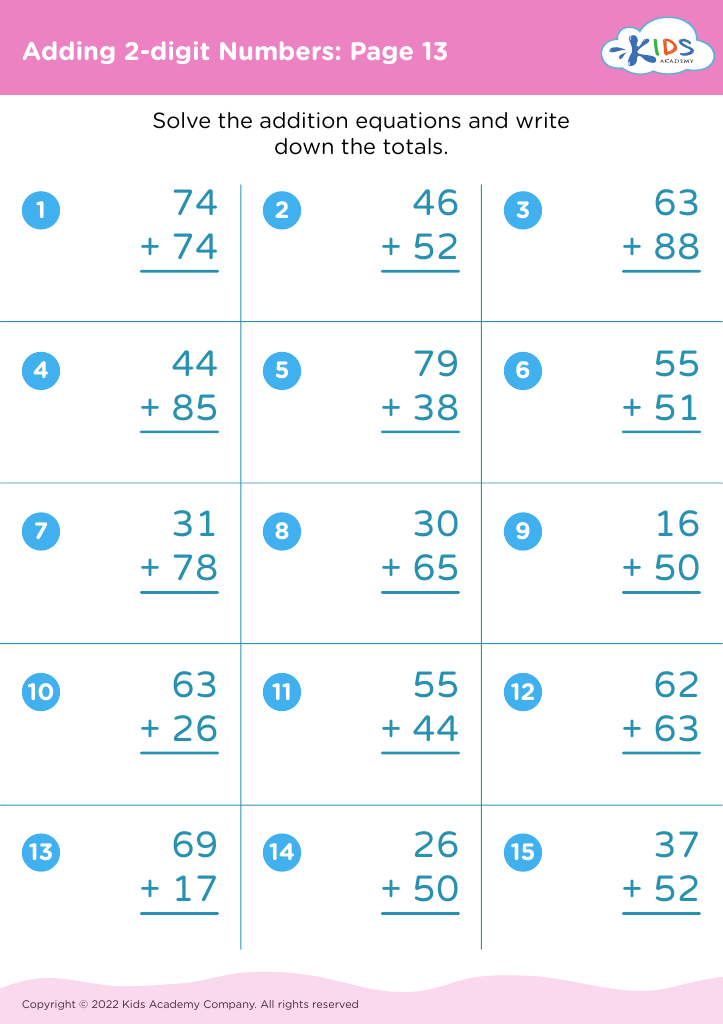
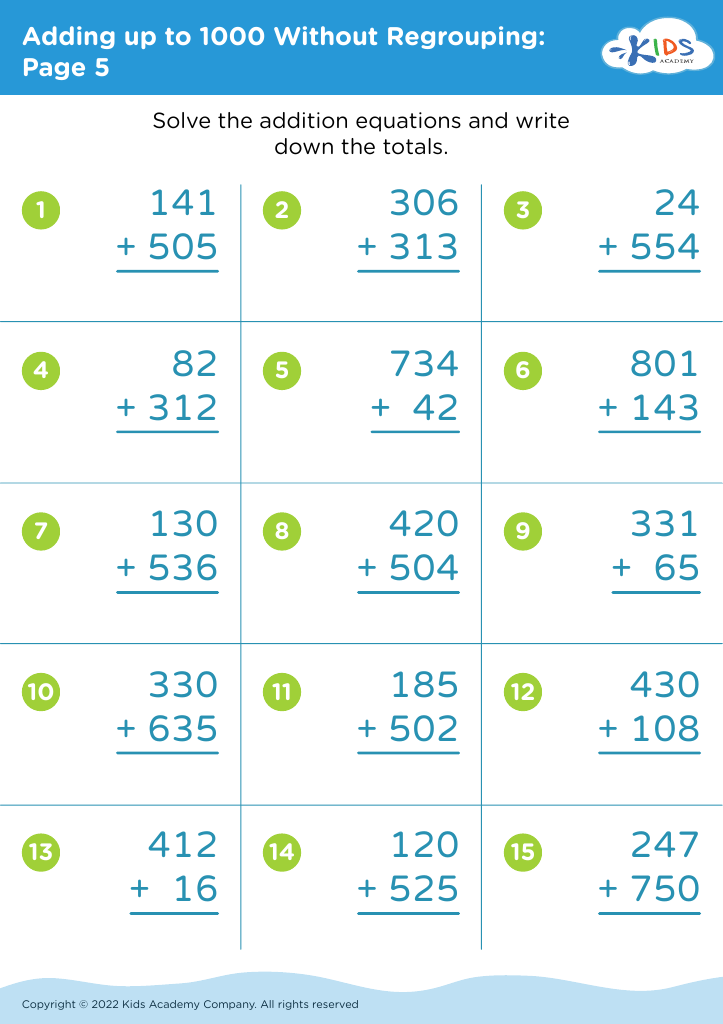
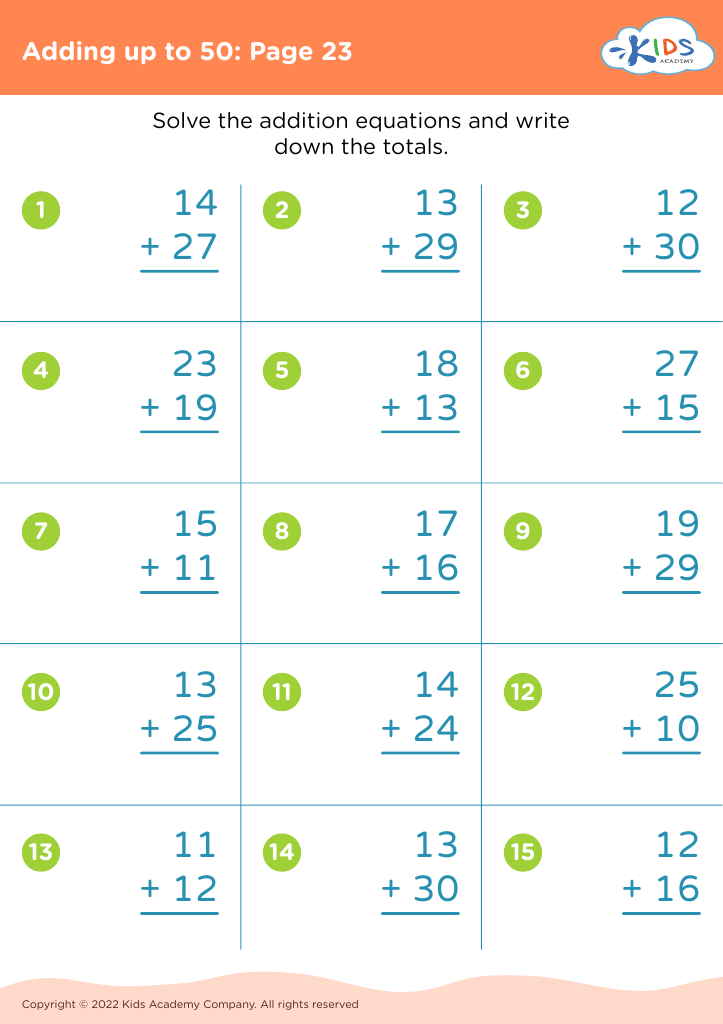
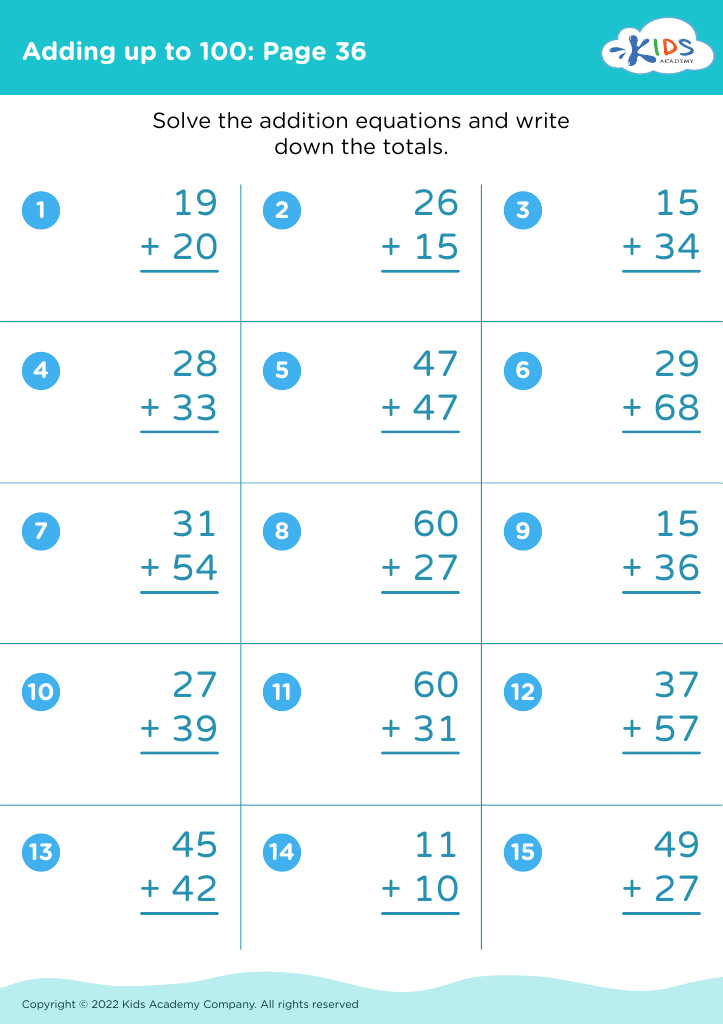








Visual representation comprehension is crucial for helping children ages 6-7 understand addition and subtraction. At this formative stage, young learners are developing foundational math skills that will support more advanced concepts later on. Visual tools like number lines, counters, and diagrams transform abstract numerical ideas into tangible ones, making them accessible and less daunting for children.
Parents and teachers should care about using these tools because they cater to diverse learning styles and help bridge gaps in understanding. Visual aids offer a multi-sensory approach, engaging sight and sometimes touch, thus reinforcing learning through various pathways. This integration enhances memory retention and comprehension, as children can "see" the math at work rather than merely memorizing factoids.
Furthermore, visual representation encourages problem-solving and critical thinking. For instance, when a child uses counters to depict addition or subtraction, they experiment with grouping and regrouping objects, building a hands-on understanding of those operations. This experiential learning fosters a deeper grasp of mathematical principles, which is essential for future academic success.
By prioritizing visual methods, parents and teachers foster a motivating and supportive learning environment. This attention to individual comprehension styles nurtures a positive relationship with math, reducing anxiety and building confidence, laying a strong foundation that will benefit children well beyond their early school years.








