Pattern recognition Addition Worksheets for Ages 6-7
6 filtered results
-
From - To
Enhance your child's mathematical skills with our engaging Pattern Recognition Addition Worksheets designed specifically for ages 6-7. These worksheets seamlessly blend fun and learning, helping young learners identify patterns while mastering addition. By engaging in activities that promote pattern recognition, children improve critical thinking and problem-solving abilities. Our carefully crafted exercises are suitable for home or classroom use, ensuring that kids grasp essential math concepts in an enjoyable way. Each worksheet offers a variety of colorful, interactive elements that make practicing addition exciting. Foster a love for math and boost confidence with our captivating Pattern Recognition Addition Worksheets today!
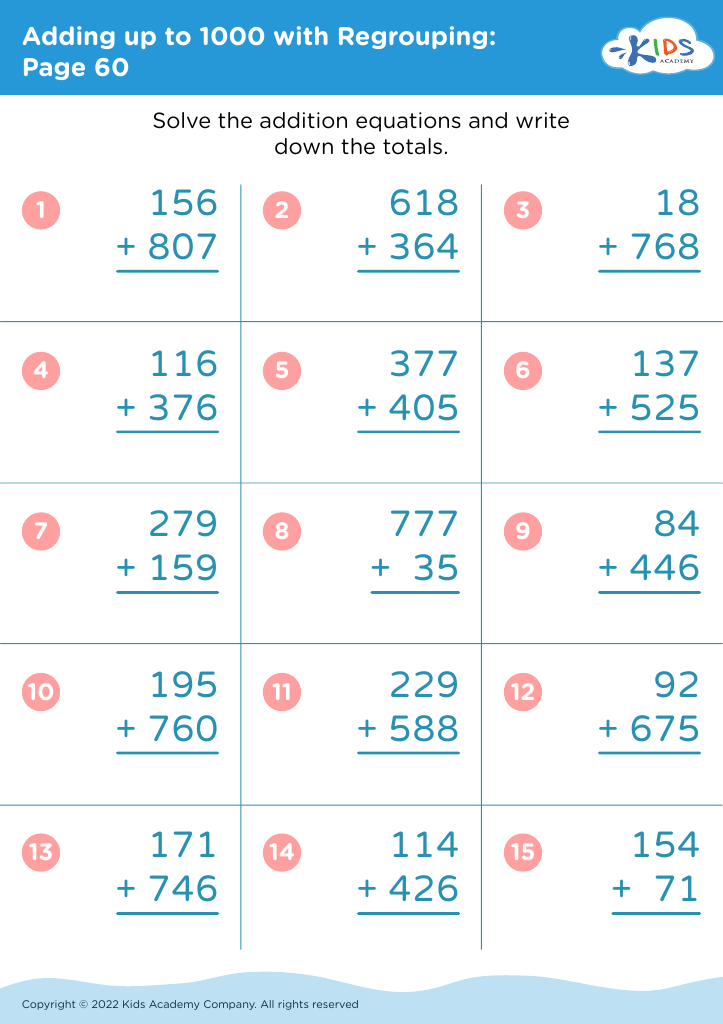
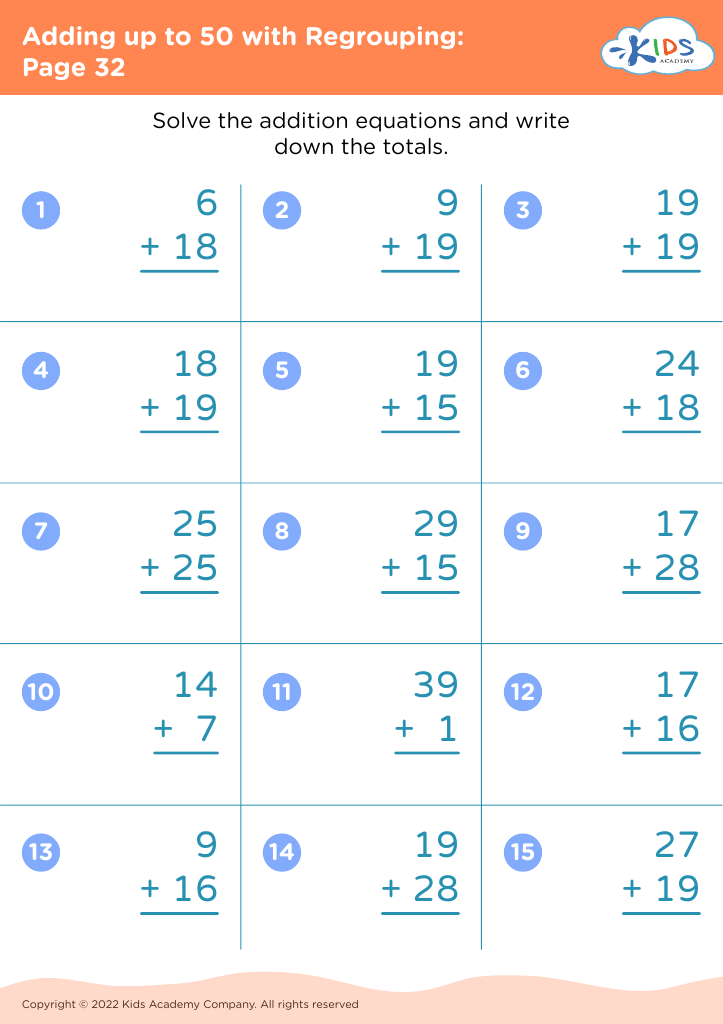
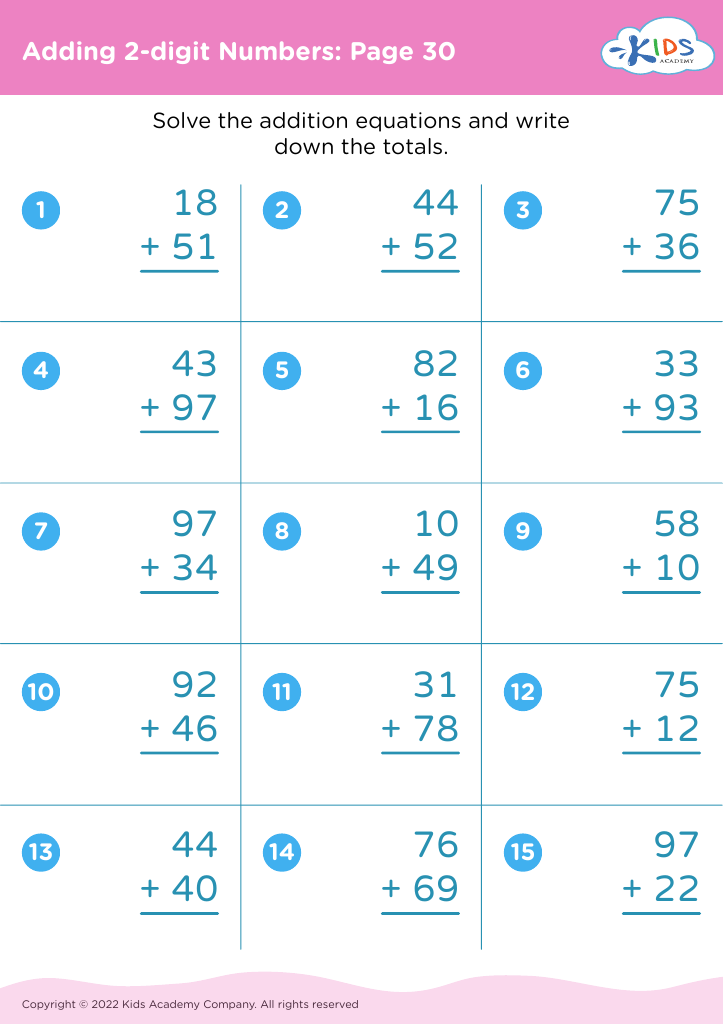
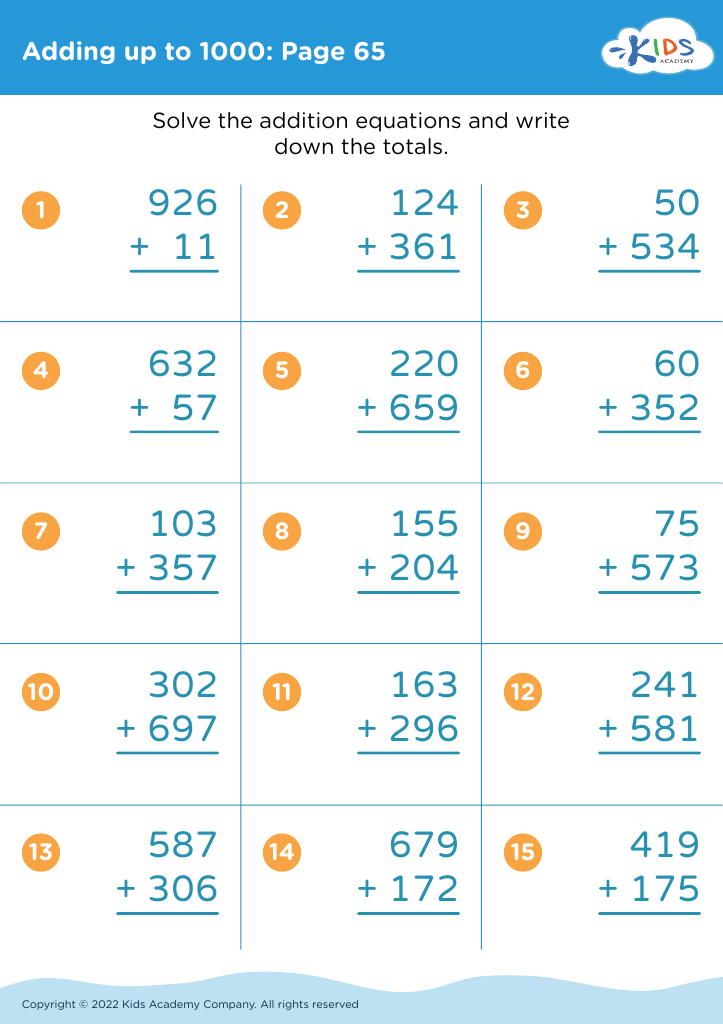
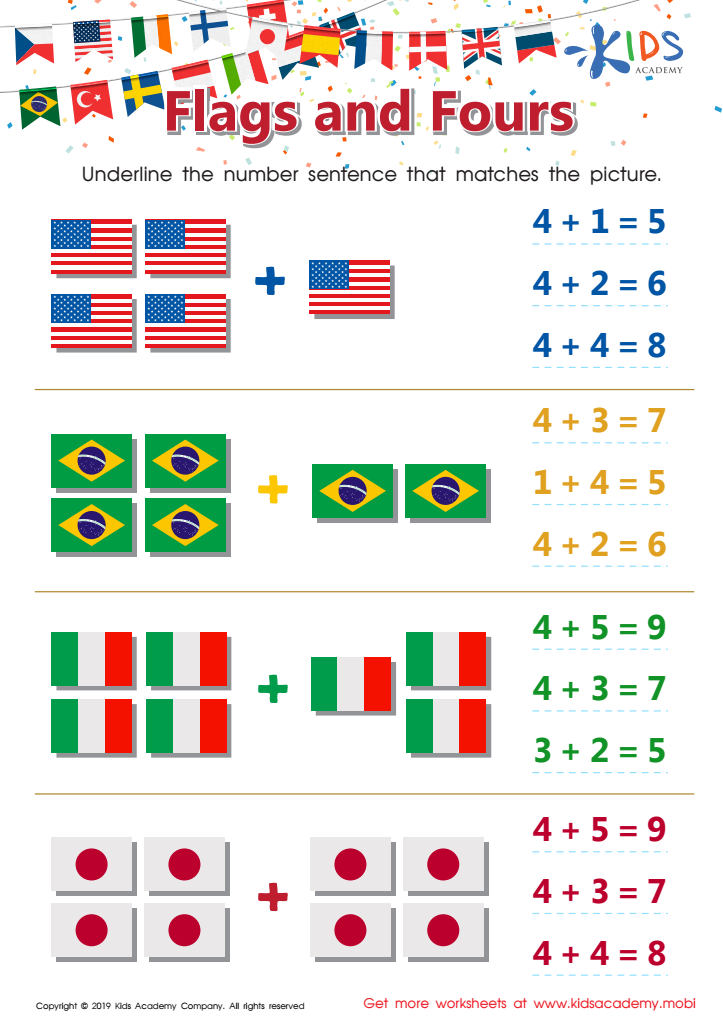
Flags and Fours Worksheet
 Assign to My Students
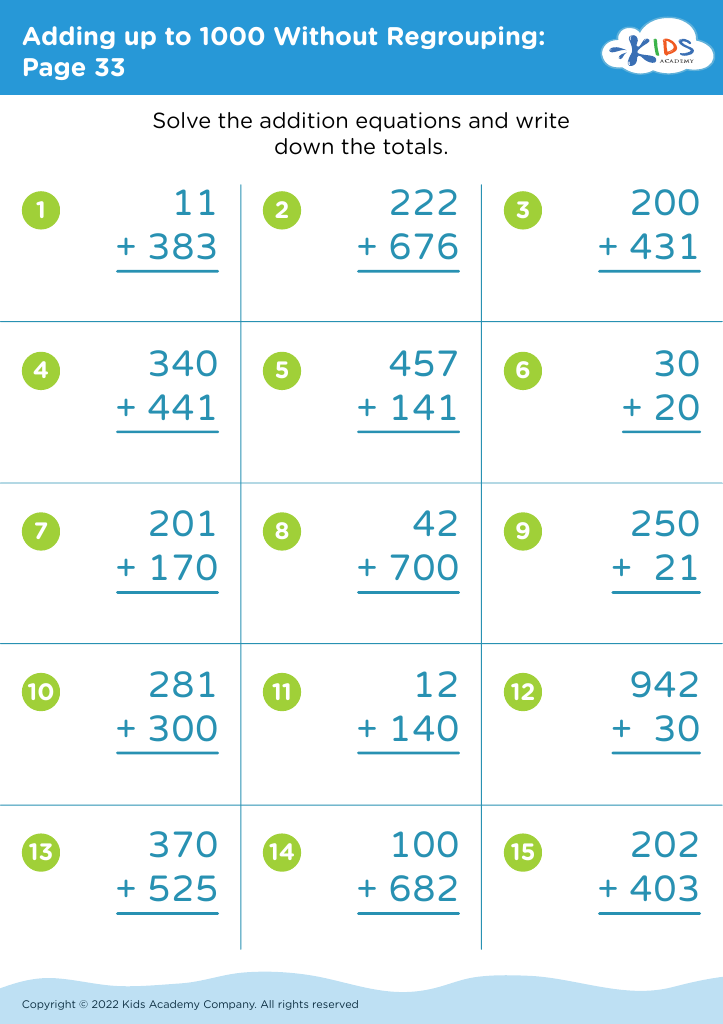







.jpg)
Pattern recognition in addition is a fundamental skill for children aged 6-7, playing a crucial role in their mathematical understanding. It helps them identify relationships between numbers and recognize rules, which are essential building blocks for arithmetic and future mathematical concepts.
When children recognize patterns, such as seeing that adding 2 to an even number always results in an even number, they develop confidence and speed in solving problems. This skill can ease the complexity of mental math, encouraging them to approach problems with a strategic mindset. Additionally, recognizing patterns fosters logical thinking and critical problem-solving skills, which can be applied across subjects.
For parents and teachers, focusing on pattern recognition in addition provides opportunities to create engaging and varied learning experiences. Hands-on activities, games, and real-life applications can make learning fun and relatable, leading to increased motivation among students. Furthermore, strong foundational arithmetic skills set the stage for future mathematical success, ensuring that children are well-prepared for more complex concepts in later grades.
Overall, prioritizing pattern recognition in addition not only enhances children's current mathematical abilities but also nurtures a love for mathematics, setting the groundwork for lifelong learning and analytical thinking.








