Filters

36 filtered results

Clear all filters
Favorites
With answer key
Interactive

36 filtered results

Difficulty Level

Grade


Subject

    Check out this FREE Trial Lesson on Addition for age 6-7!

    2 Step Word Problems Writing Equations to Match

    Favorites
    With answer key
    Interactive
    • 6-7
    • Reading comprehension
    • Addition
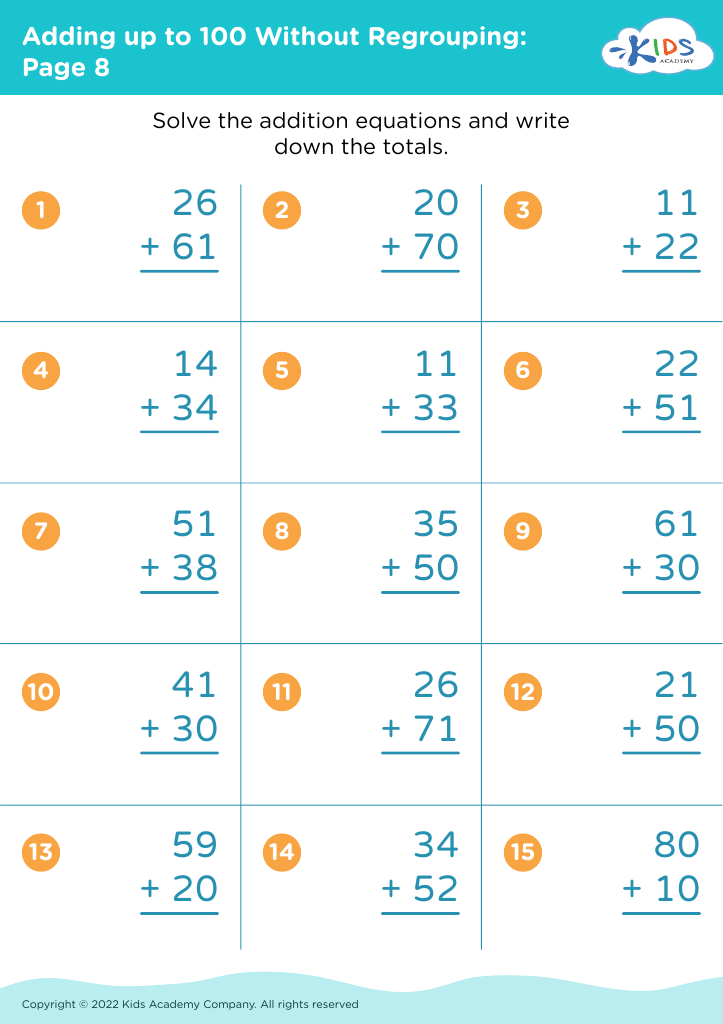
    Adding up to 100 Without Regrouping: Page 8
    Adding up to 100 Without Regrouping: Page 8
    Adding up to 100 Without Regrouping: Page 8
    Worksheet
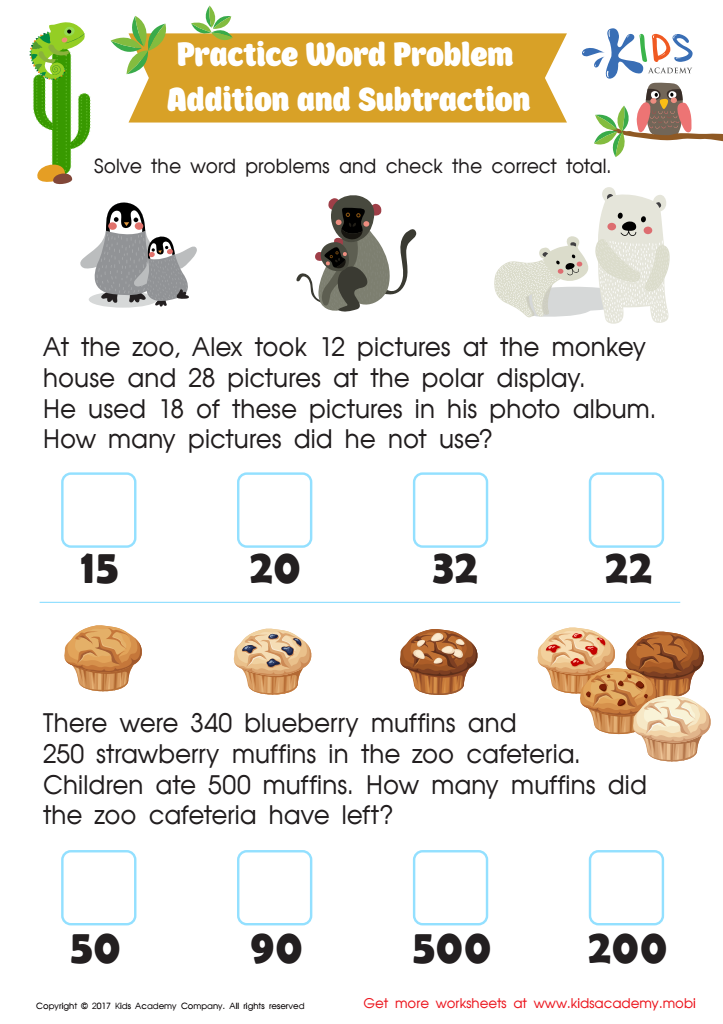
    Addition and subtraction word problem worksheet for 3rd grade
    Addition and subtraction word problem worksheet for 3rd grade

    Addition and Subtraction: Word Problems Worksheet

    Word problems can be difficult, but they offer another way to understand math. Our 3rd grade worksheet takes your child to the zoo; two intriguing word problems will test their thinking skills and help them find the total.
    Addition and Subtraction: Word Problems Worksheet
    Worksheet
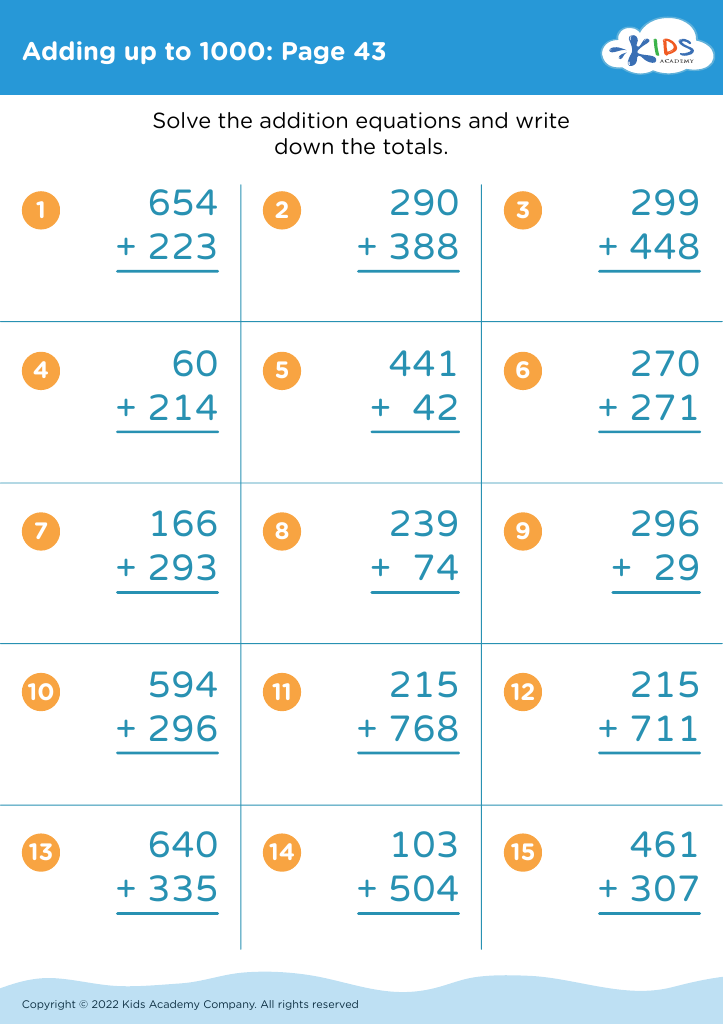
    Adding up to 1000: Page 43
    Adding up to 1000: Page 43

    Adding up to 1000: Page 43

    Adding up to 1000: Page 43
    Worksheet
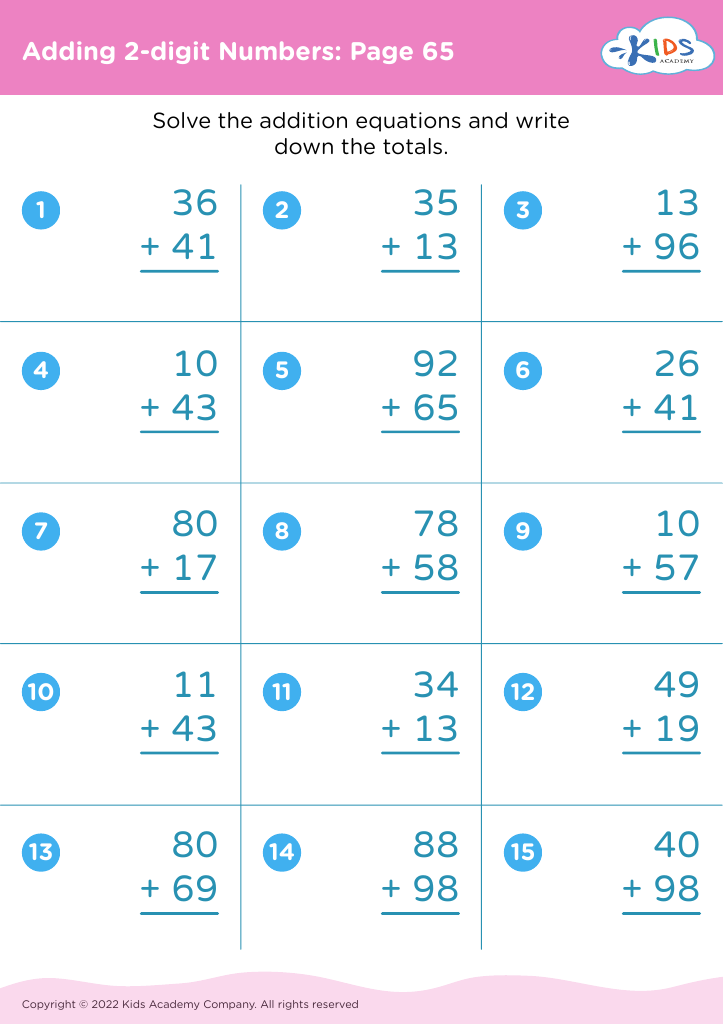
    Adding 2-digit Numbers: Page 65
    Adding 2-digit Numbers: Page 65

    Adding 2-digit Numbers: Page 65

    Adding 2-digit Numbers: Page 65
    Worksheet
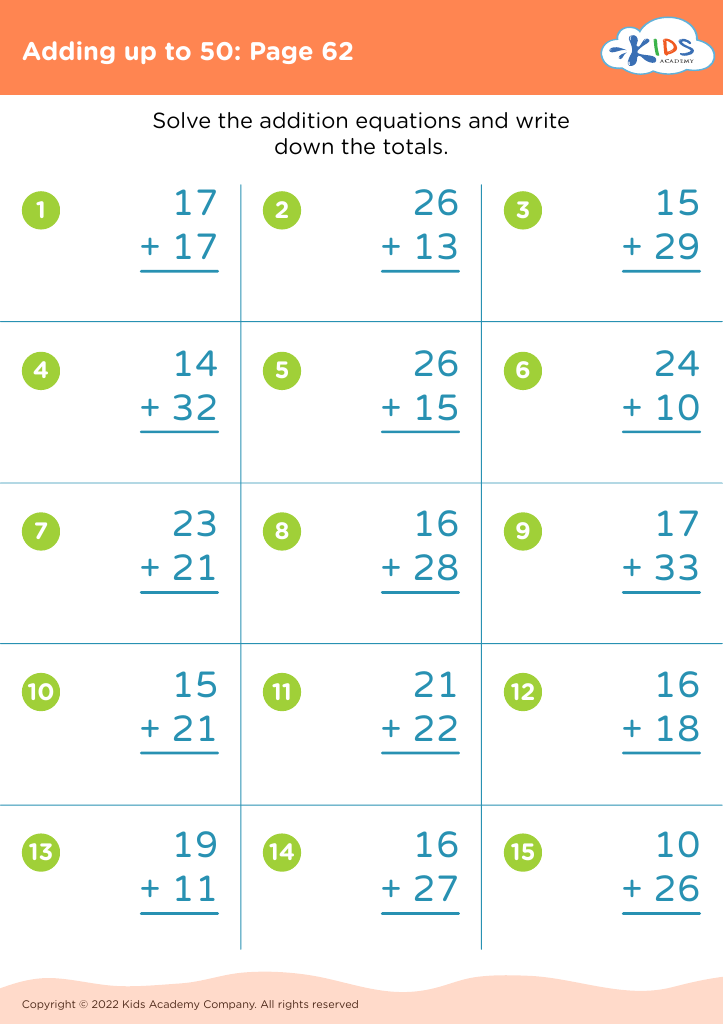
    Adding up to 50: Page 62
    Adding up to 50: Page 62

    Adding up to 50: Page 62

    Adding up to 50: Page 62
    Worksheet
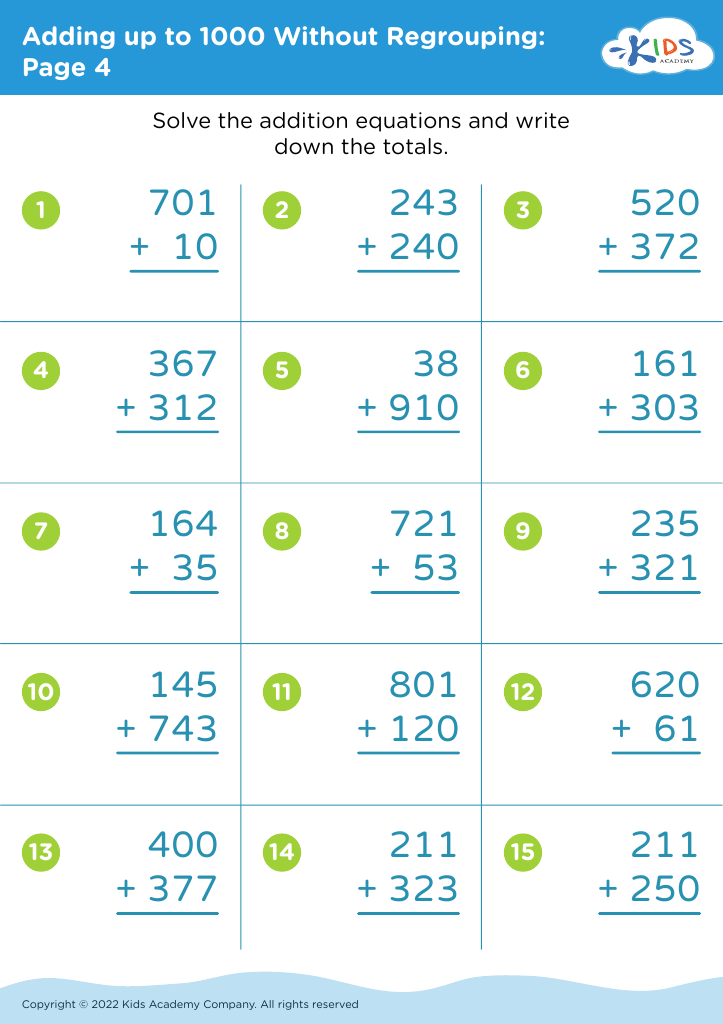
    Adding up to 1000 Without Regrouping: Page 4
    Adding up to 1000 Without Regrouping: Page 4
    Adding up to 1000 Without Regrouping: Page 4
    Worksheet
    Recycle It: +2 Worksheet

    Recycle It: +2 Worksheet

    Recycle It: +2 Worksheet

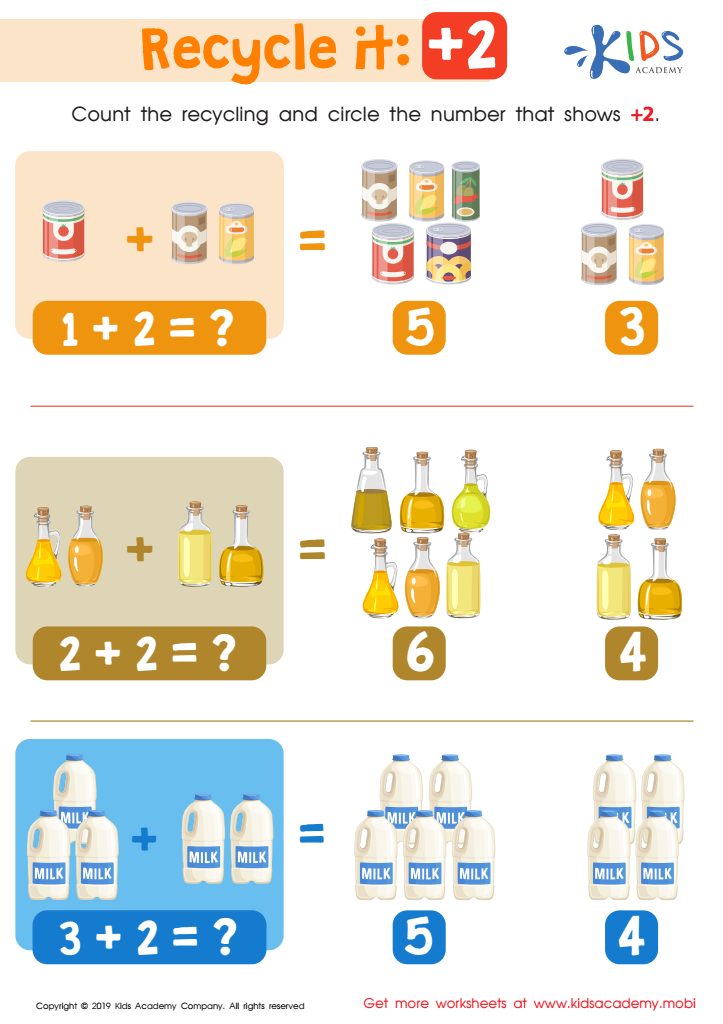
    Your kindergartners likely count everything they see, which is great for practice. Give them simple exercises such as in this worksheet to stimulate their minds. Ask them to count the recycling cans and then circle the number that shows +2.
    Recycle It: +2 Worksheet

    Worksheet
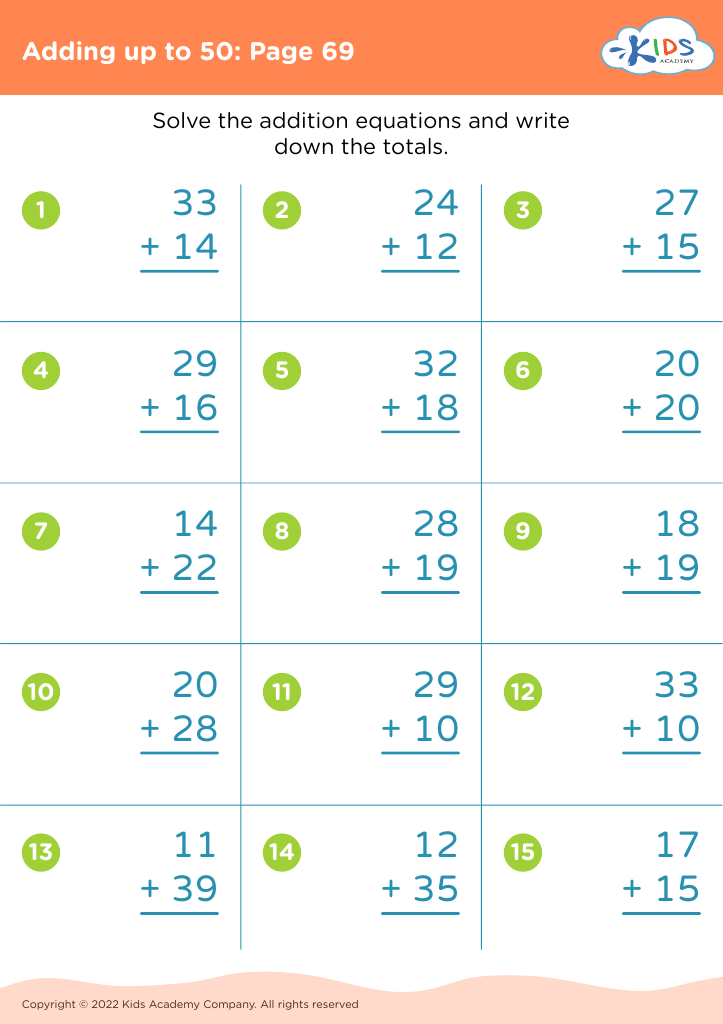
    Adding up to 50: Page 69
    Adding up to 50: Page 69

    Adding up to 50: Page 69

    Adding up to 50: Page 69
    Worksheet
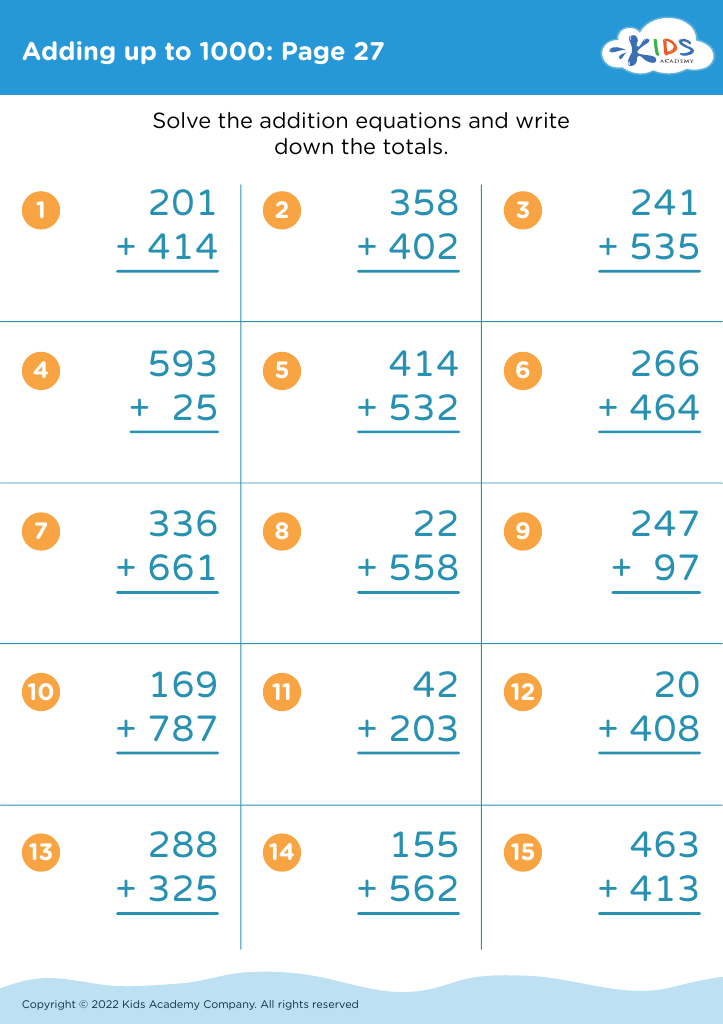
    Adding up to 1000: Page 27
    Adding up to 1000: Page 27

    Adding up to 1000: Page 27

    Adding up to 1000: Page 27
    Worksheet
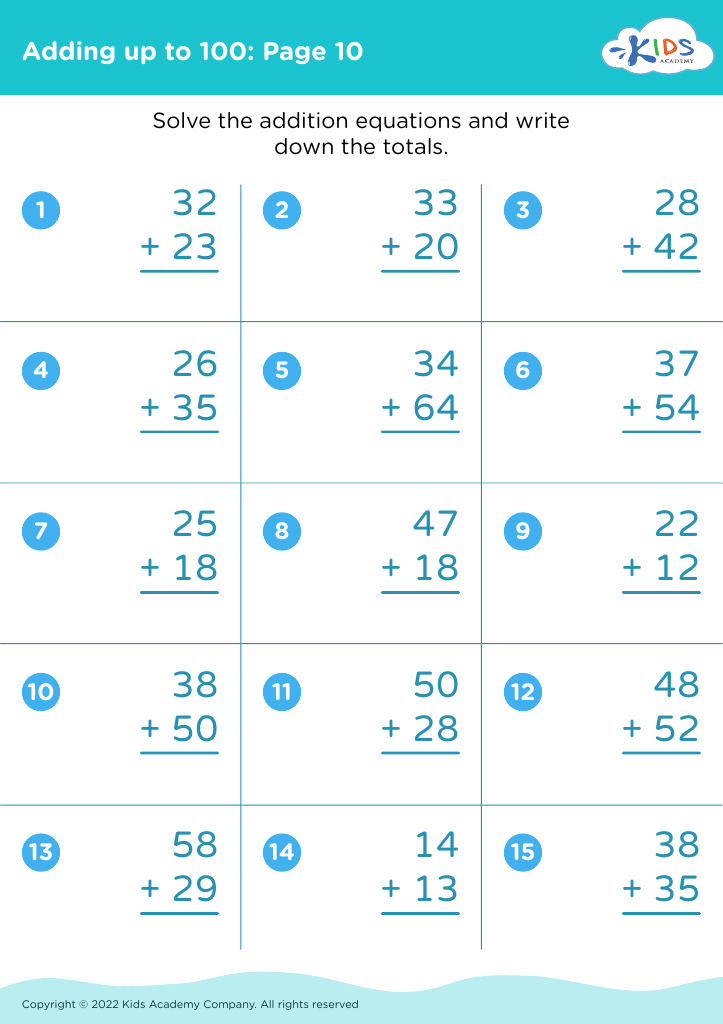
    Adding up to 100: Page 10
    Adding up to 100: Page 10

    Adding up to 100: Page 10

    Adding up to 100: Page 10
    Worksheet
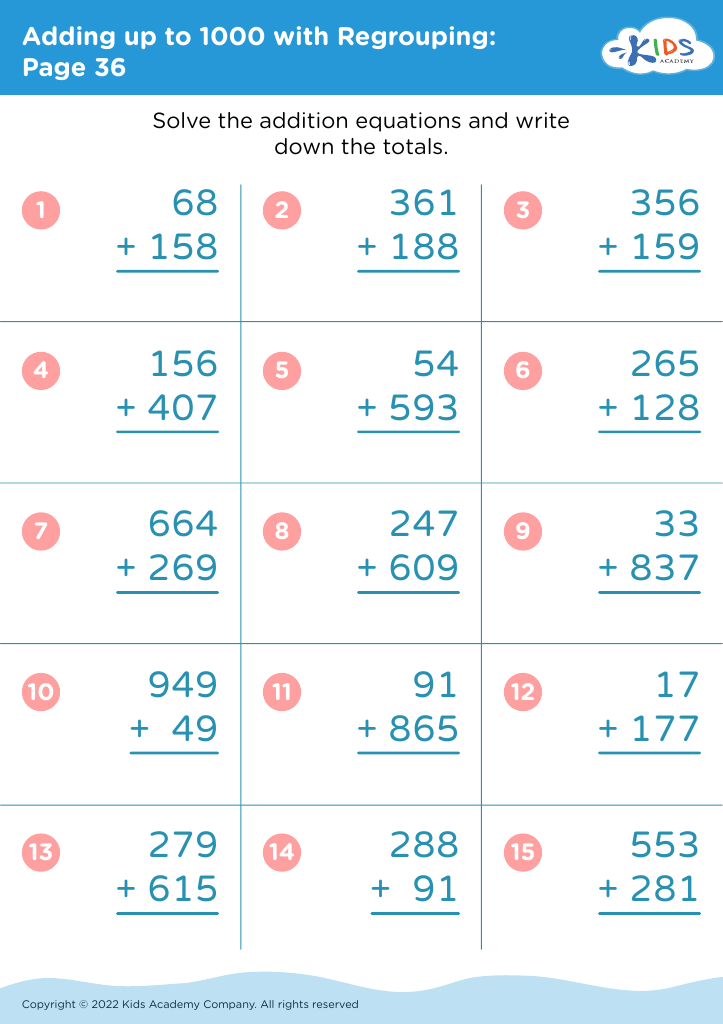
    Adding up to 1000 with Regrouping: Page 36
    Adding up to 1000 with Regrouping: Page 36
    Adding up to 1000 with Regrouping: Page 36
    Worksheet
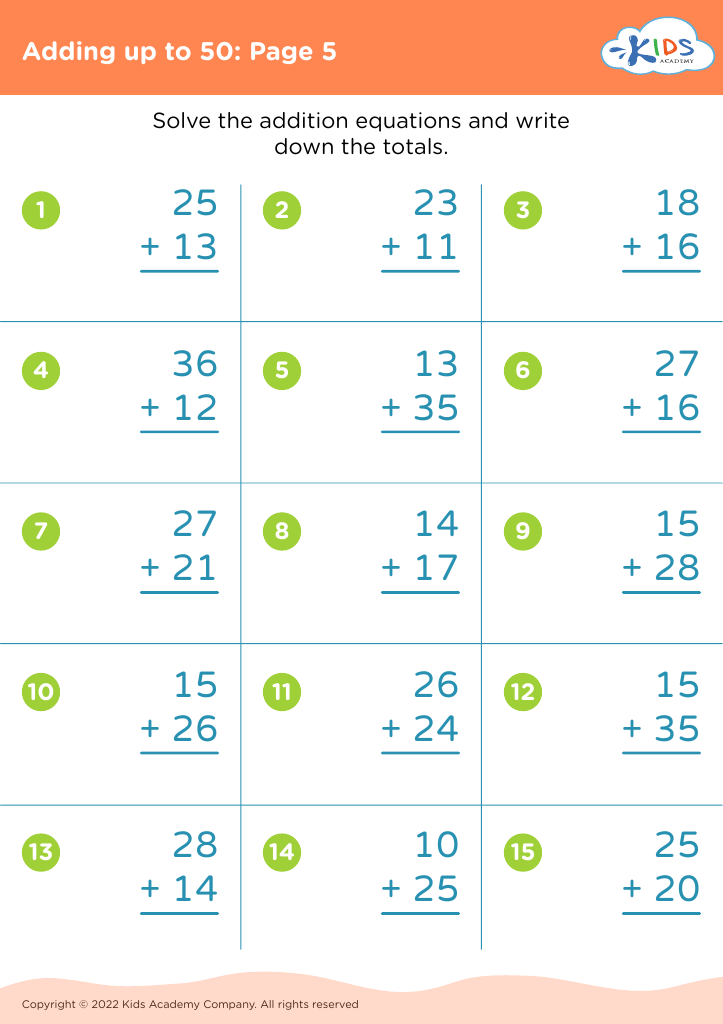
    Adding up to 50: Page 5
    Adding up to 50: Page 5

    Adding up to 50: Page 5

    Adding up to 50: Page 5
    Worksheet


    Reading comprehension is essential for children aged 6-7 as it lays the foundation for their future learning and academic success. At this age, children transition from learning to read to reading to learn, making comprehension skills crucial. Parents and teachers should care about fostering these skills because they impact children's ability to understand and engage with various subjects, from science to art, shaping their overall educational experience.

    Developing strong reading comprehension helps children become critical thinkers and problem solvers. They learn to interpret texts, infer meaning, and summarize information, crucial skills for academic performance. Furthermore, good readers tend to have broader vocabularies and improved writing abilities, enhancing their communication skills.

    Additionally, fostering a love for reading at this stage can instill lifelong learning habits. Engaging children in discussions about stories not only improves comprehension but also builds confidence, encourages curiosity, and enhances social skills as they talk about their thoughts and feelings regarding texts.

    In summary, supporting reading comprehension in early education promotes cognitive development and equips children with tools vital for ongoing learning, making it a worthwhile priority for both parents and teachers.