Recognize patterns Addition Worksheets for Ages 6-7
11 filtered results
-
From - To
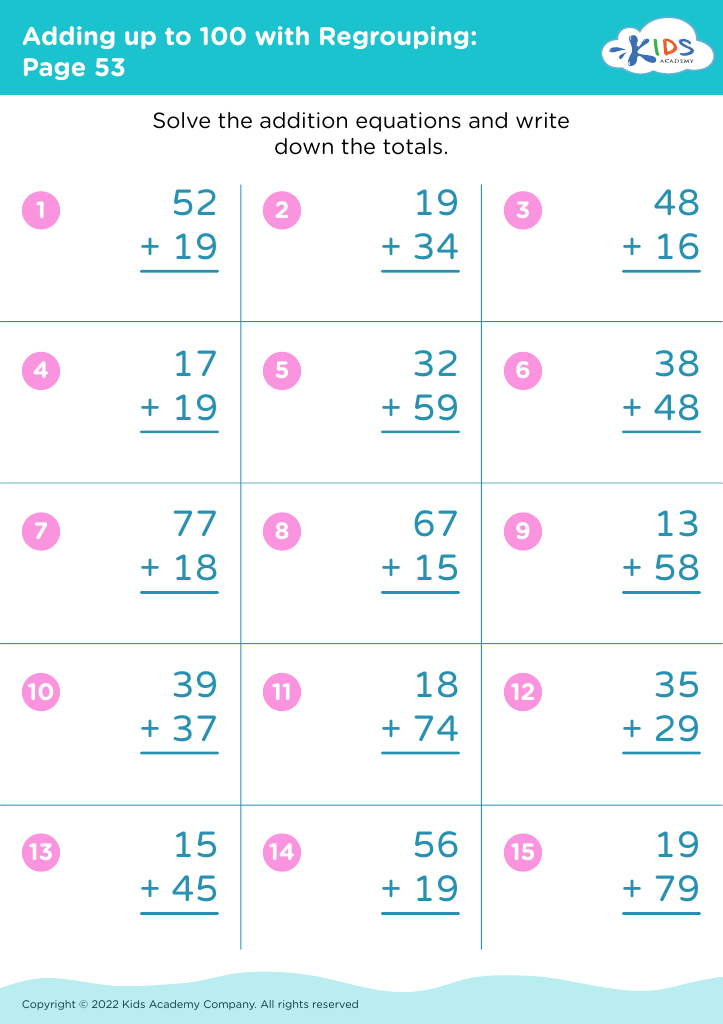
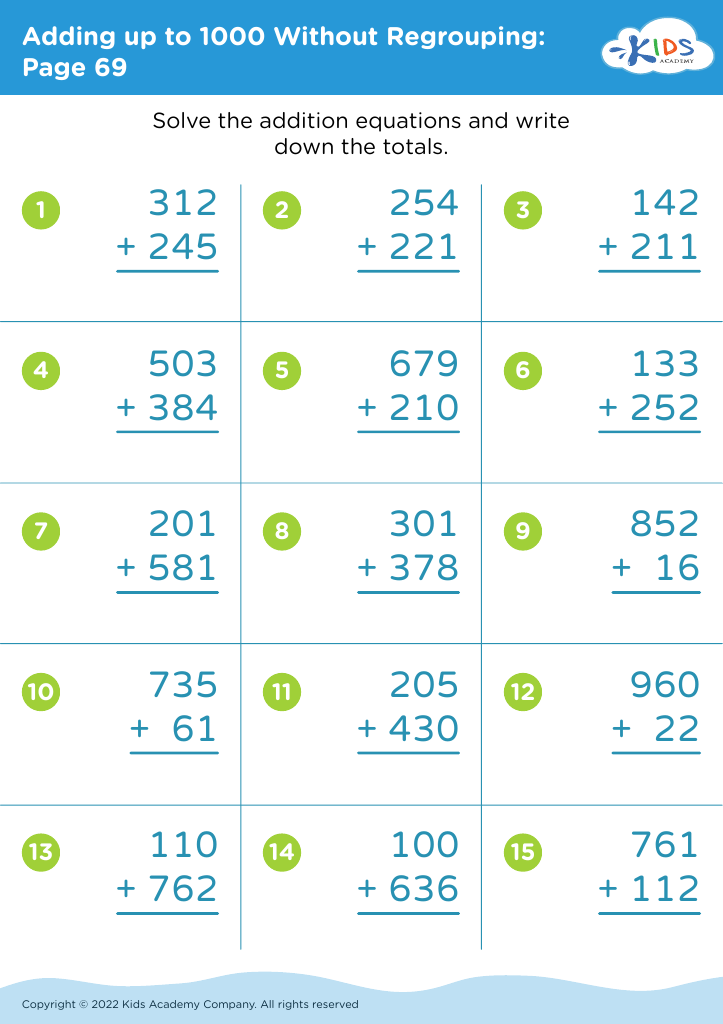
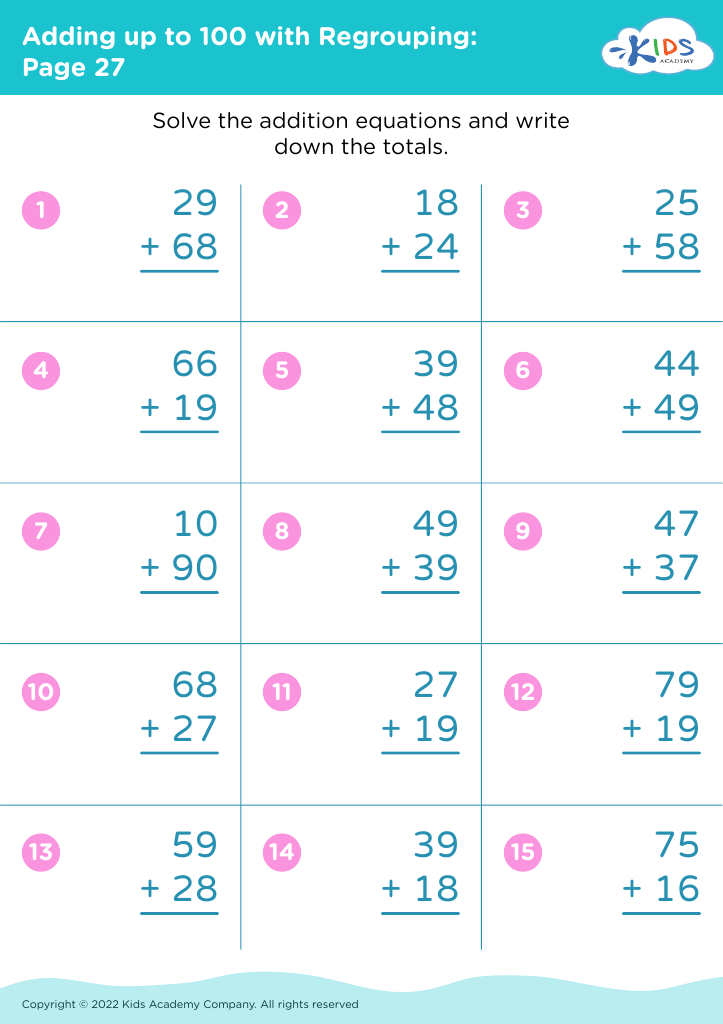
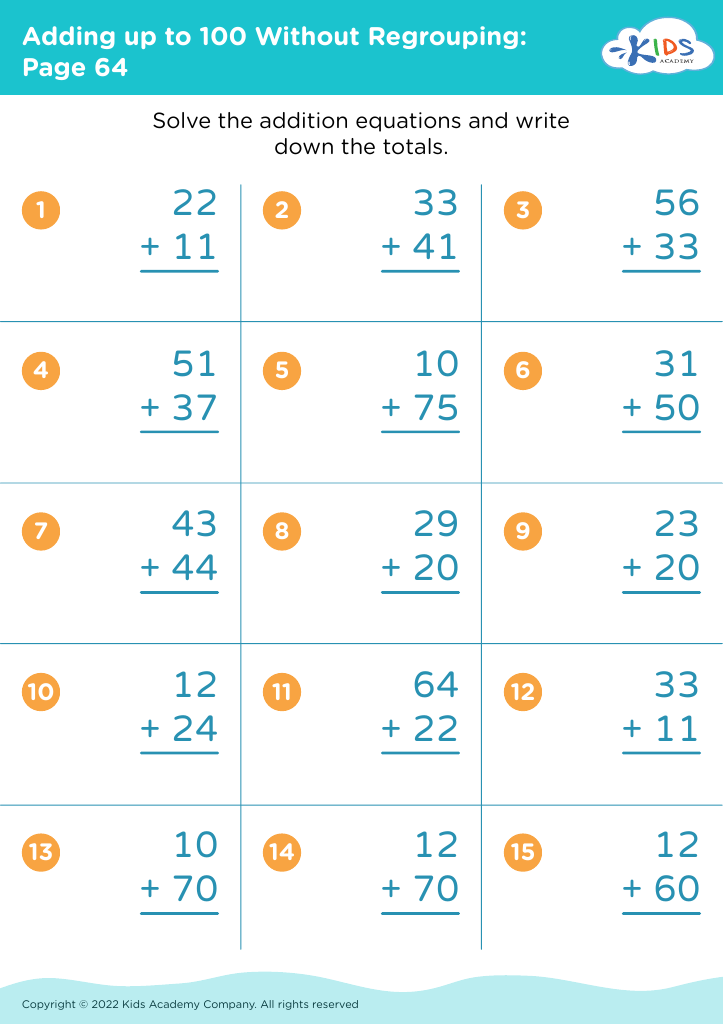
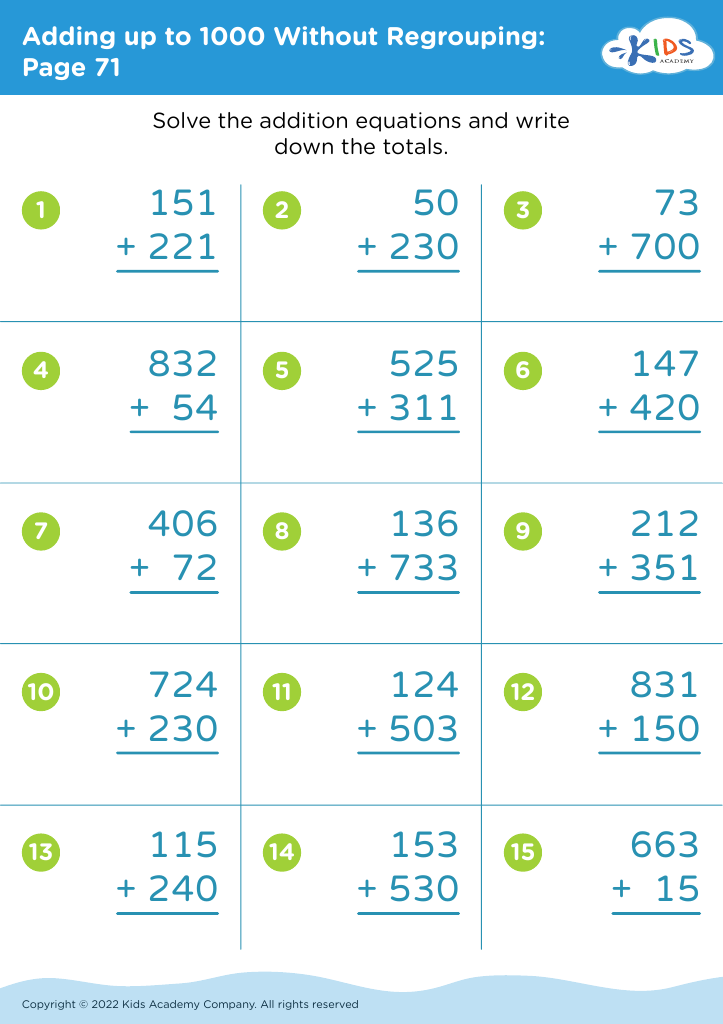
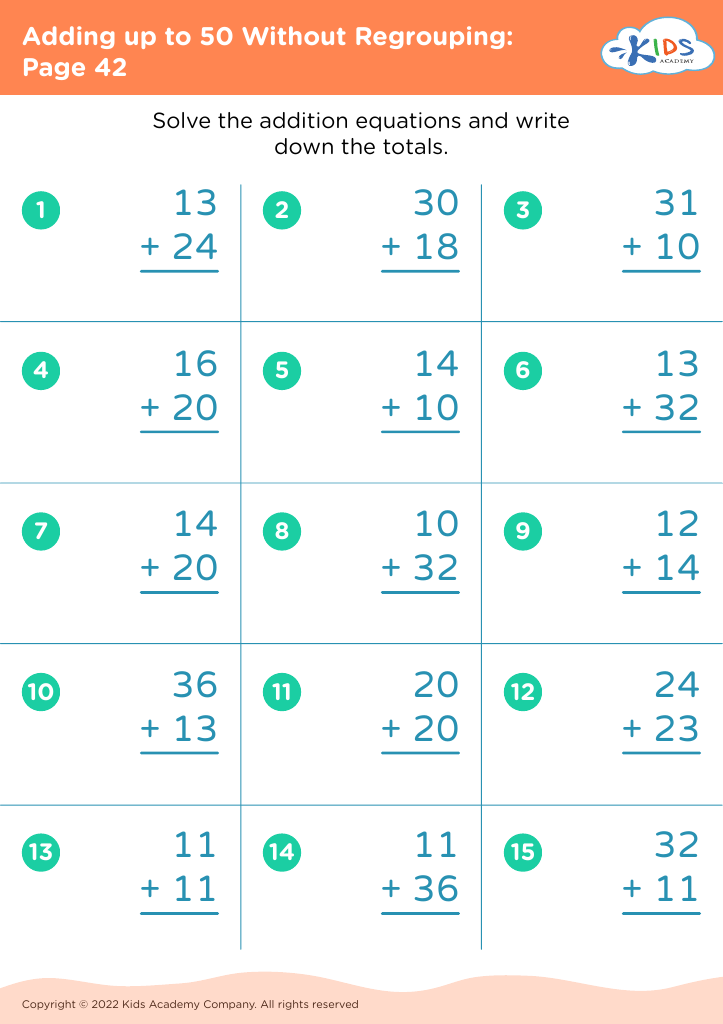
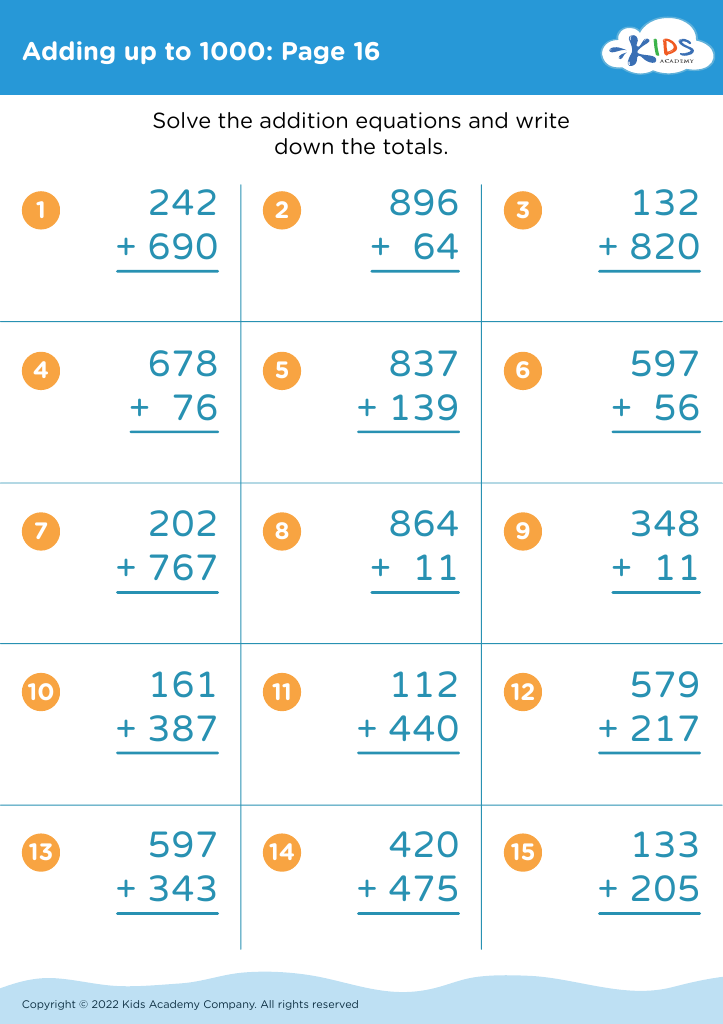
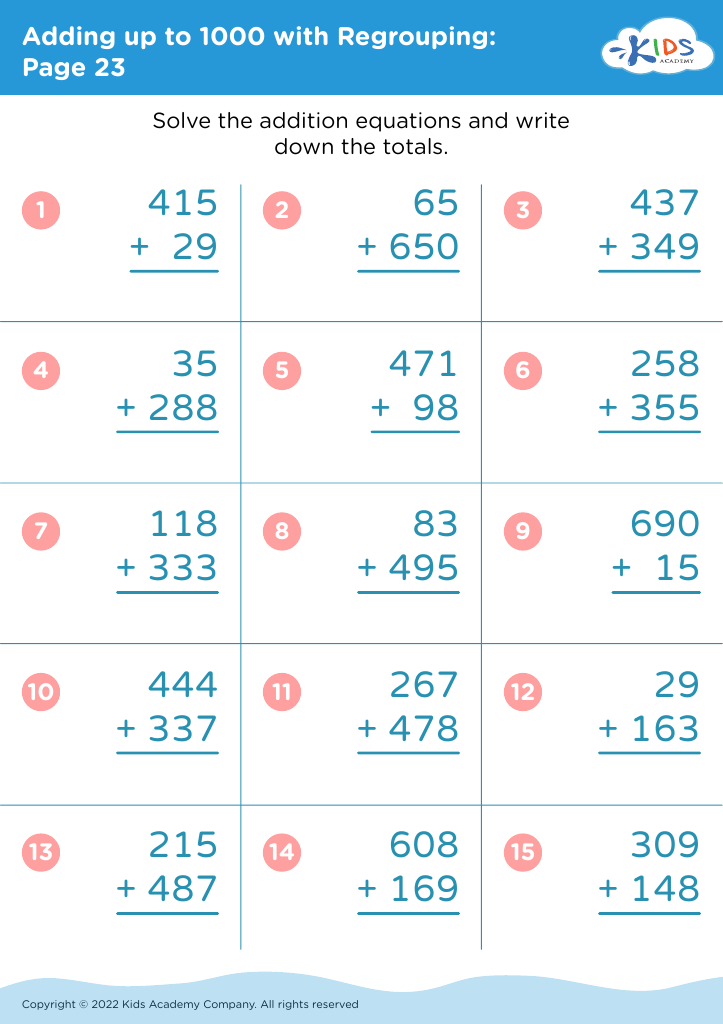
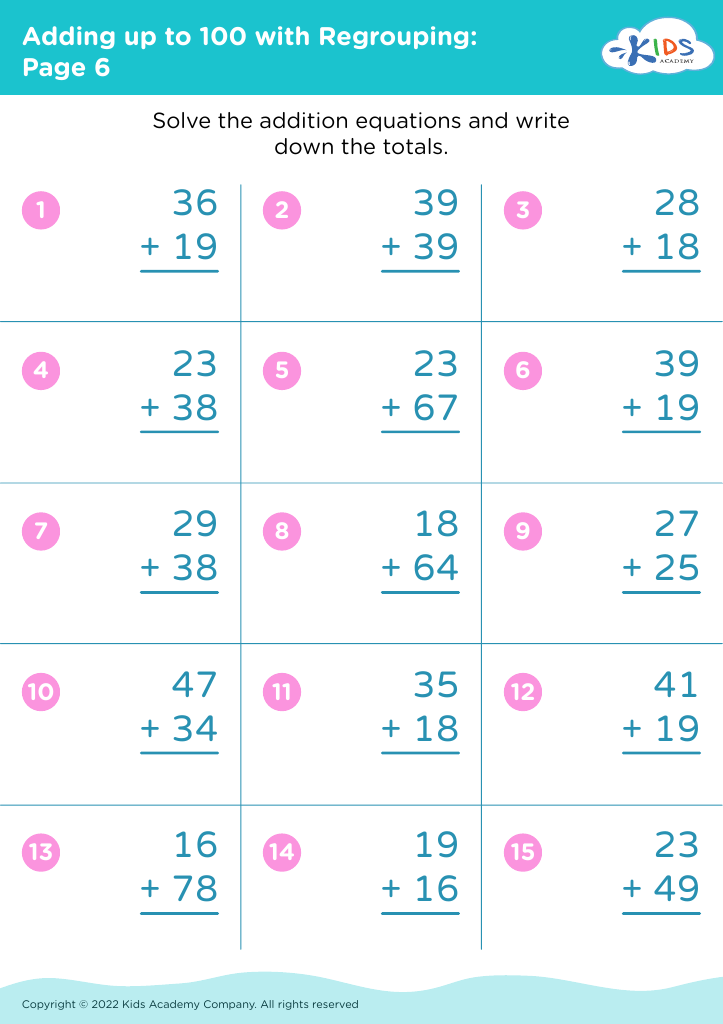
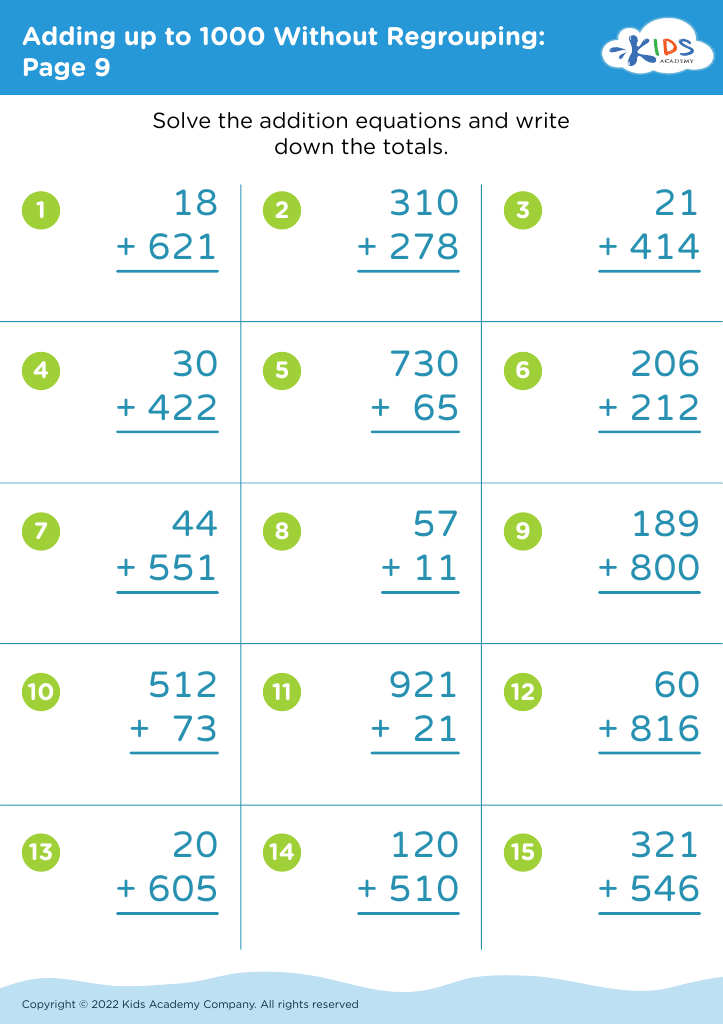
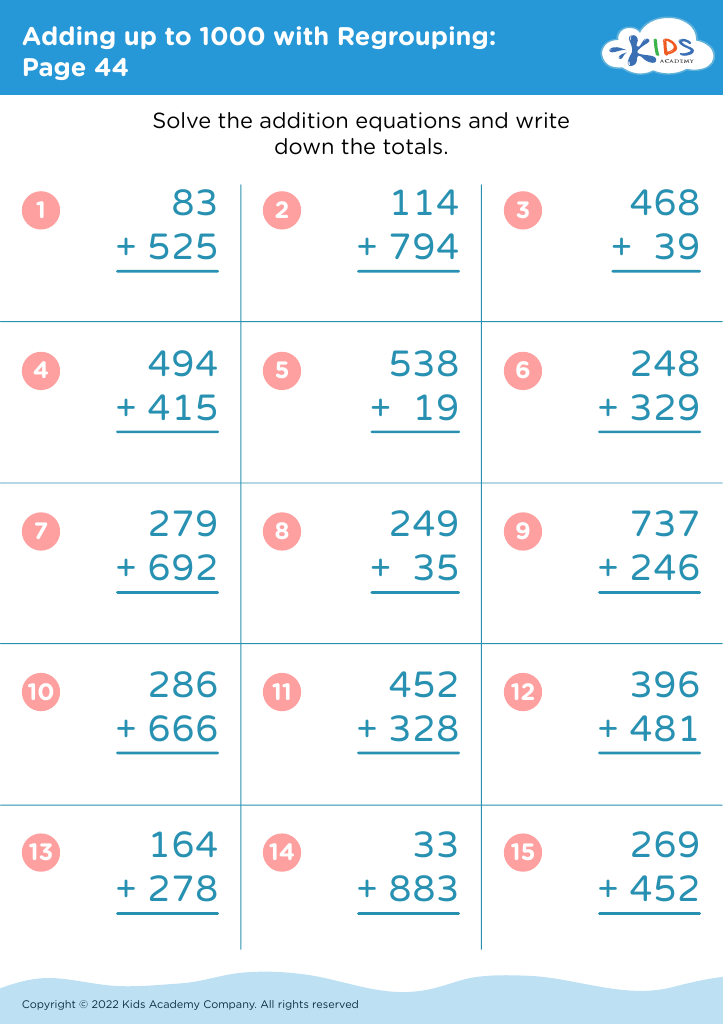
Unlock your child’s potential with our "Recognize Patterns Addition Worksheets" tailored for ages 6-7. These engaging worksheets are designed to help young learners identify and apply addition patterns, enhancing their math skills effectively. Each worksheet presents fun, interactive activities that encourage problem-solving and critical thinking. Your child will enjoy mastering the basics of addition while discovering mathematical patterns. Perfect for both classroom use and at-home practice, our worksheets not only build confidence in math but also ignite a love for learning. Explore how our expertly crafted resources can make addition enjoyable and rewarding for your young mathematician!






.jpg)

Recognizing patterns in addition for children ages 6-7 is crucial for their cognitive and mathematical development. Pattern recognition is a foundational skill that extends far beyond math, impacting a child's ability to understand and predict numerical relationships instinctively. By familiarizing young learners with addition patterns—such as identifying the regularity in sums (like 1+1=2, 2+2=4)—children begin to see the structure in numbers, which aids in more complex problem-solving later.
For parents and teachers, fostering pattern recognition in addition helps equip children with critical thinking and analytical skills. These skills are not only vital for mathematics but also for other academic areas, including reading, science, and even everyday decision-making. When children learn to notice patterns, they develop an ability to simplify problems, which enhances their confidence and eases the transition to more advanced mathematical concepts.
Moreover, early exposure to pattern recognition can make learning addition more engaging and less daunting for young learners. Interactive activities, like using visual aids or physical objects, can turn mathematics into a playful and exciting subject, fostering a positive attitude towards learning. This positive experience at an early age sets the foundation for lifelong mathematical competence and success. By prioritizing this aspect of early education, parents and teachers can significantly contribute to their children's overall intellectual growth.








