Recognizing numbers Addition Worksheets for Ages 6-7
4 filtered results
-
From - To
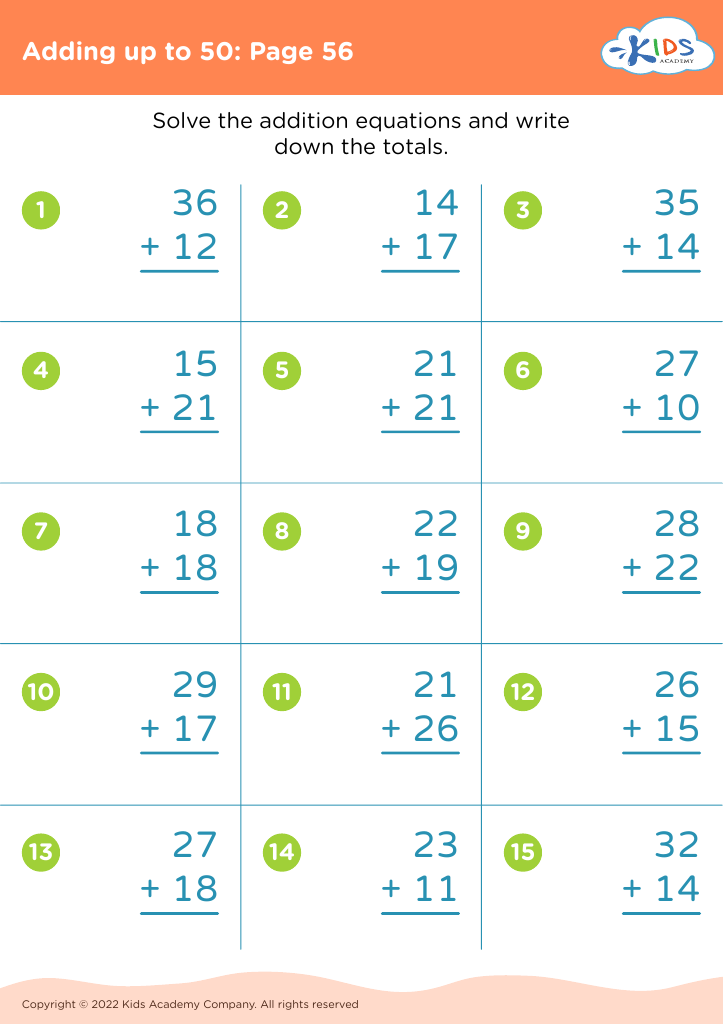
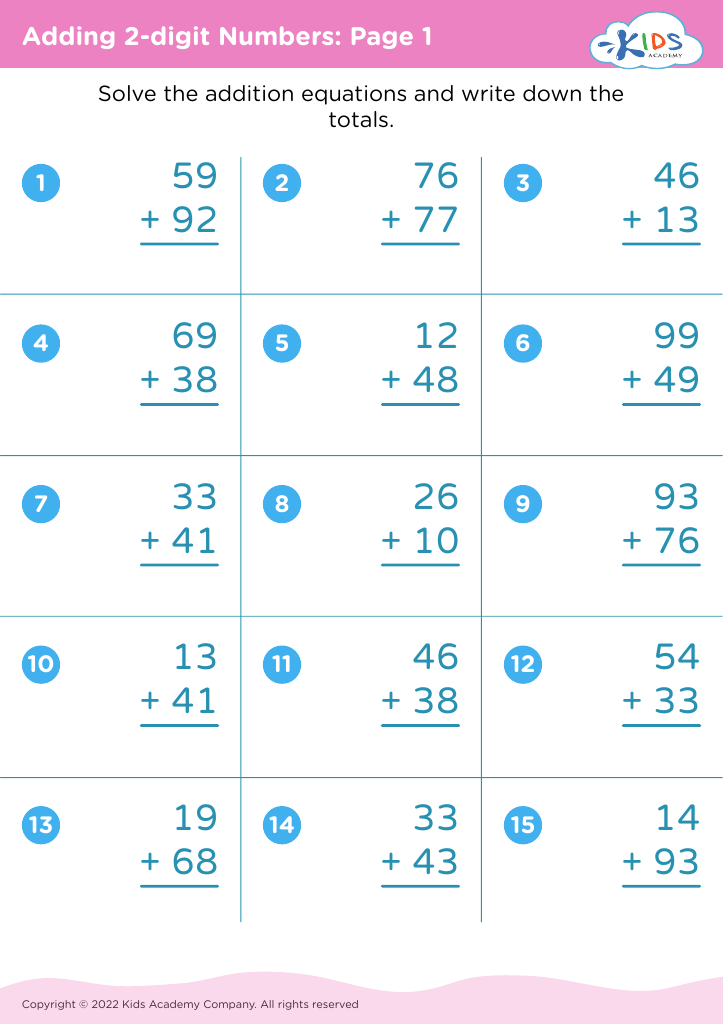
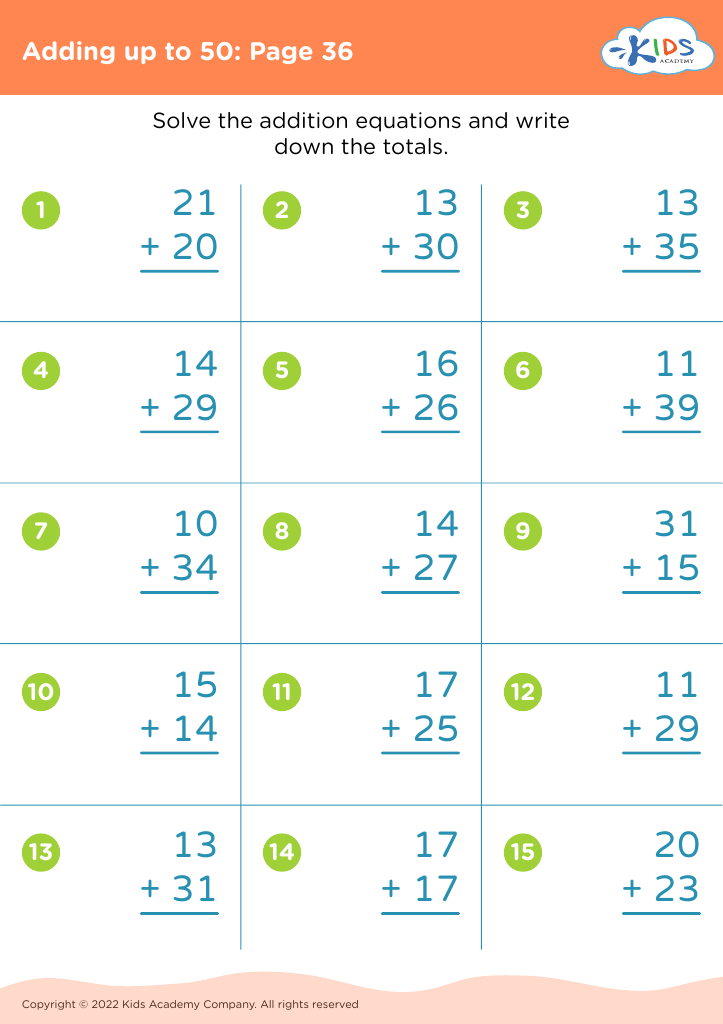
Enhance your child's math skills with our Recognizing Numbers Addition Worksheets, specially designed for ages 6-7. These engaging and colorful worksheets will help young learners identify and understand numbers while practicing basic addition concepts. Perfect for home or classroom use, our worksheets foster a fun and interactive learning environment. Children will enjoy mastering number recognition and honing their addition skills through a variety of exercises tailored to their developmental stage. Encourage your little mathematicians to develop critical thinking and problem-solving skills while building a strong foundation in math with our thoughtfully crafted addition worksheets! Get started today and watch them thrive!
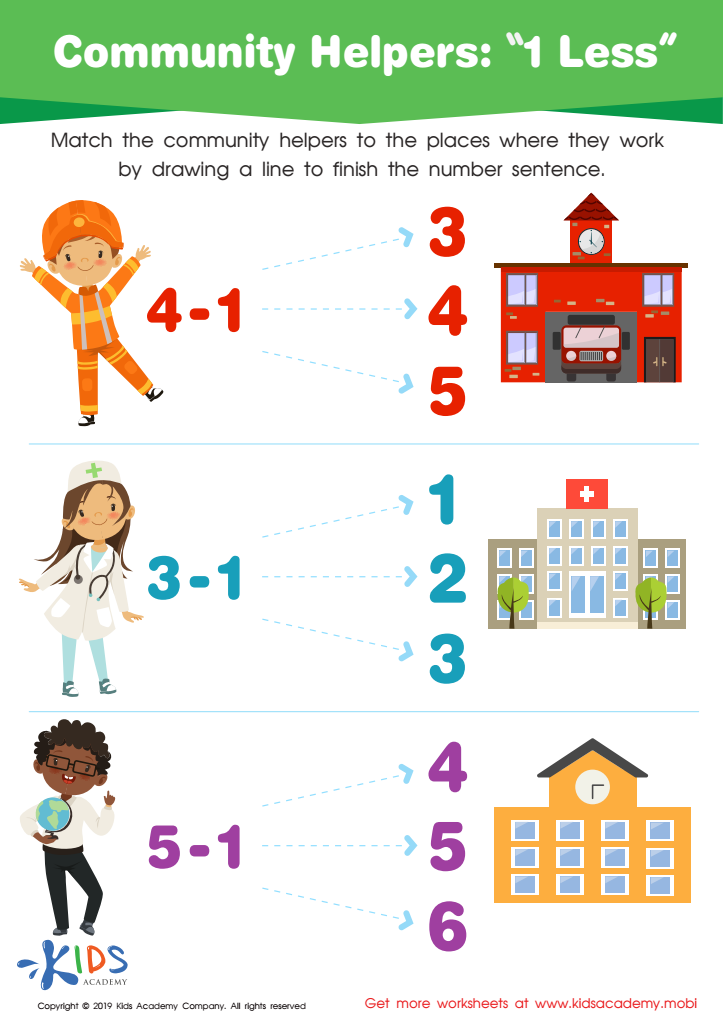
Community Helpers: 1 less Worksheet
 Assign to My Students








Recognizing numbers and mastering addition are foundational skills for children aged 6-7 that set the stage for their future academic success. At this age, children are typically in the early stages of mathematical development, and a strong grasp of these concepts fosters confidence and curiosity in learning.
Understanding number recognition helps children identify and interpret quantities in everyday life, such as counting objects, telling time, and understanding prices. Once children can recognize numbers, building upon this knowledge with addition teaches them how to combine quantities, a skill crucial for problem-solving in mathematics and real-world applications.
Parents and teachers should prioritize the development of these skills because they encourage cognitive growth, enhance critical thinking, and promote a positive attitude toward math. Early mastery of addition also enables children to approach more complex mathematical operations—such as subtraction, multiplication, and division—while supporting analytical skills and logical reasoning.
Moreover, nurturing these skills can lead to an increased interest in mathematics, benefiting children's overall educational experiences. Engaging children through enjoyable activities and real-life applications reinforces their learning and motivation. Early intervention and support, therefore, are key in paving the way for lifelong success in math and beyond.








