Understanding quantity Addition Worksheets for Ages 6-7
9 filtered results
-
From - To
Explore our "Understanding Quantity Addition Worksheets" designed specifically for children aged 6-7! These engaging worksheets help young learners grasp the concept of quantity and improve their addition skills. Through fun activities and colorful visuals, children will enhance their number recognition, counting abilities, and face the foundational principles of addition with confidence. The worksheets encourage hands-on learning, allowing kids to connect objects with numbers, making math enjoyable and interactive. Whether at home or in the classroom, these resources provide essential practice that supports early math development, setting students up for success in their future mathematical journey. Discover the joy of learning with us today!
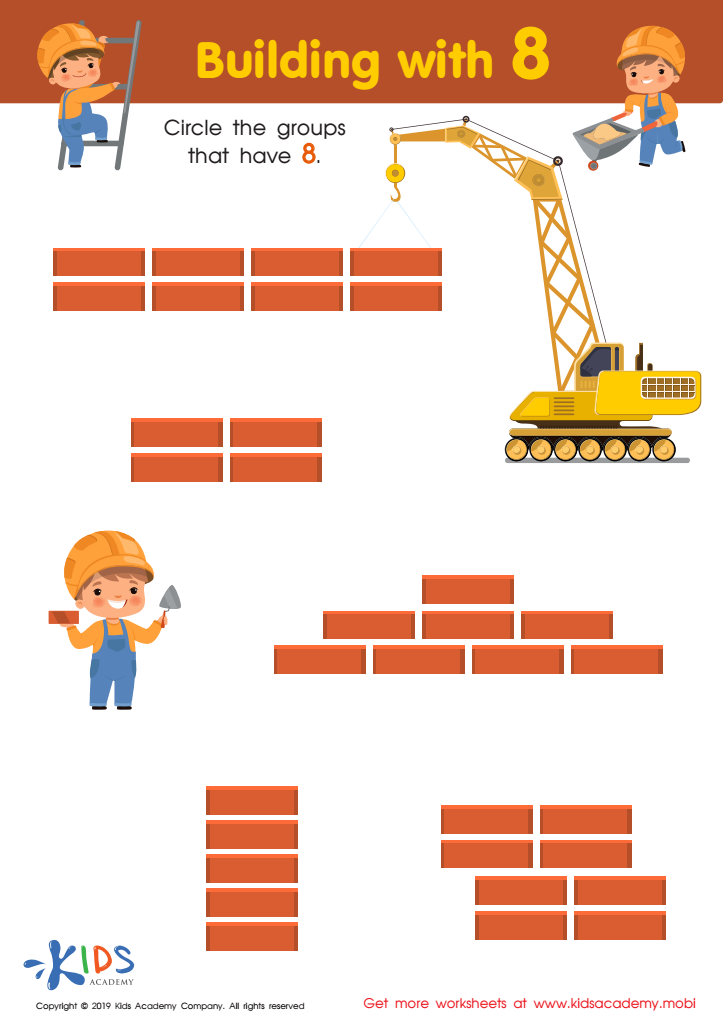
Building with 8 Worksheet
 Assign to My Students
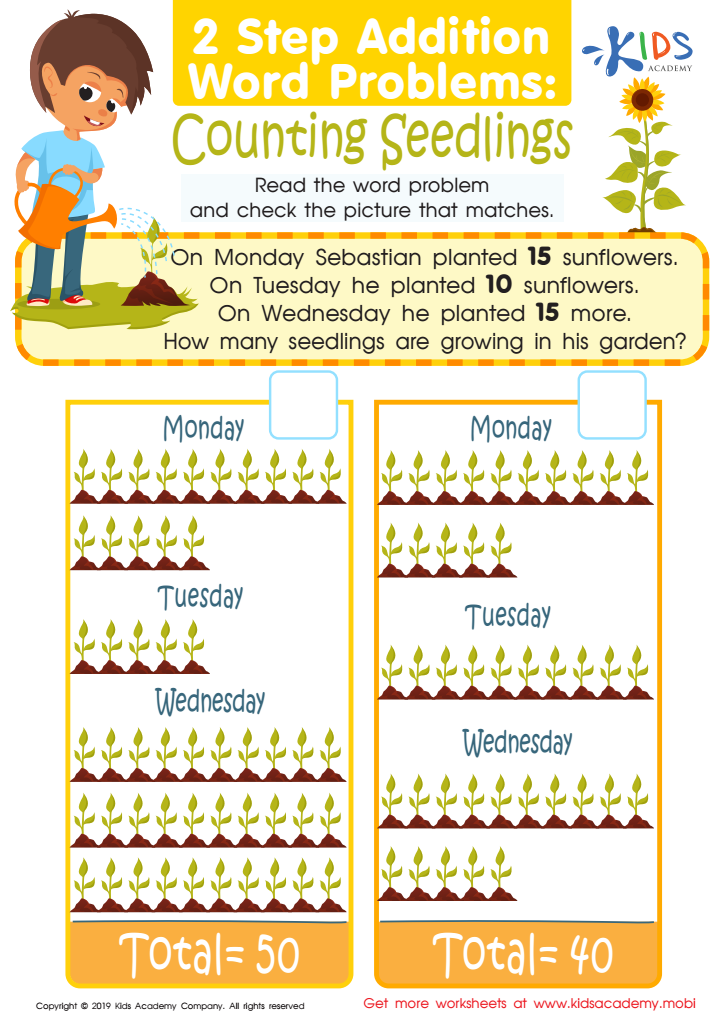
Counting Seedlings Worksheet
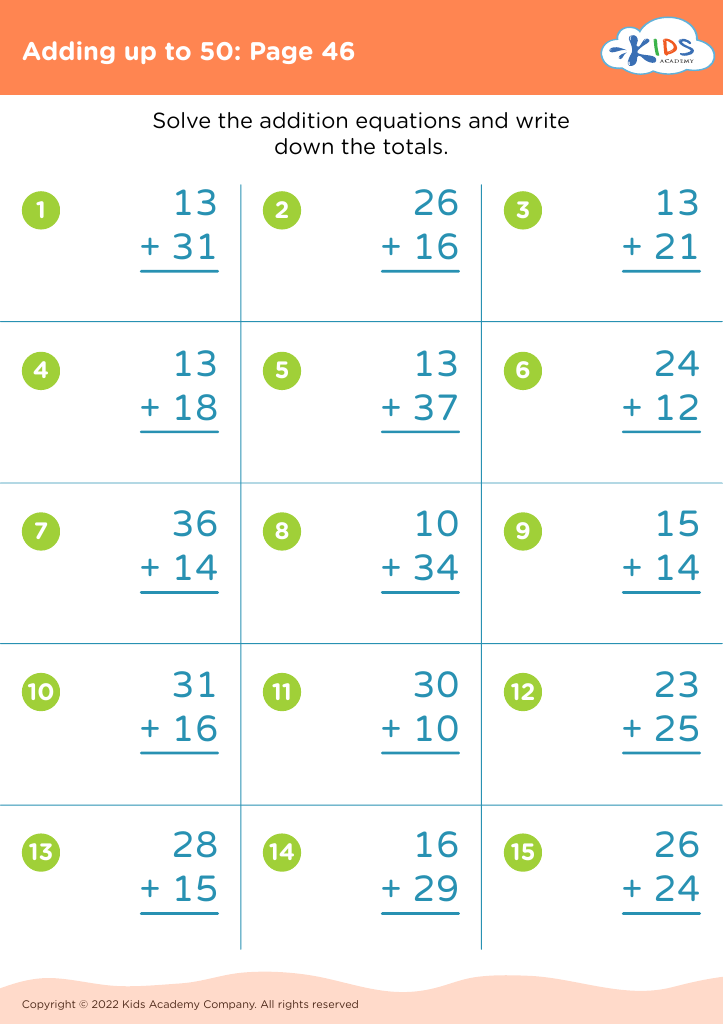
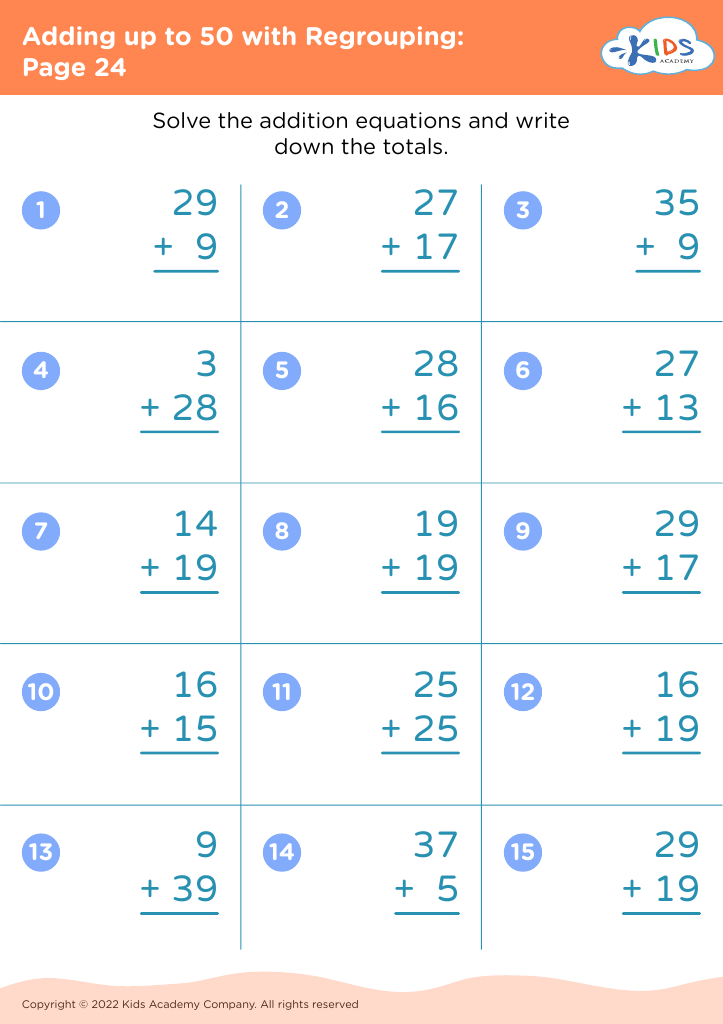
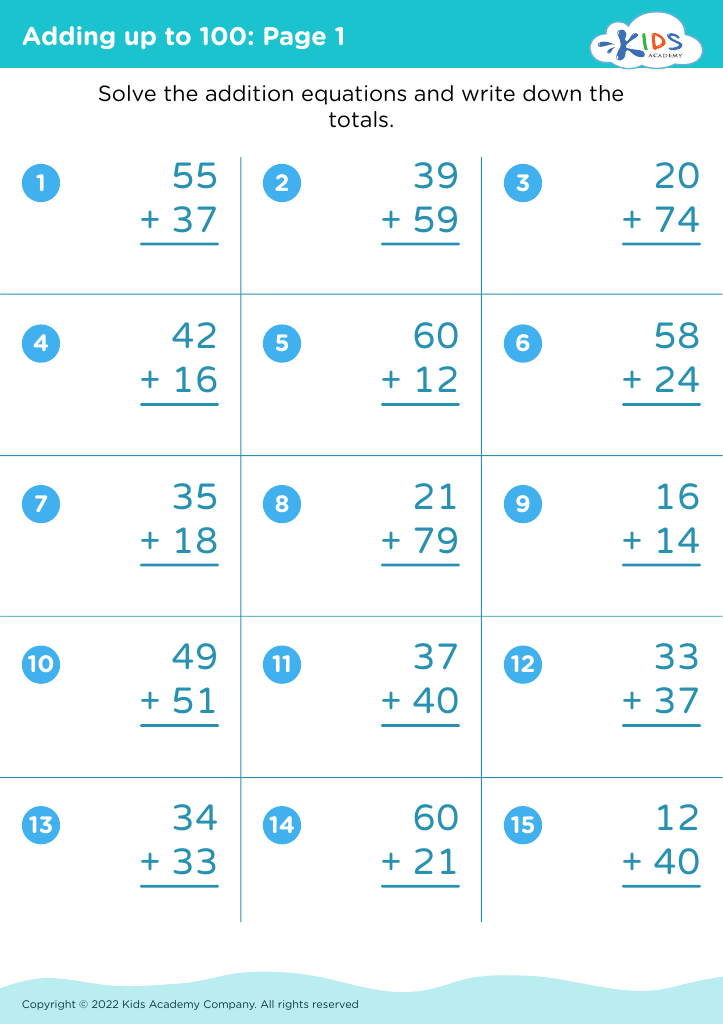
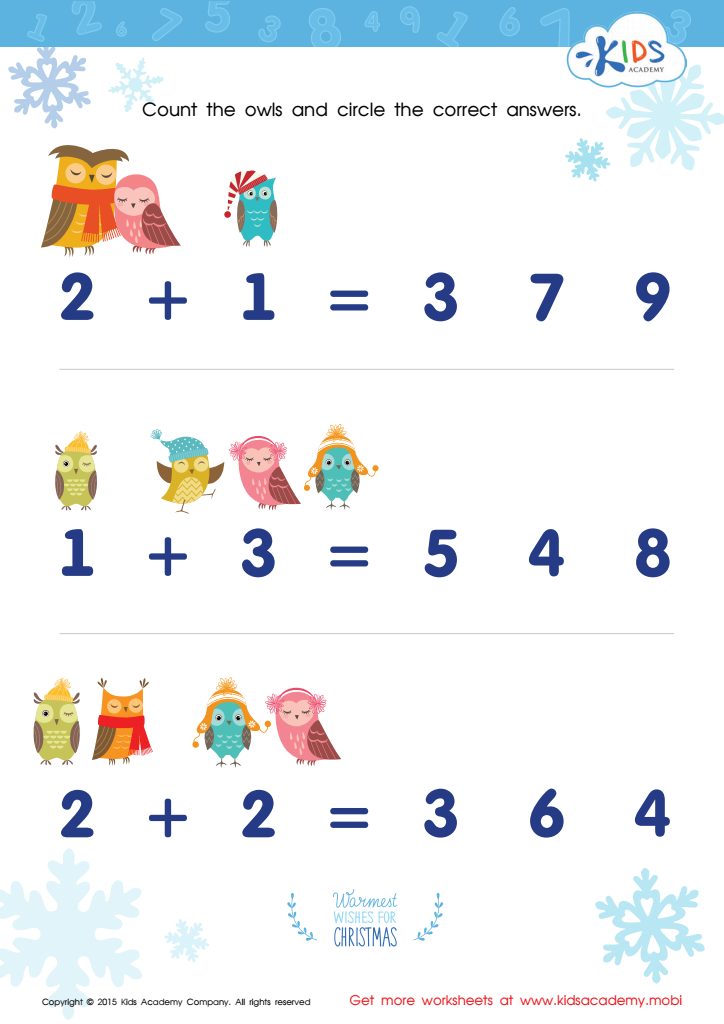
Count Little Owls Worksheet
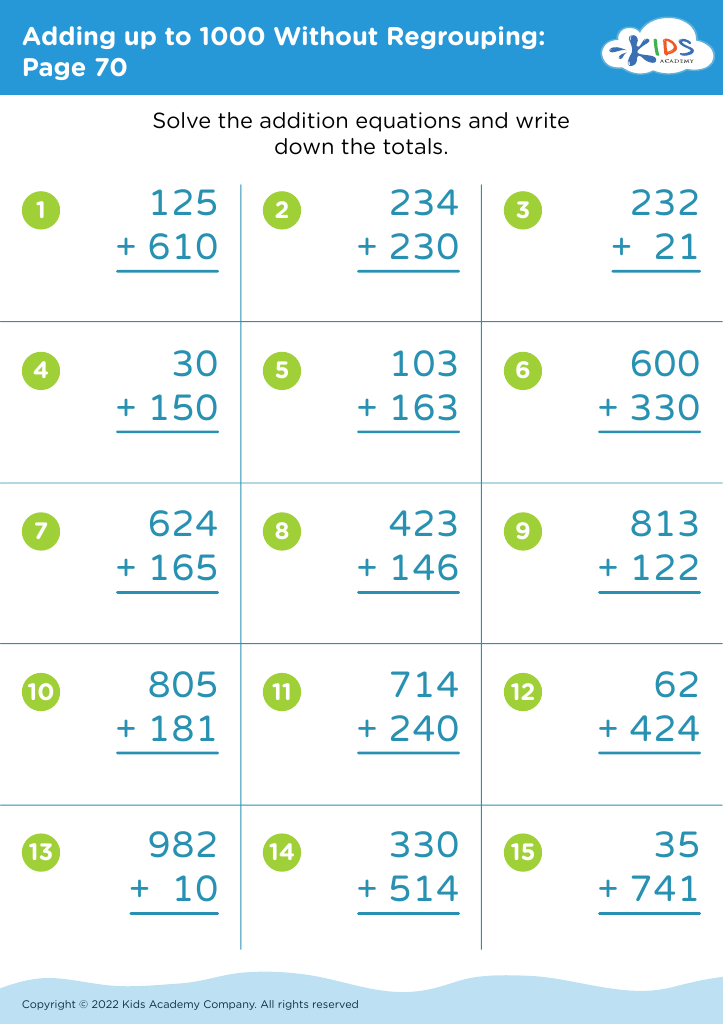








Understanding quantity addition is crucial for children aged 6-7, as it lays the foundation for their mathematical skills and overall cognitive development. During these formative years, children are introduced to basic addition concepts, which helps them grasp number relationships, develop problem-solving skills, and foster logical thinking.
When parents and teachers prioritize understanding quantity addition, they promote a deeper comprehension of numbers beyond rote memorization. This awareness encourages children to visualize quantities, enabling them to make connections between numbers and real-life situations. For instance, children can learn to recognize that adding two apples and three apples results in five apples, reinforcing the idea of combining quantities meaningfully.
Moreover, fostering a solid grasp of addition prepares students for more advanced mathematical concepts, such as subtraction and simple arithmetic operations involving larger numbers. It builds confidence in their abilities, reducing math anxiety and promoting a positive attitude toward learning.
Ultimately, an understanding of quantity addition nurtures critical thinking and sets children on a path toward academic success. Given that math skills are cumulative, teachers and parents play a pivotal role in ensuring that children are comfortable with fundamental concepts, thereby ensuring a strong educational foundation.








