Basic geometry Geometry Worksheets for Ages 6-7
3 filtered results
-
From - To
Discover engaging Basic Geometry Worksheets designed specifically for children aged 6-7! These printable resources introduce young learners to fundamental geometric concepts in a fun and interactive way. From identifying shapes like squares, circles, and triangles to understanding basic attributes, these worksheets encourage skills such as shape recognition and spatial awareness. Perfect for classroom or home learning, our worksheets are tailored to meet early math standards while fostering a love for learning. Enhance your child’s geometry skills with vibrant visuals and hands-on activities that make mastering the basics both enjoyable and effective! Start building a strong foundation in geometry today!
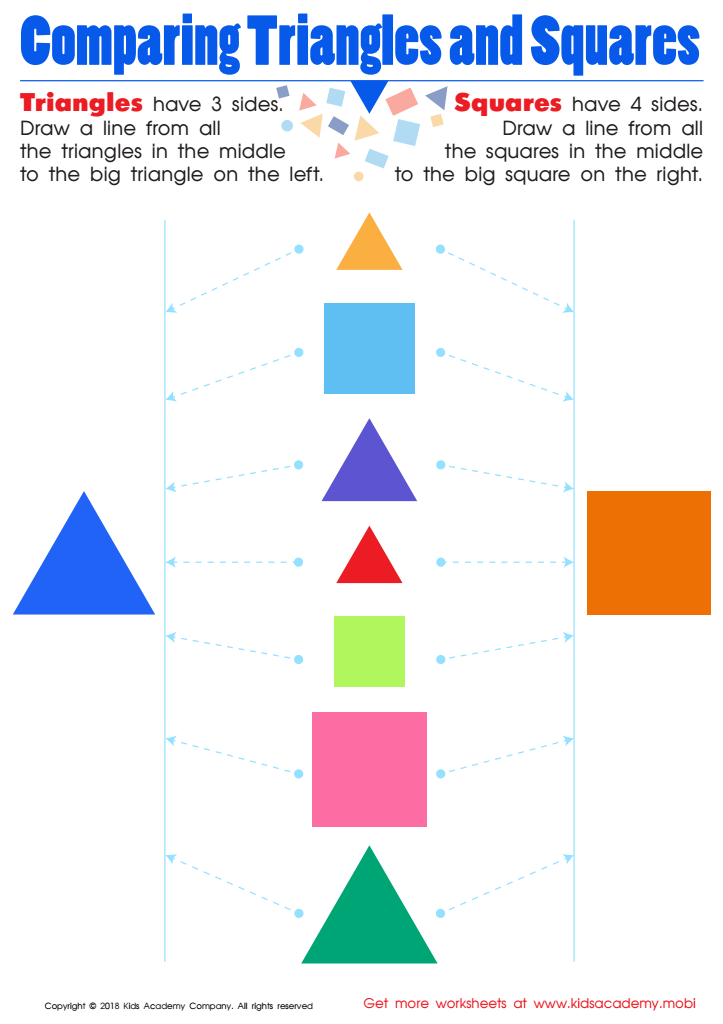
Comparing Triangles Squares Worksheet
 Assign to My Students











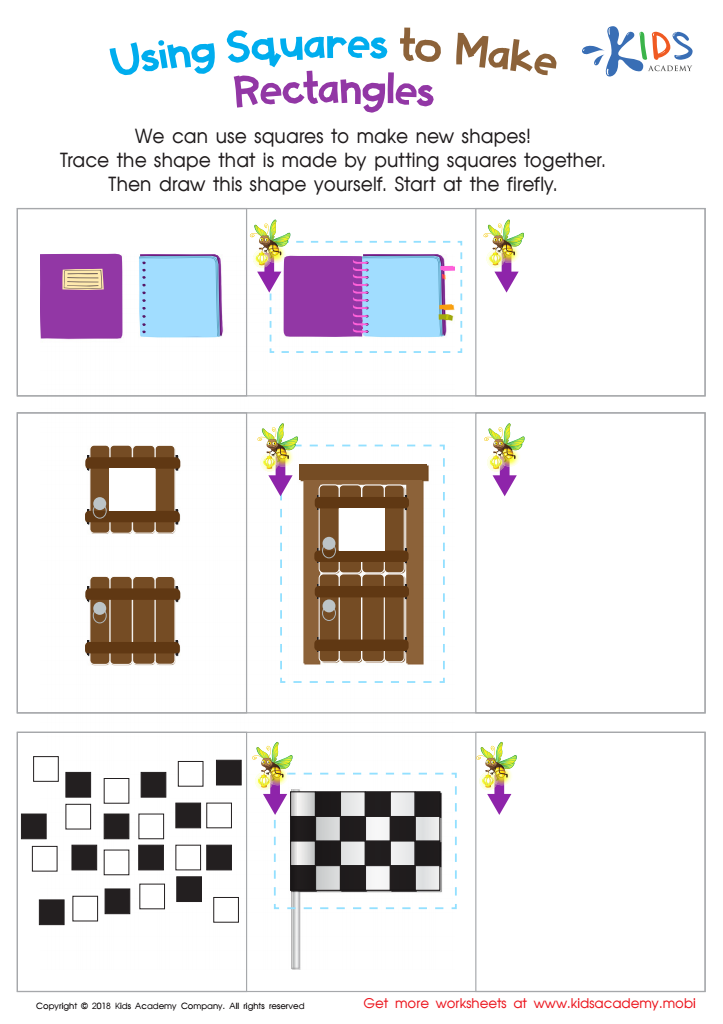
Using Squares to Make Rectangles Worksheet
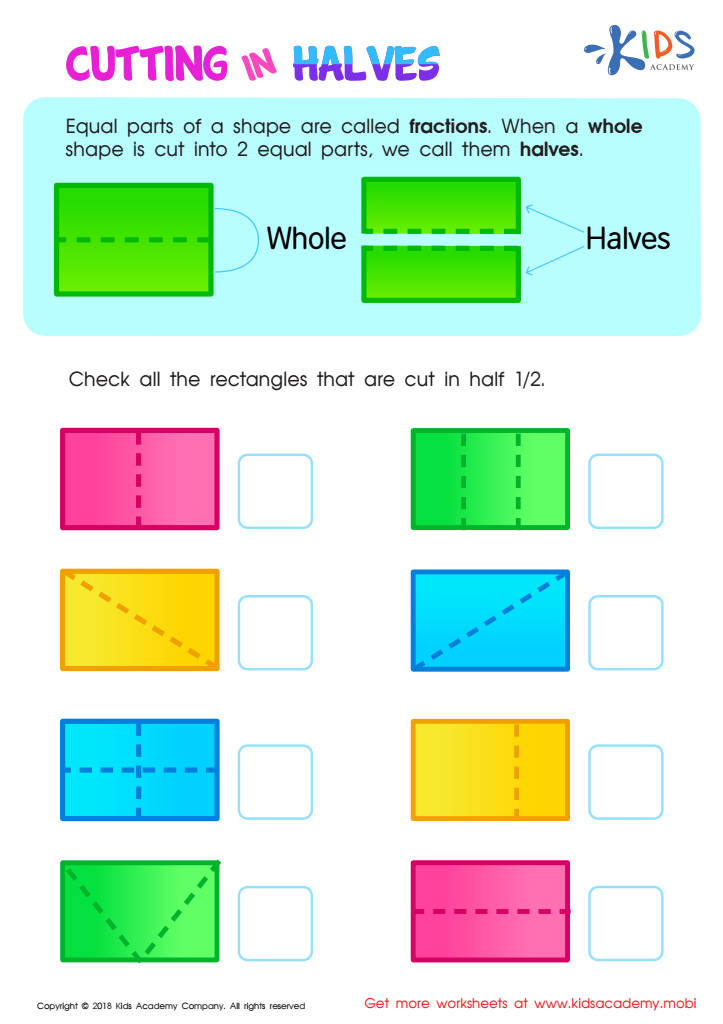
Cutting in Halves Worksheet








Basic geometry is essential for children aged 6-7 for several reasons. Firstly, it develops essential spatial awareness, helping children understand shapes, sizes, and relationships between objects. This foundational knowledge fosters critical thinking and problem-solving skills that are applicable in everyday life.
Moreover, geometry enhances students' ability to classify and organize information, which is a key component of higher-order cognitive skills. By identifying shapes like circles, squares, and triangles, children gain a grasp of basic mathematical principles that lay the groundwork for more advanced topics in later grades.
Engaging with geometry also encourages creativity. When children explore geometric shapes through drawing, construction, or interactive games, they learn to think outside the box and approach problems from different perspectives. This hands-on experience promotes a love for learning and makes math enjoyable.
Additionally, this competency contributes to overall academic success, as students equipped with spatial reasoning perform better in subjects like science and technology, where geometric understanding is crucial.
In summary, parents and teachers should prioritize basic geometry because it not only enhances children’s cognitive skills but also prepares them for future academic challenges while fostering a lifelong appreciation for mathematics.








