Color recognition Geometry Worksheets for Ages 6-7
5 filtered results
-
From - To
Unlock your child's potential with our "Color Recognition Geometry Worksheets for Ages 6-7". These engaging activities not only make learning fun but also enhance essential skills in both color recognition and basic geometry. Designed by educational experts, each worksheet offers vibrant and hands-on exercises that focus on identifying and coloring different shapes and patterns. Ideal for young learners, these printables foster creativity while reinforcing concepts like shape identification, spatial reasoning, and fine motor skills. Give your child a head start in math and art with our comprehensive and colorful worksheets, perfect for home or classroom use. Start exploring today!
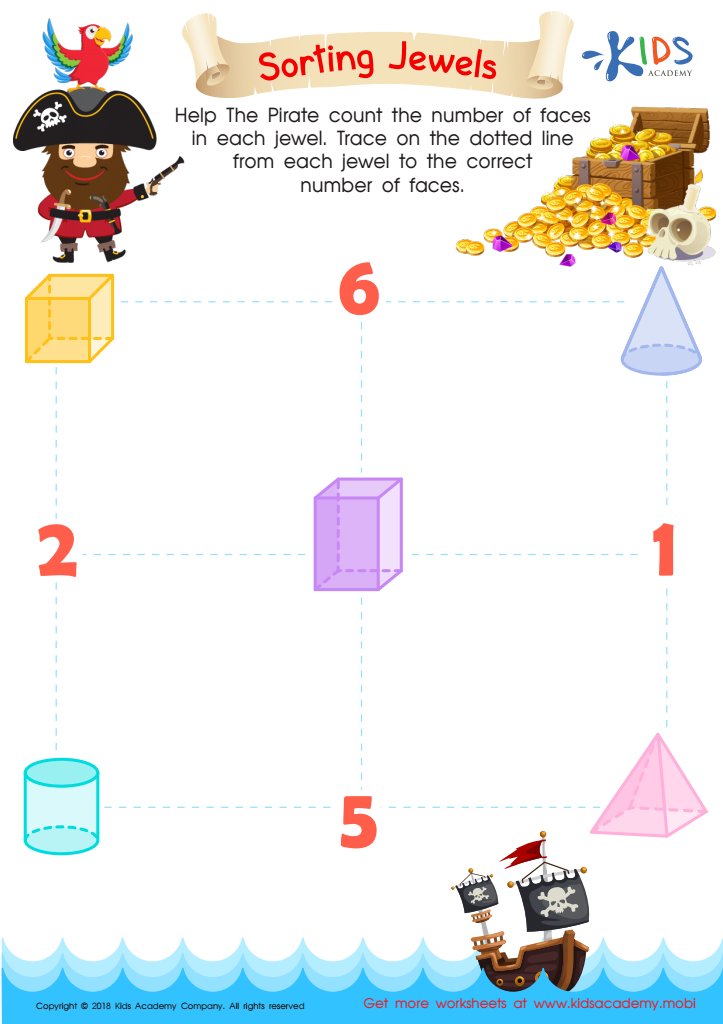
Sorting Jewels Worksheet











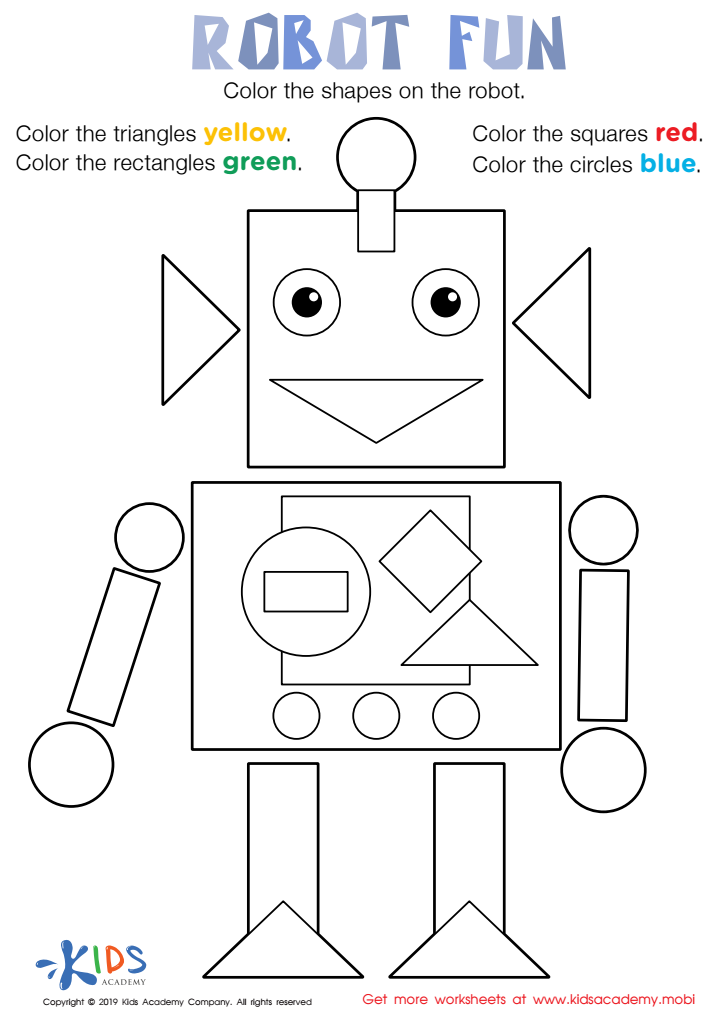
Robot Fun Worksheet
 Assign to My Students
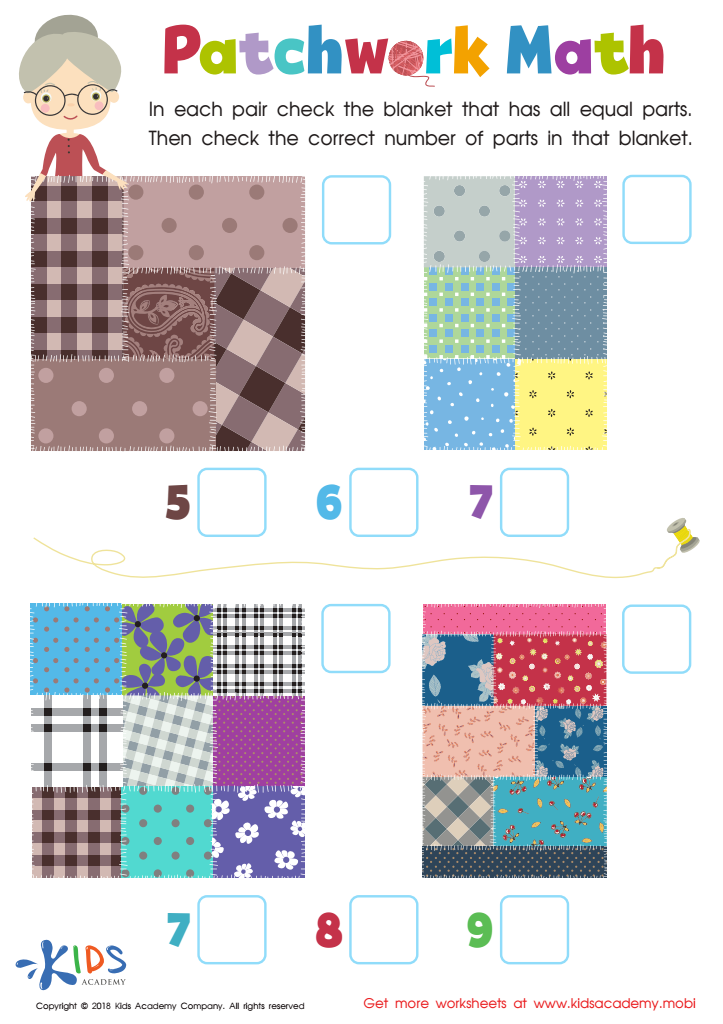
Patchwork Math Worksheet
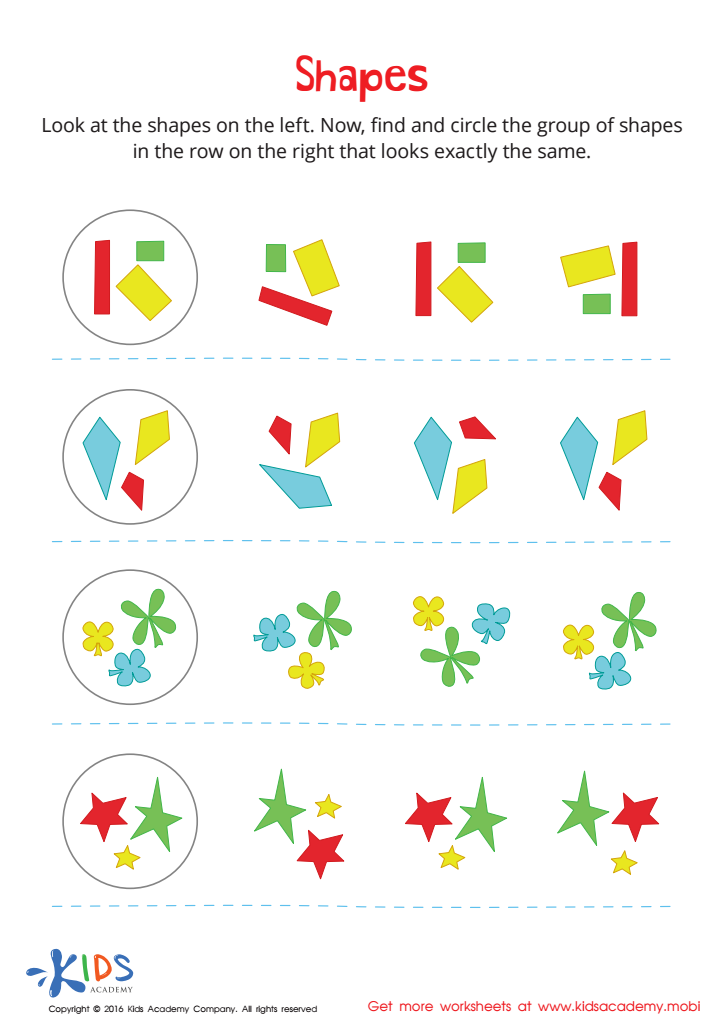
Shapes Worksheet
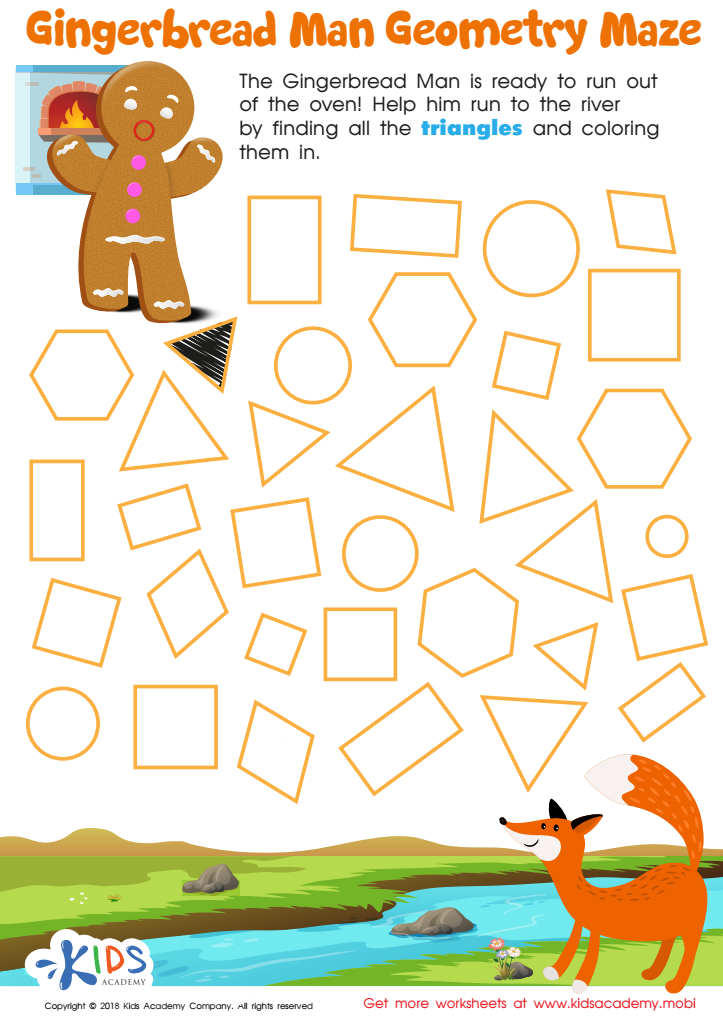
Gingerbread Man Geometry Maze Worksheet








Color recognition and geometry are critical components of early childhood education, especially for children aged 6-7. Understanding colors helps children with several developmental aspects such as language skills, cognitive growth, and social development. When children can identify and name colors, they expand their vocabulary and enhance their communication abilities. This is particularly important as they prepare for reading and writing, where recognizing color words and their proper use in sentences supports literacy.
Geometry, on the other hand, introduces young minds to the shapes, sizes, spatial understanding, and the relationships between different objects and figures. At age 6-7, children learn the basic geometric concepts that lay the groundwork for more complex math and science topics. By engaging in activities that involve identifying, sorting, and manipulating shapes, children enhance their problem-solving skills and logical thinking. This robust foundation in early math concepts boosts their confidence and interest in STEM (Science, Technology, Engineering, and Math) fields.
Furthermore, the integration of color recognition and geometry in playful and interactive ways, such as through puzzles, drawing, and building blocks, supports fine motor skills and hand-eye coordination. Therefore, both parents and teachers should prioritize these foundational concepts to foster a well-rounded, enriching educational experience that promotes holistic growth.








