Fine Motor Skills Geometry Worksheets for Ages 6-7 - Page 2
27 filtered results
-
From - To
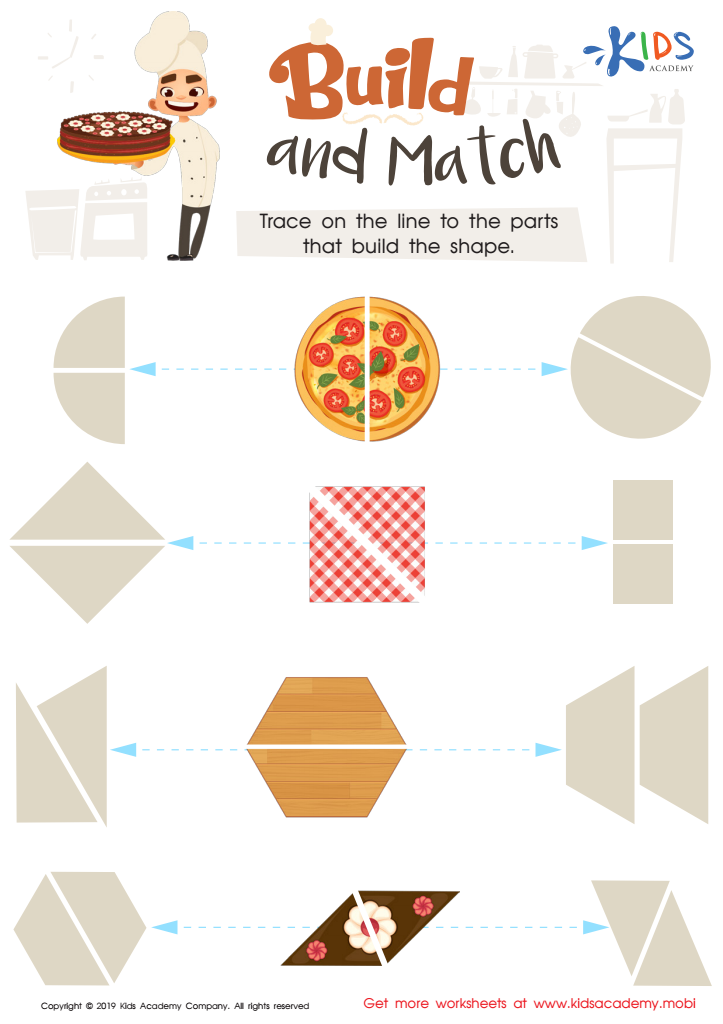
Build and Match Worksheet
 Assign to My Students











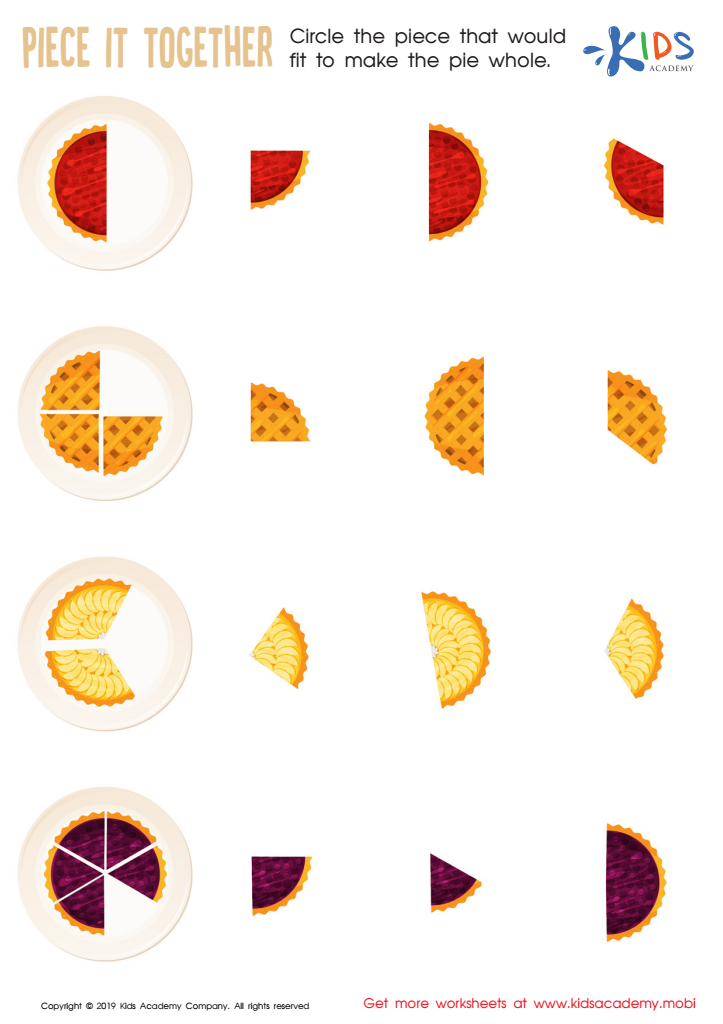
Piece it together Worksheet
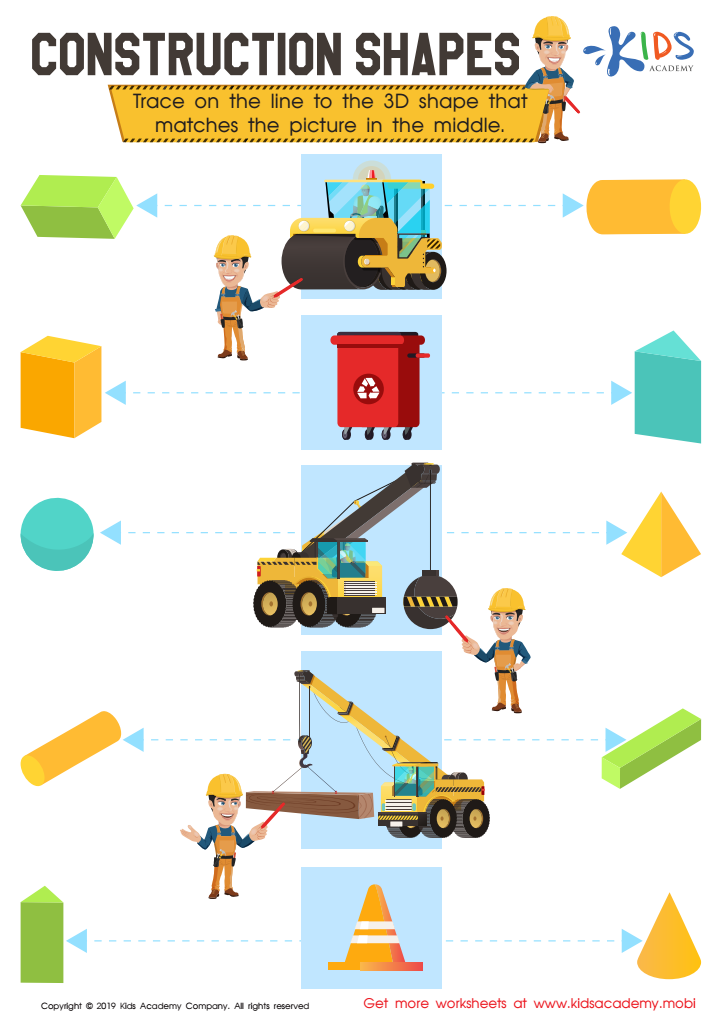
Construction Shapes Worksheet








Fine Motor Skills Geometry for ages 6-7 is crucial as it bridges critical developmental milestones that impact a child's academic, social, and life skills. Fine motor skills involve the coordination of small muscles, especially in the hands and fingers, pivotal for everyday tasks such as writing, drawing, dressing, and handling tools. At this age, children's ability to control and coordinate their hand movements directly affects their mastery of tasks essential for success in school.
Incorporating geometry into fine motor activities provides a dual benefit. Geometric exercises, like tracing shapes or assembling puzzles, enhance hand-eye coordination, precision, and dexterity, all while cultivating spatial awareness and early math skills. These foundational skills are not only fundamental for handwriting but also for math achievement, since geometry involves understanding shapes, sizes, and the properties of space.
Moreover, fine motor skill development contributes significantly to a child's self-confidence and independence. Successfully managing geometric tasks can be incredibly empowering, reinforcing a sense of accomplishment. Ultimately, investing time and effort into honing fine motor skills through geometry at this formative stage sets children up for greater academic performance and smoother day-to-day functioning, creating a robust foundation for future learning and life skills.








