Filters

57 filtered results

Clear all filters
Favorites
With answer key
Interactive

57 filtered results

Difficulty Level

Grade


Check out this FREE Trial Lesson on Geometry for age 6-7!

Cut Rectangles: Halves and Wholes

Favorites
With answer key
Interactive
  • 6-7
  • Shape Recognition
  • Geometry
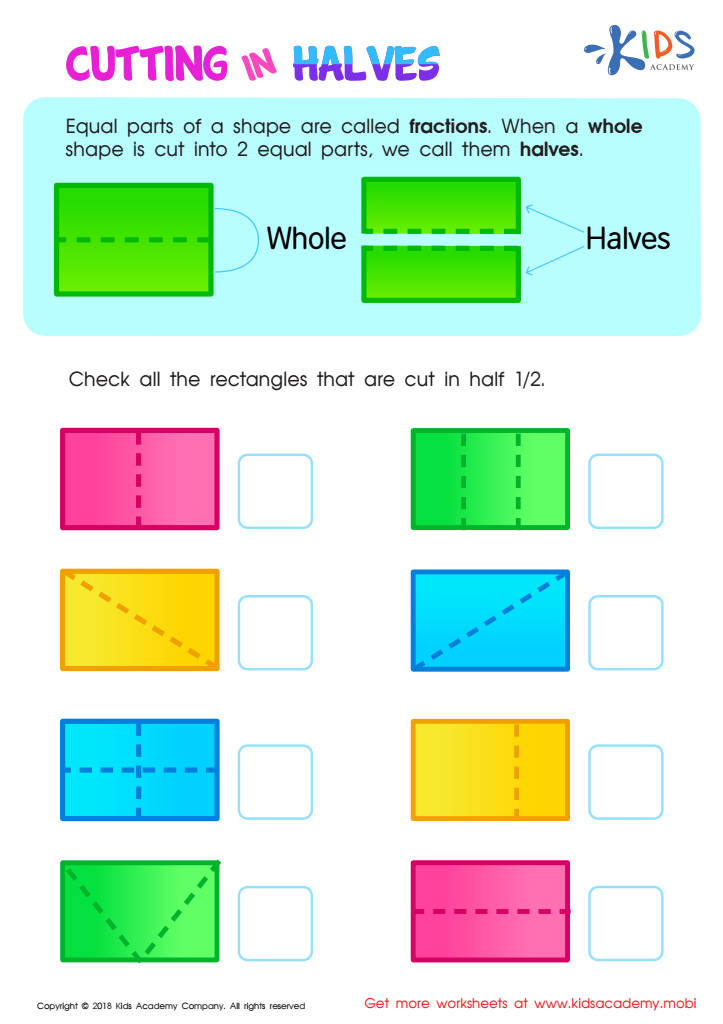
Cutting in Halves Worksheet

Cutting in Halves Worksheet

Show your child how to divide a whole shape, like a square, into smaller pieces to become fractions. Point out when a shape is divided into two equal parts, it's called a half. Look at the worksheet together, and identify all rectangles that are cut in half (½).
Cutting in Halves Worksheet
Worksheet
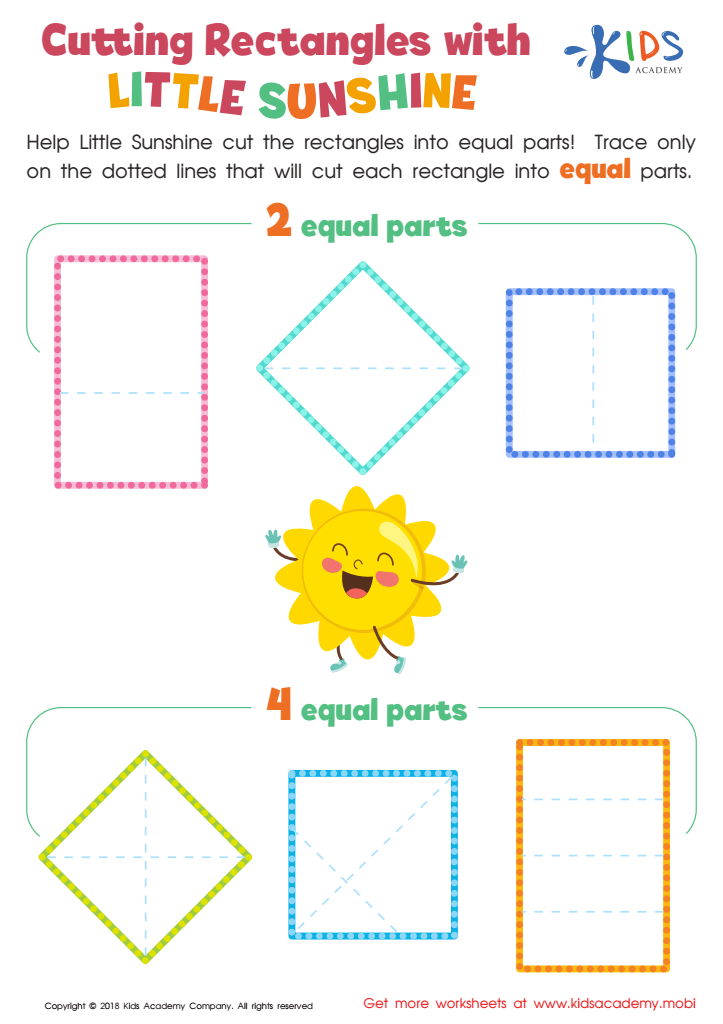
Cutting Rectangles with Little Sunshine Worksheet

Cutting Rectangles with Little Sunshine Worksheet

Introduce Little Sunshine to your students. Help them to cut rectangles into two or four equal parts by tracing the dotted lines. It's easy - the lines divide them evenly. Encourage your students to help Little Sunshine complete the task!
Cutting Rectangles with Little Sunshine Worksheet
Worksheet
Geometric Shapes for Kids: Drawing Ovals And Triangles with Fun

Drawing Ovals And Triangles with Fun Printable
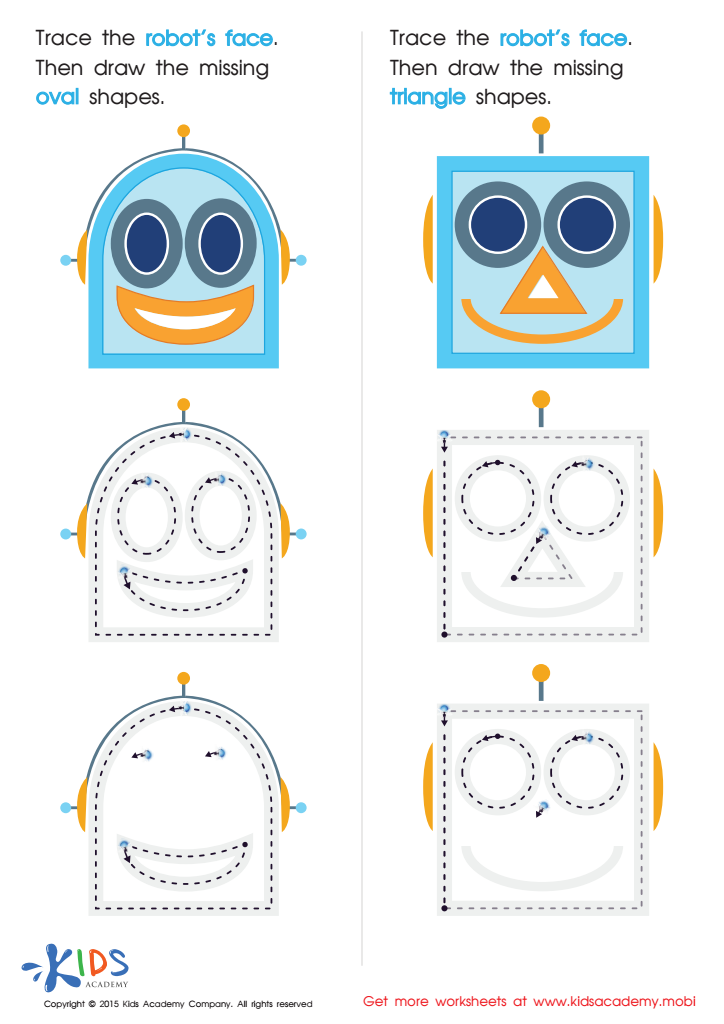
Trace the face and draw missing ovals and triangles. Test your memory and recall shapes' names. Check if you remember how to draw them!
Drawing Ovals And Triangles with Fun Printable
Worksheet
Circle Laser Cutting Worksheet

Circle Laser Cutting Worksheet

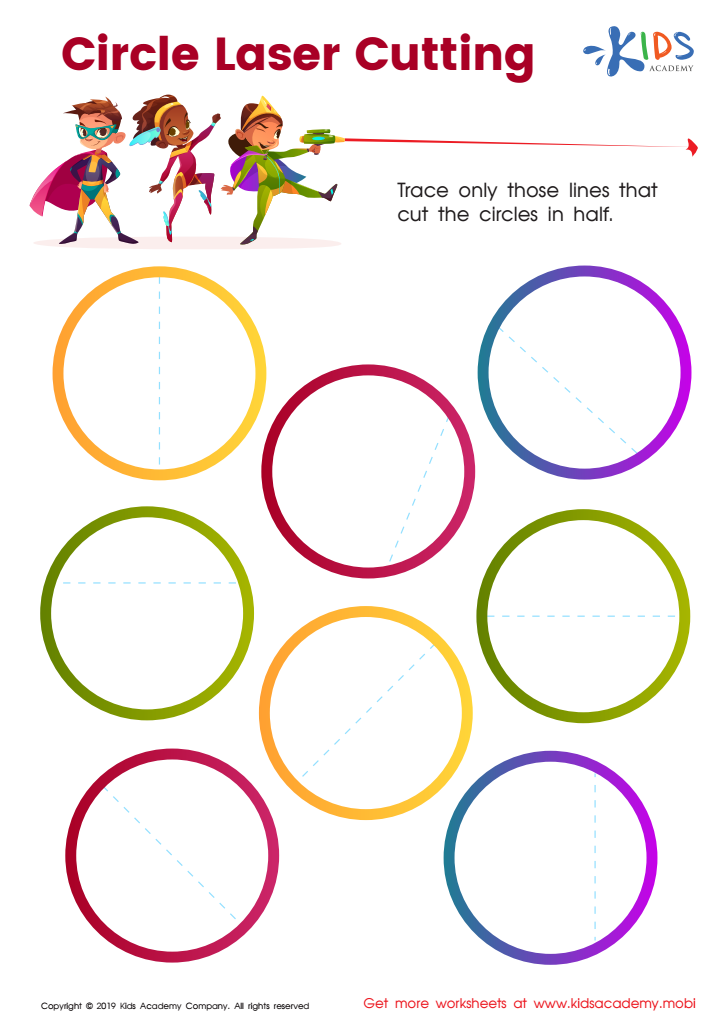
Encourage your kids to learn geometry! Remind them that when shapes are cut into two equal parts, they are called halves. Have them look at the circles in the worksheet, and trace the lines that cut the circles in half. Geometry is an essential part of education, and although it may not be exciting, it's a valuable skill to have.
Circle Laser Cutting Worksheet
Worksheet
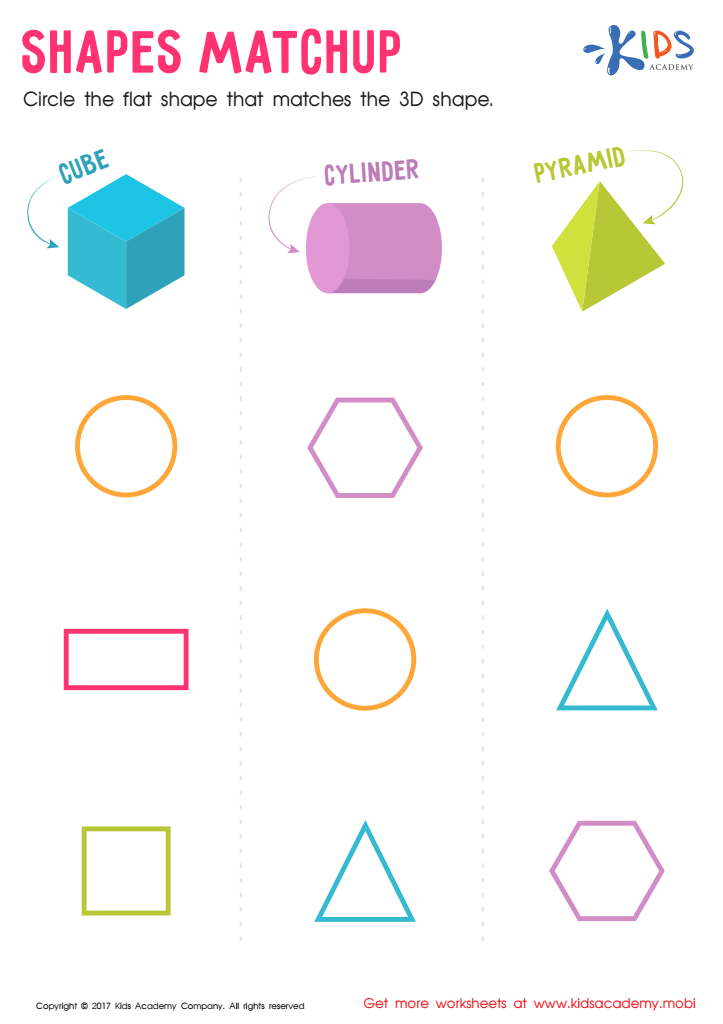
Shapes Matchup Worksheet

Shapes Matchup Worksheet

Explain to your kids that 3D shapes are the view from another angle, offering depth, height and width. This worksheet encourages them to match the 3D shapes to their 2D form. They can circle the flat shapes that match the 3D shapes in the printout.
Shapes Matchup Worksheet
Worksheet
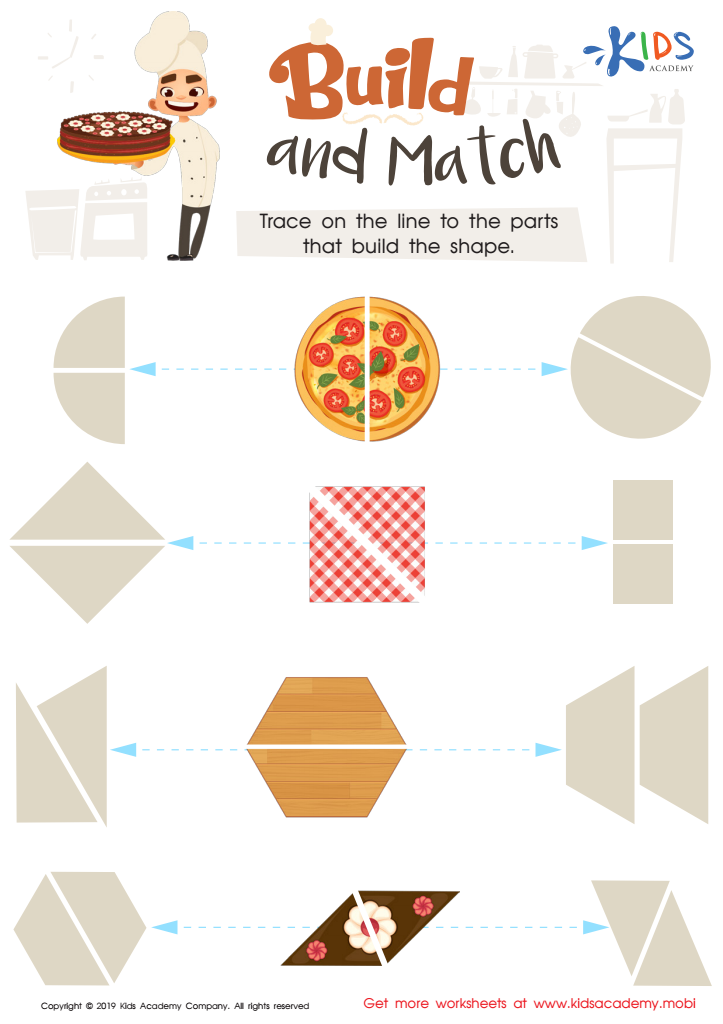
Build and Match Worksheet

Build and Match Worksheet

This bright worksheet will get your kids excited to learn more! Use the colorful images and shapes to engage them and have them trace the parts to build the shape. This fun exercise will help them retain the lessons and make it an enjoyable experience.
Build and Match Worksheet
Worksheet
Piece it together Worksheet

Piece it together Worksheet

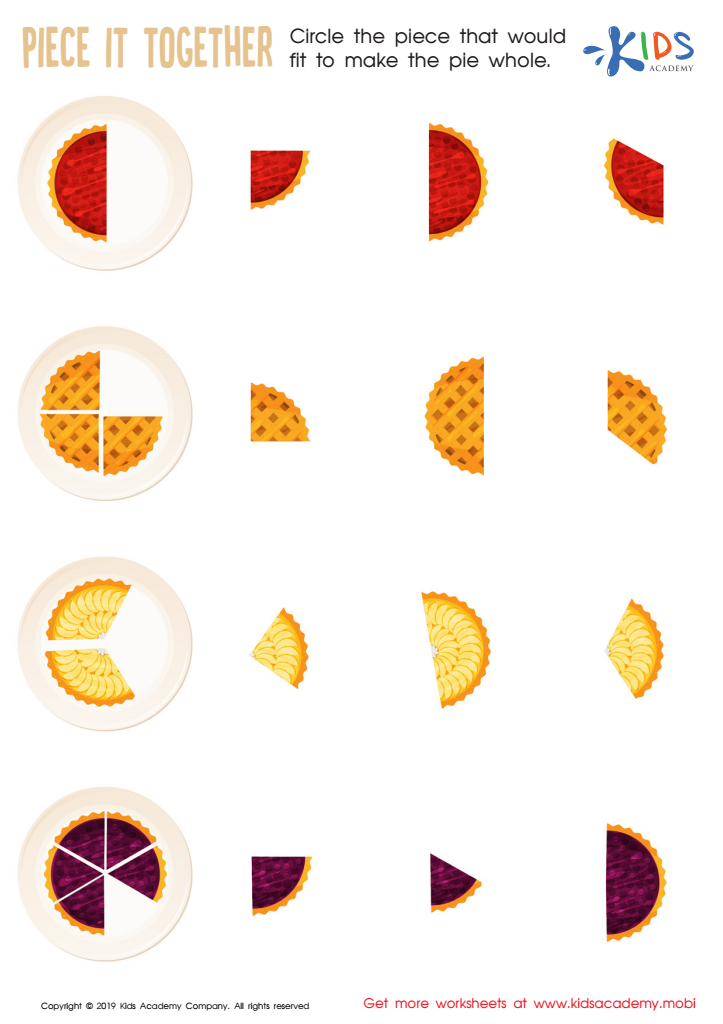
Help your kids learn fractions! Even if they're not eager, teach them as they get older. Teachers will provide enough lessons and homework, but you can go a step further. Look at a worksheet with your kids and help them circle the piece that would make the pie whole.
Piece it together Worksheet
Worksheet
Whole Shape from Halves, Thirds and Fourths Worksheet

Whole Shape from Halves, Thirds and Fourths Worksheet

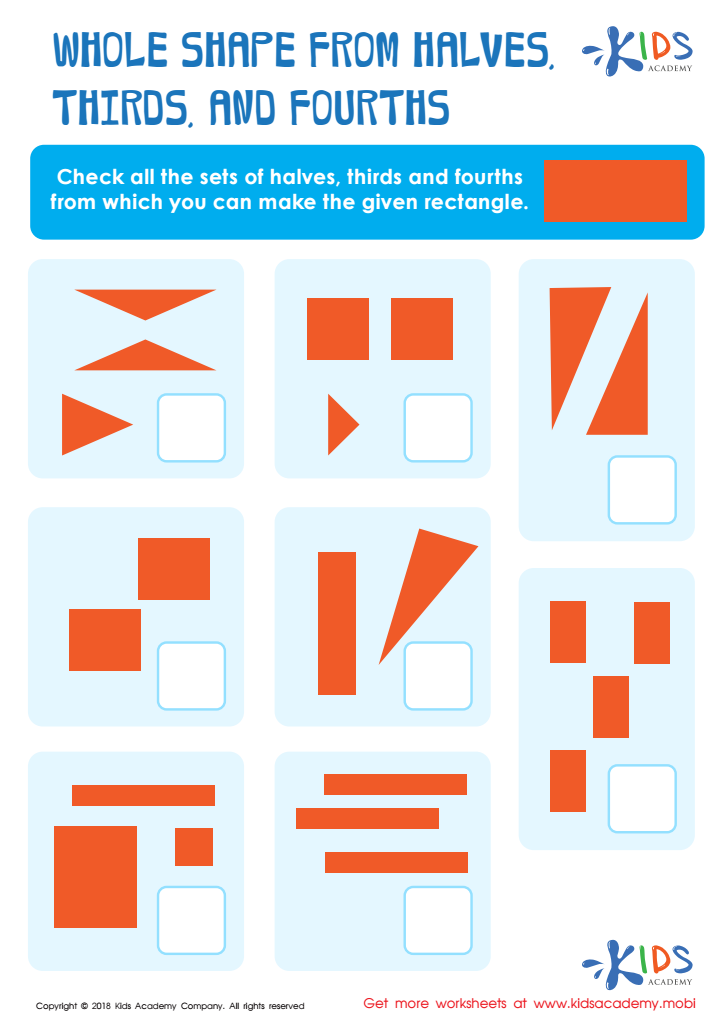
Explain to your students that they can make a new shape by combining halves, thirds, and fourths of a shape. Show them the worksheet with the rectangle at the top and ask them to find which sets of halves, thirds, and fourths make it. Have them check all the correct sets.
Whole Shape from Halves, Thirds and Fourths Worksheet
Worksheet
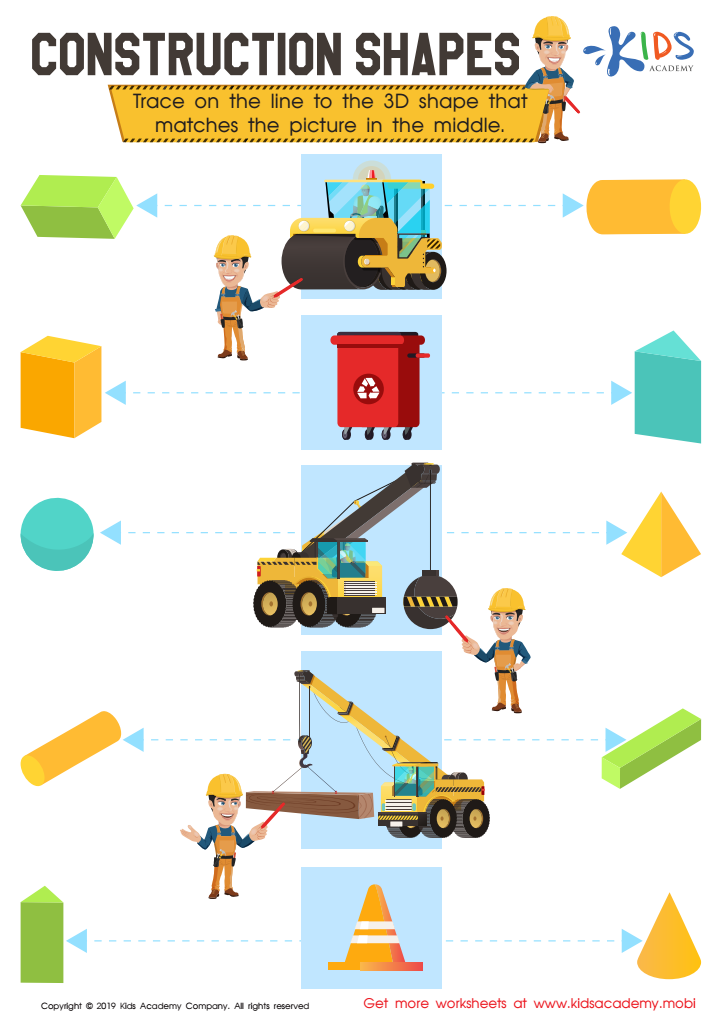
Construction Shapes Worksheet


Construction Shapes Worksheet

Construction workers are professionals who build structures like buildings. In this worksheet, kids will learn about shapes with the help of workers and their equipment. Help them trace the lines to the 3D shape that matches the picture in the middle.
Construction Shapes Worksheet
Worksheet


... 2 3

Shape recognition geometry is an essential early math skill for children aged 6-7, forming the building blocks for future education in mathematics and problem-solving. Firstly, understanding shapes enhances children's spatial awareness, which is crucial in everyday tasks such as navigation, object manipulation, and even art. Shapes are everywhere - in nature, in architecture, and in the design of various objects, and recognizing them helps children make sense of their surroundings.

Moreover, recognizing and distinguishing between different shapes lays a solid foundation for more complex mathematical concepts. For instance, when children learn to identify and compare shapes, they are practicing critical thinking, categorization, and pattern recognition. These are key skills that support later learning in more advanced topics such as geometry, algebra, and data analysis.

In terms of cognitive development, shape recognition significantly boosts children's visual memory and attention to detail. When kids engage with shapes through drawing, building blocks, or puzzles, they develop fine motor skills and learn to observe similarities, differences, and symmetry, which are vital for both academic success and daily functioning.

By fostering an understanding of shapes, parents and teachers not only equip children with essential academic tools but also boost their confidence in solving problems, thinking critically, and seeing the world in new and meaningful ways. This early investment in shape recognition is thus a stepping stone to lifelong learning and intellectual curiosity.