Visual Perception Skills Geometry Worksheets for Ages 6-7
3 filtered results
-
From - To
Enhance your child's learning experience with our Visual Perception Skills Geometry Worksheets, perfect for ages 6-7! These engaging worksheets are designed to develop essential visual perception skills while introducing geometric concepts in a fun and interactive way. Children will practice identifying shapes, understanding spatial relationships, and improving their observation skills through a variety of activities. Each worksheet is thoughtfully crafted to promote critical thinking and problem-solving, making math enjoyable. Use these resources at home or in the classroom to help young learners build a strong foundation in geometry and visual literacy. Empower your child's educational journey today with these colorful, skill-building worksheets!
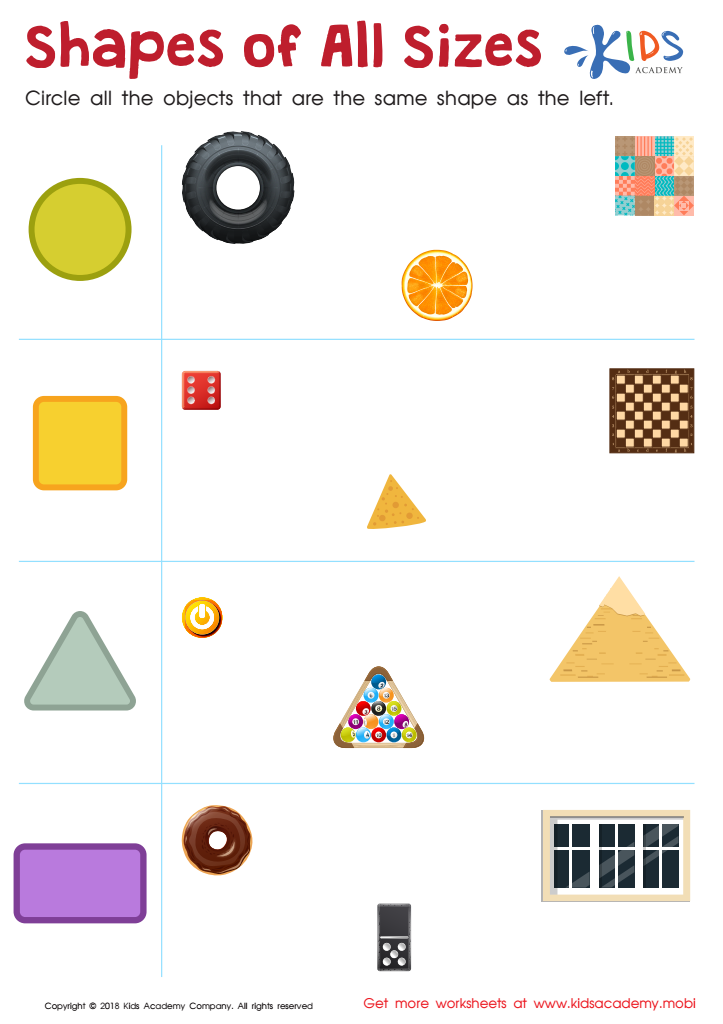
Shapes of All Sizes Worksheet
 Assign to My Students











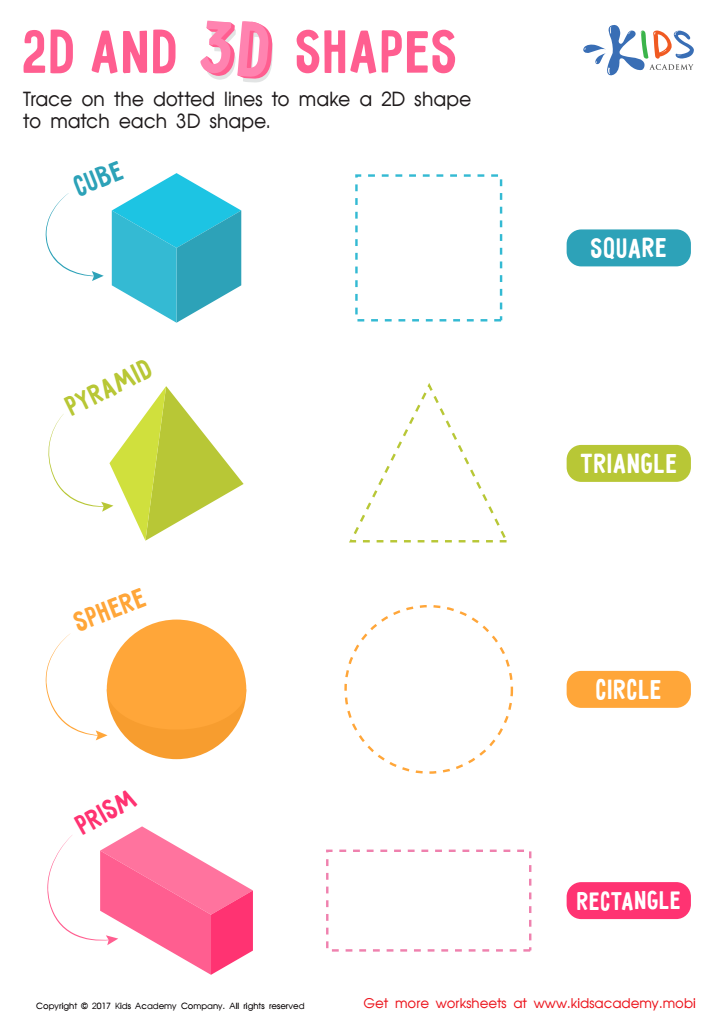
2D and 3D Shapes Worksheet
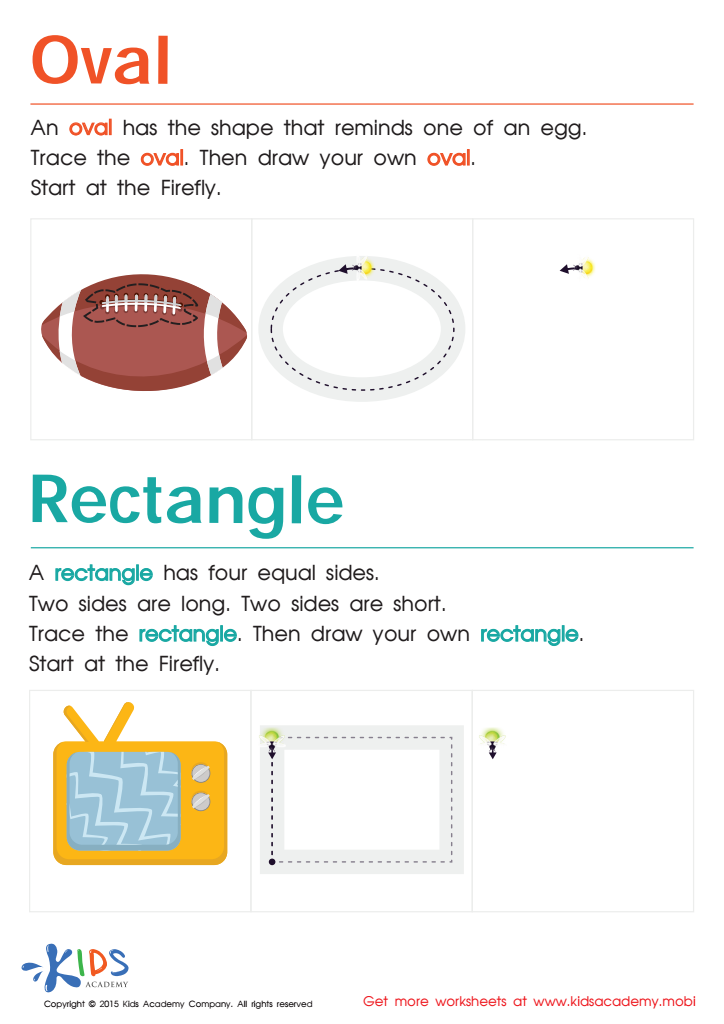
Easy Drawing of Ovals And Rectangles Worksheet








Parents and teachers should care about visual perception skills in geometry for children aged 6-7 because these skills form the foundation for a child's understanding of spatial relationships, shapes, and overall mathematical competence. At this age, children are naturally curious and eager to explore their surroundings. Developing strong visual perception skills helps them make sense of geometric concepts, enhancing their ability to recognize, manipulate, and describe shapes.
Children with well-developed visual perception skills can easily identify patterns, understand symmetry, and visualize geometric transformations. These skills are not only vital for geometry but also contribute to their success in other subjects like science, where spatial reasoning is crucial in understanding models and representations.
Moreover, fostering visual perception skills enhances problem-solving abilities and promotes critical thinking. As children engage in activities like drawing, building with blocks, or solving puzzles, they are inadvertently practicing these vital skills. Parents and teachers can support this development through fun and engaging activities that invite exploration and creativity. By prioritizing visual perception skills in geometry, educators and caregivers equip children with essential tools for lifelong learning, setting the stage for academic success and helping them navigate the world around them confidently.








