Addition Practice Numbers Worksheets for Ages 6-7 - Page 2
31 filtered results
-
From - To
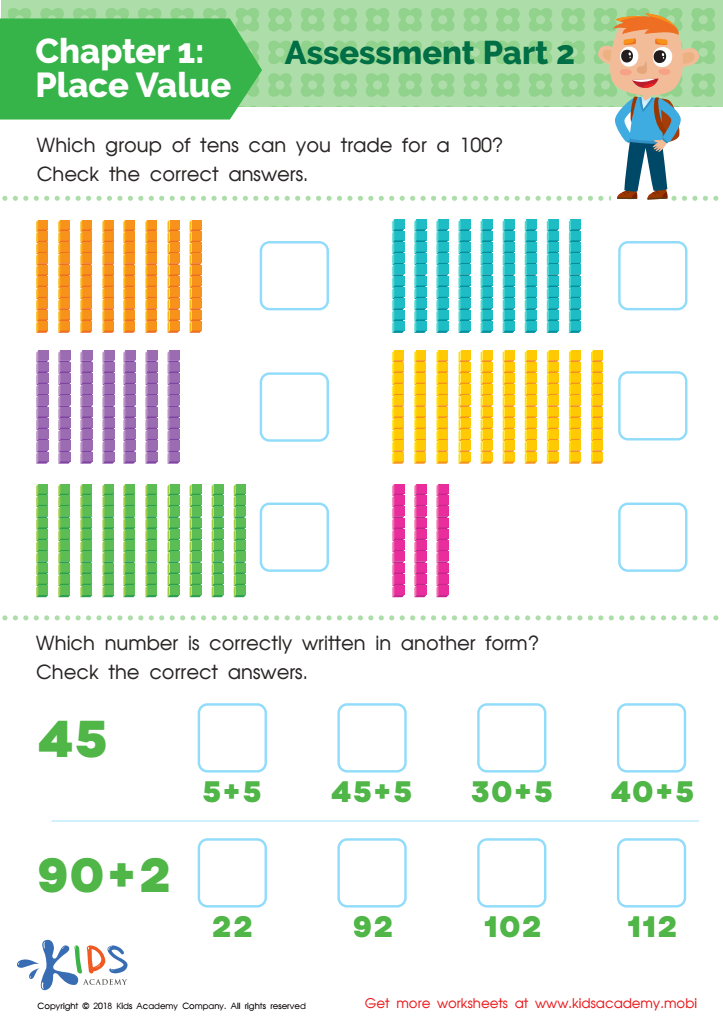
Place Value: Chapter 2 Worksheet
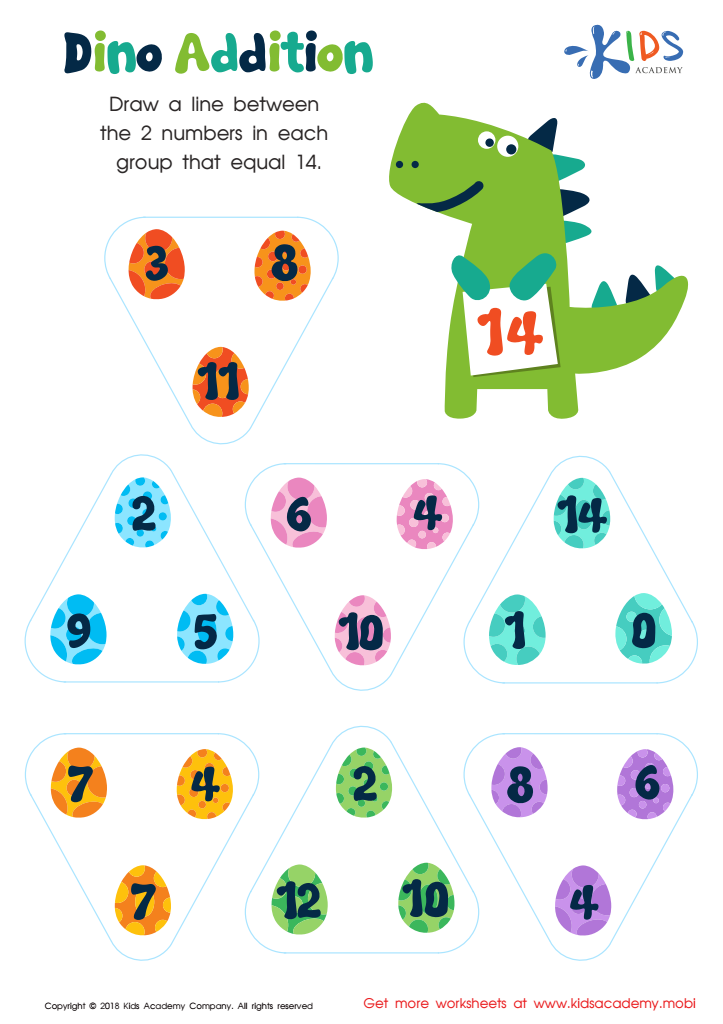
Dino Addition Worksheet
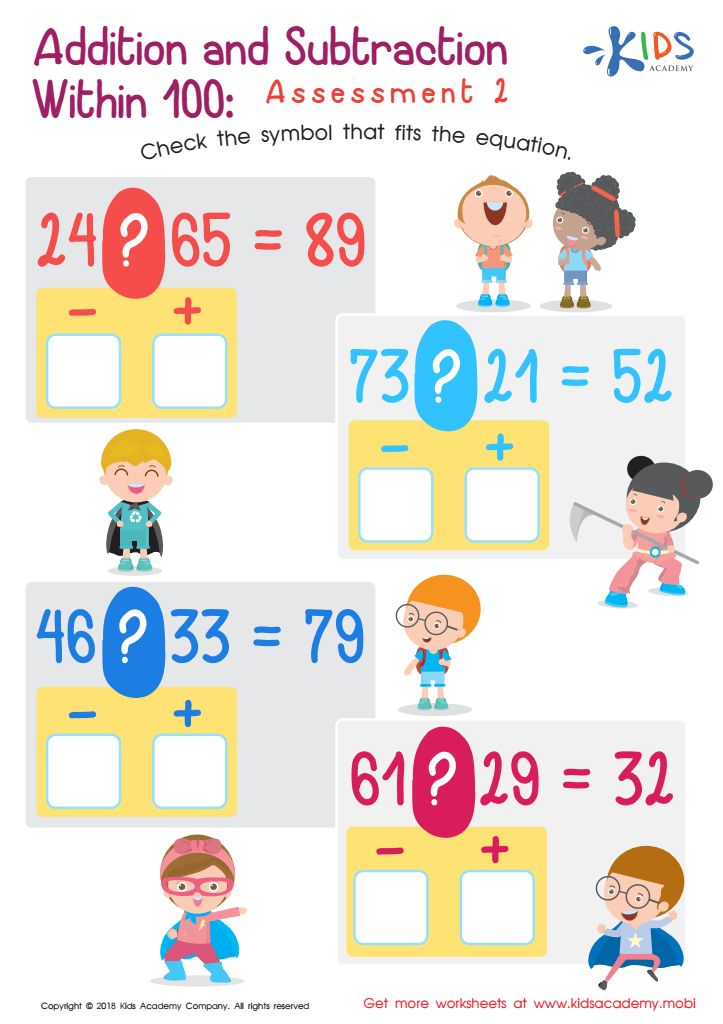
Addition and Subtraction Within 1: Assessment 2 Worksheet
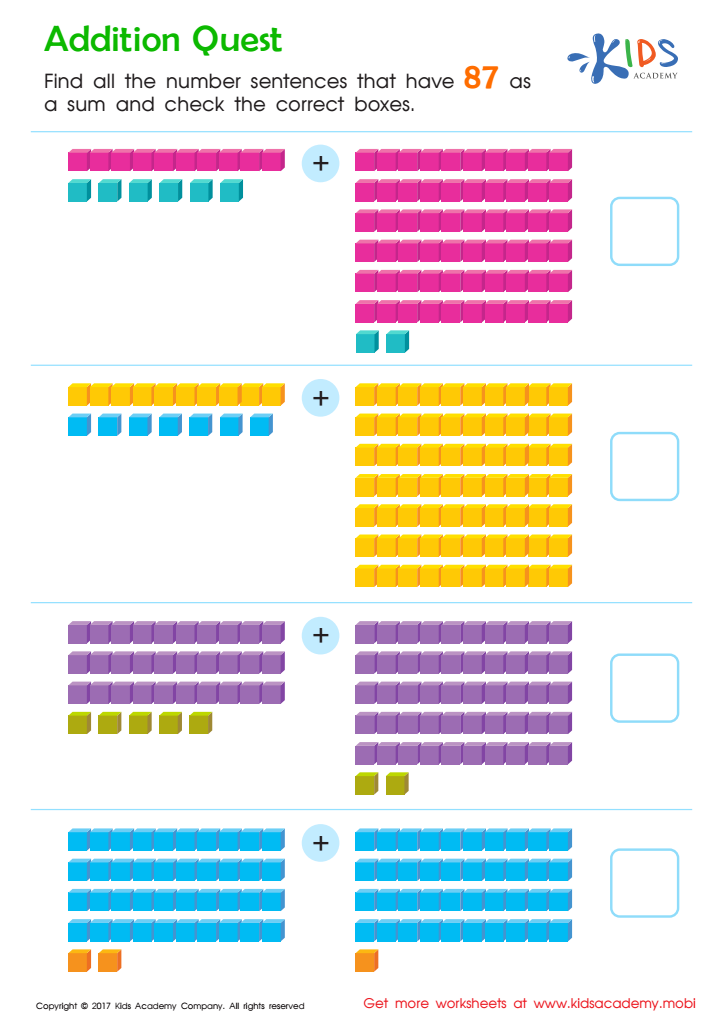
Addition Quest Worksheet: Part 1
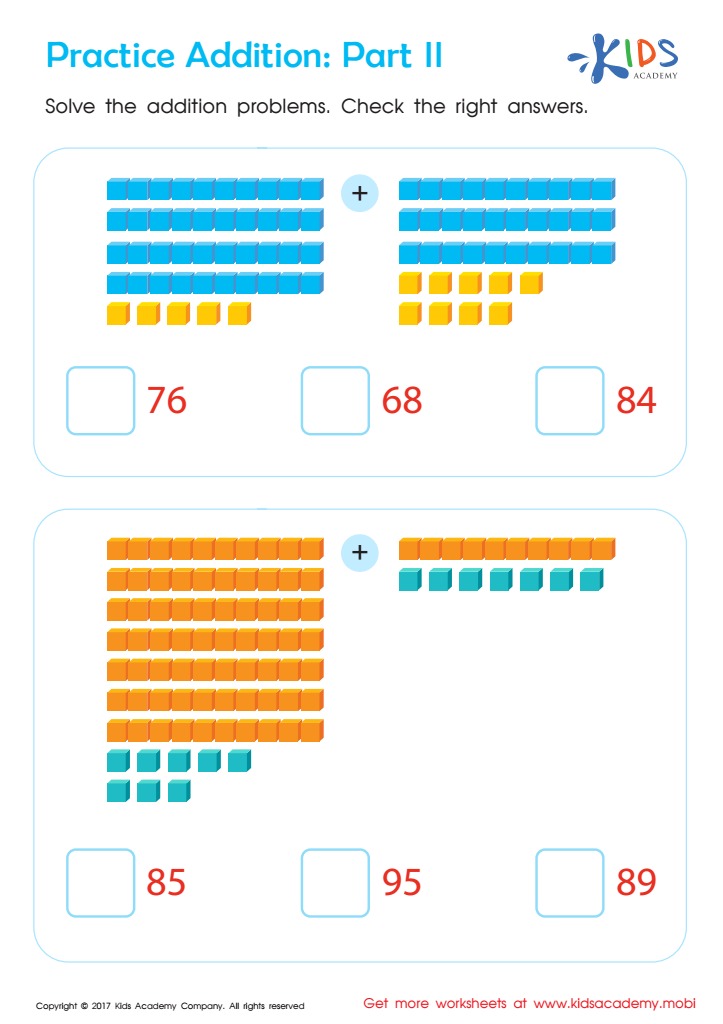
Practice Addition: Part 2 Worksheet
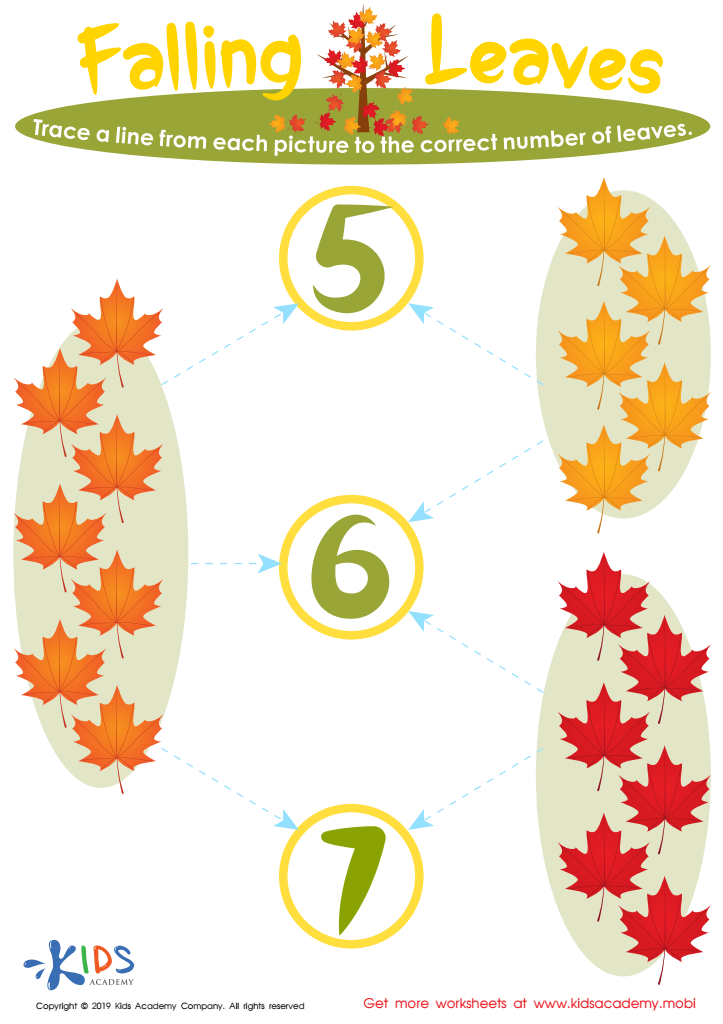
Falling Leaves Worksheet
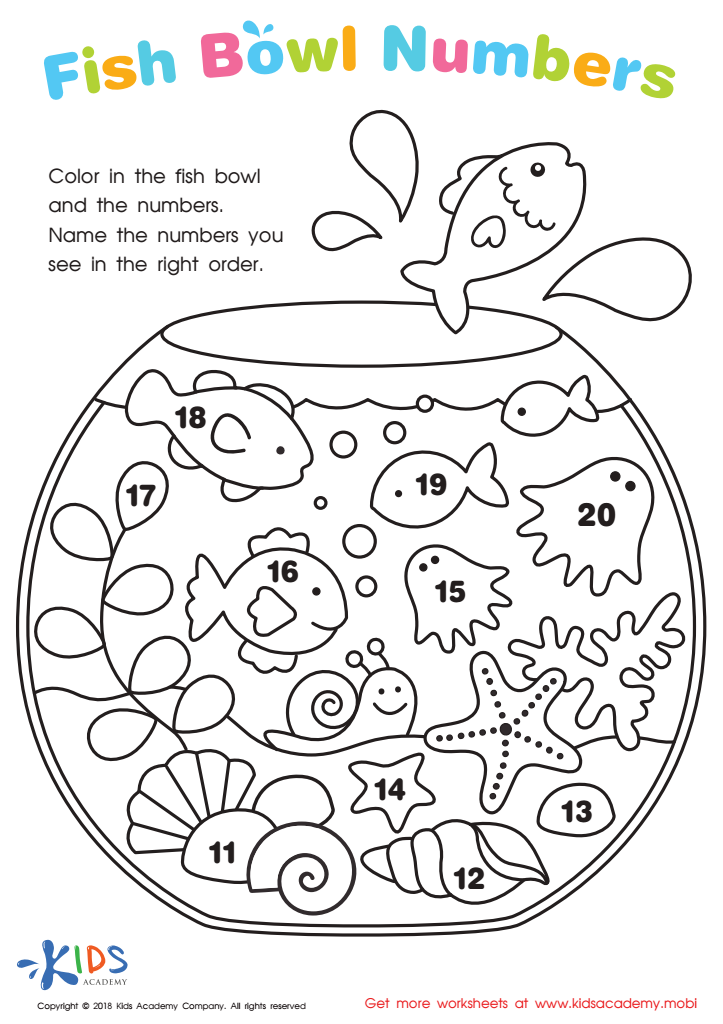
Fish Bowl Numbers Worksheet
 Assign to My Students



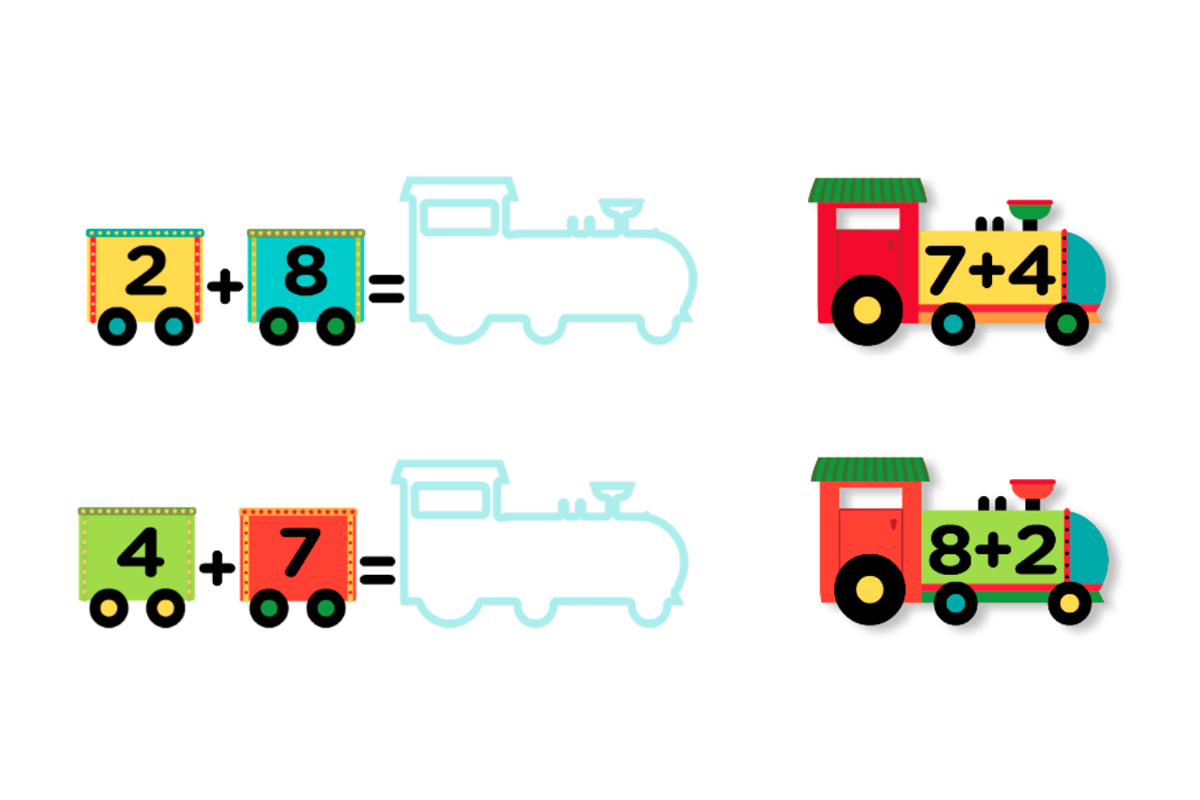




Addition practice for children aged 6-7 is crucial for their cognitive development and foundational math skills. At this age, children are typically in the early stages of developing numerical fluency, which sets the groundwork for their future academic success. Regular practice helps solidify their understanding of number relationships, enhances their problem-solving capabilities, and fosters confidence in their abilities.
By focusing on addition, parents and teachers can offer structured experiences that promote engagement and enjoyment in learning math. Fun activities, such as games or interactive exercises, allow children to see mathematics as an enjoyable challenge rather than a chore. This positive reinforcement can lead to a lasting interest in math.
Additionally, mastering addition prepares children for more complex concepts in the future, including subtraction, multiplication, and eventually, algebra. Moreover, proficiency in addition supports overall academic achievement, as many subjects incorporate numerical skills.
Supporting addition practice not only benefits academic performance but also encourages critical thinking and perseverance. When parents and teachers actively participate in this process, it strengthens the child’s learning experience, creating a supportive environment that nurtures both mathematical knowledge and a positive attitude toward learning.








