Data interpretation Numbers Worksheets for Ages 6-7
5 filtered results
-
From - To
Explore our engaging Data Interpretation Numbers Worksheets for ages 6-7! Designed to enhance early math skills, these worksheets help young learners develop their ability to interpret and analyze data through fun, interactive activities. Children will practice reading bar graphs, pictographs, and tally charts while honing their critical thinking abilities. Each worksheet features colorful visuals and age-appropriate tasks, ensuring an enjoyable learning experience. Ideal for classroom use or at-home practice, our worksheets support foundational math skills, fostering confidence in young learners. Dive into the world of data with our comprehensive resources and make math exciting for your child today!
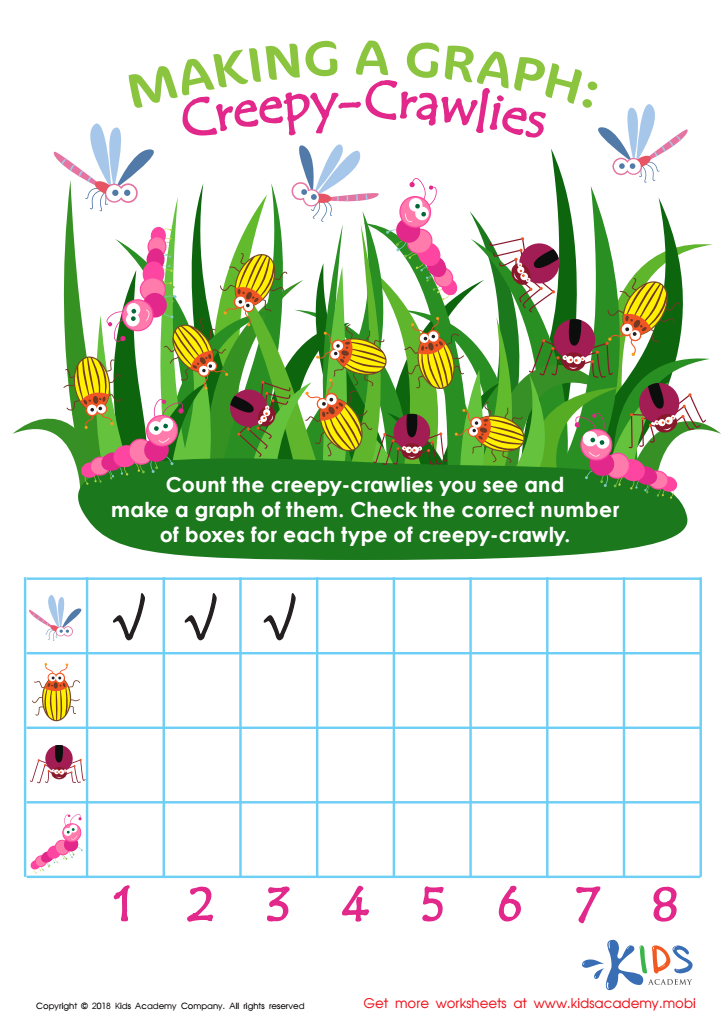
Making a Graph: Creepy Crawlies Worksheet
 Assign to My Students
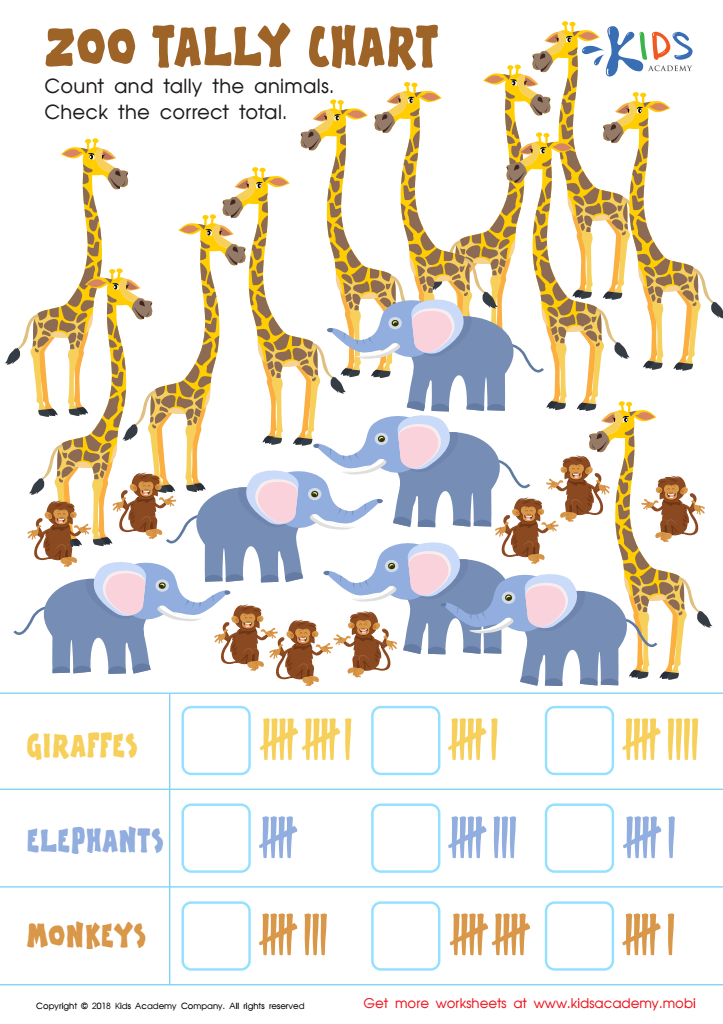
Zoo Tally Chart Worksheet
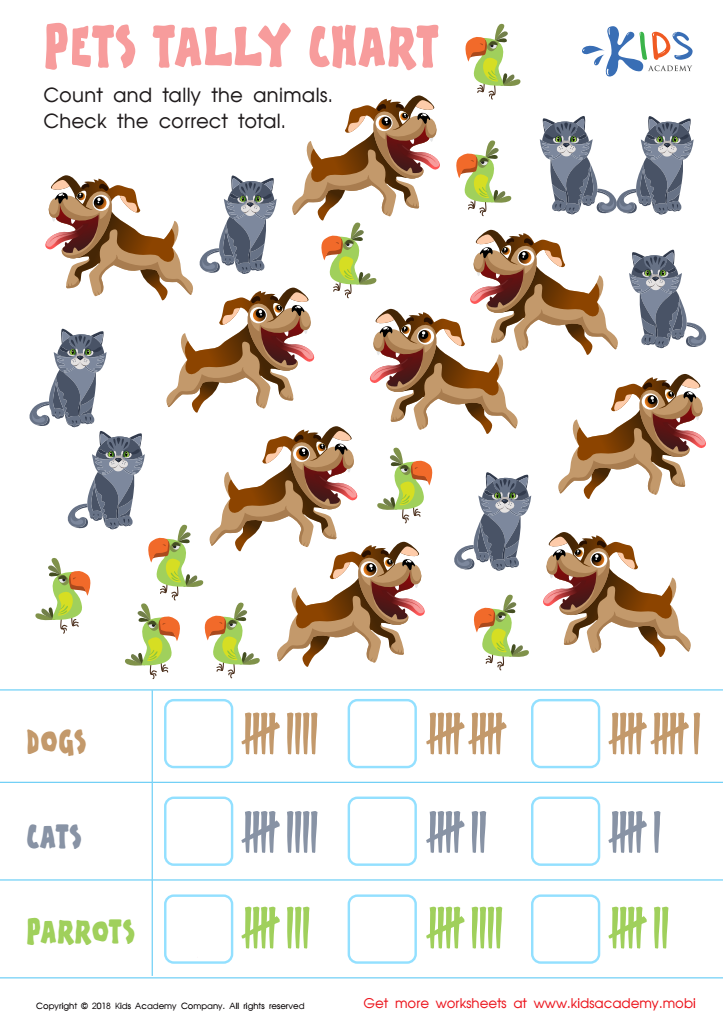
Pets Tally Chart Worksheet
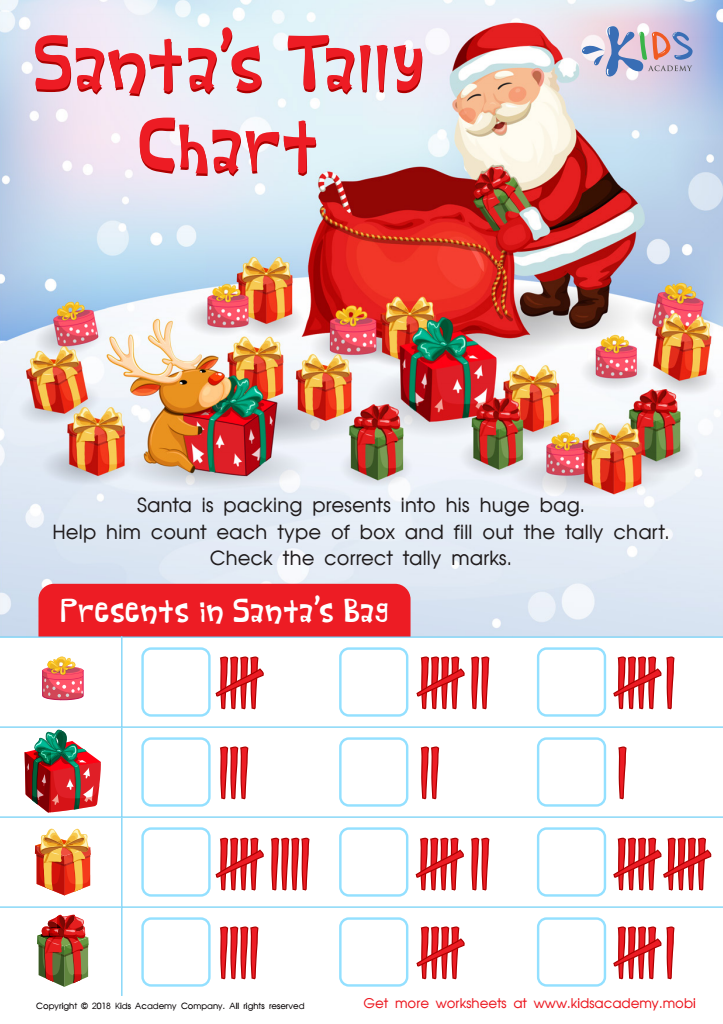
Santa Tally Chart Worksheet
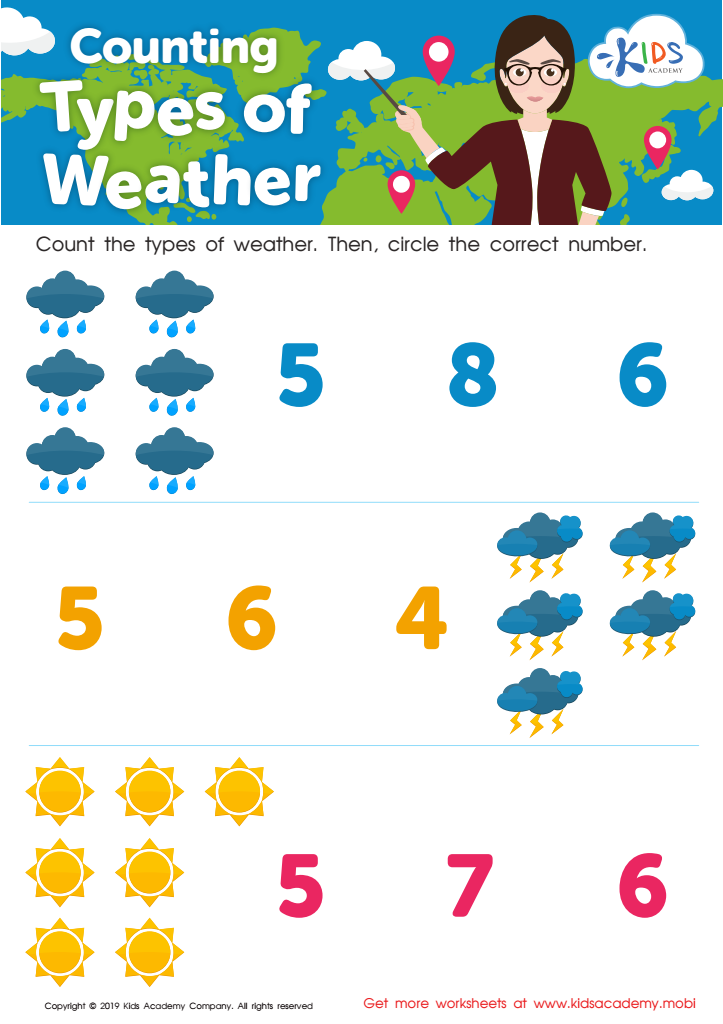
Counting Types of Weather Worksheet







Data interpretation at ages 6-7 is crucial as it lays the foundation for essential life skills. During this developmental stage, children are naturally curious and eager to understand the world around them. Introducing concepts of data, such as counting, measuring, and basic graphing, helps them make sense of everyday information.
For parents and teachers, fostering data interpretation skills empowers children to analyze information critically. When kids learn how to collect, organize, and interpret numbers through simple activities like surveys and bar graphs, they strengthen their mathematical understanding and boost their problem-solving abilities. These skills are also linked to developing literacy, as interpreting data requires comprehension of language and symbols.
Moreover, early exposure to data interpretation enhances children's confidence in math, a subject many struggle with later in their education. It encourages logical reasoning and equips them with the analytical tools necessary for future academic pursuits. Ultimately, by caring about and integrating data interpretation in their learning, parents and teachers are not just teaching kids to handle numbers; they're preparing them for a future filled with information-driven decision-making and enhancing their critical thinking abilities crucial in today’s data-centric world.








