Fine motor development Numbers Worksheets for Ages 6-7
3 filtered results
-
From - To
Enhance your child’s fine motor skills with our engaging Numbers Worksheets designed specifically for ages 6-7! These worksheets provide an interactive way for young learners to practice writing and recognizing numbers while developing essential coordination and control. Each activity integrates fun themes that keep children motivated and excited to learn. From tracing and coloring numbers to connecting dots and completing patterns, our worksheets cater to various learning styles. These resources not only help boost confidence in math but also strengthen hand-eye coordination and dexterity. Explore our collection today to support your child’s growth and make learning enjoyable!
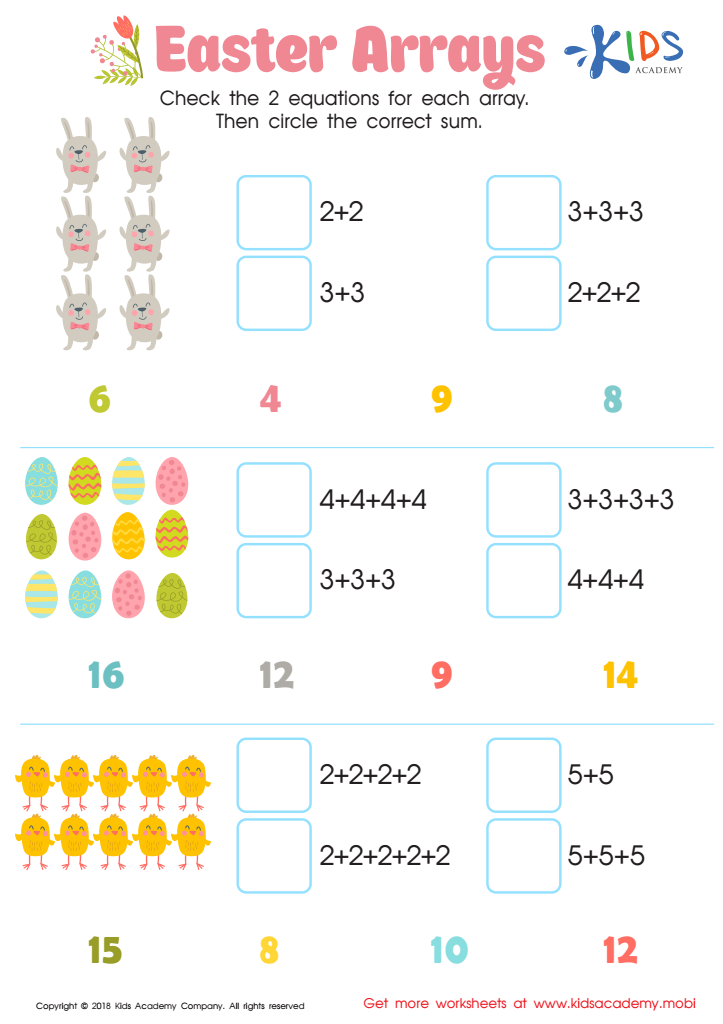
Easter Arrays Worksheet
 Assign to My Students
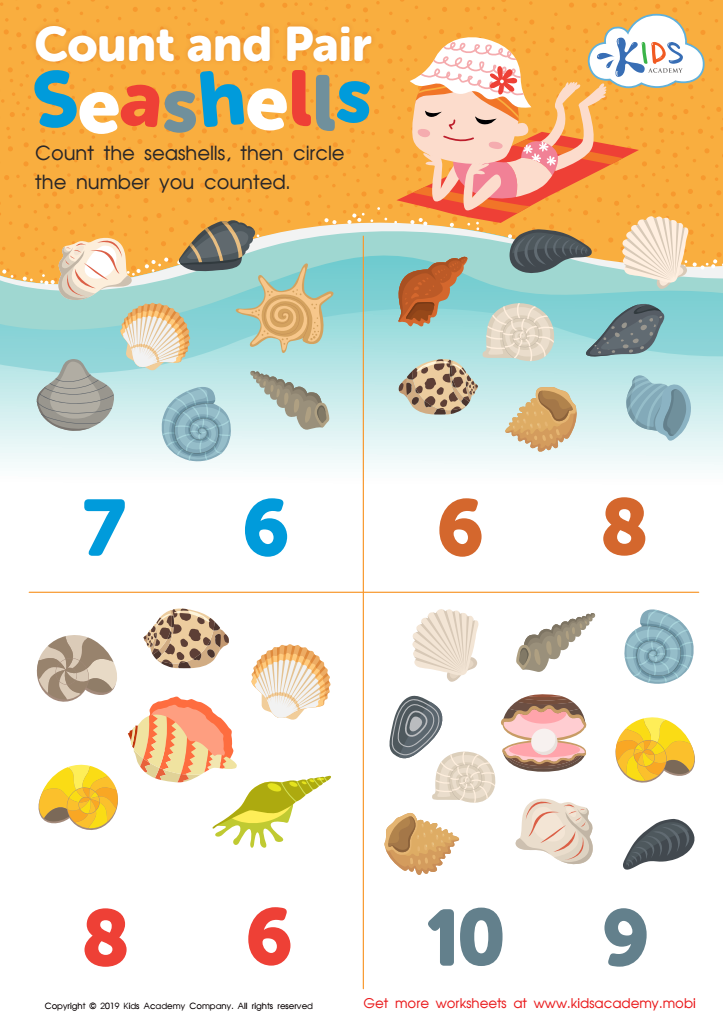
Count and Pair Seashells Worksheet
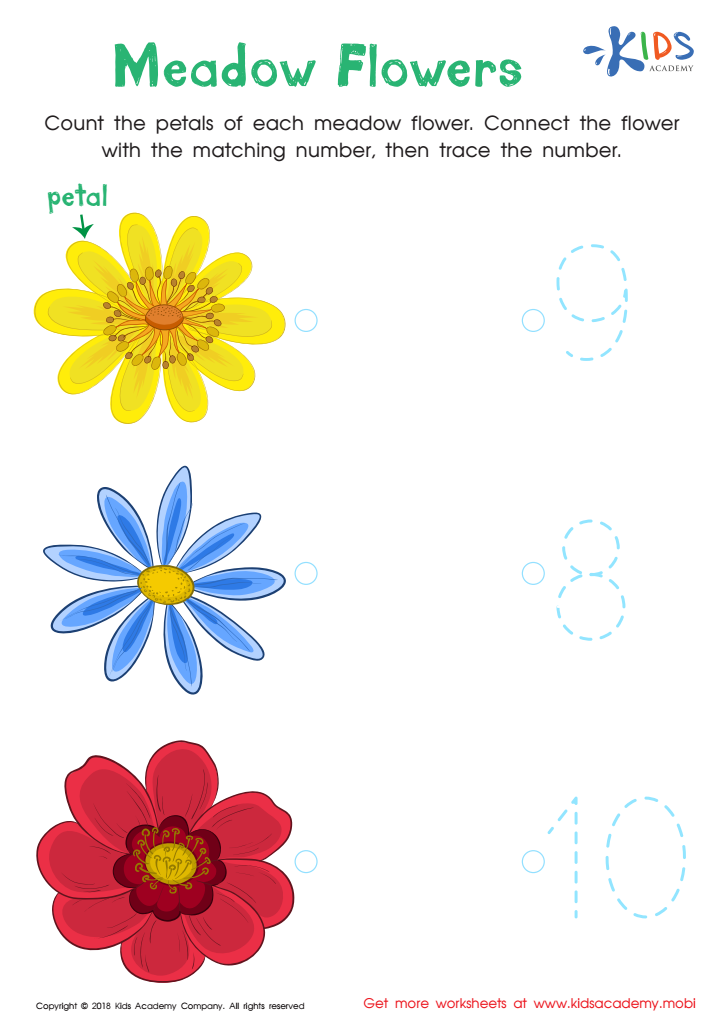
Kindergarten Number Tracing: Medow Flowers Worksheet



.jpg)




Fine motor development plays a crucial role in the growth and learning of children aged 6 to 7, making it a key focus for parents and teachers. At this age, children are refining their ability to perform tasks that require precision and control, such as writing numbers, using scissors, and manipulating small objects. Strong fine motor skills are essential for academic success, as they directly impact a child’s ability to write legibly, complete math problems, and engage in art activities.
Developing these skills not only enhances a child's academic performance but also contributes to their self-confidence and independence. When children can effectively manage tasks that require fine motor coordination, they experience a sense of accomplishment, which boosts their motivation to tackle new challenges. Furthermore, fine motor development is linked to cognitive skills; as children engage in activities like drawing numbers or playing with LEGO, they simultaneously develop spatial awareness and problem-solving abilities.
Parents and teachers can support fine motor development through various engaging activities like crafts, puzzles, and games that encourage hand-eye coordination. At this formative stage, nurturing these skills helps set a strong foundation for lifelong learning and personal growth. Therefore, prioritizing fine motor skill development is vital for holistic child development.








