
Mental math skills Numbers Worksheets for Ages 6-7
5 filtered results
Difficulty Level
Grade
Age
-
From - To
Subject
Activity
Standards
Boost your child's mathematical confidence with our engaging Mental Math Skills Worksheets designed for ages 6-7. These worksheets emphasize essential number recognition and quick calculation abilities, promoting a strong foundation in math. Our fun and interactive exercises challenge students with addition and subtraction problems, fostering mental agility and problem-solving skills. Crafted to align with early learning standards, these resources ensure your child can tackle math with ease. Ideal for classroom use or at-home practice, these worksheets make learning numbers enjoyable and effective. Equip your young learner with the tools they need to excel in mathematics and develop a lifelong love for learning!
Favorites
With answer key
Interactive
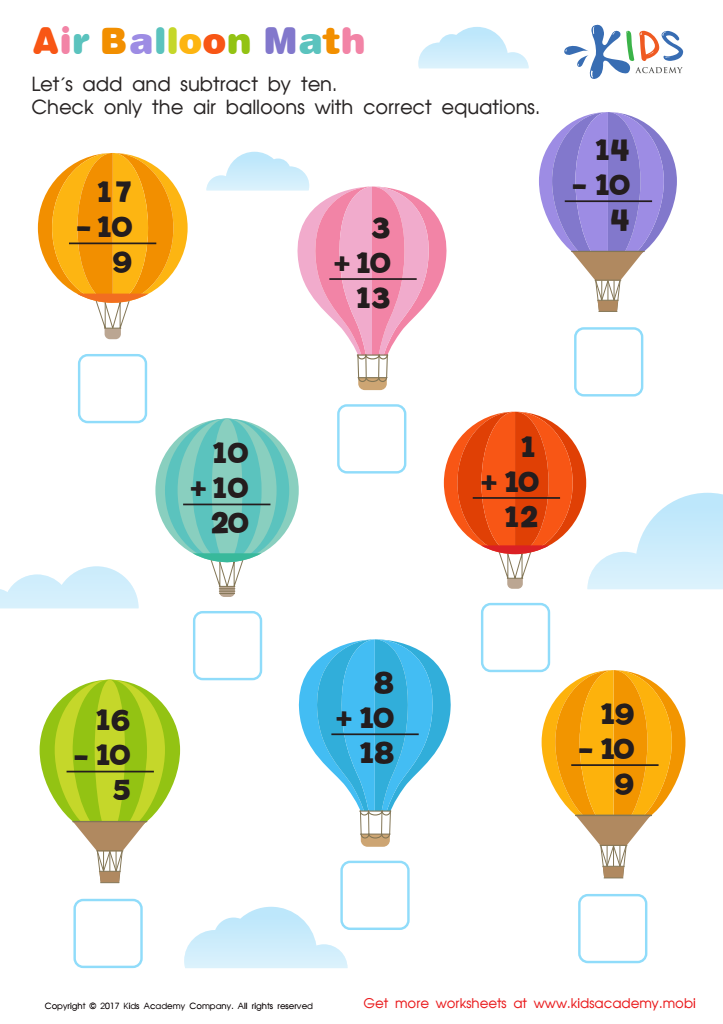
Air Balloon Math Worksheet
Revised:
Review your child's addition and subtraction skills with this fun worksheet. Featuring hot air balloons filled with math equations, help your child add or subtract by ten before ticking the boxes with the right answers. Working through the equations one-by-one is a great way to make math practice enjoyable!
 Assign to My Students
Air Balloon Math Worksheet
Worksheet
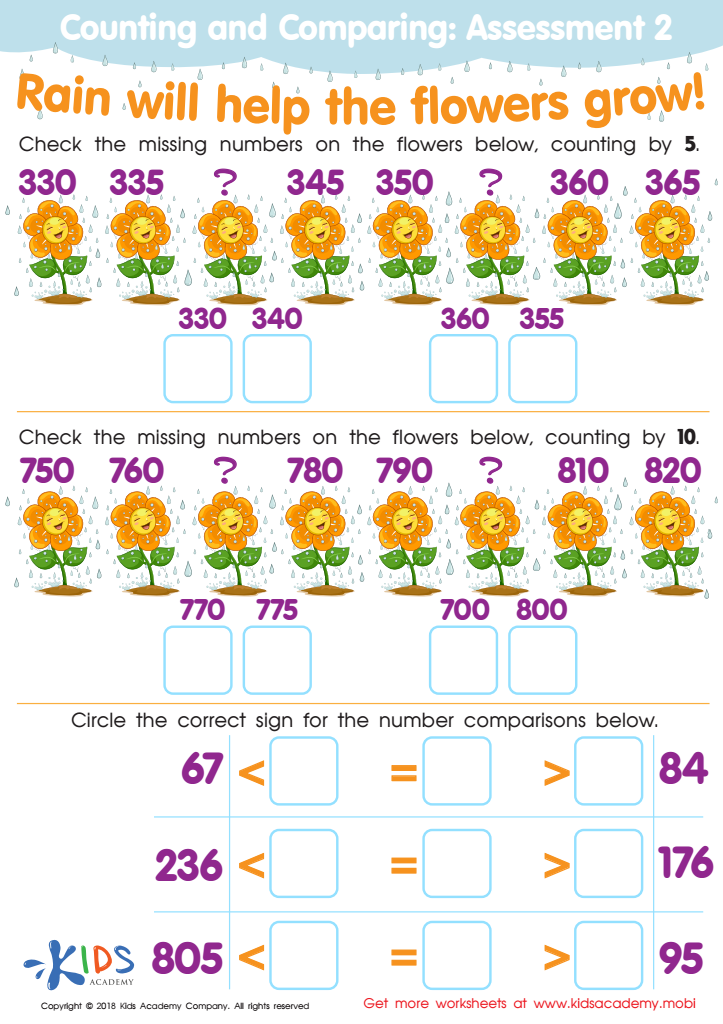
Counting and Comparing: Assessment 2 Worksheet
This worksheet featuring flowers in the rain is a great way to assess your kids' math skills. Check their number line and comparison sentences accuracy to get an overview of their abilities. Knowing these skills helps with computation, so you can pinpoint where they need extra help.
Counting and Comparing: Assessment 2 Worksheet
Worksheet
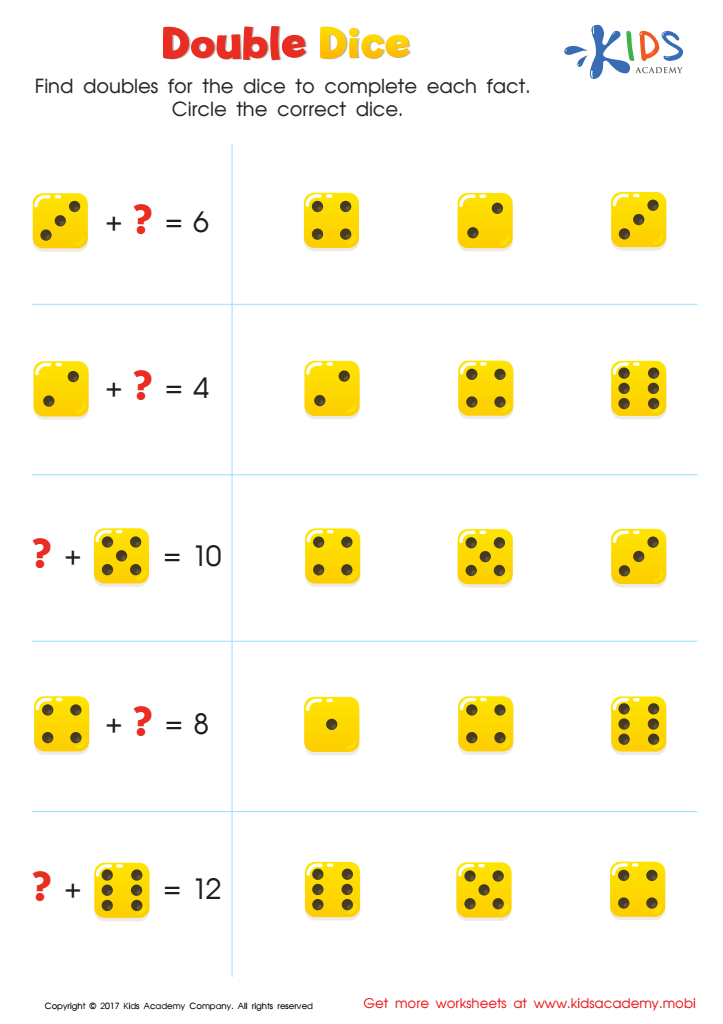
Addition Facts: Double Dice Worksheet
Are you looking for ways to make maths more engaging for kids? Maths can be a bore, but by teaching kids from an early age that it can be fun, they won't struggle with it. This worksheet is a great way to start: your child needs to identify the number on the left dice and find its double on the right. The sum of the two dice is also given.
Addition Facts: Double Dice Worksheet
Worksheet
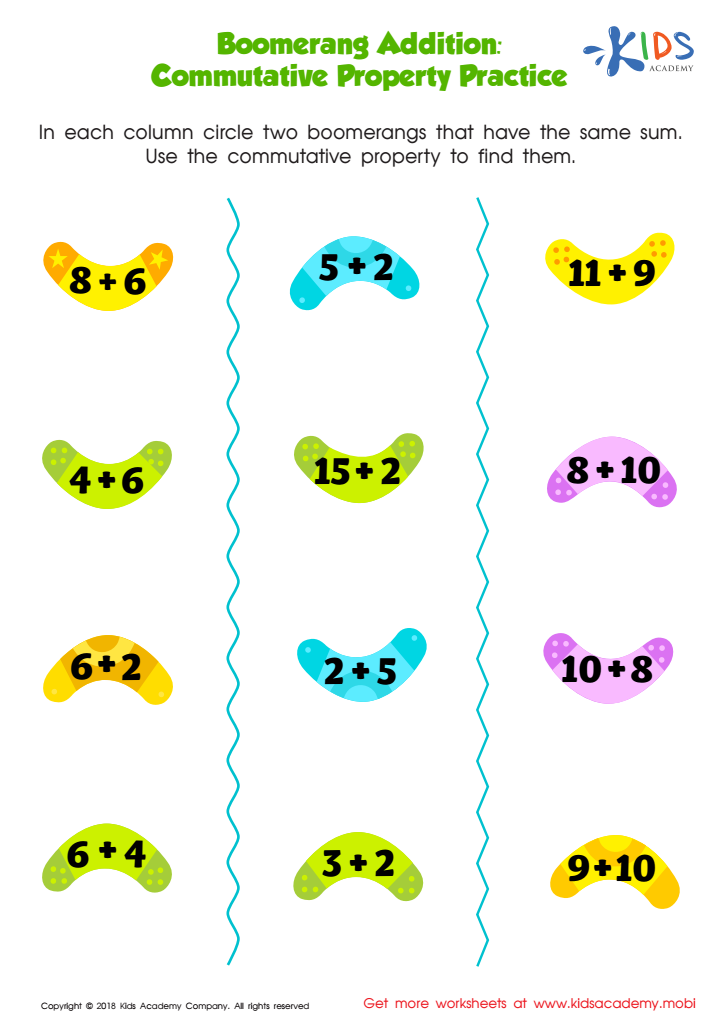
Boomerang Addition Worksheet
Kids know that when a boomerang is thrown, it reverses its path back. The same goes for addition: numbers can be rearranged and the sum will remain the same. Use this worksheet to find matching pairs of colorful boomerangs and equations. Look through each column and use the commutative property to find the pairs with the same sum.
Boomerang Addition Worksheet
Worksheet
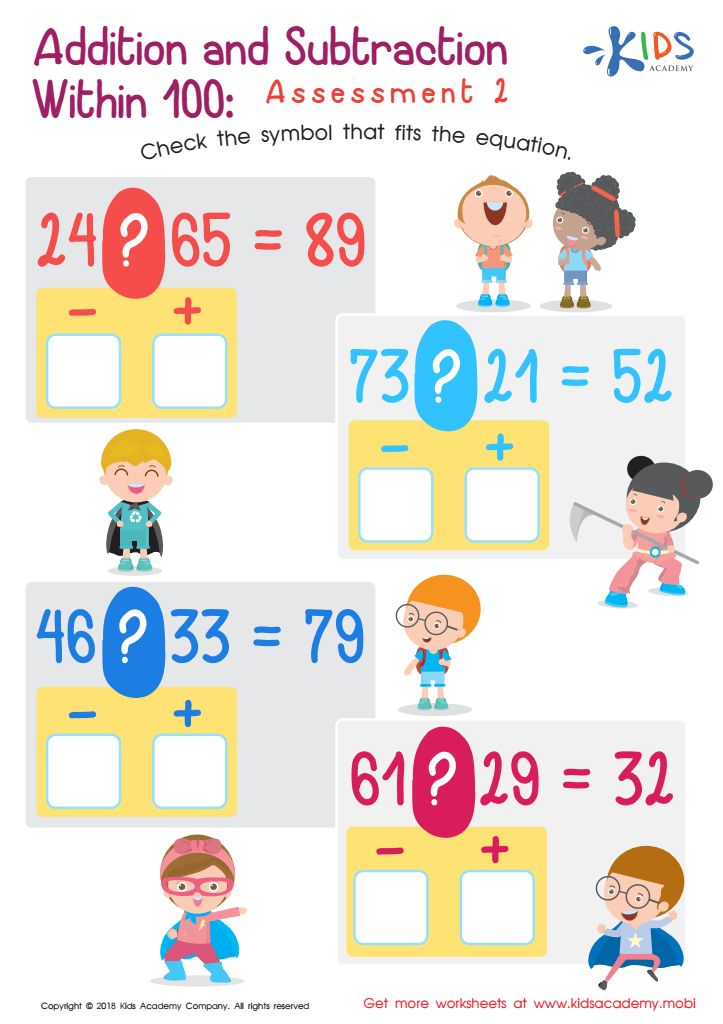
Addition and Subtraction Within 1: Assessment 2 Worksheet
This worksheet is a great tool to help your students learn addition and subtraction. It contains four equations in a printable pdf. Ask your students to review the equation and determine if the symbol between them is a '+' or '-'. Guide them in selecting the correct symbols for each equation.
Addition and Subtraction Within 1: Assessment 2 Worksheet
Worksheet
Join Kids Academy for Free
Who is primarily going to use this learning content?


.jpg)





At ages 6-7, children are at a critical stage of cognitive development where foundational math skills significantly impact their overall academic success. Mental math skills, which involve solving mathematical problems in one's head without using a calculator or pencil, are particularly important during this period. They foster a deep understanding of numbers and relationships, enhancing problem-solving abilities and critical thinking.
Parents and teachers should prioritize mental math because it builds confidence in children's mathematical abilities, allowing them to tackle more complex concepts later on. Mental math also encourages children to make connections between numbers and apply mathematical thinking to real-world situations. It enhances numerical fluency, leading to quicker calculations and greater efficiency in handling basic operations like addition, subtraction, multiplication, and division.
Moreover, strong mental math skills develop resilience and perseverance, as children learn to approach challenges systematically rather than relying on external tools. These skills contribute not only to academic success but also to everyday life, as children encounter math in shopping, cooking, and budgeting as they grow. By nurturing mental math abilities, parents and teachers equip children with essential skills that will benefit them throughout their educational journey and beyond.








