Understanding number sequence Numbers Worksheets for Ages 6-7
3 filtered results
-
From - To
Discover exciting and engaging "Understanding Number Sequence" worksheets, tailored for children ages 6-7. Our interactive resources are designed to help young learners master the concept of number sequences through fun activities and exercises. Students will improve their counting skills, learn to recognize patterns, and enhance their mathematical reasoning. Each worksheet encourages independent thinking and problem-solving, fostering a deeper understanding of numbers in various contexts. Perfect for home or classroom use, these worksheets support early numeracy development, making math enjoyable and accessible for your child. Dive into the world of numbers with our colorful, easily printable worksheets today!
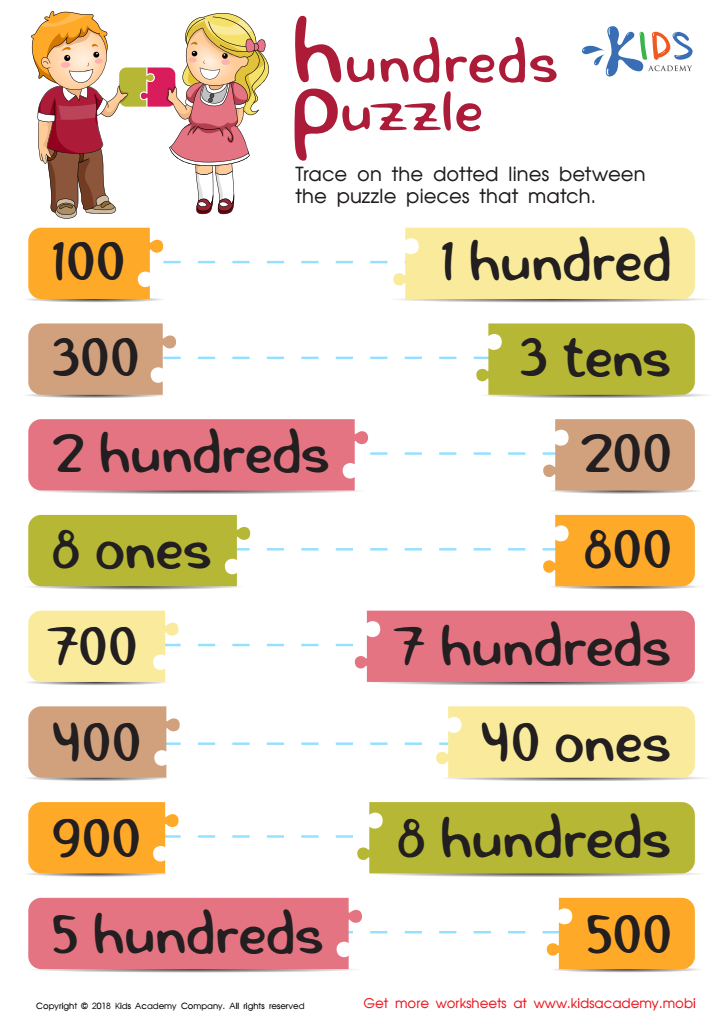
Hundreds Puzzle Worksheet
 Assign to My Students
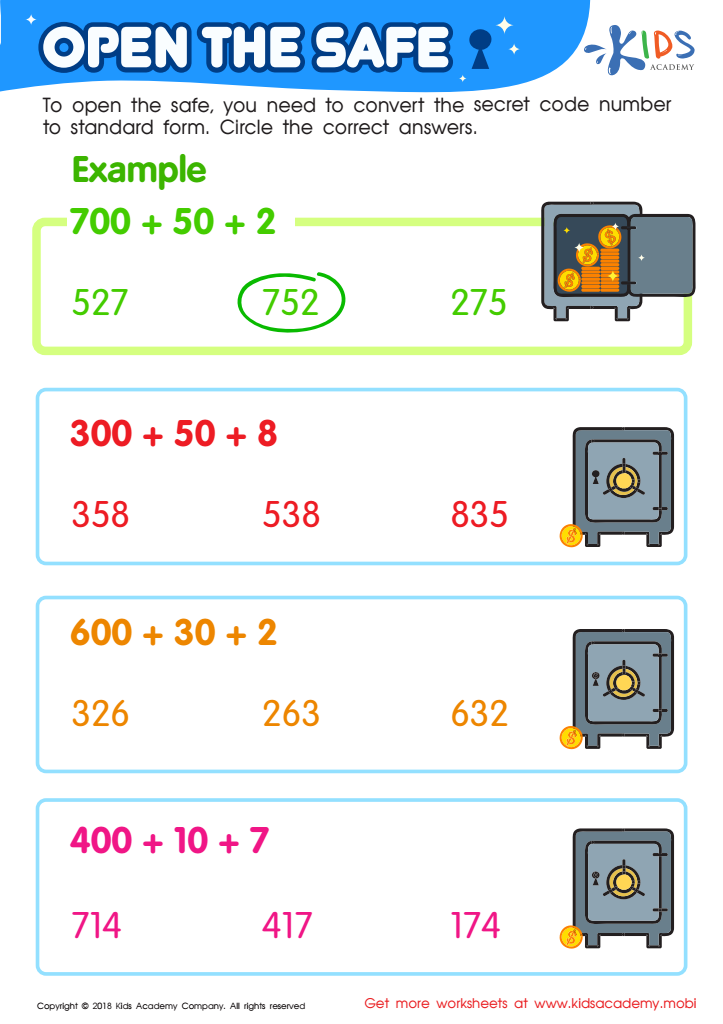
Open the Safe Worksheet
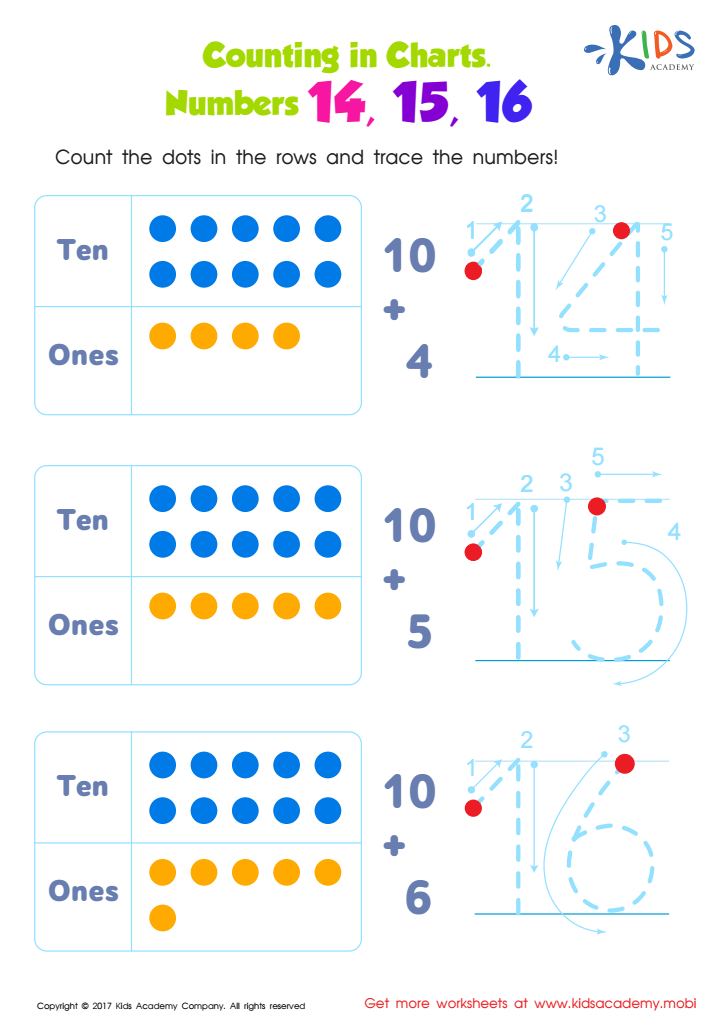
Number Tracing Worksheet








Understanding number sequences is crucial for children aged 6-7 as it lays the foundation for their mathematical development. At this age, children begin to explore patterns and relationships within numbers, which enhances their problem-solving skills and logical thinking. When parents and teachers emphasize number sequences, they help children recognize not only counting patterns but also the underlying concepts of addition, subtraction, and multiplication.
Moreover, engagement with number sequences fosters a sense of confidence in math. Children who grasp these concepts early are better equipped to handle more complex mathematical operations in the future. Recognizing patterns in number sequences also aids in distinguishing odd and even numbers, improving their numerical fluency.
Additionally, understanding sequences provides a practical framework that can be observed in everyday life, such as recognizing dates, time, and even in nature. This relevance assists in promoting a positive attitude towards math, making it less intimidating and more engaging.
In summary, nurturing an understanding of number sequences cultivates not just mathematical skills, but enhances overall cognitive development in young learners. This early investment in numeracy pays dividends in their everyday life and future academic success.








