Understanding skip-counting Numbers Worksheets for Ages 6-7
3 filtered results
-
From - To
Unlock the power of numbers with our "Understanding Skip-Counting Numbers Worksheets for Ages 6-7"! Designed specifically for early learners, these engaging worksheets make it fun and easy for children to grasp the concept of skip-counting by 2s, 5s, and 10s. Our colorful, interactive materials not only enhance young mathematicians' number sense but also boost their confidence in arithmetic. With Kid’s Academy’s expertly crafted resources, children will build a strong foundation in counting sequences, setting them up for continued success in math. Explore our selection and watch your child’s understanding of numbers soar!
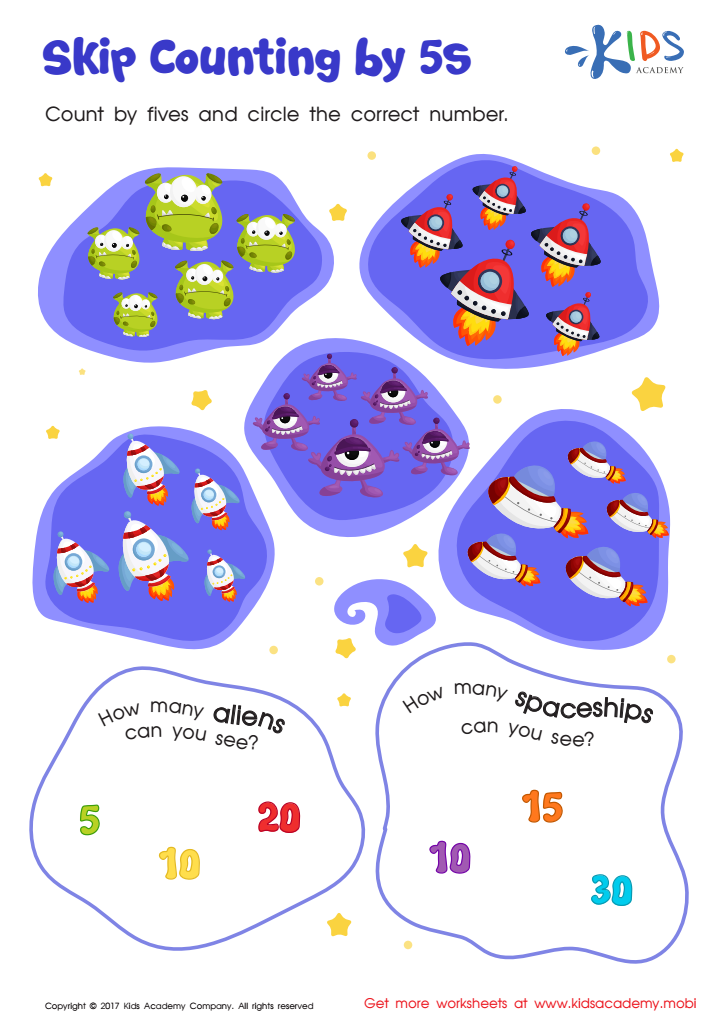
Skip Counting by 5s: Aliens and Spaceships Printable
 Assign to My Students
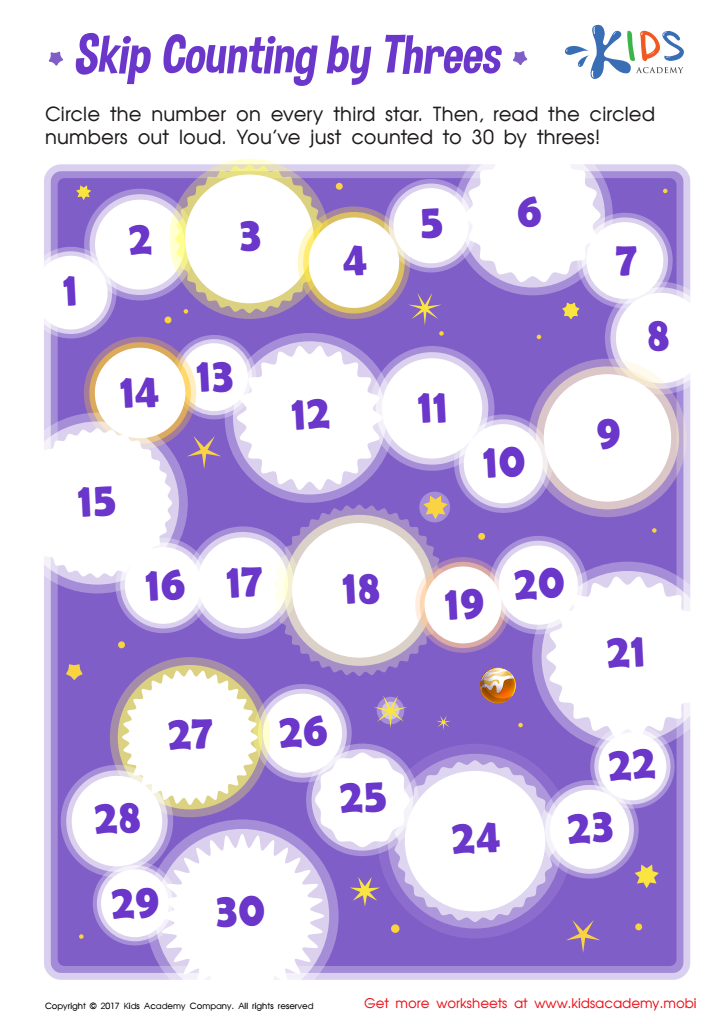
Skip Counting By Three Printable
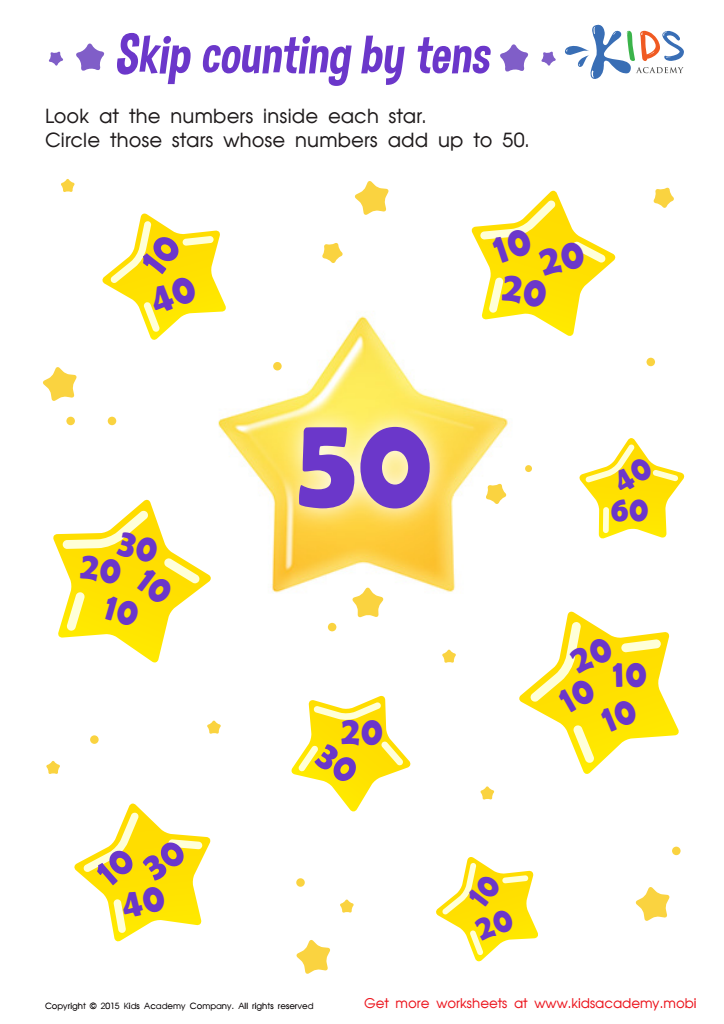
Learn Dozens: Skip Counting by Tens Printable








Skip-counting is a fundamental mathematical skill for children aged 6-7, serving as a building block for more advanced arithmetic and problem-solving skills. For parents and teachers, understanding and facilitating this development is crucial. Here's why:
First, skip-counting enhances numerical fluency. By practicing counting by 2s, 5s, or 10s, children develop a stronger sense of number patterns and sequences, making basic arithmetic like addition and subtraction quicker and more intuitive. This forms a strong foundation for future math topics, such as multiplication and division, which rely heavily on understanding numerical patterns.
Second, skip-counting encourages cognitive development. This practice involves memory, attention to detail, and analytical thinking as children identify and continue patterns. Enhanced cognitive skills aid not only in mathematics but also in other academic subjects by strengthening general problem-solving abilities and logical reasoning.
Third, many everyday situations require an understanding of skip-counting. Examples include counting money, telling time, and measuring ingredients in cooking. Consequently, proficiency in skip-counting equips children with practical life skills.
In sum, by caring about and supporting the early learning of skip-counting, parents and teachers lay down crucial educational foundations, nurturing both academic success and essential life skills in young learners.








