
Analytical thinking Math Worksheets for Ages 6-7
5 filtered results
Difficulty Level
Grade
Age
-
From - To
Subject
Activity
Standards
Welcome to our collection of Analytical Thinking Math Worksheets for ages 6-7! Designed to foster critical thinking skills, these worksheets engage young learners in fun and interactive ways. Each activity encourages children to problem-solve, recognize patterns, and make decisions based on given information. With colorful graphics and age-appropriate challenges, our worksheets help children develop essential mathematical concepts while enhancing their analytical abilities. Perfect for classroom use or at-home learning, these resources support varied learning styles. Inspire curiosity and boost confidence in your child's math skills with our engaging and educational materials. Start exploring today for a brighter tomorrow in math!
Favorites
With answer key
Interactive
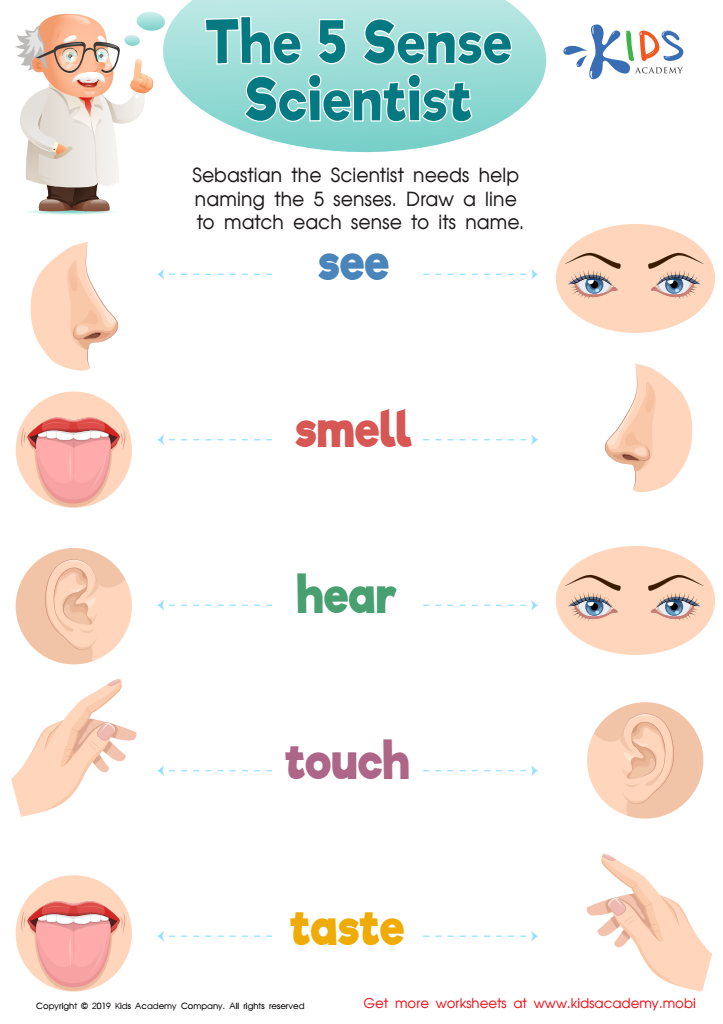
The 5 Sense Scientist Worksheet
Our young children will have fun learning about their five senses with this free Sense Scientist worksheet. Helping Sebastian the Scientist, they'll name the five senses and use traceable lines to connect each picture with its correct sense. Colorful words and pictures will create a memorable picture representation.
 Assign to My Students
The 5 Sense Scientist Worksheet
Worksheet
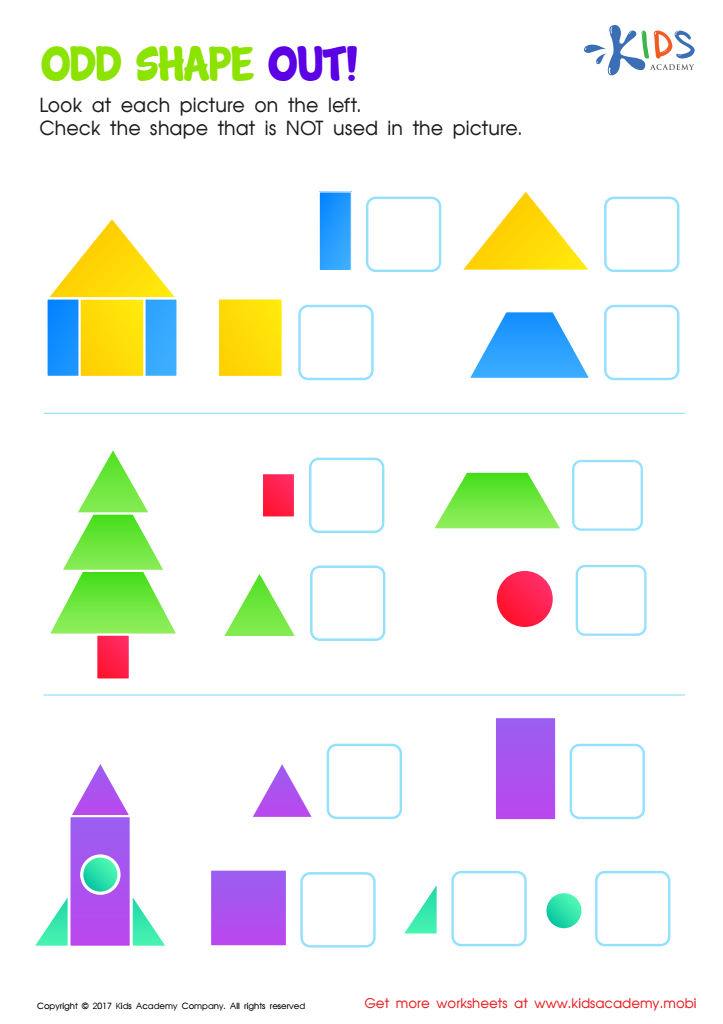
Odd Shape Out Worksheet for Grade 1
This worksheet can help your kids test their knowledge of shapes. They should have already been introduced to the most common shapes and be able to identify and draw them. Look at the picture and help your child identify each shape. Then, check which one isn't used to make the object.
Odd Shape Out Worksheet for Grade 1
Worksheet
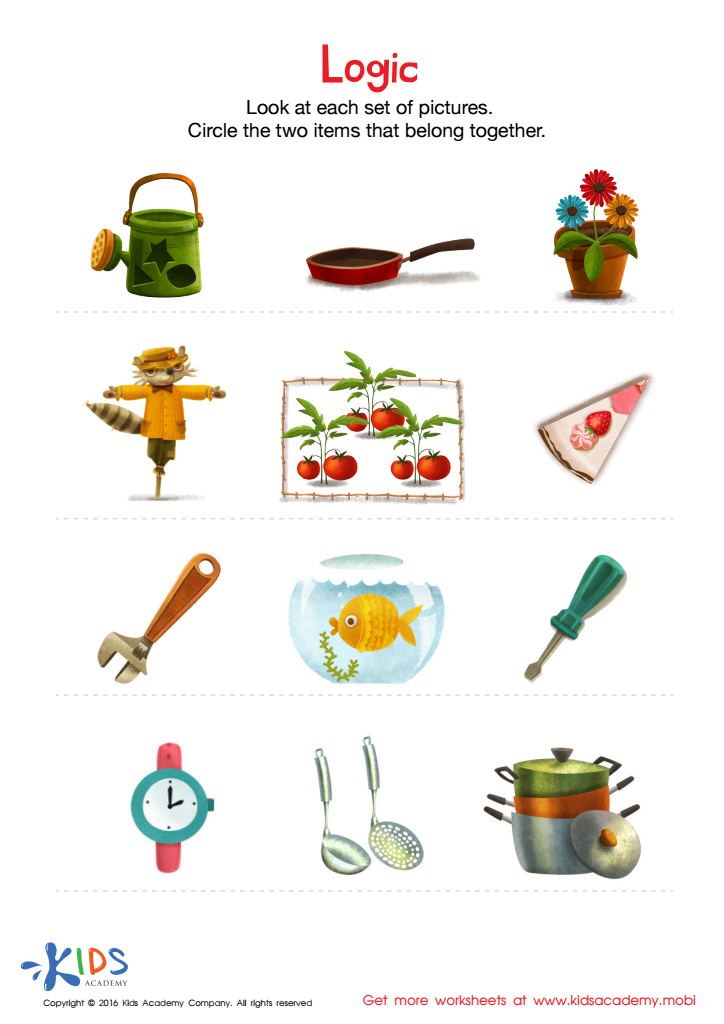
Logic Game Sorting Worksheet
Start your child's logic and reasoning development early with this fun matching worksheet! Through cute images and simple conversations, your little one can learn problem-solving, categorization, and matching skills. Plus, it's a great way for children to explore how items are used in real life. Try it and watch them boost skills with ease and fun!
Logic Game Sorting Worksheet
Worksheet
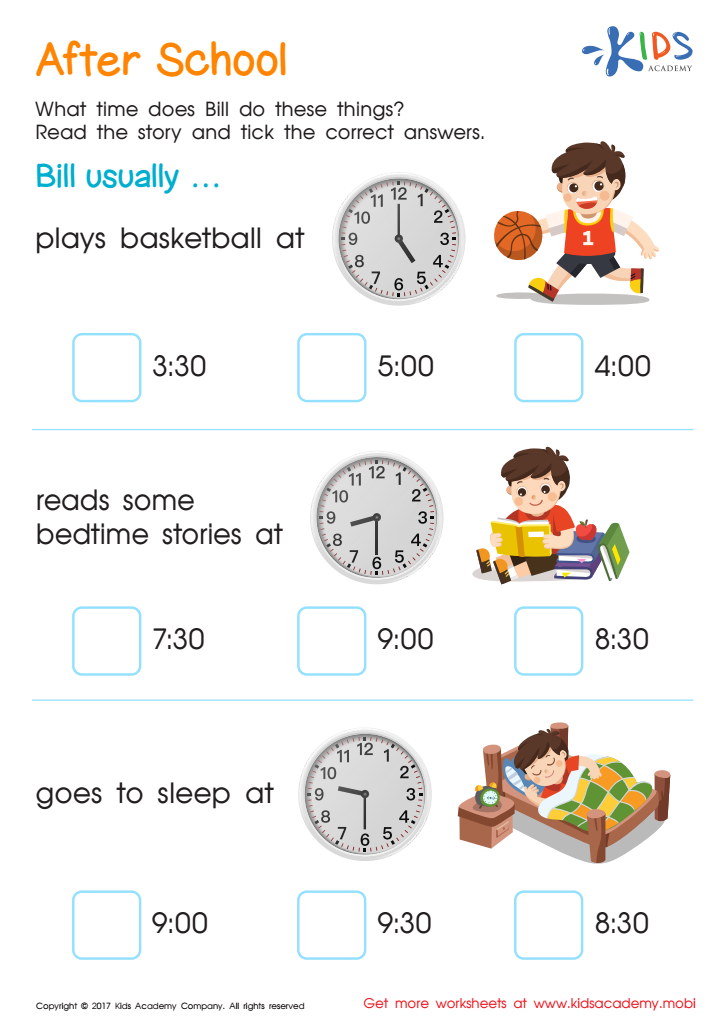
After School Time Printable
Meet Bill, a fun character who does the same things as all of us! This time-telling printable worksheet, 'After School', is an enjoyable way for your child to get familiar with Bill. It's a quick and cute activity to help understand the clocks and learn more about this new friend.
After School Time Printable
Worksheet
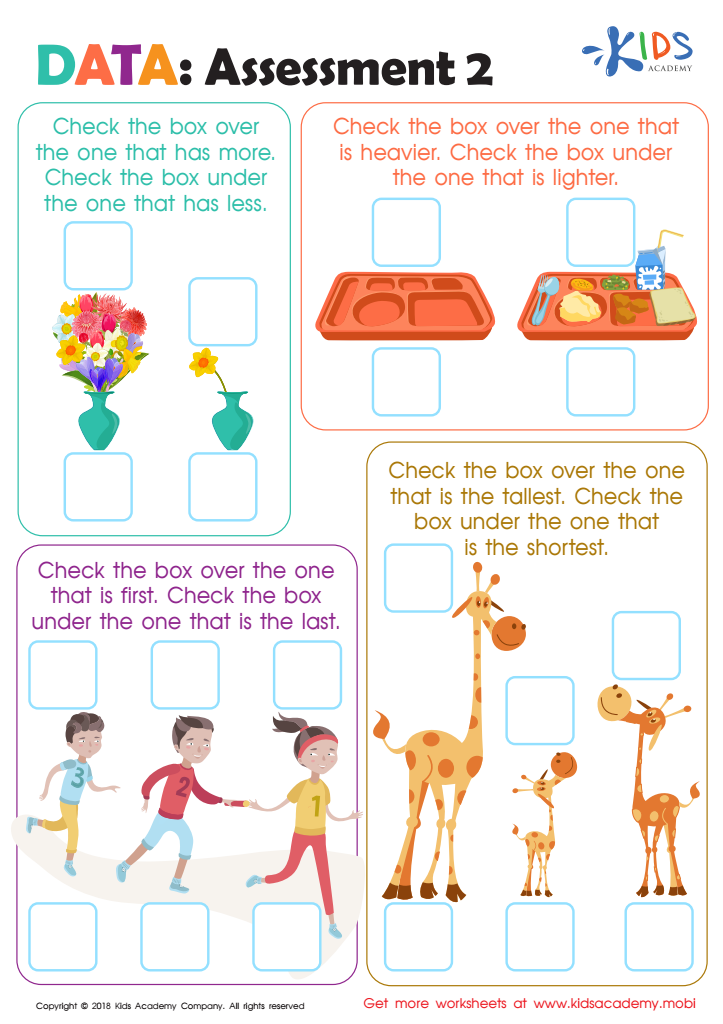
Data: Assessment 2 Worksheet
This printable worksheet tests students' understanding of words related to quantity and measurement, such as "more", "less", "heavy", "light", "first", "last", "tall", and "short". It helps children compare and contrast when solving measurement problems. Ideal for math classes, it encourages students to gain the essential skills needed in subjects like math, science, and reading.
Data: Assessment 2 Worksheet
Worksheet
Join Kids Academy for Free
Who is primarily going to use this learning content?








Analytical thinking in math is crucial for children aged 6-7 as it forms the foundation for their overall cognitive development and problem-solving skills. At this stage, children begin to transition from basic number recognition to understanding more complex concepts and relationships. Encouraging analytical thinking helps children learn to approach problems systematically, break them down into manageable parts, and devise solutions.
Research shows that strong analytical skills contribute not only to success in future math but also in other academic subjects and real-life situations. Mathematics is much more than rote memorization of facts; it involves reasoning, logic, and critical thinking. When parents and teachers foster these skills, they empower children to make connections between concepts, see patterns, and develop creativity in their approach to math challenges.
Additionally, fostering analytical thinking helps build perseverance and resilience. Children learn that making mistakes is a part of the learning process, which encourages a growth mindset. As they tackle increasingly complex problems, they gain confidence in their abilities, setting a positive trajectory for their educational journey. In essence, nurturing analytical thinking during these formative years equips children with essential skills that extend far beyond math, shaping their ability to navigate the world effectively.








