
Basic Counting Math Worksheets for Ages 6-7
3 filtered results
Difficulty Level
Grade
Age
-
From - To
Subject
Activity
Standards
Our "Basic Counting Math Worksheets for Ages 6-7" are designed to foster essential math skills in young learners. These engaging, printable resources provide a fun and interactive way for children to practice counting, number recognition, and basic addition and subtraction. Perfectly tailored for first and second graders, each worksheet not only reinforces fundamental concepts but also boosts confidence in math through colorful, captivating exercises. Ideal for classroom use or homeschooling, our basic counting worksheets make learning both effective and enjoyable, laying a strong foundation for future math success. Join us on the journey to make counting a delightful adventure!
Favorites
With answer key
Interactive
 Assign to My Students
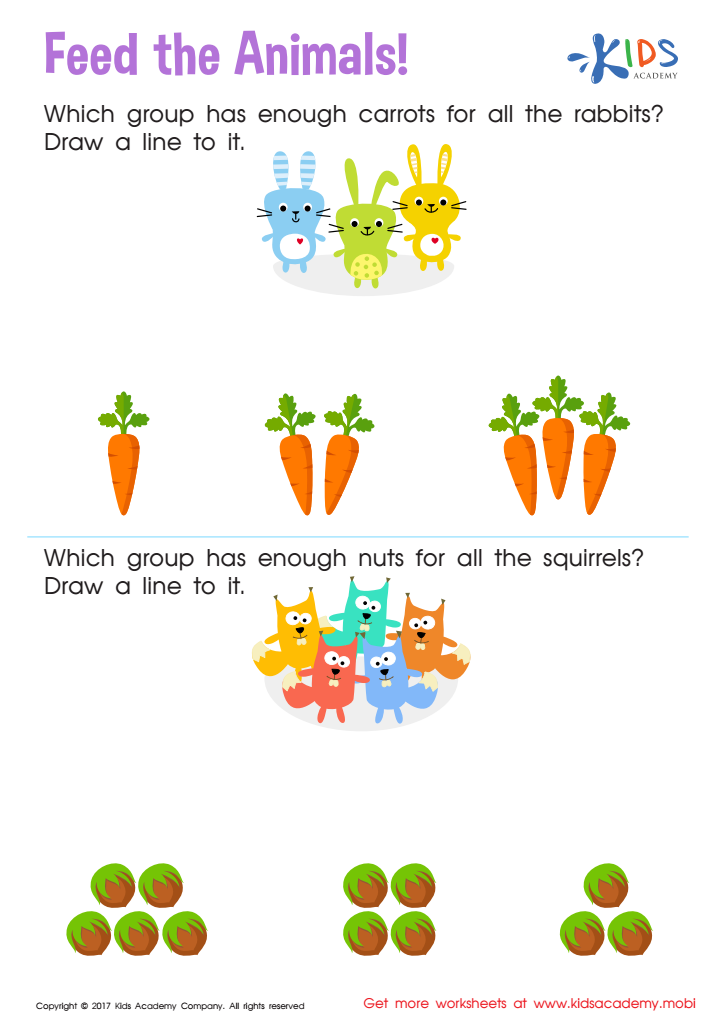
Count and Match: Feed the Animals Worksheet
Learning and growing involves more than just numbers, phonics and comparison. This Feed the Animals worksheet helps kids to exercise their reasoning skills. They must work out how many rabbits and carrots there are, and then repeat the process for the squirrels. This encourages problem solving and counting skills.
Count and Match: Feed the Animals Worksheet
Worksheet
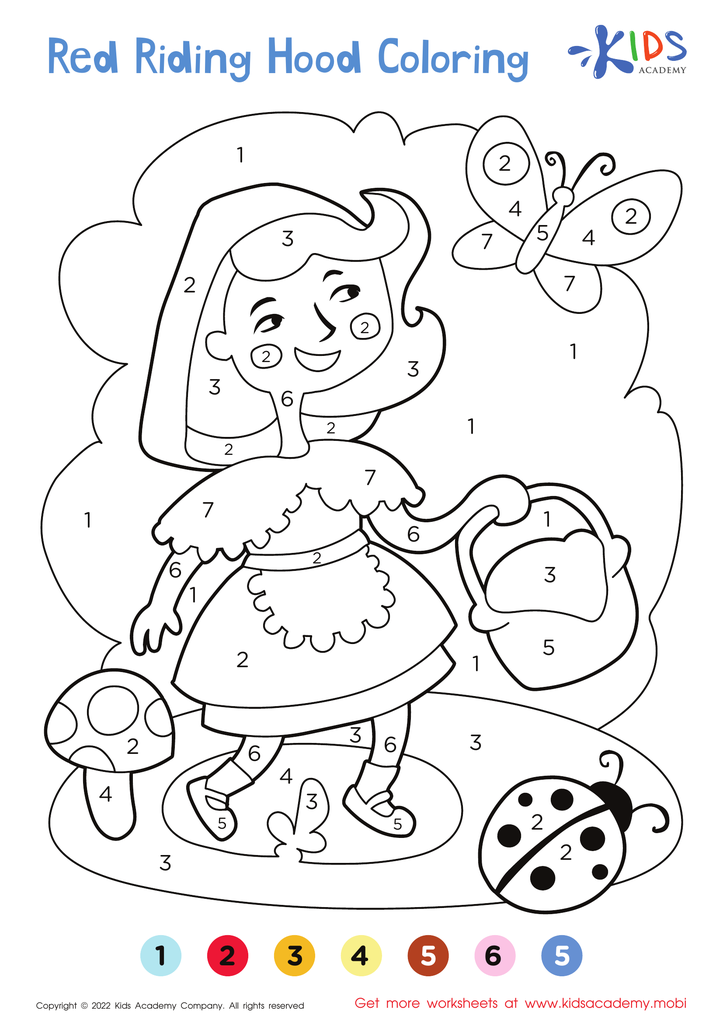
Little Red Riding Hood – Coloring by Numbers
Download this free PDF page and enjoy coloring Little Red Riding Hood. It's an easy and fun activity that everyone can do - just follow the numbers! Get your colored pencils ready and have a blast. 80 words.
Little Red Riding Hood – Coloring by Numbers
Worksheet
Join Kids Academy for Free
Who is primarily going to use this learning content?






Parents and teachers should place a strong emphasis on basic counting math for children ages 6-7 because it forms the bedrock of their future mathematical understanding. At this early age, children are building their foundational skills that they will rely on throughout their educational journey.
Firstly, counting is the first step in understanding numbers and develops number sense, which is crucial for tackling more complex mathematical concepts like addition, subtraction, multiplication, and division. It helps children recognize patterns, which aids in problem-solving and logical thinking. Basic counting also reinforces one-to-one correspondence, the idea that each object can be counted once and only once, an essential concept for accurate calculation.
Secondly, mastering these skills boosts confidence and creates a positive attitude toward math. Young children who struggle with basic counting might develop math anxiety, which can hinder their performance in later grades. Early success in counting leads to a smoother transition into more advanced topics.
Finally, these skills are not only important academically but are also applicable in everyday life. Kids will use these counting skills in various activities such as reading clocks, understanding money, and following recipes.
In short, prioritizing basic counting equips children with confidence and competence in math, nurtures critical thinking, and prepares them for real-world applications.








