Comparing object weights Math Worksheets for Ages 6-7
3 filtered results
-
From - To
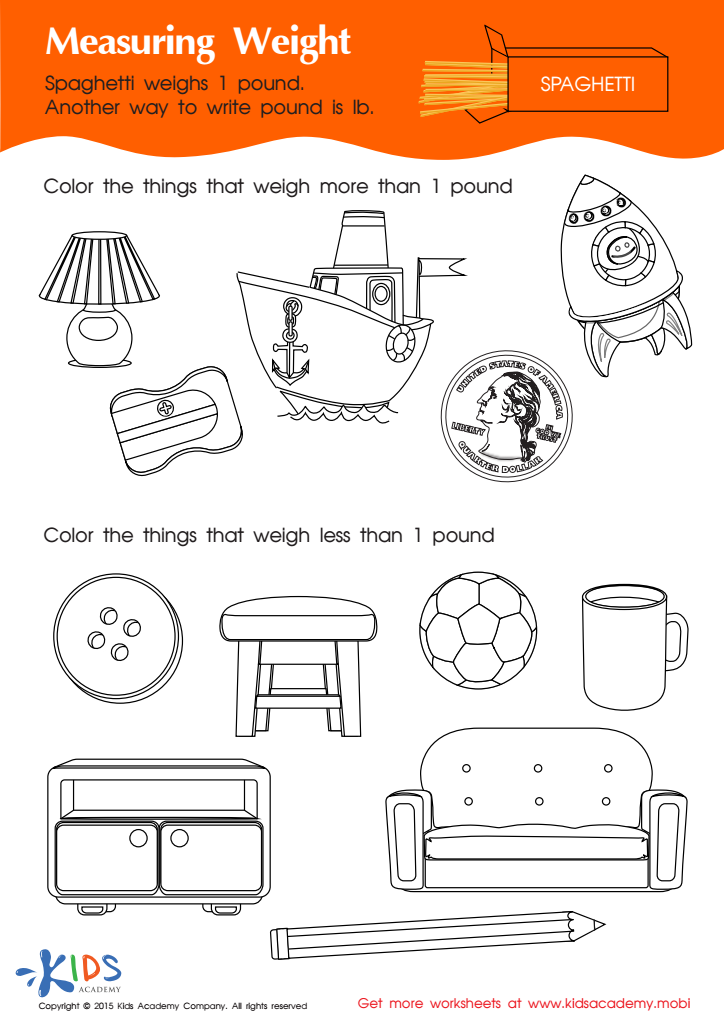
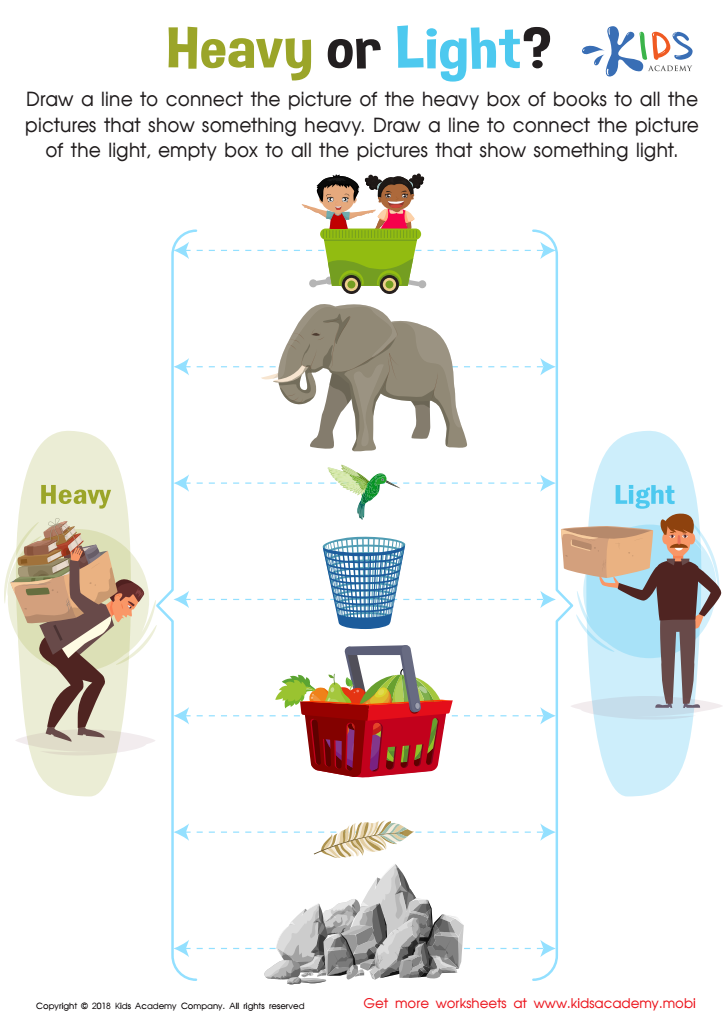
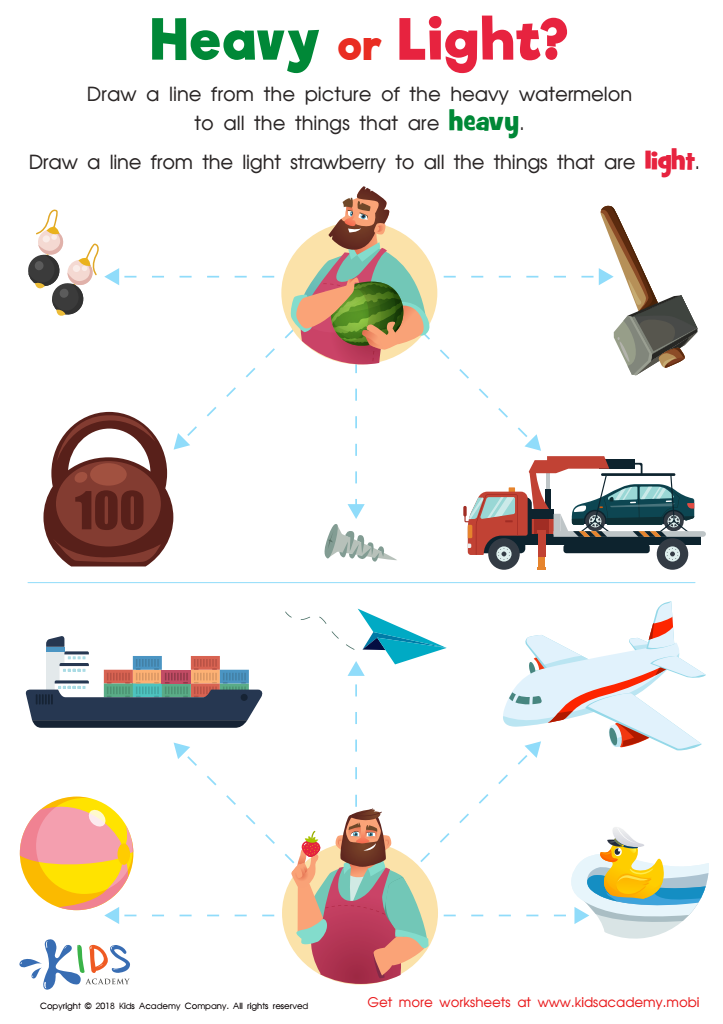
Discover our engaging "Comparing Object Weights" math worksheets designed for children aged 6-7! These fun, interactive resources help young learners develop essential math skills by comparing the weights of various objects. Through colorful illustrations and relatable everyday items, students will practice critical thinking and reasoning as they determine which objects are heavier or lighter. Ideal for classroom activities or at-home learning, our worksheets encourage hands-on exploration while solidifying foundational concepts. Help your child build confidence in their mathematical abilities while mastering the art of comparison. Download the worksheets today and watch your child's problem-solving skills flourish!
 Assign to My Students
Heavy or Light? Worksheet
Heavy or Light? Worksheet






Parents and teachers should prioritize teaching young children about comparing object weights for several reasons. First, it lays a foundational understanding of measurement concepts, which are essential in developing critical thinking and problem-solving skills. At ages 6-7, children are naturally curious about the world around them and enjoy hands-on learning experiences, making weight comparison both engaging and educational.
Understanding weight comparison also introduces basic math concepts, such as greater than, less than, and equal to, in a tangible way. This activity helps students to develop estimation skills and an understanding of balance, which are critical for more complex mathematical concepts later on.
Furthermore, this learning experience fosters language development, as children learn to articulate their reasoning, compare objects, and engage in discussions about weight and why certain items feel heavier or lighter. Lastly, incorporating real-life elements into this math concept enhances children's engagement and illustrates the practical application of math in everyday scenarios, ultimately instilling a positive attitude toward math integral for lifelong learning. Thus, fostering skills in comparing weights not only strengthens their mathematical foundation but also encourages a deeper inquisitiveness about their environment.








