Comparing objects Math Worksheets for Ages 6-7
6 filtered results
-
From - To
Explore our engaging "Comparing Objects Math Worksheets for Ages 6-7," designed to help young learners develop essential comparison skills. These worksheets provide a fun and interactive way for children to practice identifying differences and similarities in various objects, enhancing their critical thinking and observational abilities. Each worksheet features colorful visuals, real-life scenarios, and age-appropriate tasks that make learning enjoyable. Ideal for home or classroom use, our resources reinforce mathematical concepts such as size, quantity, and shape comparisons, fostering confident young mathematicians. Download our stimulating worksheets today and watch your child excel in their mathematical journey!
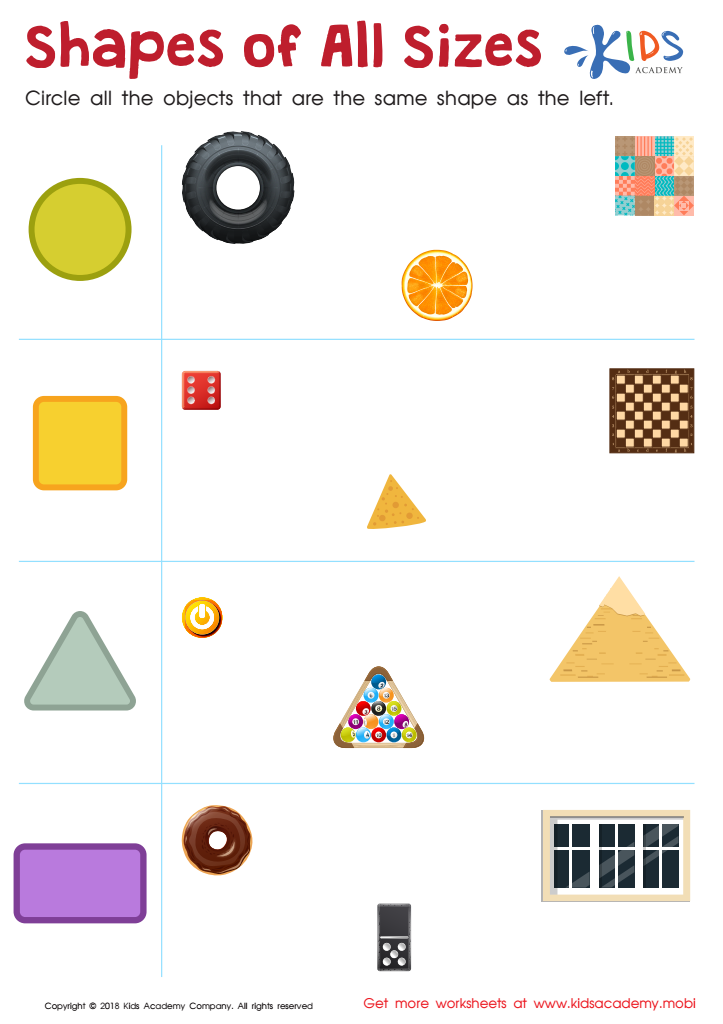
Shapes of All Sizes Worksheet
 Assign to My Students
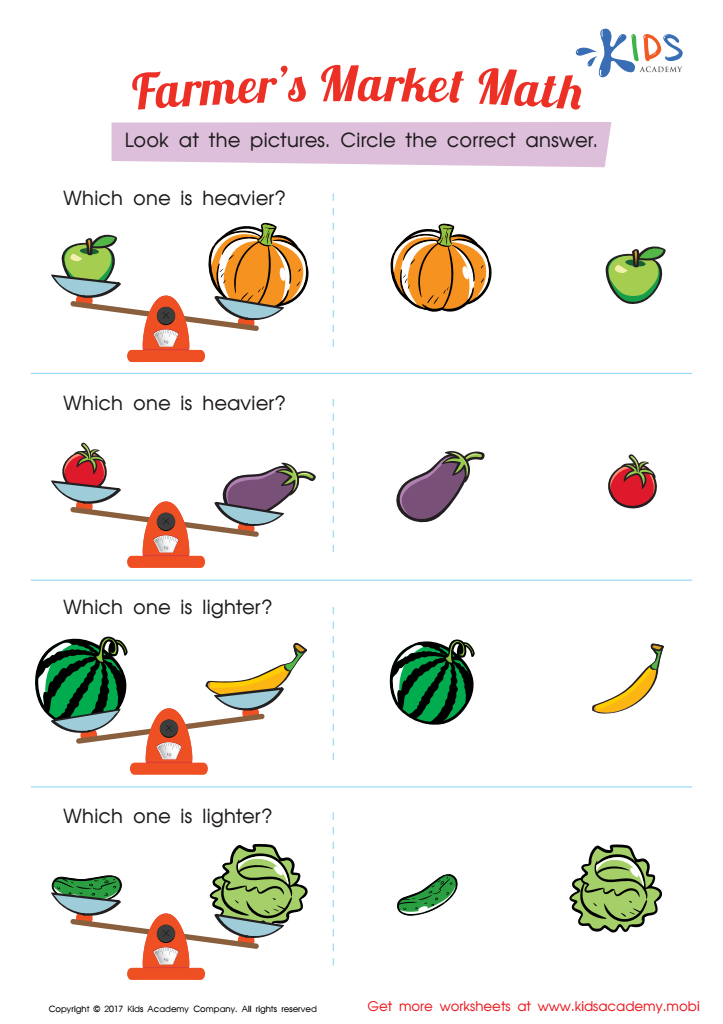
Which One Is Heavier Worksheet
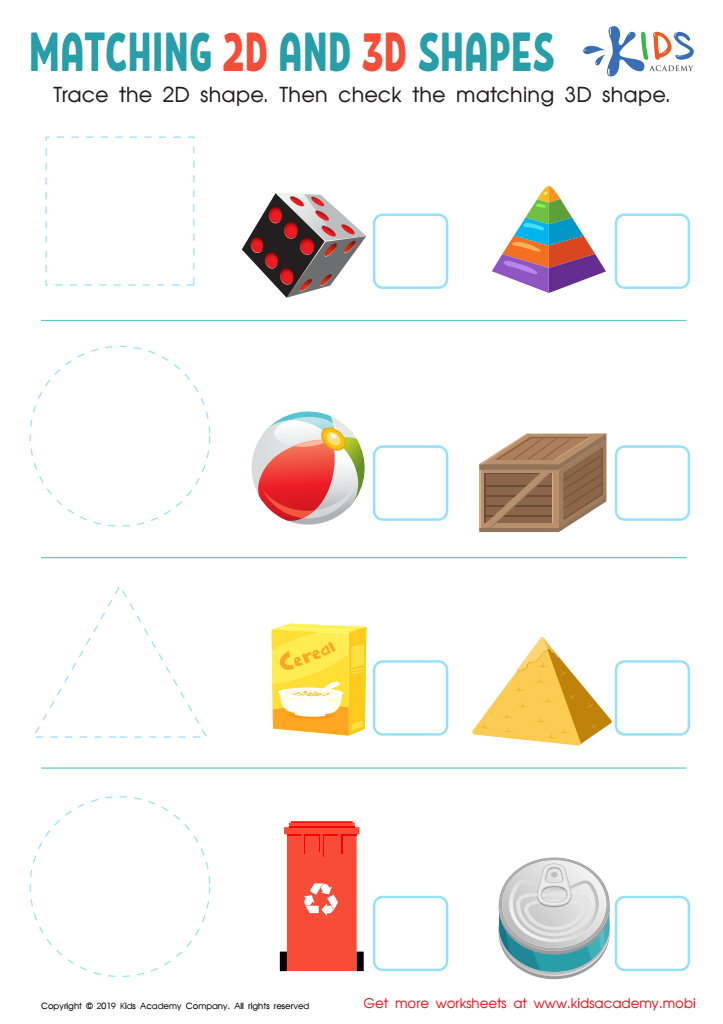
Matching 2D and 3D Shapes Worksheet
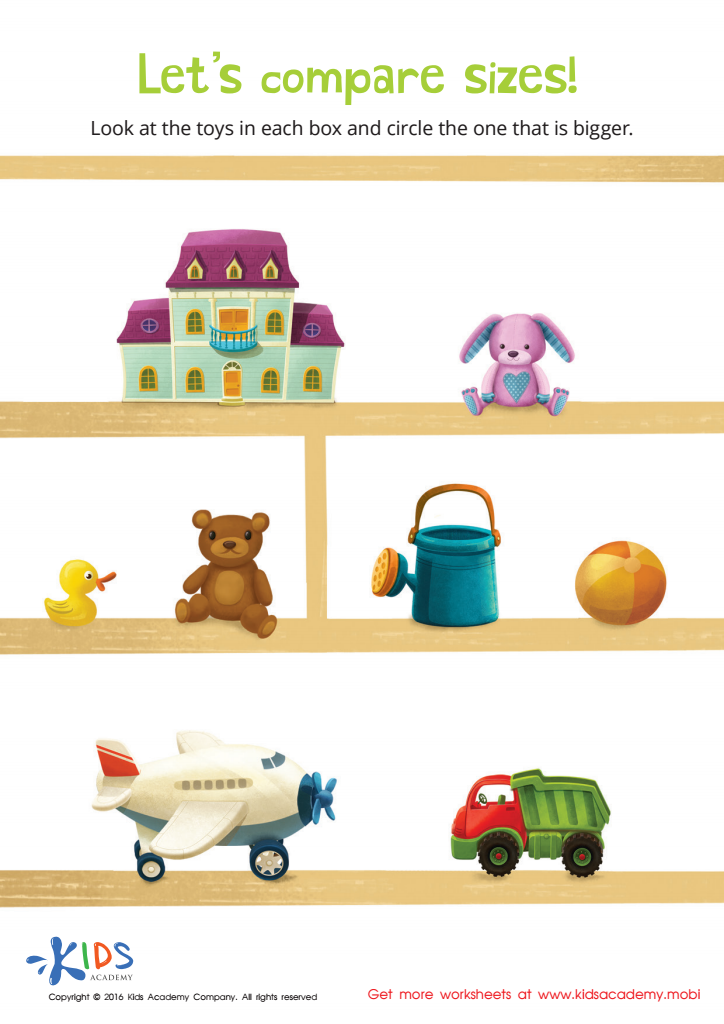
Classifying by Size Sorting Worksheet








Comparing objects in math is a fundamental skill for children aged 6-7, and it's crucial for parents and teachers to pay attention to this stage of learning. At this age, children begin to develop early mathematical concepts, such as size, weight, and volume, which are essential for their overall cognitive development. Comparing objects fosters critical thinking skills and helps children make sense of the world around them.
When children compare objects, they learn to identify differences and similarities, enhancing their observational skills. This foundational understanding sets the stage for more complex math concepts, including measurement, fractions, and even basic algebra later on. Moreover, engaging in comparison activities can enrich their vocabulary, as they learn quantitative terms like "longer," "heavier," or "greater than."
In a practical sense, these skills translate into everyday situations, such as cooking, shopping, or even organizing their belongings, making math relatable and applicable. By encouraging comparing activities through playful and interactive methods, parents and teachers can foster a positive attitude toward math, making it a fun and integral part of the child's learning journey. Ultimately, empowering children with these skills benefits their academic success and builds their confidence in using math in daily life.








