
Counting money Math Worksheets for Ages 6-7
3 filtered results
Difficulty Level
Grade
Age
-
From - To
Subject
Activity
Standards
Teach your child essential money skills with our engaging Counting Money Math Worksheets for ages 6-7! These interactive worksheets are designed to make learning fun while strengthening your child's ability to identify, count, and manage coins and bills. Perfectly tailored for young learners, our activities cover basic addition, subtraction, and problem-solving skills involving money. With colorful illustrations and real-life scenarios, your child will build confidence in handling money, preparing them for future financial literacy. Download our high-quality, printable worksheets from Kids Academy and watch your child excel in practical math and everyday life skills!
Favorites
With answer key
Interactive
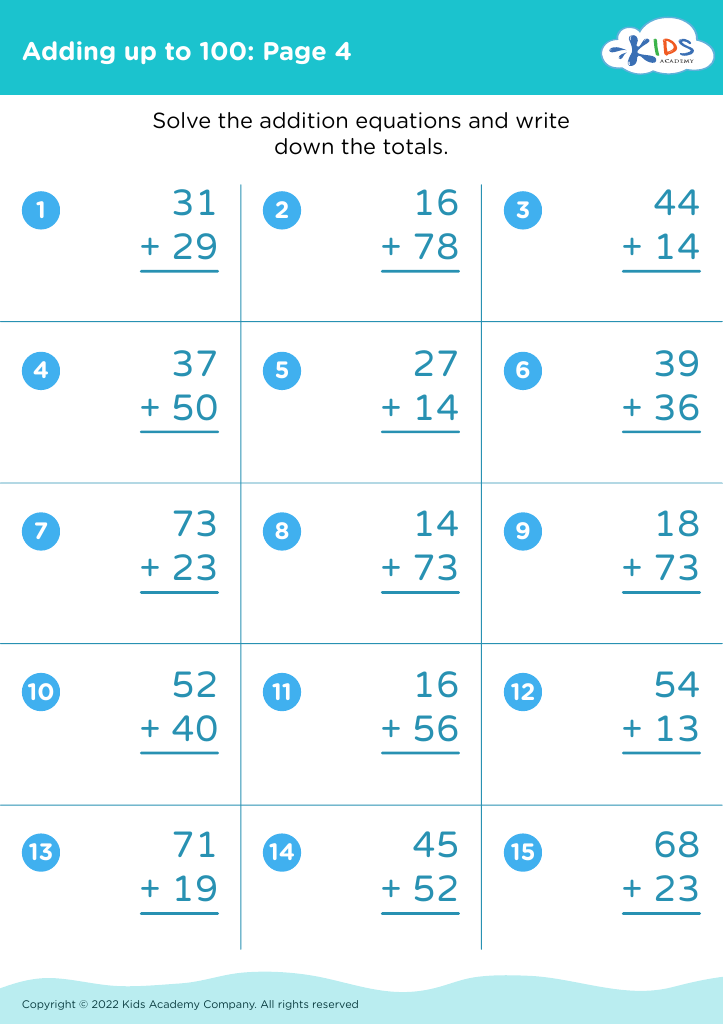
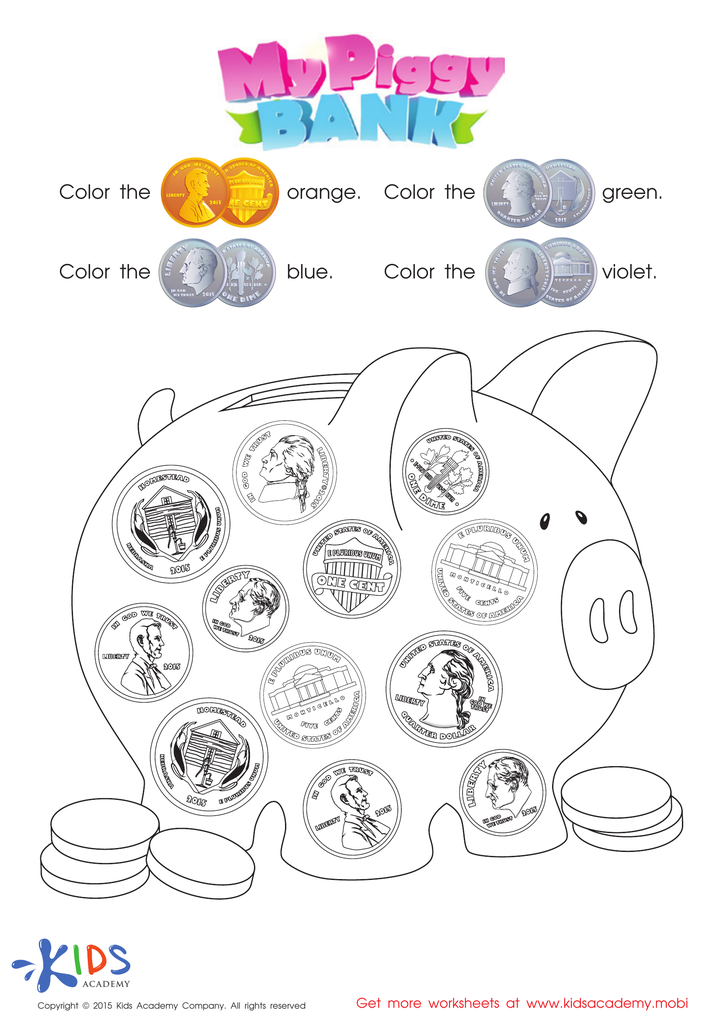
Recognizing Money Money Worksheet
Help the piggy bank by coloring its coins with Kids Academy's free money worksheets! Learn the different coins and their values with your kids. Printable worksheets are available to continue the lesson. Let's learn and have fun!
Recognizing Money Money Worksheet
Worksheet
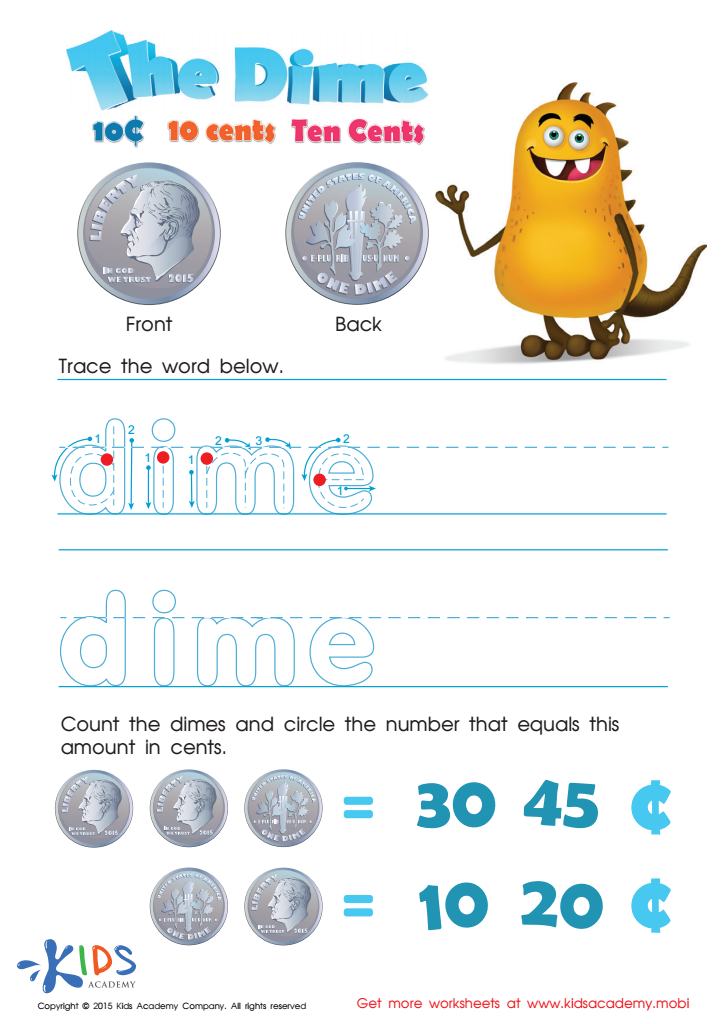
Ten Cents or the Dime Money Worksheet
Introduce your kids to coin games! Start with a dime: trace the word on both sides and count the dimes. Kids Academy has printable worksheets to help your kids learn how to count money.
 Assign to My Students
Ten Cents or the Dime Money Worksheet
Worksheet
Join Kids Academy for Free
Who is primarily going to use this learning content?






Counting money is an essential skill for children ages 6-7 as it serves as a foundation for both mathematical proficiency and practical life skills. Learning to count money helps children understand the concept of value, addition, and subtraction in a tangible way. This is because they can physically manipulate coins and bills, which aids in comprehending abstract mathematical concepts.
Mastering this skill enhances cognitive development and problem-solving abilities. It requires kids to recognize different denominations, make change, and carry out basic arithmetic operations, which strengthens their overall number sense. Moreover, the real-world application of handling money fosters financial literacy from an early age, setting the stage for better financial decision-making in the future.
For parents and teachers, integrating money-counting activities into learning is crucial for developing a child’s independence and responsibility. These activities can also be engaging and fun, particularly when contextualized within everyday scenarios, like shopping games or allowance tracking.
By caring about this aspect of math education, parents and teachers equip children with the skills needed to thrive in a world where financial transactions are a daily occurrence. It instills confidence and enthusiasm for learning, promoting a mindset that sees math not just as a subject, but as an essential life tool.








