
Developing analytical skills Math Worksheets for Ages 6-7
4 filtered results
Difficulty Level
Grade
Age
-
From - To
Subject
Activity
Standards
Unlock your child's potential with our engaging "Developing Analytical Skills Math Worksheets" designed specifically for ages 6-7. These worksheets introduce young learners to essential math concepts through fun, interactive challenges that stimulate critical thinking. Each activity encourages problem-solving and fosters logical reasoning, helping children connect math to real-world situations. With colorful graphics and age-appropriate scenarios, these printable worksheets create an enjoyable learning environment. Perfect for both home and classroom use, they serve as valuable tools for reinforcing math skills and building confidence. Equip your child with the analytical skills needed for academic success and lifelong learning today!
Favorites
With answer key
Interactive
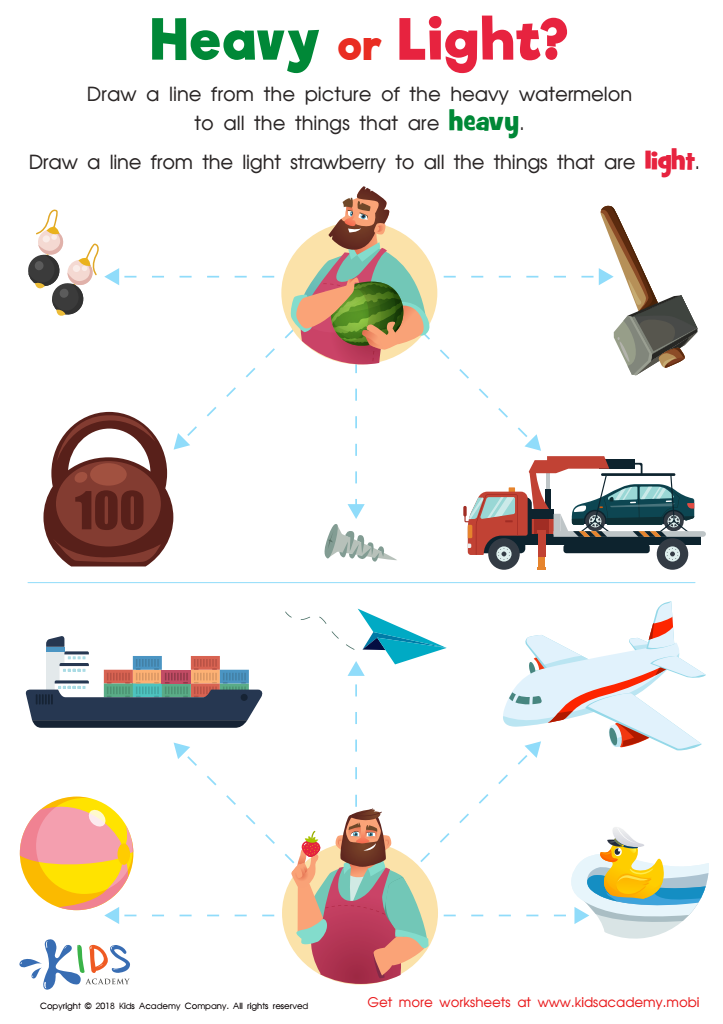
Heavy or Light? Worksheet
This fun, free worksheet helps kids build measurement skills and reinforce concepts of 'heavy' and 'light', while also improving their fine motor skills. Kids use traceable lines to connect the gentleman to objects they know, giving them a strong foundation for understanding weight.
 Assign to My Students
Heavy or Light? Worksheet
Worksheet
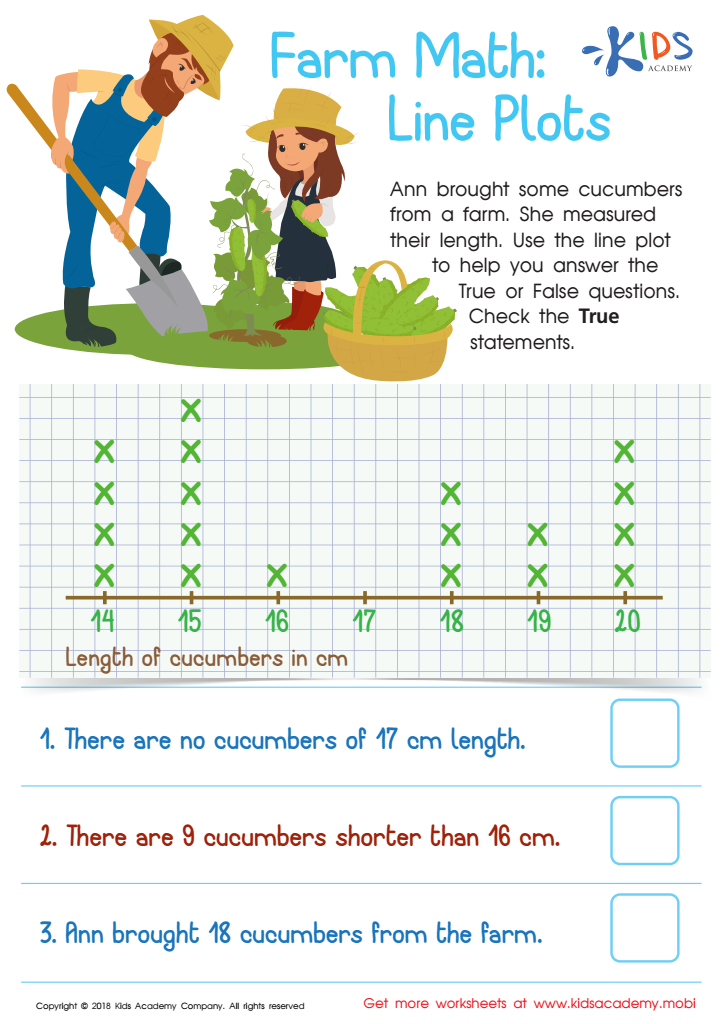
Farm Math: Line Plots Worksheet
Ann brought cucumbers from a farm and measured their length. She drew a line plot for your students to use to answer True/False questions about the number and length of the cucumbers. Ask your students to check only the True statements. (80 words)
Farm Math: Line Plots Worksheet
Worksheet
Join Kids Academy for Free
Who is primarily going to use this learning content?








Developing analytical skills in math for ages 6-7 is crucial for young learners as it sets the foundation for their future academic success and everyday problem-solving abilities. At this age, children are naturally curious and eager to comprehend the world around them. By engaging them in analytical thinking through mathematical concepts, we reinforce their ability to observe, classify, and understand patterns. These skills enhance their ability to think logically and critically.
Parents and teachers should care about this development because strong analytical skills foster confidence in math, which can lead to a positive attitude toward learning in general. Children who develop these abilities early are better equipped to tackle complex problems later on, thereby reducing math anxiety as they advance in their education.
Mathematics is not just about numbers; it's about understanding relationships, making connections, and applying knowledge in real-life situations. Encouraging analytical skills also supports other subjects, including science and reading, as children learn to analyze information and think systematically. Ultimately, nurturing these skills fosters lifelong learners who can adapt to various challenges, contributing to their overall growth and success in an increasingly complex world.








