Developing critical thinking Math Worksheets for Ages 6-7
3 filtered results
-
From - To
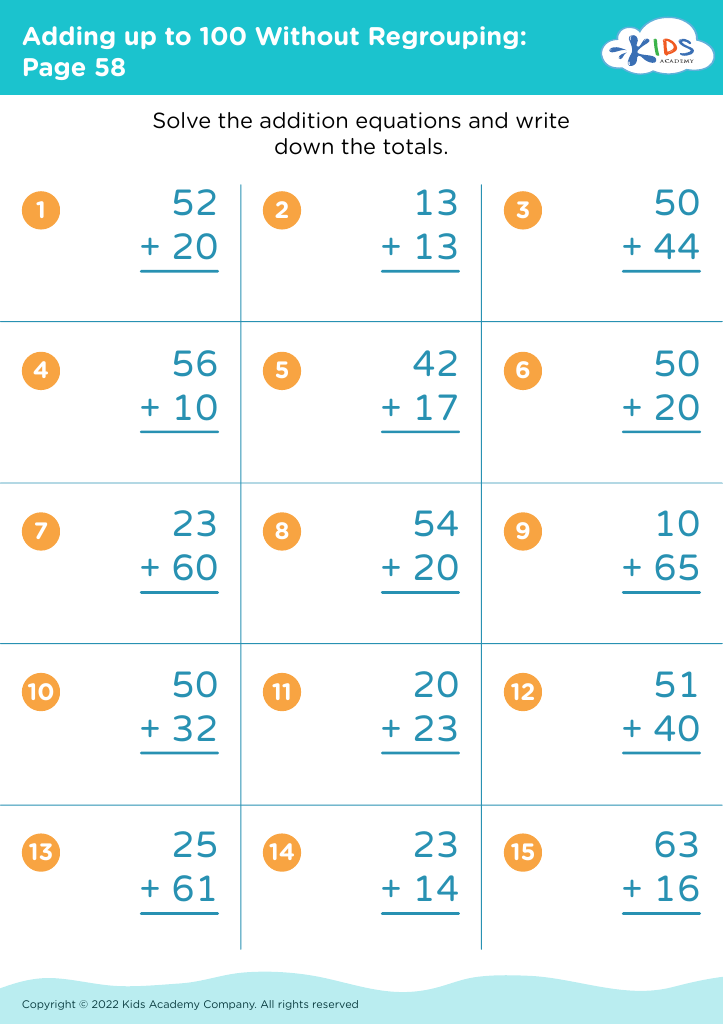
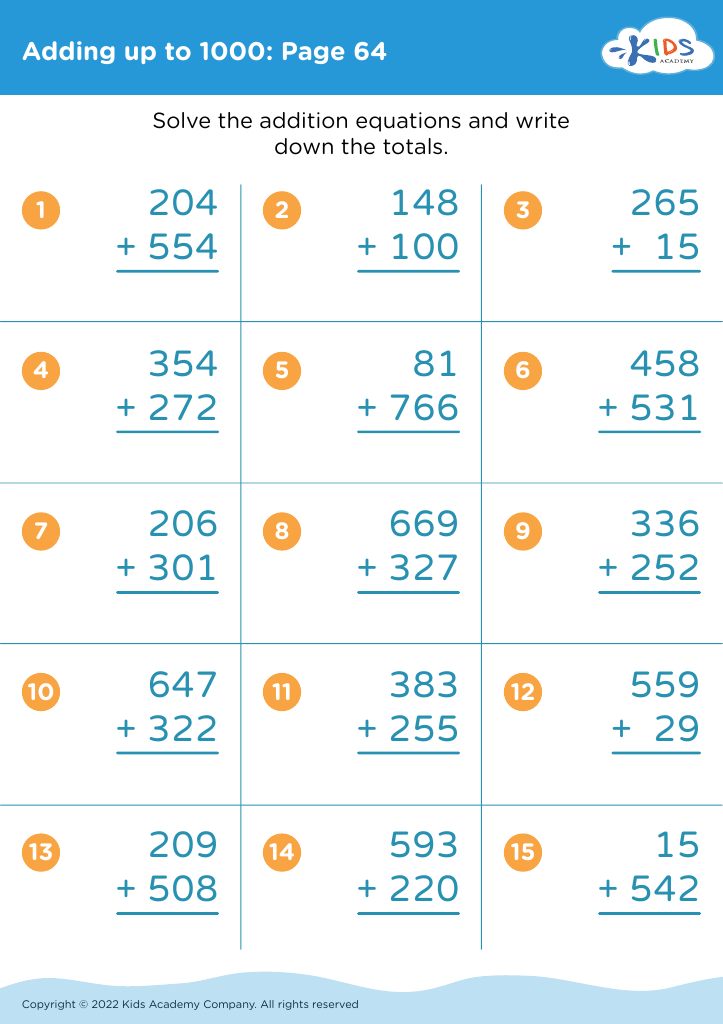
Our "Developing Critical Thinking Math Worksheets for Ages 6-7" are designed to inspire young minds while building essential math skills. Tailored for first and second graders, these engaging worksheets challenge students with age-appropriate problems that promote analytical thinking and problem-solving abilities. Through fun puzzles, intriguing math word problems, and thought-provoking exercises, children enhance their ability to reason logically and make connections between concepts. These resources are perfect for both classroom use and at-home practice. Help your child develop a strong mathematical foundation and a love for learning with our thoughtfully crafted critical thinking math sheets.
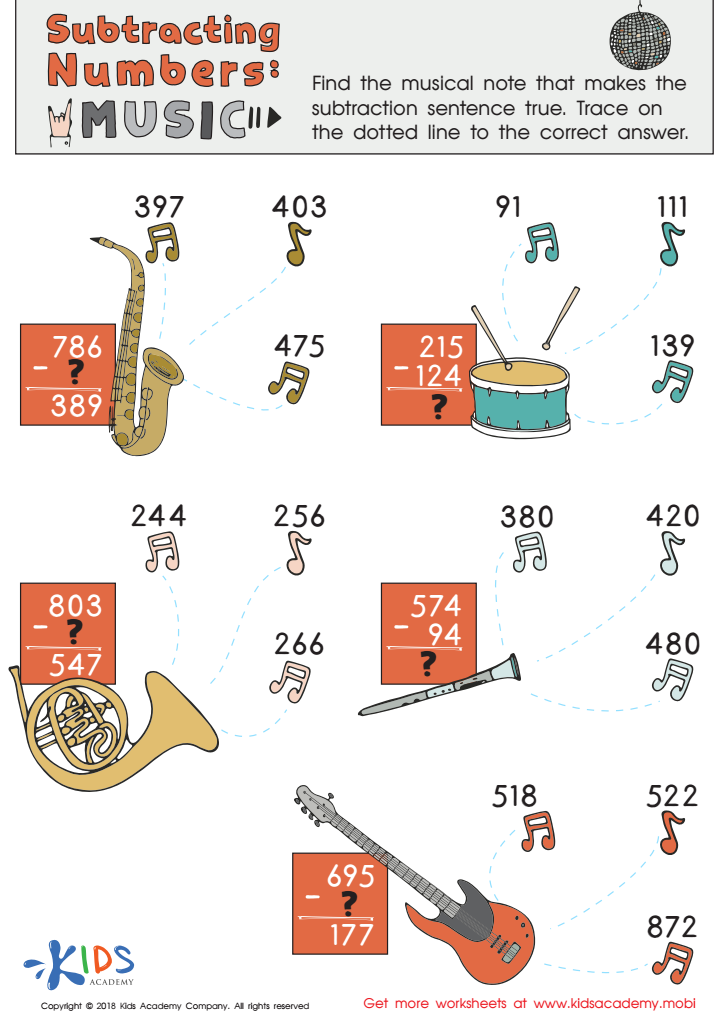
Subtracting Numbers: Music Worksheet
 Assign to My Students



.jpg)


.jpg)
Developing critical thinking in math for children aged 6-7 is crucial for a multitude of reasons. At this developmental stage, kids are establishing foundational skills that will influence their future learning and overall cognitive development. By fostering critical thinking, we help them go beyond rote memorization to understand "why" and "how" math concepts work, thereby deepening their comprehension.
When children are encouraged to think critically, they learn to tackle problems creatively, exploring multiple solutions instead of fixating on a single path. This approach nurtures resilience and adaptability, skills vital for academic success and real-world problem-solving. Moreover, engaging in critical thinking sharpens their ability to reason logically and spot patterns, which are essential skills in mathematics and life.
For parents and teachers, instilling these skills helps ensure that children enjoy learning and retain knowledge more effectively. A child who understands the reasoning behind a calculation is more likely to apply that knowledge in various contexts, enhancing their overall academic performance.
Overall, emphasizing critical thinking in math sets the stage for lifelong learning, encouraging children to be inquisitive, resourceful, and confident in their abilities. These qualities aren’t just beneficial for math; they lay the groundwork for becoming thoughtful, well-rounded individuals.








