Reading clocks Math Worksheets for Ages 6-7
7 filtered results
-
From - To
Our Reading Clocks Math Worksheets for Ages 6-7 are perfect for helping young learners master the essential skill of telling time. Designed specifically for first and second graders, these engaging worksheets offer a variety of exercises to reinforce the concept of reading both analog and digital clocks. Students will practice identifying hour and minute hands, recognizing time increments, and understanding AM and PM. With our worksheets, children develop confidence in time-telling through interactive and colorful activities, making learning both fun and educational. Equip your child with the tools to excel in math and daily routines with these delightful worksheets.
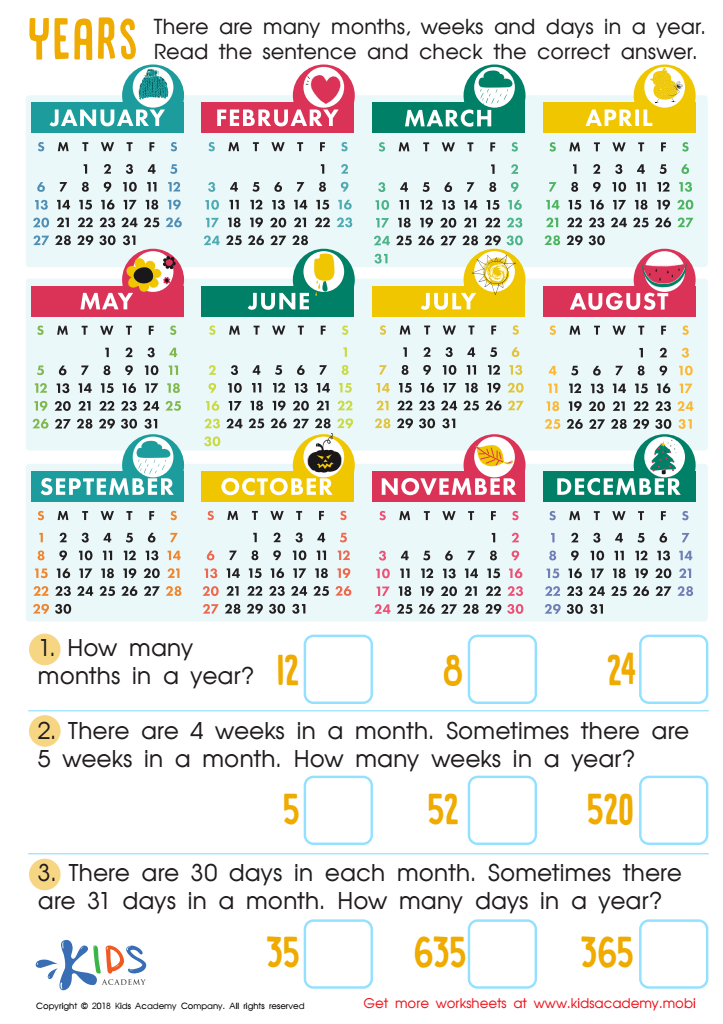
Years Worksheet
 Assign to My Students
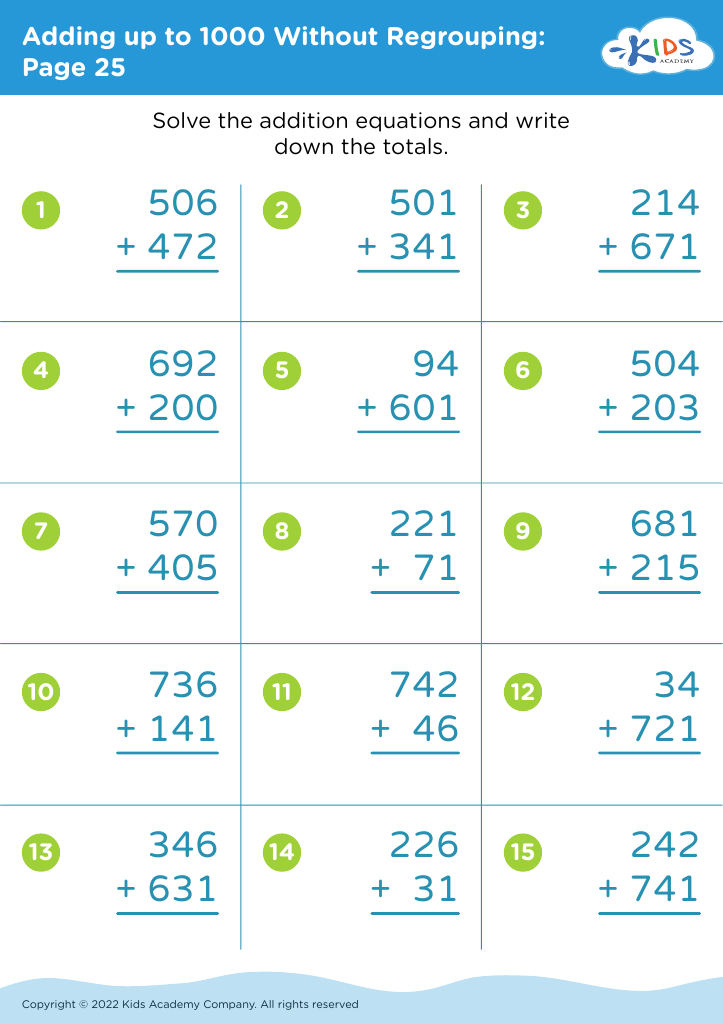
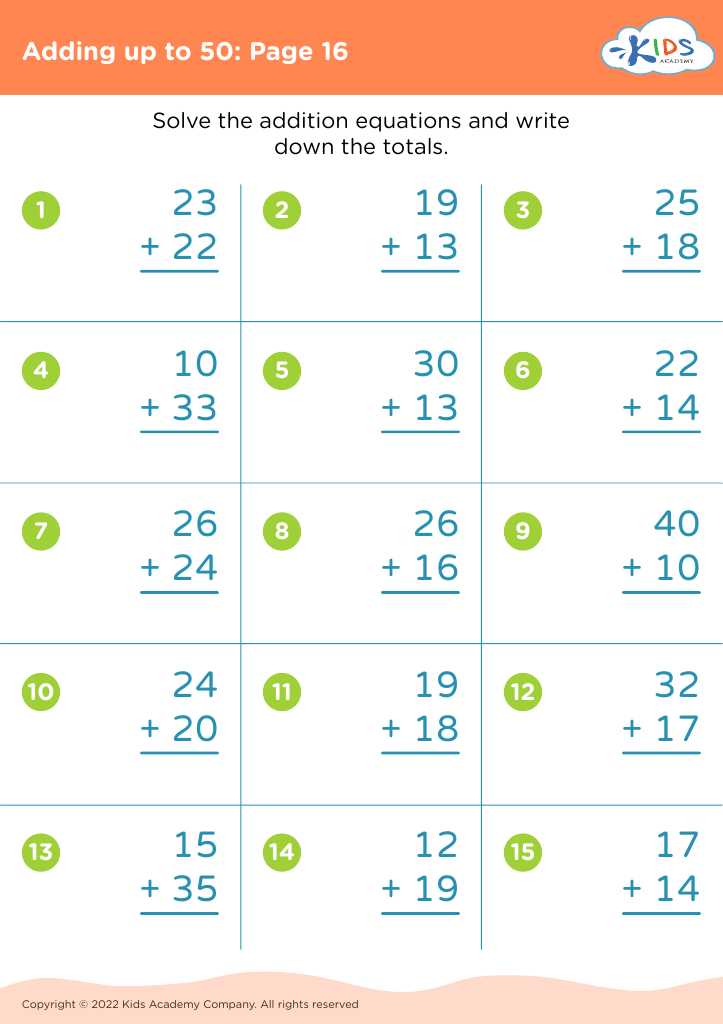
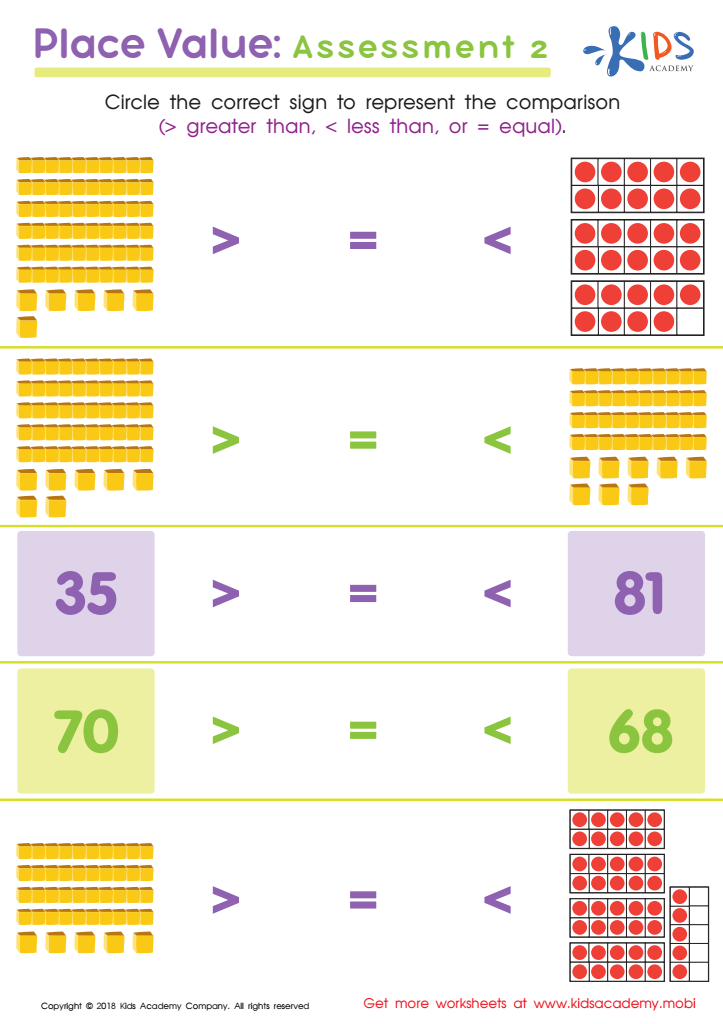
Place Value: Assessment 2 Worksheet
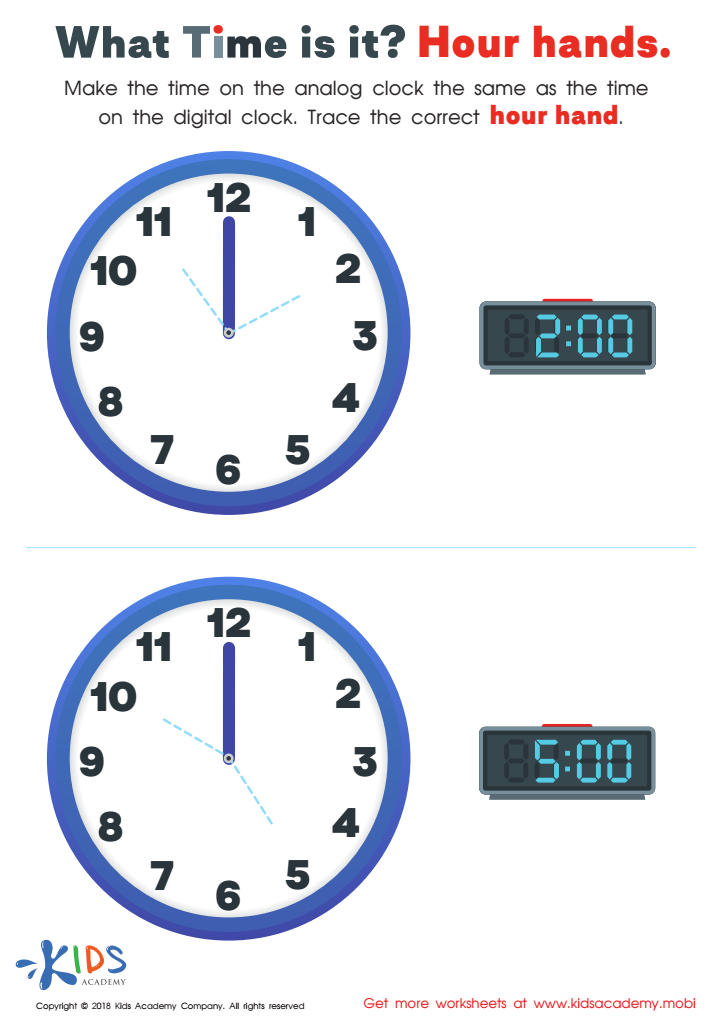
What Time Is it? Hour Hands Worksheet
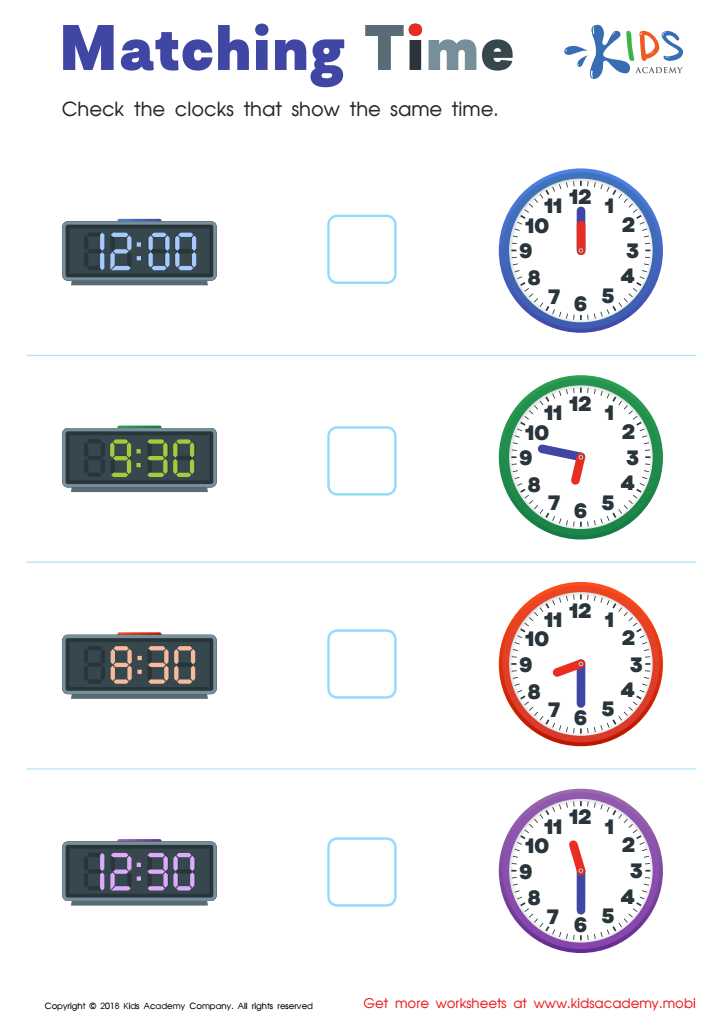
Matching Time Worksheet








Parents and teachers should prioritize teaching children ages 6-7 how to read clocks because it supports their development in numerous fundamental ways. Understanding how to read an analog clock enhances a child's recognition of numbers and their sequence, improves hand-eye coordination, and builds a practical understanding of elapsed time. These skills are foundational not only for further math learning but also for everyday activities.
When children learn to tell time, they develop a sense of discipline and time management, essential life skills that will benefit them throughout their education and beyond. Mastering this skill involves counting by fives, an early math concept crucial for addition and multiplication. Furthermore, it fosters a sense of routine and predictability. Children begin to understand the duration of daily tasks and the concept of punctuality, aiding both their academic performance and social interactions.
Additionally, digital devices dominate today's world, yet an understanding of analog time-telling enriches cognitive and spatial reasoning. Unlike digital clocks that plainly display time, analog clocks require children to learn to interpret the positions of the hands relative to numbers, fostering critical thinking and problem-solving abilities.
In summary, parents and teachers should emphasize teaching children how to read clocks because it establishes essential math skills, promotes time management, and encourages broad cognitive development critical for future success.








