Recognizing numbers Math Worksheets for Ages 6-7
8 filtered results
-
From - To
Discover our engaging "Recognizing Numbers Math Worksheets" designed specifically for children ages 6-7. These worksheets promote early math skills through a variety of fun activities that help young learners identify, write, and understand numbers. With vivid illustrations and challenging exercises, kids will enhance their number recognition through counting, matching, and sorting exercises that make learning enjoyable. Ideal for both classroom and home use, these worksheets create a solid foundation for future math concepts. Support your child's educational journey with our easily accessible printables that encourage independent learning and build confidence in their math abilities. Start exploring today!
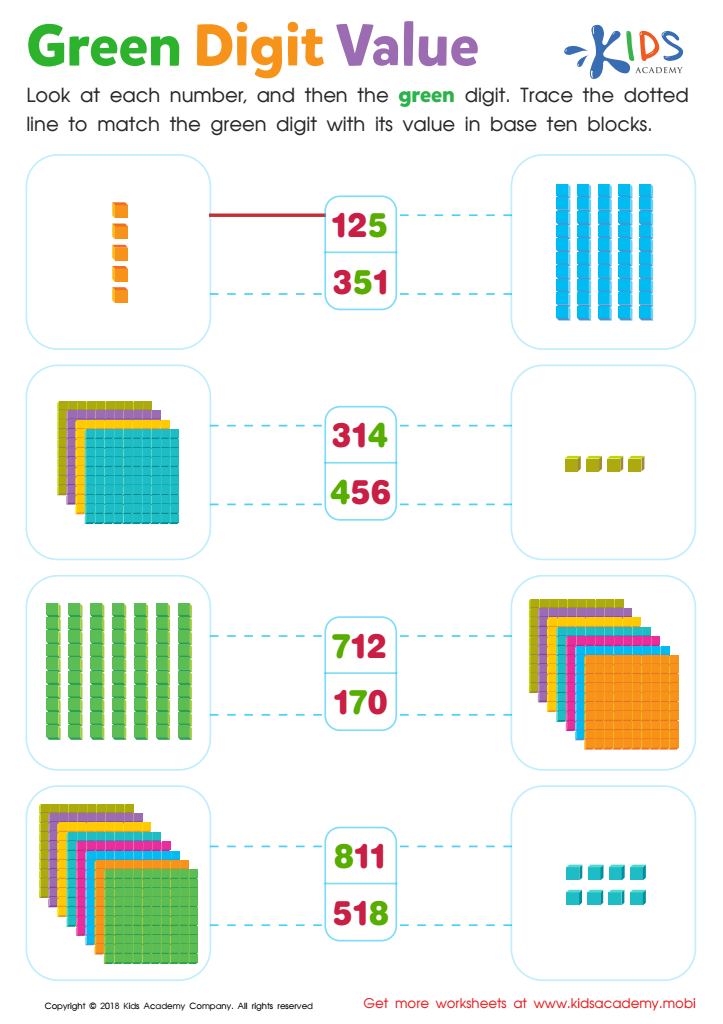
Green Digit Value Worksheet
 Assign to My Students
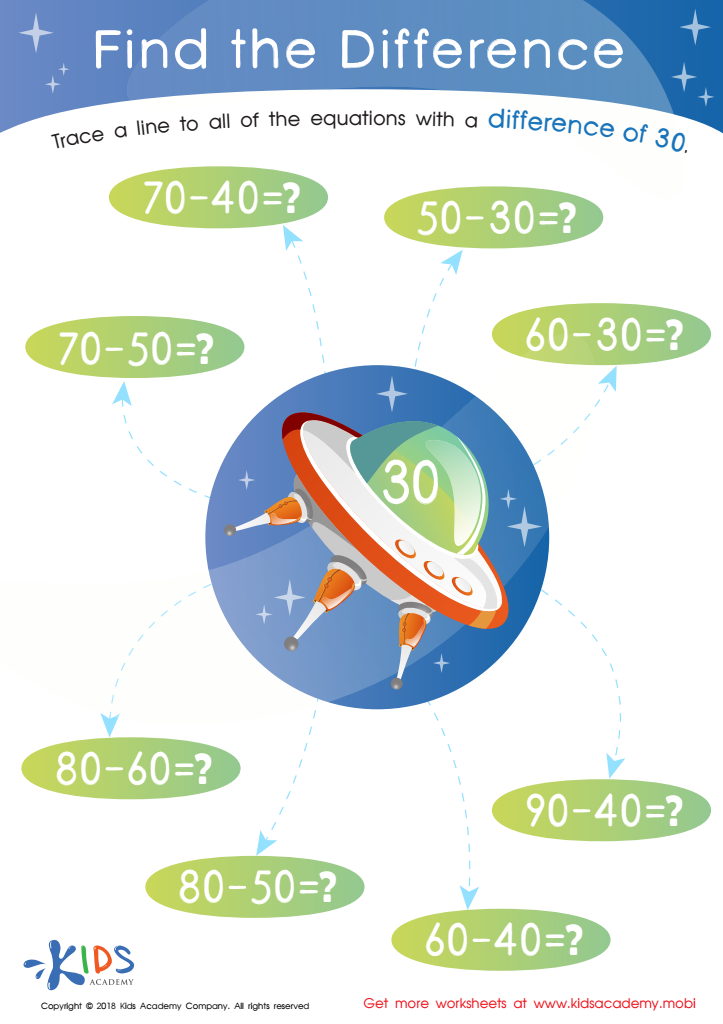
Find The Difference Worksheet
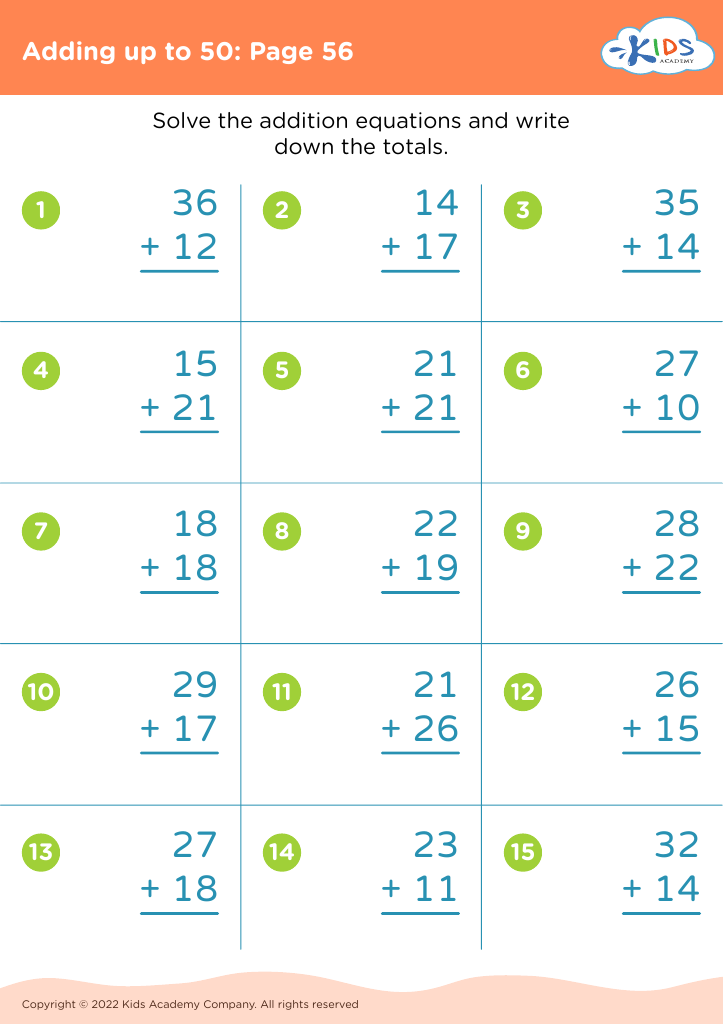
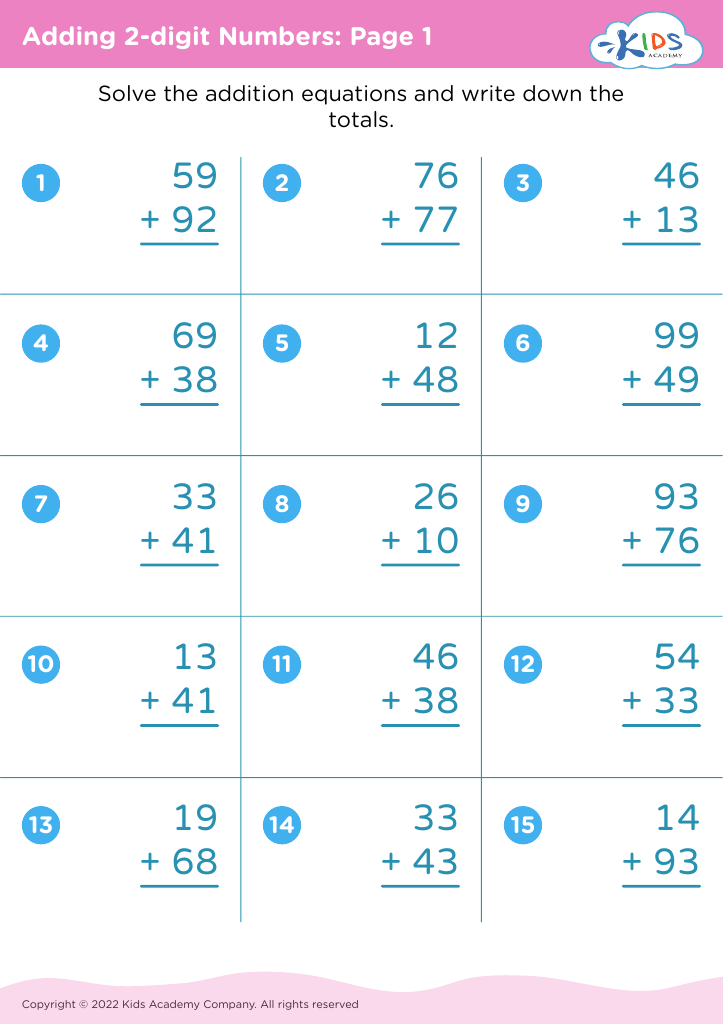
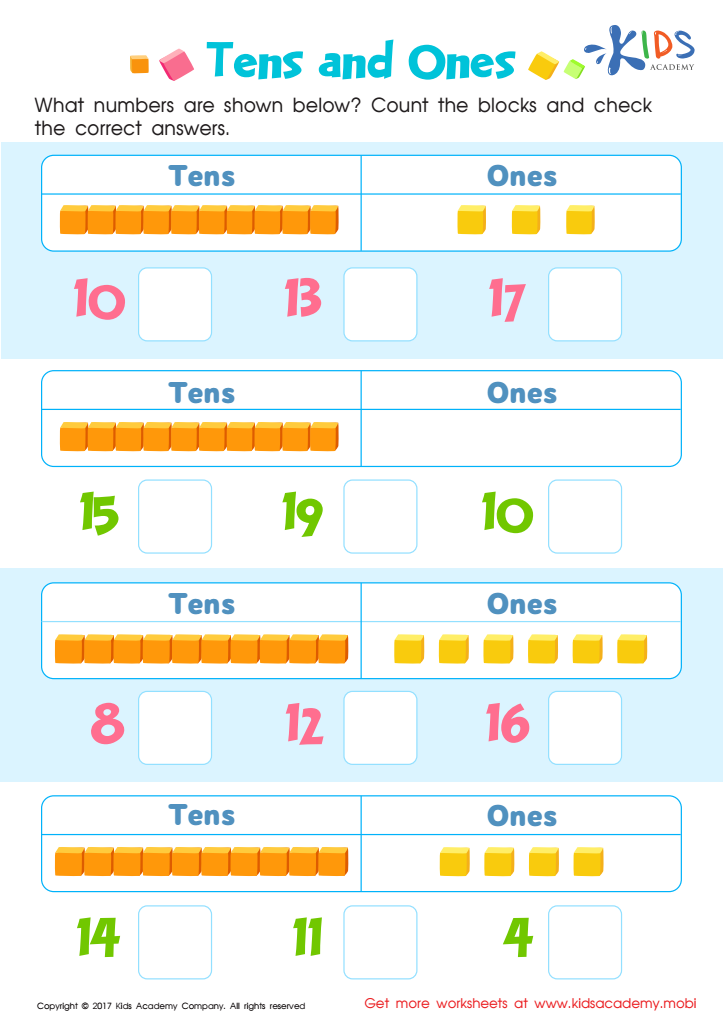
Tens and Ones Worksheet
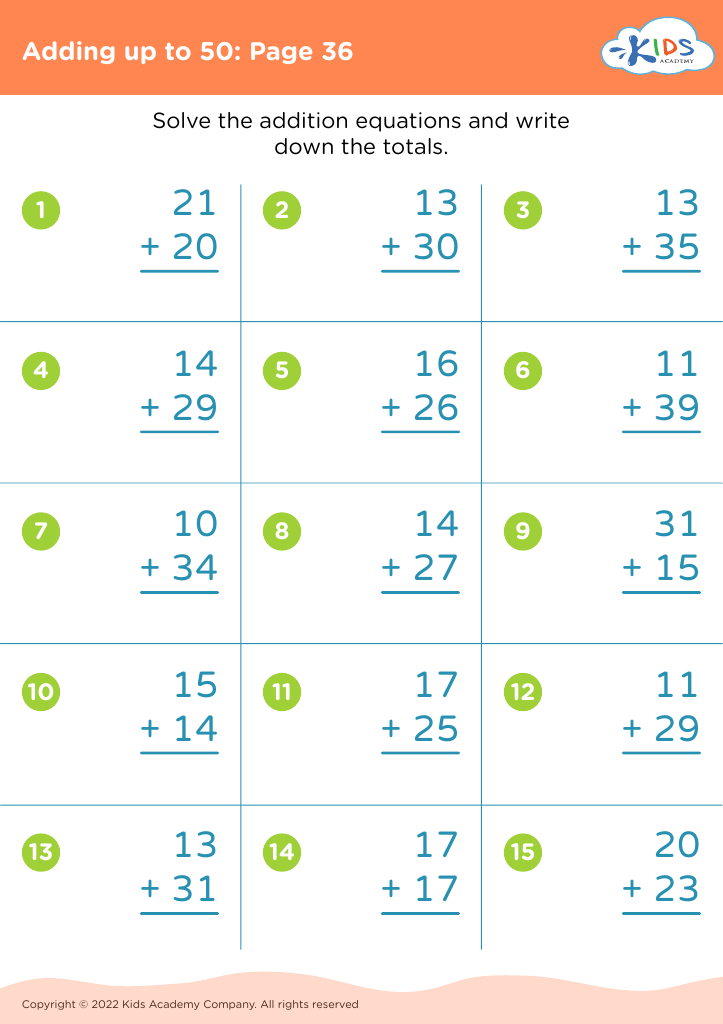
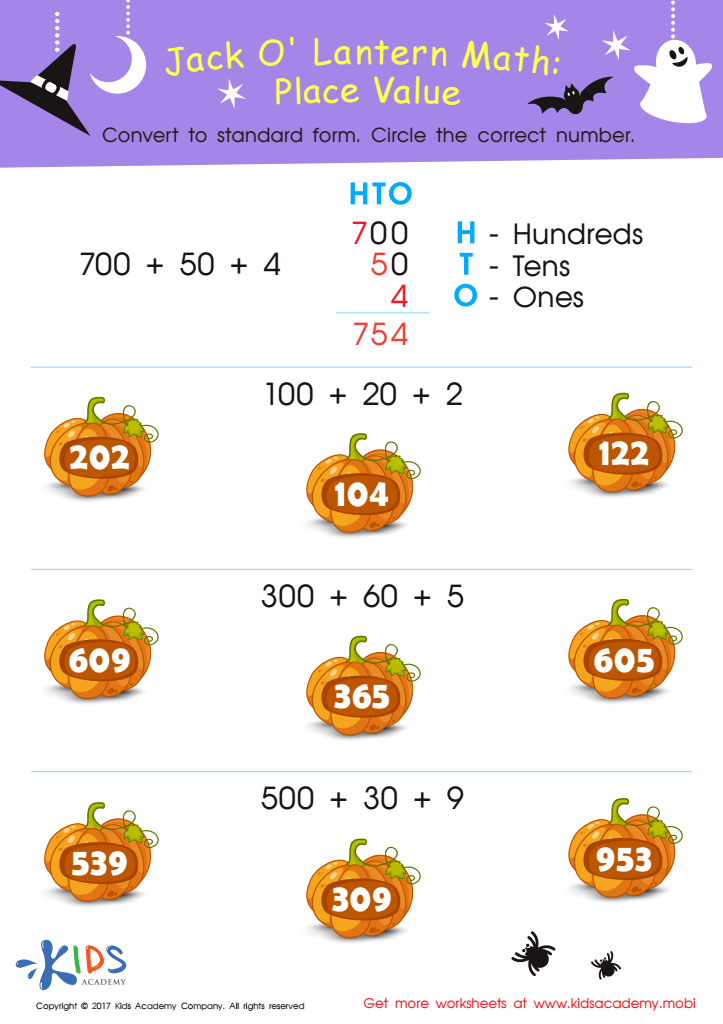
Free Place Value Worksheet
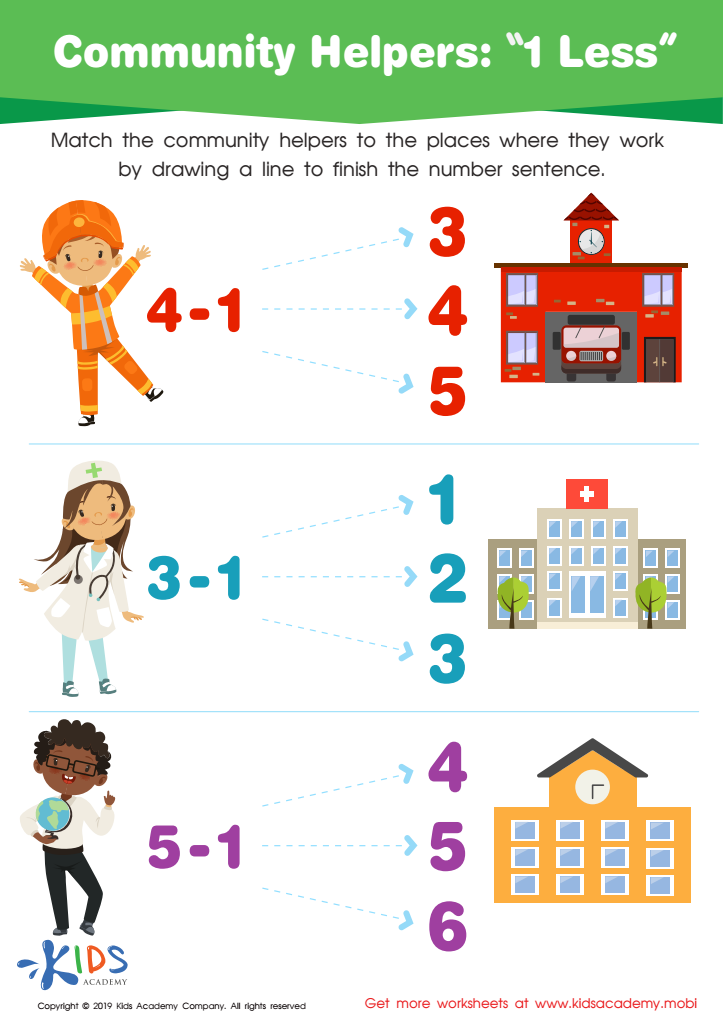
Community Helpers: 1 less Worksheet







Recognizing numbers is a foundational skill for children aged 6-7, making it crucial for parents and teachers to prioritize. At this age, children are transitioning from basic number awareness to more complex mathematical concepts. Mastering number recognition enhances their ability to perform basic arithmetic operations, which are essential for their overall math competence.
When children can recognize numbers, they develop mathematical fluency, enabling them to tackle everyday calculations, understand time, manage money, and make sense of data—all essential skills for daily life. Number recognition also serves as a stepping stone for more advanced subjects like algebra and geometry in later grades.
Moreover, engaging with numbers boosts cognitive development, enhancing critical thinking and problem-solving abilities. It fosters positive attitudes toward math, promoting persistence in overcoming challenges.
Through interactive games, puzzles, and practical applications, parents and teachers can make number recognition enjoyable, establishing a positive learning environment. By nurturing this skill, they set children up for success in academic settings and beyond, laying a strong foundation for lifelong learning and confidence in their mathematical abilities. Ultimately, recognizing numbers is not just about math; it's about empowering children to navigate the world around them effectively.








