Spatial understanding Math Worksheets for Ages 6-7
4 filtered results
-
From - To
Discover our engaging Spatial Understanding Math Worksheets designed for children ages 6-7. These printable resources focus on developing essential spatial awareness skills, helping young learners visualize and navigate the world around them. Through fun activities involving shapes, patterns, and spatial relationships, children will enhance their problem-solving abilities and critical thinking. Our worksheets are specifically tailored to align with early math education standards, ensuring your child gains a strong foundation in spatial concepts. Perfect for both classroom and at-home learning, these worksheets provide an interactive way to boost confidence in math while making learning enjoyable. Explore our collection and watch your child's skills soar!
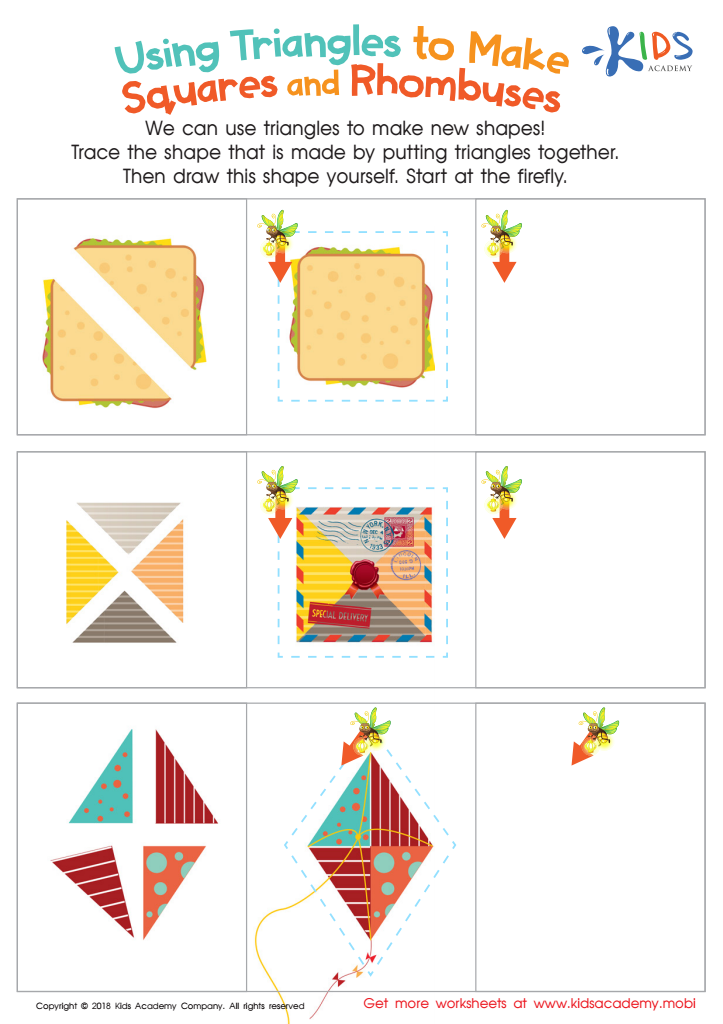
Using Triangles to Make Squares and Rhombuses Worksheet
 Assign to My Students
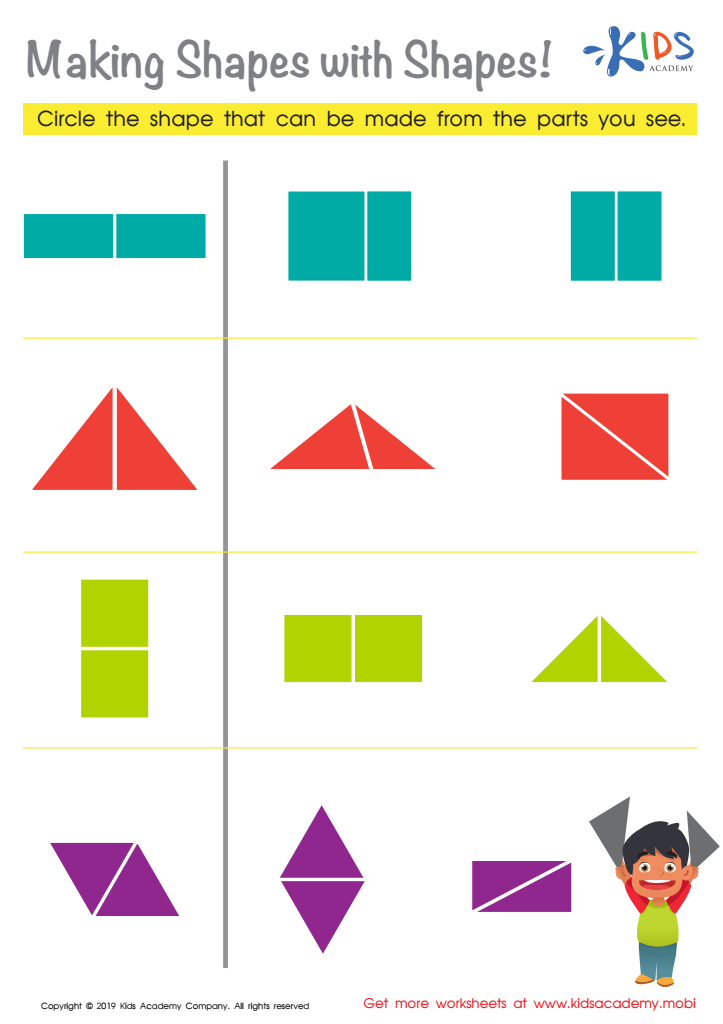
Making Shapes with Shapes Worksheet
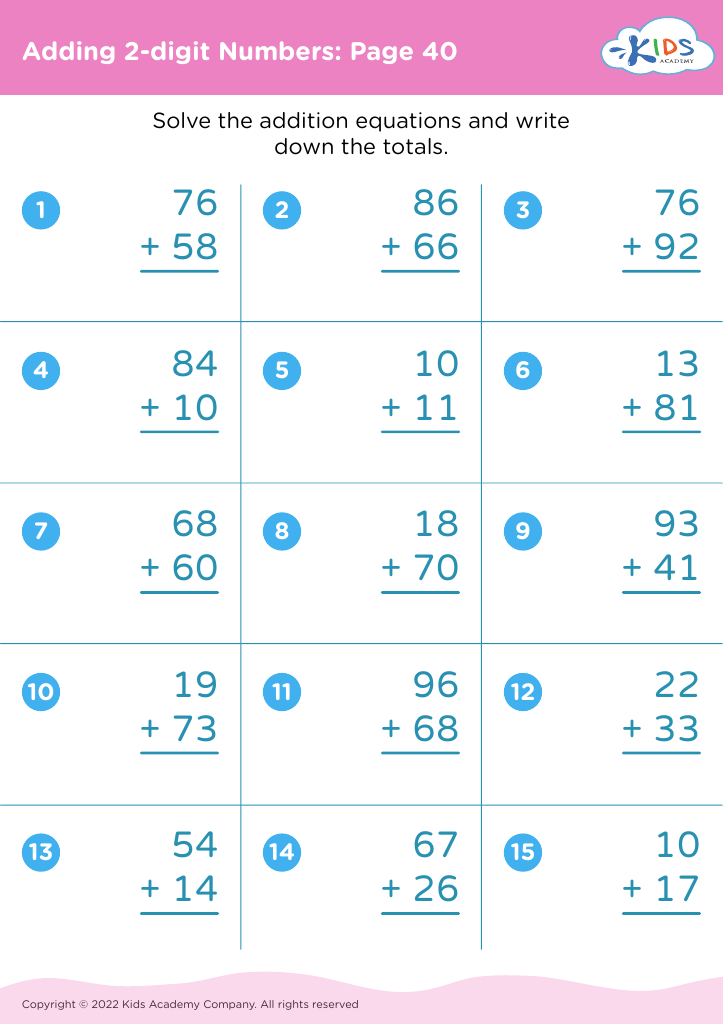
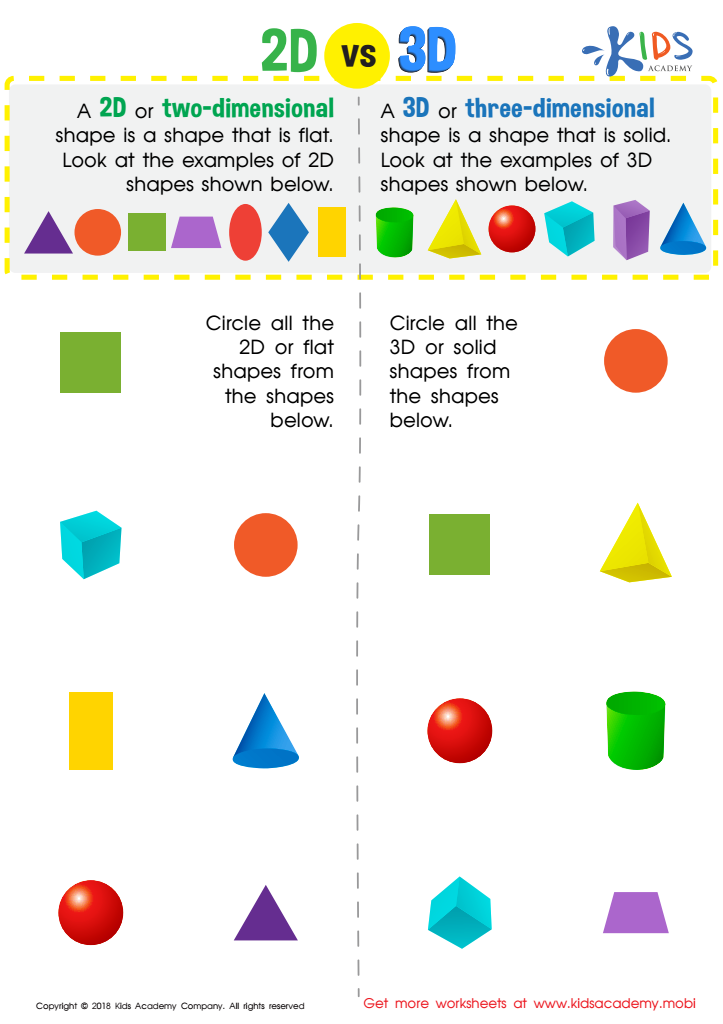
2D vs 3D Shapes Worksheet








Spatial understanding is a crucial foundation for developing strong mathematical skills in children ages 6-7. At this stage, children are beginning to grasp more complex concepts, and spatial awareness plays a vital role in their overall cognitive development. When parents and teachers focus on enhancing spatial understanding, they help children to visualize and manipulate objects, which is essential for mastering geometry, measurement, and problem-solving.
Incorporating spatial reasoning into early math education fosters critical thinking and promotes a stronger grasp of mathematical principles. It encourages children to see relationships between shapes, understand symmetry, and recognize patterns, all of which are fundamental for future learning in math and other disciplines.
Moreover, spatial understanding is not limited to mathematics. It cultivates skills essential for science, art, and everyday life. By caring about and promoting spatial understanding, parents and teachers empower children to approach challenges with creativity and confidence. Engaging in activities like puzzles, building blocks, and drawing can significantly enhance their spatial reasoning skills.
Overall, nurturing spatial understanding in young learners sets the stage for academic success and equips them with important life skills critical for their development and future learning.








