Time-telling skills Math Worksheets for Ages 6-7
5 filtered results
-
From - To
Master the art of time-telling with our engaging math worksheets designed specifically for children aged 6-7. These worksheets make learning to read both analog and digital clocks fun and interactive. Children practice telling time to the hour, half-hour, and quarter-hour through a variety of activities and exercises. Our easy-to-follow worksheets build strong foundational skills while enhancing confidence and precision. Perfect for classroom use or home practice, these expertly crafted resources aim to develop essential time-telling abilities that support daily routines and future academic success. Start your child's journey towards mastering time today with Kids Academy!
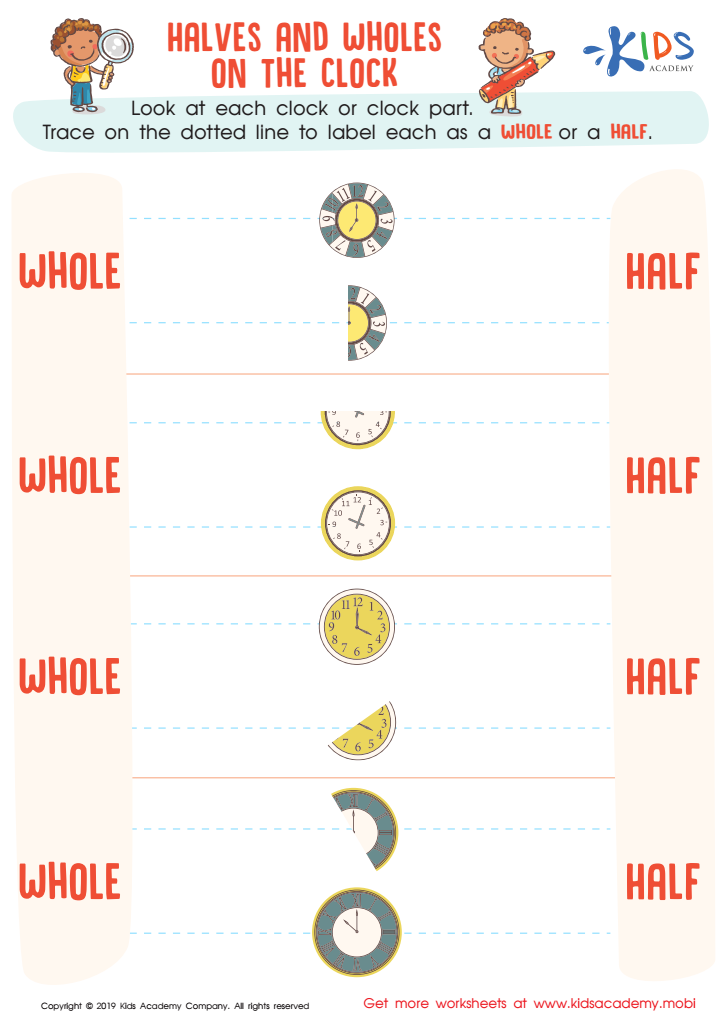
Halves and Wholes on the Clock Worksheet
 Assign to My Students
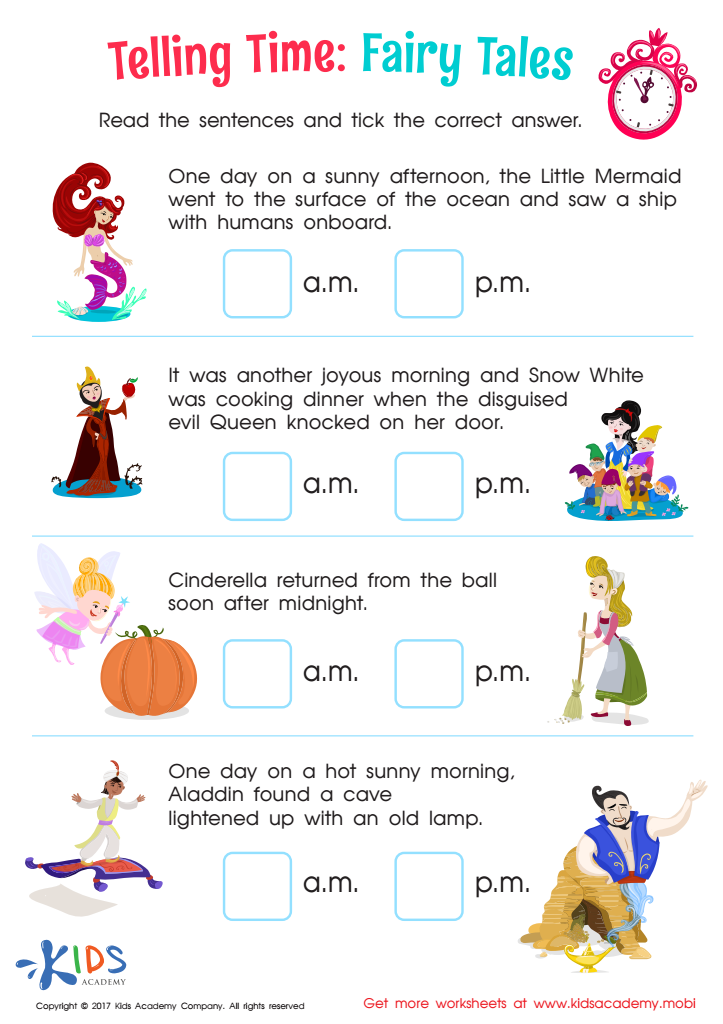
Telling Time: Fairy Tales Worksheet
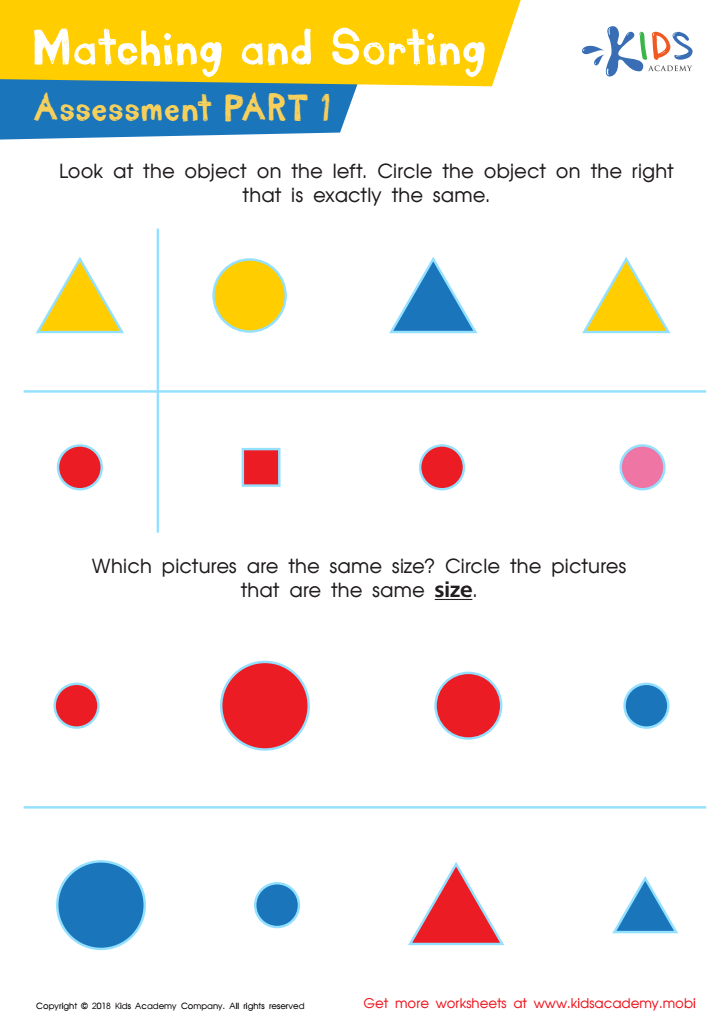
Matching and Sorting for Kindergarten: Assessment 1 Worksheet
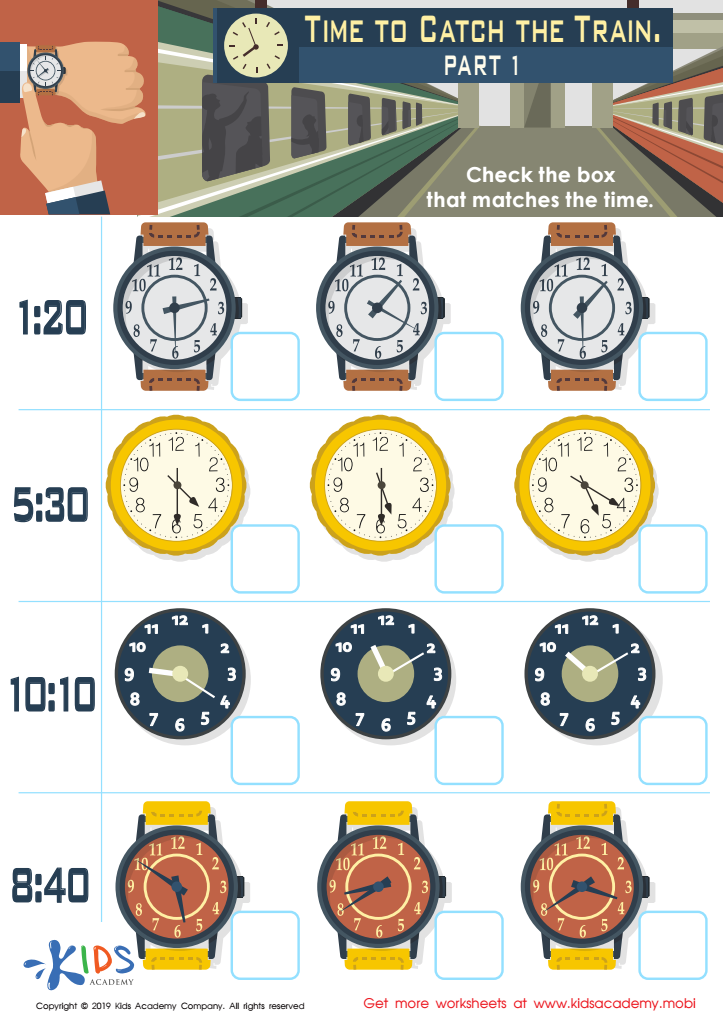
Time to Catch the Train Part 1 Worksheet







Time-telling skills form a crucial part of a child's mathematical education, especially for those aged 6-7. Firstly, learning to tell time fosters children’s understanding of numbers and arithmetic because time involves counting, skip counting (by fives), addition, and subtraction. These skills are valuable cornerstones for more complex mathematical concepts.
Secondly, grasping how to tell time enhances a child’s sense of responsibility and independence. When children can read a clock, they start understanding daily schedules, aiding them in managing their routines effectively and making smoother transitions throughout the day.
In addition, knowing how to tell time helps young learners build important life skills. It develops their sense of punctuality and awareness of time passage, valuable for academic success and general daily activities. This skill reinforces their ability to stay focused and complete tasks in a timely manner, important for both schoolwork and extracurricular activities.
Also, incorporating engaging, real-life activities to teach time, like using clocks and timers, making daily schedules, or reading stories involving time, makes math more relatable and enjoyable, encouraging a positive attitude towards mathematics as a whole. Therefore, fostering time-telling skills equips children with both essential educational foundations and practical life skills.








